
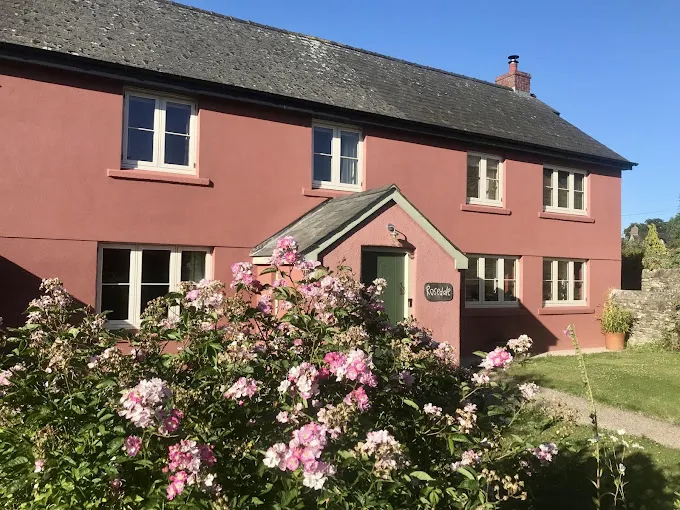
Spray Lime Render: Complete Guide for UK Properties
Spray lime render is a breathable, flexible external wall finish applied using powered equipment – ideal for period properties, solid wall buildings, and coastal homes across South Wales and the wider UK.
Table of Contents
- What Is Spray Lime Render?
- How Spray Lime Render Is Applied
- Mix Ratios, Coat Thickness, and Curing
- Spray Lime Render for South Wales Properties
- Frequently Asked Questions
- Comparing Render Systems
- Our Rendering Services
- Practical Tips for Lime Render Projects
- The Bottom Line
- Sources & Citations
Article Snapshot
Spray lime render is a traditional, breathable rendering system applied via mechanical spray equipment for faster, more consistent coverage. It suits heritage and solid-wall properties, requires careful multi-coat application, and performs well in high-rainfall climates when correctly specified and cured.
Spray Lime Render in Context
- A three-coat lime render system uses a scratch coat of 10 mm, a float coat of 10 mm, and a finish coat of 6 mm (Conserv Lime Mortars, 2025)[1]
- Each coat should not exceed 15 mm in thickness to avoid cracking and shrinkage (Conserv Lime Mortars, 2025)[1]
- The standard mix for lime render is 1 part lime to 2 parts sand by volume (Singleton Birch, 2024)[2]
- Carbonation of lime render proceeds at approximately 1 month per 3 mm of thickness (Singleton Birch, 2024)[2]
What Is Spray Lime Render?
Spray lime render is a traditional lime-based external coating applied using powered spray equipment rather than hand tools, combining the breathability of lime with the speed and consistency of mechanical application. Coloured Rendering South Wales has worked with a full range of external render systems since 1998, and understanding where lime fits within that spectrum helps property owners make informed choices. Unlike cement-dominated renders, lime renders allow moisture vapour to pass through the wall, which is important for older solid-wall buildings where trapping moisture causes structural damage. The spray method accelerates coverage of large wall areas while maintaining the even coat thickness that lime application demands.
Lime render has been used on British buildings for centuries, but the shift to mechanical spray application is a more recent development that addresses one of lime’s main practical challenges – the time and skill required for hand application across multiple coats. Spray equipment forces the mix onto the substrate under controlled pressure, improving adhesion and eliminating voids that hand-applied lime leaves on uneven or porous surfaces. For period properties in South Wales, where solid stone and brick walls are common, this makes spray lime render a genuinely practical solution rather than a heritage niche.
The material itself is made from lime putty or hydraulic lime combined with appropriately graded sand. “The standard mix for a render should be 1 lime to 2 sand by volume,” notes guidance from Singleton Birch, Building Materials Experts (Singleton Birch, 2024)[2]. Sand quality matters significantly – clay content in the sand must remain below 2 per cent by weight to prevent shrinkage cracking once the render cures (Singleton Birch, 2024)[2]. Specifying the correct sand is as important as the lime-to-sand ratio itself, and it is one area where experienced renderers consistently outperform those new to the material.
Call Us
How Spray Lime Render Is Applied
Spray lime render application follows a structured sequence of coats, each serving a distinct purpose in building up a durable, crack-resistant external finish. The process differs fundamentally from single-coat modern render systems, and property owners should understand that the multi-stage approach is not a complication – it is what gives lime render its performance characteristics. Mechanical spray equipment is set up to deliver a consistent flow of mixed material at the correct pressure, ensuring the render keys into the substrate rather than simply sitting on the surface.
Preparation is the first step. The background surface must be clean, free from dust and loose material, and dampened before application to control suction. On highly absorbent substrates such as old brick or stone, inadequate dampening causes the wall to draw moisture out of the fresh render too quickly, which is a primary cause of early cracking. “A common cause of cracking is excess or rapid moisture loss or the render drying too quickly,” explains Deri, a Lime Render Practitioner at Cornish Lime (Cornish Lime, 2025)[3]. In warm weather – including the warmer summer periods South Wales increasingly experiences – both the background and the freshly applied render require more frequent dampening than standard guidance suggests.
The scratch coat is applied first, sprayed to approximately 10 mm thickness and then scratched with a comb or devil float to create a mechanical key for the following coat (Conserv Lime Mortars, 2025)[1]. This coat must be allowed to achieve sufficient strength before the float coat is applied – at least 10 days under ideal conditions (Conserv Lime Mortars, 2025)[1]. Rushing between coats is one of the most common errors on lime render projects, particularly when contractors are working to tight schedules. The float coat follows at another 10 mm, levelling the surface, and the finish coat – often 6 mm – provides the final texture and appearance (Conserv Lime Mortars, 2025)[1]. Throughout the process, the spray equipment must be cleaned thoroughly between mixes to prevent partially set material contaminating fresh batches.
Mix Ratios, Coat Thickness, and Curing
Getting the mix ratio and coat thickness right is the technical foundation of a successful spray lime render project, and errors at this stage cannot be corrected by careful finishing work. Lime render behaves differently from cement-based systems and requires an understanding of carbonation – the chemical process by which lime hardens by absorbing carbon dioxide from the air rather than by hydration as cement does. This distinction shapes every decision about coat thickness, drying time, and curing management.
The standard 1:2 lime-to-sand mix provides a workable material with appropriate strength for most external applications (Singleton Birch, 2024)[2]. Where a small proportion of cement is introduced to accelerate initial set – a practice used in wetter climates – mix proportions matter. As Graham O’Hare of Cathedral Stonemasons notes from the Smeaton Project research: “a 1:1:6 mix, containing a 50 per cent cement binder, is unlikely to segregate, while a 1:2:9 mix, containing a 33 per cent cement binder, is almost certainly at risk” (Building Conservation, 2025)[4]. Adding cement to a lime render system requires careful specification to avoid creating an incompatible mix that undermines the breathability the lime was chosen to provide.
Coat thickness is equally important. The Conserv Lime Mortars team notes that “lime render is heavy and cures very slowly compared to modern cement based, resin or polymer renders. Thick layers are less likely to adhere due to the excess weight and are prone to shrinkage and cracking with the increased amount of moisture” (Conserv Lime Mortars, 2025)[1]. No individual coat should exceed 15 mm in thickness (Conserv Lime Mortars, 2025)[1]. Carbonation proceeds at roughly 1 month per 3 mm of render thickness, meaning a full three-coat system reaching 26 mm total depth requires several months to fully carbonate and reach its design strength (Singleton Birch, 2024)[2].
Curing management in the period immediately after application is what separates long-lasting lime renders from those that crack and fail within their first year. Cornish Lime’s technical guidance recommends spraying freshly applied lime render with water for the first 3 to 5 days, adjusting duration based on temperature and background suction (Cornish Lime, 2025)[3]. Shading newly applied render from direct sunlight and protecting it from frost during the early curing period is equally important, particularly in exposed coastal and upland locations across South Wales.
Spray Lime Render for South Wales Properties
Spray lime render is particularly well suited to the South Wales built environment, where a combination of Victorian and Edwardian solid-wall housing, high annual rainfall, and coastal salt air creates specific demands that many modern render systems are not designed to meet. The region’s building stock includes large numbers of properties with traditional stone and brick construction in areas ranging from central Swansea to the Gower Peninsula, the Valleys, and coastal towns from Barry to Tenby, all of which benefit from breathable external finishes.
South Wales receives significantly higher rainfall than much of England, and wind-driven rain is a consistent challenge for external wall finishes throughout the region. A breathable lime render allows any moisture that penetrates the wall – through micro-cracks, around window reveals, or through the masonry itself – to evaporate back out rather than becoming trapped. Trapped moisture in solid walls leads to internal dampness, deterioration of masonry, and in winter, freeze-thaw damage that accelerates render failure. For properties in coastal locations such as Mumbles, Porthcawl, or Penarth, the render specification also needs to account for salt-laden air, which accelerates deterioration in less resistant systems.
The spray application method addresses a practical challenge specific to South Wales renovation projects: many of the region’s older properties have uneven or irregular wall surfaces that demand skilled hand application when using traditional methods. Spray equipment allows consistent coverage across undulating or textured masonry, reducing the risk of thin spots that would fail first under weather exposure. When combined with the correct specification of hydraulic lime or lime putty appropriate to the property’s construction and location, coloured rendering solutions for Swansea and surrounding areas are delivered with the durability that South Wales conditions demand. Properties in exposed positions on hillsides above Cardiff, in the coastal belt of the Vale of Glamorgan, or in the wind-funnelling valleys near Merthyr all require careful consideration of the render specification rather than a generic approach.
Your Most Common Questions
Is spray lime render suitable for modern properties, or only for older buildings?
Spray lime render is most commonly specified for older, solid-wall properties where breathability is a structural requirement, but it is not exclusively a heritage product. Modern properties built with cavity wall construction do not require the vapour-permeable properties that make lime the correct choice for Victorian or Georgian buildings, so a silicone or polymer render is more practical for new builds. However, lime render is used on contemporary construction where an architect has specified a traditional or natural material aesthetic, or where planning conditions in a conservation area require it. The key question is always whether the substrate and building type genuinely benefit from lime’s breathability. For solid stone or brick walls, the answer is yes. For modern block or insulated systems, a modern thin coat silicone render performs better and is significantly faster to cure. A qualified renderer with experience across multiple system types is best placed to advise on the appropriate specification for any individual property.
How long does spray lime render take to fully cure?
Lime render cures through a process called carbonation, which is considerably slower than the hydration process that sets cement-based renders. Carbonation progresses at approximately 1 month per 3 mm of render thickness (Singleton Birch, 2024)[2]. A standard three-coat spray lime render system with a scratch coat of 10 mm, float coat of 10 mm, and finish coat of 6 mm reaches a total depth of approximately 26 mm, meaning full carbonation across the depth of the system takes many months. Between coats, the scratch coat alone requires at least 10 days under favourable conditions before the float coat is applied (Conserv Lime Mortars, 2025)[1]. Active curing management – including water spraying for 3 to 5 days after each coat – extends the working period and is essential to preventing premature cracking (Cornish Lime, 2025)[3]. Property owners should plan lime render projects with realistic timescales, particularly for exposed South Wales properties where weather conditions extend drying periods further.
What causes cracking in spray lime render and how can it be prevented?
Cracking in lime render has several distinct causes, most of which relate to moisture management, coat thickness, or mix specification. Rapid moisture loss from the fresh render – caused by high temperatures, direct sunlight, wind, or an excessively absorbent background – is one of the most common causes. Applying coats that exceed 15 mm in thickness creates layers that are too heavy to adhere reliably and that contain too much moisture, both of which promote shrinkage cracking as the render dries (Conserv Lime Mortars, 2025)[1]. Sand with a clay content above 2 per cent also increases shrinkage risk significantly (Singleton Birch, 2024)[2]. Prevention centres on correct mix specification, controlled coat thickness, adequate dampening of the background before application, and active curing of each coat after application. Where cement is added to a lime mix to accelerate set in wet conditions, the proportions must be carefully controlled to avoid creating a mix that is too rigid to accommodate the natural movement of an older building, which itself becomes a cause of cracking over time.
Can spray lime render be coloured, and does the colour last?
Lime render is coloured using natural pigments mixed directly into the finish coat, producing a through-coloured surface that does not rely on a painted topcoat for its appearance. The difference between pigmented lime render and modern through-coloured render systems such as monocouche is worth understanding. Pigmented lime finishes complement heritage property aesthetics well, but the colour range is more limited than modern synthetic render systems and the intensity of colour varies between batches. For property owners seeking a wide palette of durable, fade-resistant colours with low ongoing maintenance, a thin coat silicone render or monocouche through-colour system offers better long-term colour stability. Lime render is also limewashed or painted with breathable mineral paints to add colour without compromising breathability. The appropriate approach depends on whether the priority is heritage authenticity, colour flexibility, or low long-term maintenance – all of which are valid considerations depending on the property and its setting.
Comparing Lime Render with Other External Render Systems
Choosing between spray lime render and modern render systems requires weighing breathability, durability, application speed, and long-term maintenance requirements. The table below compares four commonly specified external render approaches to help property owners and specifiers understand the key differences.
| Render System | Breathability | Application Speed | Curing Time | Maintenance | Best Suited To |
|---|---|---|---|---|---|
| Spray Lime Render | High – vapour permeable | Moderate – multiple coats with waiting periods | Slow – months for full carbonation[2] | Requires periodic limewash or repair | Solid-wall heritage and period properties |
| Thin Coat Silicone Render | Good – water repellent but breathable | Fast – single thin coat over base | Days to weeks | Low – self-cleaning properties | Modern and renovated properties, coastal locations |
| Monocouche Through Colour Render | Moderate | Fast – single coat application | Weeks | Very low – no repainting required | New builds and housing developments |
| One Coat Cement Render | Low – less breathable | Moderate – faster than lime | Days | Higher – requires painting and repainting | Properties where painted finish is acceptable |
Our Rendering Services at Coloured Rendering South Wales
Coloured Rendering South Wales has delivered external rendering and internal plastering services across South Wales since 1998, building more than 25 years of hands-on experience with the full range of render systems available to UK property owners. We are a Baumit Approved EWI Applicator with City & Guilds Assured accreditation, certified to install Baumit StarTop premium silicone render and complete external wall insulation systems with manufacturer-backed warranties of up to 25 years.
Our services span expert spray rendering and external wall insulation across South Wales, including thin coat silicone render, monocouche through colour render, one coat cement render, rendering repairs, and full EWI installations. We use spray application technology across our render systems, which enables faster and more consistent coverage than traditional hand application – reducing project timescales and disruption to occupants without compromising the quality of the finished surface.
“With over 15 years in the building trade I have experienced several different plasterers all offering different styles and finishes. Geoff’s thin coat spray finish render would rival the best and I can’t recommend his team enough to someone thinking of using him. His professionalism and work ethic has stood out from many of the others we have worked with.” – Keri Hopkins, Google Review
“We’re 100% happy and wouldn’t hesitate to recommend Jeff. His workmanship is excellent and we’re also very happy with the product he recommended to eradicate the penetrating damp and give our house a great new look and lease of life.” – Alistair Legge, Google Review
We cover residential homeowners, property developers, landlords, and commercial clients throughout Swansea, Cardiff, Newport, Bridgend, and the wider South Wales region. To discuss which render system is right for your property, contact Coloured Rendering South Wales for a free quote or consultation on your rendering project. Call us on 07815 868070 or email geoff@colouredrenderingsouthwales.com.
Practical Tips for Spray Lime Render Projects
Planning a lime render project correctly from the outset avoids the most common and costly problems. The following guidance applies to both residential and commercial properties across South Wales.
Assess the substrate thoroughly before specifying. Lime render performs best when the background is structurally sound, clean, and appropriately porous. Friable, dusty, or painted surfaces need treating or removing before application. On solid stone or rubble walls, a spatterdash bonding coat applied before the scratch coat significantly improves adhesion and reduces the risk of delamination.
Match the lime type to the exposure level. Natural hydraulic lime (NHL) is graded by its hydraulic strength – NHL 2 for sheltered positions, NHL 3.5 for moderate exposure, and NHL 5 for severe exposure such as gable ends facing the prevailing wind or coastal elevations. South Wales coastal properties in Gower, Mumbles, or Barry Island require NHL 3.5 as a minimum. Using too weak a hydraulic lime in an exposed location results in render that erodes prematurely.
Plan the project around the weather forecast. Lime render must not be applied in freezing conditions or when frost is forecast within 24 hours of application. It also performs poorly in very hot, dry weather without active curing management. The ideal application conditions are mild, overcast days with moderate humidity – conditions that South Wales provides more reliably than many other parts of the UK, though summer heatwaves require additional curing vigilance.
Do not rush between coats. The scratch coat must reach adequate strength before the float coat is applied, and the float coat must be stable before the finish is applied. Spraying with water to slow drying during the first 3 to 5 days after each coat keeps the carbonation process active and dramatically reduces the risk of shrinkage cracking (Cornish Lime, 2025)[3]. If time pressure is a genuine constraint, discuss with your renderer whether a hydraulic lime with a faster initial set is appropriate for your project, or whether a modern silicone render system better fits your timescales. For properties requiring rendering repairs across South Wales, addressing the root cause of existing render failure – whether moisture ingress, structural movement, or an incompatible previous render – is essential before new material is applied.
The Bottom Line
Spray lime render is the right choice for solid-wall, heritage, and period properties across South Wales where breathability is non-negotiable, but it demands precise mix specification, controlled coat thickness, and active curing management to perform as intended. The spray application method brings real practical advantages – faster coverage, better adhesion on uneven substrates, and consistent coat thickness – without altering the fundamental chemistry that makes lime renders suited to older buildings. For modern properties or those requiring fast turnaround, silicone or monocouche systems offer better value and lower maintenance. Choosing the correct system for your specific property, location, and budget is the decision that most determines long-term performance.
Coloured Rendering South Wales has specified and applied external renders across South Wales since 1998, with direct experience of the coastal climate challenges, traditional building stocks, and modern render technologies relevant to the region. Call us on 07815 868070, email geoff@colouredrenderingsouthwales.com, or visit our contact page to arrange a free property assessment and quotation.
Sources & Citations
- The Lime Render Guide. Conserv Lime Mortars, 2025.
https://www.lime-mortars.co.uk/lime-render/guides/the-lime-render-guide - Best Practice Guide – Renders. Singleton Birch, 2024.
https://singletonbirch.co.uk/wp-content/uploads/2024/04/bestpractiseguiderenders.pdf - Curing Lime Renders & Mortars. Cornish Lime, 2025.
https://cornishlime.co.uk/application-guides/curing-lime-based-renders-mortars/ - Lime Mortars and Renders: The Relative Merits of Adding Cement. Building Conservation, 2025.
https://www.buildingconservation.com/articles/cement/cement.htm