
External Wall Insulation Carmarthen: Complete Guide
External wall insulation Carmarthen homeowners need must withstand Wales’s wet climate – this guide covers systems, costs, energy savings, and how to find a certified installer near you.
Table of Contents
- What Is External Wall Insulation?
- Energy Savings and Benefits of EWI
- EWI Systems: Silicone, Monocouche, and Cement Render
- Choosing an External Wall Insulation Installer in Carmarthen
- Frequently Asked Questions
- Comparing EWI Render Finish Options
- Coloured Rendering South Wales
- Practical Tips for Your EWI Project
- The Bottom Line
- Sources & Citations
Quick Summary
External wall insulation Carmarthen is a system of insulation boards and rendered finish applied to the outside of a property to reduce heat loss and weatherproof the exterior. It suits solid-wall homes across Carmarthenshire, delivers significant energy bill savings, and improves EPC ratings without disrupting internal living spaces.
By the Numbers
- 52.1% of English dwellings have cavity or solid wall insulation (Statista – England Housing Insulation Statistics, 2022)[1]
- Only 16% of solid wall dwellings in Scotland have insulation installed, compared with 69% of cavity wall dwellings (Scottish Government – Scottish House Condition Survey, 2022)[2]
- 46,900 households had been upgraded under the Great British Insulation Scheme by the end of December 2024 (UK Government – Great British Insulation Scheme Statistics, 2025)[3]
- Wales recorded 214 household upgrades per 100,000 households under the Great British Insulation Scheme by end of December 2024 (UK Government – Great British Insulation Scheme Statistics, 2025)[3]
What Is External Wall Insulation?
External wall insulation Carmarthen is a complete wall treatment system that bonds insulation boards to the outer face of a building, then protects them with a reinforced render finish. It is the primary solution for properties built with solid walls – common throughout Carmarthenshire’s older housing stock – where standard cavity wall insulation is not an option. Coloured Rendering South Wales, based in Swansea and operating across South Wales, installs EWI systems that combine certified thermal performance with attractive, weather-resistant rendered finishes suited to the Welsh climate.
A typical EWI system consists of three main components: the insulation layer (usually expanded polystyrene or mineral wool boards), a reinforcing mesh embedded in a basecoat render, and a decorative finish coat such as silicone or acrylic render. Each layer serves a distinct purpose – insulation reduces thermal transmittance, mesh reinforcement prevents cracking, and the finish coat protects the entire system from the driving rain and coastal salt air that properties in and around Carmarthen regularly face.
The Welsh Government has acknowledged the value of this approach directly. As they noted, “External wall insulation can offer householders a sustainable solution to reducing their energy needs, carbon footprint and fuel bills.” (Welsh Government, 2018)[4] For properties in Carmarthen and the surrounding villages, this is more than a policy statement – it reflects the practical reality that many local homes were built before modern insulation standards existed, leaving residents with avoidably high heating costs every winter.
Call Us
EWI is relevant for solid-walled terraced houses, semi-detached properties, and traditional stone cottages found widely across Carmarthenshire. These building types lose heat at a disproportionate rate. As the Scottish Government noted in its 2022 survey, “A poorly insulated building can lose up to 25% of its heat through its walls. Solid walls lose even more heat than cavity walls – often more than double that of an uninsulated cavity wall.” (Scottish Government, 2022)[2] The same physics applies to solid-wall homes in Wales, making external solid wall insulation one of the highest-impact upgrades available to Carmarthen property owners.
Installation does not require residents to vacate the property and causes no internal disruption. Work is carried out entirely from the outside, adding between 80mm and 150mm to the wall thickness. This increase needs to be considered carefully around windows, doors, and external features such as sills and copings, all of which require proper detailing to maintain weathertightness.
Energy Savings and Benefits of EWI
The measurable energy and comfort benefits of external solid wall insulation make it one of the most cost-effective home improvement investments available to Carmarthen property owners. Reduced heat loss through treated walls means your boiler works less to maintain a comfortable temperature, which directly lowers fuel consumption and bills throughout the heating season.
The Energy Saving Trust has quantified this impact: “Depending on the type of solid wall insulation, householders could save around £445 a year.” (Energy Saving Trust, 2018)[4] For a household in Carmarthen heating through a long Welsh winter, cumulative savings over the ten-to-twenty-year lifespan of a quality EWI system represent a substantial return on investment, particularly when energy prices remain elevated.
Beyond direct fuel bill reductions, EWI improves a property’s Energy Performance Certificate (EPC) rating. Improving the EPC band matters both for owner-occupiers and landlords – minimum energy efficiency standards for rental properties in Wales continue to tighten, and an improved EPC rating increases a home’s attractiveness and value on the open market. The Office of National Statistics noted that wall insulation is an important factor in EPC scoring for houses, where external wall area is proportionally large (UK Government Office of National Statistics, 2022)[5].
Comfort improvements are experienced immediately after installation. Cold wall surfaces cause radiant heat loss and condensation, which leads to surface mould. Once the thermal performance of the wall improves, internal surface temperatures rise, condensation risk drops, and rooms feel noticeably warmer at the same thermostat setting. For properties in Carmarthen close to the Tywi estuary or exposed rural locations, this improvement in felt warmth makes a tangible difference to daily living during the months of October through March.
The render finish applied over the insulation system also provides a durable weather barrier that protects the underlying wall structure from moisture penetration – a persistent concern in western Wales given the high annual rainfall. A quality silicone or through-coloured finish coat repels water while remaining vapour-permeable, allowing any moisture within the wall to escape rather than becoming trapped. This breathability is an important technical requirement, particularly for older stone or brick buildings in Carmarthenshire, and should be confirmed with your installer before specifying a system.
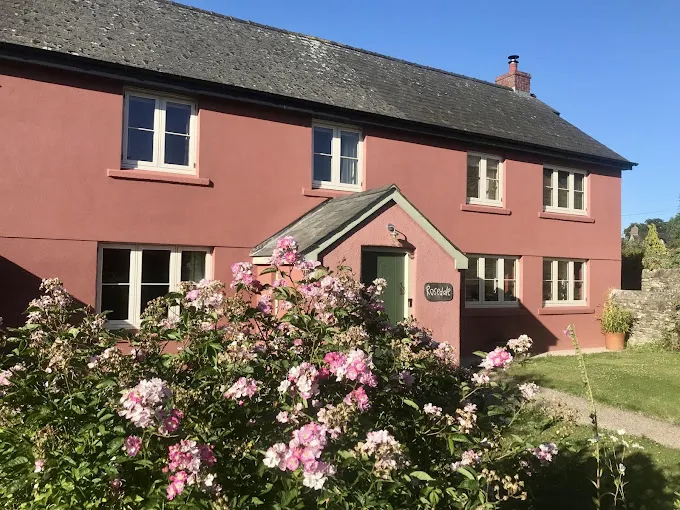
There is also a significant kerb appeal benefit. EWI replaces ageing or stained exterior surfaces with a fresh, consistent rendered finish in any colour. Properties with tired pebbledash, crumbling lime render, or outdated external paint are transformed in appearance – a benefit that is immediately visible from the street and appreciated by neighbours and valuers alike.
EWI Systems: Silicone, Monocouche, and Cement Render
The choice of render finish coat for your external wall insulation system determines long-term performance, maintenance requirements, and visual outcome – and not all render types are equally suited to the Carmarthen climate. Three systems are most commonly specified across South Wales: thin coat silicone render, monocouche through-colour render, and one coat cement render.
Thin coat silicone render is widely regarded as the premium finish for EWI applications. Its silicone-based polymer formula gives the coating outstanding flexibility, allowing it to expand and contract with the building through seasonal temperature changes without cracking. Silicone renders are also inherently hydrophobic – water beads and runs off rather than soaking into the surface – while remaining vapour-permeable. Self-cleaning properties further reduce maintenance, as rainfall rinses dust and pollutants from the facade. For coastal and high-rainfall locations around Carmarthen and Carmarthenshire, thin coat silicone render is the preferred specification. It is available in a wide range of colours that retain their appearance for decades without repainting.
You can explore the technical characteristics of facade render systems in detail through Baumit’s guide to facade renders and paints, which outlines performance specifications for silicone and other finish coats used in EWI applications.
Monocouche through-colour render is a cement-based system where the colour runs throughout the full thickness of the coat, rather than being applied as a surface paint. This characteristic means that minor surface abrasion does not expose a contrasting base material underneath. Monocouche is highly durable and offers good weather resistance. It is applied by spray or hand to achieve a range of textured finishes, from fine scratch to coarse roughcast. Because the colour is integral, no repainting is ever required, which makes it an economical long-term choice for housing developments and landlord-owned properties where ongoing maintenance costs need to be controlled.
One coat cement render is the most cost-effective external finish option. Applied in a single coat over the EWI basecoat, it provides a solid, weather-resistant surface that is painted in any chosen colour. It is well suited to properties where the owner wants the flexibility to change the colour in future through repainting. Spray application technology achieves consistent thickness and coverage across large wall areas more efficiently than traditional hand application, reducing both labour time and the risk of uneven finish.
For listed buildings and properties in conservation areas around Carmarthen town centre, Historic England has noted that “External insulation is often an option worth considering, where aesthetics allow. However there are various considerations that need to be addressed and further research is needed to gain a fuller understanding of these.” (Historic England Research, 2014)[6] If your property is listed or sits within a conservation area, you should consult Carmarthenshire County Council’s planning department before proceeding, as permitted development rights do not apply in all cases.
Choosing an External Wall Insulation Installer in Carmarthen
Selecting the right installer for your external wall insulation project in Carmarthen is the most important decision you will make in the entire process, as poor installation voids manufacturer warranties, risks moisture entrapment, and results in costly remedial work within a few years. There are several criteria that distinguish reliable, qualified contractors from those who are simply applying render without the appropriate knowledge or certification.
Installer certification is non-negotiable for EWI systems carrying manufacturer warranties. Look for contractors who are approved installers for the specific EWI system they are proposing – for example, a Baumit Approved EWI Applicator with City & Guilds Assured accreditation is certified to install Baumit StarTop premium silicone render and full EWI systems, with manufacturer-backed warranties of up to 25 years. Engaging a certified applicator is the only way to access these long-term product guarantees, which protect your investment if system defects arise.
Relevant experience in South Wales is also a meaningful differentiator. Installers who have worked extensively across Carmarthenshire, Pembrokeshire, and the wider region understand local planning considerations, the specific demands of Welsh weather on render systems, and the architectural characteristics of buildings in the area – from Victorian terraces in Carmarthen town to exposed rural properties in the Tywi Valley. Ask to see a portfolio of completed EWI projects, including any properties in comparable coastal or high-rainfall locations.
Verifiable customer reviews provide independent evidence of workmanship quality and reliability. A contractor maintaining a 5.0 Google rating across a substantial number of reviews has a documented track record that you can independently verify before committing. This is considerably more meaningful than verbal assurances or unverified testimonials on a contractor’s own website.
Before work begins, a reputable installer will conduct a thorough property assessment to check substrate condition, identify any existing moisture issues, evaluate the suitability of the wall for direct EWI application, and advise on detailing requirements around windows, doors, soffits, and other features. Skipping this assessment stage is a warning sign. The Property Care Association provides guidance on identifying damp and structural issues that should be resolved before any external treatment is applied, and a professional installer will flag these proactively.
Detailed written quotations are standard practice for reputable rendering and EWI contractors. The quotation should specify the full system by name and manufacturer, insulation board type and thickness, finish coat product and colour reference, preparation works required, and project timeline. Any contractor who cannot or will not provide this level of specification in writing should be treated with caution, regardless of the price they quote.
Your Most Common Questions
Does external wall insulation require planning permission in Carmarthen?
In most cases, external wall insulation on a standard residential property in Carmarthen falls within permitted development rights and does not require a full planning application. However, there are important exceptions. If your property is a listed building, sits within a designated conservation area, or has had its permitted development rights removed by a planning condition, you will need to apply for prior approval or full planning consent from Carmarthenshire County Council before installation begins. Properties in Article 4 Direction areas face additional restrictions. The safest approach is to contact the council’s planning department directly to confirm your property’s status before commissioning any work. Your installer should be familiar with local planning requirements and able to advise you at the initial consultation stage.
How long does an external wall insulation system last?
A correctly installed EWI system using quality materials and certified by the manufacturer lasts between 25 and 40 years with minimal maintenance. Systems installed by a Baumit Approved EWI Applicator carry manufacturer-backed warranties of up to 25 years, providing documented protection over a substantial portion of that lifespan. The longevity of the system depends heavily on the quality of installation – particularly the detailing around windows, doors, and wall junctions where water finds a path behind the system if poorly finished. Choosing a render finish with self-cleaning properties, such as thin coat silicone render, helps maintain the appearance of the facade over the decades without periodic repainting. Routine visual inspections every few years allow minor issues such as small cracks at vulnerable junctions to be addressed before water ingress occurs.
Can I get funding or grants for external wall insulation in Wales?
Yes. Several funding routes are available to eligible homeowners in Wales. The Welsh Government’s Warm Homes Programme provides grant assistance for energy efficiency improvements including external wall insulation for qualifying households – eligibility is based on income, benefits received, and property EPC rating. At UK level, the Great British Insulation Scheme has supported 46,900 households by the end of December 2024 (UK Government – Great British Insulation Scheme Statistics, 2025)[3], with Wales recording 214 upgrades per 100,000 households under the scheme (UK Government – Great British Insulation Scheme Statistics, 2025)[3]. The ECO4 scheme, administered through energy suppliers, also provides funding for insulation measures in low-income households. Eligibility criteria change periodically, so check current availability through the Welsh Government’s energy efficiency portal or speak to your installer, who has up-to-date knowledge of schemes available in Carmarthenshire.
What is the difference between external wall insulation and cavity wall insulation?
Cavity wall insulation fills the air gap that exists between the inner and outer leaves of a double-skin wall, built after the 1930s. It is installed by drilling holes through the outer skin and injecting insulating material, with no visible change to the building’s exterior. External wall insulation, by contrast, applies insulation boards and a render finish to the outside face of the wall, increasing its overall thickness. EWI is the appropriate solution for solid wall properties – those built with a single thickness of brick, stone, or block – which make up a significant proportion of older homes in Carmarthen and across rural Carmarthenshire. Solid walls conduct heat more readily than cavity walls, which is why they benefit most from insulation treatment. Only a property survey confirms which wall construction type you have, but properties built before approximately 1920 are most likely to be solid-walled and candidates for external solid wall insulation rather than cavity fill.
Comparing EWI Render Finish Options
The render finish you choose for your EWI system affects both the performance of the facade and the ongoing maintenance commitment over its lifetime. The table below compares the three principal finish options available for external wall insulation projects in Carmarthen and across South Wales, helping you match the system to your property’s requirements and budget.
| Finish Type | Weather Resistance | Maintenance Requirement | Colour Options | Best Suited To |
|---|---|---|---|---|
| Thin Coat Silicone Render | Excellent – hydrophobic and breathable | Very low – self-cleaning properties | Wide range, fade-resistant[4] | Coastal and high-rainfall locations, premium finishes |
| Monocouche Through-Colour Render | Good – weather-resistant cement base | Low – no painting required | Pre-mixed range, through-coloured | Housing developments, landlord properties, traditional aesthetics |
| One Coat Cement Render | Good – solid weather barrier | Moderate – requires periodic repainting | Unlimited via paint | Budget-conscious projects, flexible colour preference |
Coloured Rendering South Wales
Coloured Rendering South Wales is a Swansea-based plastering and spray rendering company established in 1998, serving residential and commercial clients throughout South Wales including Carmarthen, Llanelli, Swansea, Cardiff, and Newport. With over 25 years of continuous operation, the team brings detailed knowledge of local building types, Welsh weather conditions, and the render systems best suited to properties across the region.
As a Baumit Approved EWI Applicator with City & Guilds Assured accreditation, Coloured Rendering South Wales is certified to install Baumit StarTop premium silicone render and complete external wall insulation systems carrying manufacturer-backed warranties of up to 25 years. This certification distinguishes the company from general rendering contractors and gives clients documented long-term protection on their investment.
Services cover the full spectrum of external rendering and insulation work: thin coat silicone render, monocouche through-colour render, one coat cement render, external wall insulation, rendering repairs, and internal plastering. Whether you need a complete EWI installation on a Carmarthenshire solid-wall property or a targeted repair to failing render on a coastal property, the team assesses each project individually and specifies the most appropriate solution.
“With over 15 years in the building trade I have experienced several different plasterers all offering different styles and finishes. Geoff’s thin coat spray finish render would rival the best and I can’t recommend his team enough to someone thinking of using him.” – Keri Hopkins, Google Review
“We’re 100% happy and wouldn’t hesitate to recommend Jeff. His workmanship is excellent and we’re also very happy with the product he recommended to eradicate the penetrating damp and give our house a great new look and lease of life.” – Alistair Legge, Google Review
The company maintains a perfect 5.0 Google rating across numerous independently verified reviews – a track record that speaks directly to the consistency of workmanship and customer care on every project. To learn more about the team and their approach, visit the About us – Learn more about our experienced team and rendering expertise page, or explore EWI Specialists South Wales – expert external wall insulation installations for energy efficiency for full details on EWI services. Contact the team directly on 07815 868070 or email geoff@colouredrenderingsouthwales.com to arrange a free property assessment.
Practical Tips for Your EWI Project
Timing your installation matters. EWI render coats require adequate drying conditions to cure correctly. Spring and early autumn are the best times to undertake external rendering work in Carmarthenshire, avoiding the coldest winter months when render should not be applied in frost conditions, and the driest summer periods when direct strong sunlight causes rapid surface drying that reduces bond strength. Your installer will monitor weather forecasts and advise on appropriate scheduling.
Address any existing damp, cracking, or structural movement before EWI installation begins. Applying insulation over a wall with active moisture ingress, failed pointing, or significant cracks does not resolve the underlying problem – it conceals it, making diagnosis harder and remedial costs higher later. A thorough substrate survey is a prerequisite for quality EWI work.
Confirm the planned insulation thickness before signing off on the specification. Thicker insulation boards deliver better thermal performance, but the additional wall thickness must be carefully managed at window and door reveals, around meters and vents, and at the eaves. Your installer should provide reveal extensions, bead trims, and all associated detailing as part of the quoted system – not as extras.
Consider the full system warranty carefully. A render finish product warranty and an EWI system warranty are different things. A manufacturer-backed system warranty from a certified applicator covers the entire installed assembly, not just individual components. Request documentary evidence of warranty registration after installation is complete.
For properties considering Coloured Rendering Swansea – durable and attractive rendering solutions for residential and commercial properties, the same principles of substrate preparation and system certification apply equally whether the project is in Swansea, Carmarthen, or anywhere across South Wales.
If your property already has render showing cracks, hollow patches, or areas of delamination, get a condition assessment before committing to a full EWI system. In some cases, targeted repairs to the existing render are the appropriate and more cost-effective solution. Rendering Repairs South Wales – professional repairs and maintenance for external wall renders provides more detail on what repair options are available and when repair is preferable to full replacement.
Finally, check whether your local authority has any active grant or funding programmes running specifically in your postcode area. Funding availability through schemes such as Nest Wales or ECO4 changes quarterly, and a contractor with current experience of local schemes is aware of opportunities that are not widely advertised.
The Bottom Line
External wall insulation Carmarthen properties need must do two jobs simultaneously: reduce heat loss through solid walls that account for a disproportionate share of a home’s energy demand, and protect the building from the high rainfall and Atlantic weather that characterises West Wales throughout the year. A properly specified and installed EWI system achieves both objectives, delivering measurable reductions in fuel bills, an improved EPC rating, and a fresh, durable external appearance that lasts for decades without repainting.
The quality of installation is the decisive factor in whether your EWI system delivers on its promise or fails prematurely. Choosing a Baumit Approved EWI Applicator with a verified track record across South Wales is the most reliable way to protect your investment.
To discuss your property and get a free, no-obligation assessment, contact Coloured Rendering South Wales on 07815 868070, email geoff@colouredrenderingsouthwales.com, or use the online form at Contact Coloured Rendering South Wales for a free quote or consultation on your rendering project.
Sources & Citations
- Insulation and energy efficiency of housing in England and Wales. Statista – England Housing Insulation Statistics, 2022.
https://www.statista.com/statistics/292265/insulation-in-dwellings-in-england-uk-y-on-y/ - Scottish House Condition Survey: 2022 Key Findings. Scottish Government, 2022.
https://www.gov.scot/publications/scottish-house-condition-survey-2022-key-findings/pages/2-energy-efficiency/ - Great British Insulation Scheme Statistics. UK Government, 2025.
https://assets.publishing.service.gov.uk/media/67b4ddd34a80c6718b55bf5e/GBIS_Release_February_2025.xlsx - External Solid Wall Insulation. gov.wales, 2018.
https://www.gov.wales/sites/default/files/publications/2018-09/external-solid-wall-insultation.pdf - Insulation and energy efficiency of housing in England and Wales. ONS, 2022.
https://www.ons.gov.uk/peoplepopulationandcommunity/housing/articles/insulationandenergyefficiencyofhousinginenglandandwales/2022 - External Wall Insulation in Traditional Buildings. Historic England Research, 2014.
https://historicengland.org.uk/research/results/reports/88-2014