
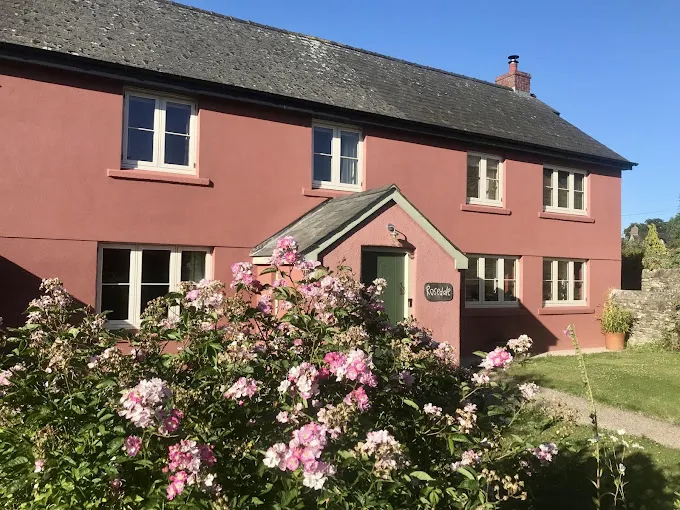
External Wall Insulation Burry Port: Costs and Grants 2025

External wall insulation Burry Port is a thermal cladding system applied to the outside of solid-walled properties, cutting heat loss, lowering energy bills, and protecting the building fabric from Wales’ wet coastal climate.
Table of Contents
- What Is External Wall Insulation?
- What Are the Benefits for Homes in Burry Port?
- How Much Does External Wall Insulation Cost?
- How Can I Get a Grant in Burry Port?
Article Snapshot
External wall insulation Burry Port is a retrofit system that wraps solid-walled homes in an insulating layer finished with render, reducing heat loss by up to a third. For Burry Port households, it cuts energy bills, protects against driving rain, and qualifies for Welsh Government funding.
Quick Stats: External Wall Insulation
- The UK has around 8.5 million solid-walled homes that need external wall insulation (UK Green Building Council, 2024)[1].
- In Wales, about 18% of homes still have uninsulated solid walls, a figure higher than the UK average (Welsh Government, 2024)[2].
- Installing external wall insulation can save a typical semi-detached home up to £355 per year on heating bills (Energy Saving Trust, 2024)[3].
- Under the ECO4 scheme, 21,154 external wall insulation measures were installed across Great Britain up to September 2024 (Department for Energy Security and Net Zero, 2024)[4].
What Is External Wall Insulation Burry Port?
External wall insulation Burry Port is a retrofit solution where rigid insulation boards are fixed to the outer face of a building’s walls before being covered with a protective render coat. This creates a thermal envelope around the property, drastically reducing the amount of heat that escapes through the masonry. In areas like Burry Port, with its solid-walled housing stock and exposed estuary conditions, the system also acts as a rain shield, stopping moisture from penetrating the brickwork. Coloured Rendering South Wales has observed that many local properties, particularly the Victorian terraces near the harbour and the 1930s semis further inland, have no cavity and lose heat rapidly without this treatment.
The system adds thickness to the wall, 90–120 mm depending on the insulation material. The boards are mechanically fixed and adhesive-bonded, then a basecoat containing a reinforcing mesh is applied for impact resistance before the final render is sprayed or trowelled on. Because the finish layer can be coloured throughout or left ready for painting, the insulation project also becomes a full external refurbishment, restoring the appearance of tired-looking facades in one operation.
External wall insulation Burry Port is classified as a fabric-first improvement under UK building regulations. It is one of the few measures that addresses both thermal performance and weather protection at the same time, something that is particularly relevant for coastal properties battered by the prevailing south-westerlies.
Call Us
What Are the Benefits for Homes in Burry Port?
Lower Energy Bills and Warmer Rooms
Heating a solid-walled property without insulation means a significant portion of the warmth generated by radiators or underfloor heating simply escapes through the walls. External wall insulation reduces heat loss through walls by as much as 35%, keeping internal surfaces warmer and the air temperature more stable. As Mike Thornton, Chief Executive of the Energy Saving Trust, explained, “With proper external insulation, homeowners see annual heating bills drop by up to £500, a saving that’s important as energy costs remain high” (Energy Saving Trust, 2025)[5]. The actual saving depends on the property’s size and the thickness of insulation installed, but for a typical three-bedroom home in Burry Port, reducing expenditure by £300–£400 a year is a realistic expectation.
Beyond the financial return, there is a comfort reward. Cold walls can create draughts and make rooms feel chilly even when the thermostat says the air is warm. By insulating externally, the building’s thermal mass is kept on the warm side of the insulation layer, helping rooms heat up faster and stay warm longer after the heating switches off.
Weather Protection in a Coastal Climate
Burry Port’s coastal location exposes buildings to a punishing cycle of salt-laden wind and heavy rain. Unprotected render absorbs moisture, leading to frost damage, spalling, and internal damp problems. When external wall insulation is installed, the insulation layer separates the vulnerable masonry from the weather, while the render — a modern, water-repellent formulation — forms a durable first line of defence. Dr. Simon Lannon from the Welsh School of Architecture explains, “External wall insulation, when properly installed with a weather-resistant render, extends the life of a building by protecting the brickwork from moisture while reducing heat loss by a third” (WalesOnline, 2025)[6].
The renders specified for coastal settings include silicone-based thin coat systems that are flexible enough to resist cracking and have self-cleaning properties that keep the finish looking fresh despite exposure to salt spray. This weatherproofing function is especially important in Burry Port, where the sea air can accelerate deterioration of older cement renders in just a few years.
Improved Property Value and Kerb Appeal
External wall insulation Burry Port is not just an energy measure – it is a complete external refurbishment. The render finish is applied uniformly across the entire facade, hiding patchwork repairs, mismatched bricks, and general weathering. The Energy Performance Certificate (EPC) rating of the property also jumps, and for landlords, a higher EPC rating is increasingly mandatory to comply with letting regulations. Homes that look smarter and cost less to run tend to attract higher offers from buyers and better rents from tenants.
Lower Carbon Emissions
Reducing the energy demand of a home also cuts its carbon footprint. External wall insulation lowers a dwelling’s carbon dioxide emissions by up to 1.1 tonnes per year (Energy Saving Trust, 2024)[3]. With Wales striving towards net zero targets, upgrading solid-walled homes is one of the most impactful actions a household can take. The Welsh Government has acknowledged this need by increasing its Warm Homes Programme funding, with Huw Irranca-Davies, Cabinet Secretary for Climate Change, stating, “We are investing £30 million this year to help households with the cost of energy, focusing on older properties that benefit most from measures like external wall insulation” (BBC News, 2025)[7].
How Much Does External Wall Insulation Cost?
The cost of external wall insulation Burry Port depends on the size of the property, the type of insulation used, and the complexity of the installation. For a typical three-bedroom semi-detached house, homeowners should budget between £9,000 and £15,000 for a complete system including scaffolding, insulation boards, fixing rails, basecoat, reinforcing mesh, and the decorative render finish. A larger detached property will push the upper end of that range, while a mid-terrace — being only front and back elevation — will cost less.
The table below breaks down the cost drivers that affect the final quote for external wall insulation.
| Cost Factor | Description | Approximate Influence |
|---|---|---|
| Insulation Material | Expanded polystyrene (EPS) is the most common and cost-effective; mineral wool or phenolic boards cost 20–30% more but offer higher thermal performance per mm. | £40–£80 per m² |
| Render System | A basic one-coat cement render is cheaper; premium silicone thin coat systems add £10–£18 per m² but last longer and need no repainting. | £35–£75 per m² |
| Access and Scaffolding | Straightforward access on a standard detached house is included in most quotes; complex elevations, conservatories, or rear extensions add to scaffolding costs. | £800–£2,500 |
| Site Preparation | Removing and disposing of old render, cutting back pipework, and adjusting window sills all add labour. | £500–£2,000 |
External wall insulation pays back through energy savings, but the upfront capital is a barrier. This is why many Burry Port residents look for grants rather than self-funding the whole cost.
How Can I Get a Grant in Burry Port?
ECO4 Obligation
The Energy Company Obligation (ECO4) remains the main nationwide scheme helping low-income and fuel-poor households install external wall insulation at reduced or zero cost. Energy suppliers are obligated to fund measures that improve the EPC rating of eligible homes. As of September 2024, more than 21,000 external wall insulation measures had been installed under ECO4 across Great Britain (Department for Energy Security and Net Zero, 2024)[4]. To qualify in Burry Port, you need to be a homeowner or private tenant receiving certain means-tested benefits and living in a property with a low EPC rating (D, E, F, or G).
Warm Homes Programme
Wales has its own government-funded scheme, the Warm Homes Programme, which delivered external wall insulation to 1,425 homes during 2023-24 (Welsh Government, 2024)[8]. The programme is being expanded, and Carmarthenshire County Council has specifically targeted older housing stock. Cllr. David Bryan, the council’s Cabinet Member for Environment, said, “We’re targeting areas like Burry Port where many houses are solid-walled and benefit greatly from external wall insulation to bring down fuel poverty levels” (Carmarthenshire County Council, 2025)[9]. This scheme is open to both homeowners and private tenants on lower incomes, and in many cases covers the full cost of the installation.
Nest Scheme Wales
The Welsh Government’s Nest scheme provides free advice and home energy improvements for eligible households. It works alongside ECO4 and the Warm Homes Programme, sometimes bridging gaps where one scheme does not cover the full cost. Nest advisors assess the property to recommend a package of improvements, and external wall insulation Burry Port is at the top of that list for solid-walled homes. The application process starts with a phone call or online form, after which a surveyor visits to determine eligibility and specify the work.
Checking Eligibility
Grants for external wall insulation Burry Port are primarily income-assessed and property-assessed. To find out if you qualify, you will need to provide details of household income, benefits received, and your property’s EPC rating. An accredited installer can help with this application; they know the scheme criteria and can pre-screen your home before submitting paperwork, which speeds up the approval process considerably.
Your Most Common Questions
What does external wall insulation involve for a Burry Port home?
External wall insulation involves fixing rigid insulation boards to the outside walls, embedding a reinforcing mesh in a basecoat, and finishing with a weather-resistant render. The process takes 1–2 weeks for a semi-detached property, and it completely wraps the brickwork in a thermal layer while transforming the frontage’s appearance.
Is external wall insulation suitable for older stone or brick properties in Burry Port?
Yes, external wall insulation is highly suitable for older solid brick or stone properties, provided the walls are structurally sound and any existing damp issues have been resolved first. In fact, the majority of homes targeted by Welsh Government schemes in Burry Port are pre-1930s solid-walled terraces and semis that lack a cavity, making them ideal candidates for this retrofit measure.
How long does external wall insulation last on a coastal property in Burry Port?
A correctly installed external wall insulation system using a silicone thin coat render lasts 25–30 years on a coastal property, with minimal maintenance required during its lifespan. The render’s flexibility prevents cracking from salt spray and temperature swings, and its self-cleaning surface resists algae growth that is common in damp seaside environments like Burry Port.
Can I combine external wall insulation with other home improvements?
Yes, external wall insulation is installed alongside loft insulation, window and door upgrades, and solar panels as part of a whole-house retrofit plan. Combining measures maximises the energy saving and reduces the overall installation cost per measure, and it is actively encouraged by Welsh Government schemes that aim to bring properties up to an EPC C rating in one project.
Comparing External Wall Insulation with Other Wall Upgrades
When a property has solid walls, three principal upgrade routes are available: external wall insulation, internal wall insulation, and cavity wall insulation (only for cavity properties). For Burry Port’s stock of Victorian and Edwardian terraces, cavity wall insulation is often not an option because there is no cavity to fill. The real choice lies between insulating externally or internally, and the decision affects cost, disruption, and long-term performance.
| Method | Cost (Typical 3-Bed Semi) | Disruption | Key Advantage |
|---|---|---|---|
| External Wall Insulation | £10,000–£15,000 | External only; householder remains at home throughout. | Protects brickwork from weather and improves kerb appeal. |
| Internal Wall Insulation | £5,000–£9,000 | Major internal disruption; rooms stripped back to brick, skirting removed, radiators re-sited. | Costs less upfront and preserves the original external facade. |
For Burry Port householders, external wall insulation Burry Port is the preferred choice because it addresses the root cause of weather-driven damp at the same time as insulating. Internal insulation, while cheaper, reduces floor area and leaves the outside brickwork exposed to the rain, meaning a separate external coating or render would still be needed to stop water ingress.
Why Coloured Rendering South Wales Is the Right Choice for External Wall Insulation Burry Port
Coloured Rendering South Wales has been installing rendering and external wall insulation systems across the region since 1998, giving us an intimate understanding of the local housing stock. As a Baumit Approved EWI Applicator with City & Guilds Assured accreditation, we are certified to install full external wall insulation systems backed by manufacturer warranties of 10–25 years — protection that unaccredited contractors simply cannot offer. Our spray rendering technology also means the finish coat is applied with a consistent, factory-like quality that hand trowelling cannot match, and the job is completed in significantly less time.
Our customers consistently highlight the difference our experience makes. “Geoff fitted External Wall Insulation to a wall that had a number of issues and through which a lot of heat was being lost. Geoff is very tidy, he talked us through it at every stage and was very respectful of our neighbours whilst working in their property. Great job!” — Abby Harries-Heat, Google Review. Another recent client observed, “With over 15 years in the building trade I have experienced several different plasterers all offering different styles and finishes. Geoff’s thin coat spray finish render would rival the best and I can’t recommend his team enough to someone thinking of using him.” — Keri Hopkins, Google Review. Our 5.0 Google rating reflects the standard we apply to every project, whether it is a single gable end in Burry Port or a whole row of terraces.
We also help Burry Port residents access grants and funding. From assessing ECO4 eligibility to liaising with the Warm Homes Programme, our team can handle the paperwork while you focus on the result — a warmer, drier, and better-looking home. Contact us on 07815 868070 for a free assessment and quotation, or browse rendering options for coastal properties to see how your home could look after an upgrade.
How to Plan External Wall Insulation in 4 Steps
Check Eligibility for Grants
Start by establishing whether your household qualifies for funding under ECO4, the Warm Homes Programme, or Nest. An accredited EWI installer can pre-screen your property and advise which scheme offers the most complete cover. Gather your EPC certificate and evidence of any means-tested benefits before making an enquiry.
Arrange a Technical Survey
Have a specialist surveyor inspect the walls for structural defects, damp, or failing existing render. The survey will measure wall area, assess the substrate, and check for obstacles such as boiler flues, soil pipes, and external fixtures that may need adjustment. This step produces the specification that dictates insulation thickness and render type.
Select the Render Finish
Choose a render system that complements your property’s style and copes with Burry Port’s coastal climate. Silicone thin coat renders offer the best long-term resistance to salt spray and algae. Decide on a colour from the manufacturer’s range — through-coloured formulations eliminate the need for future painting.
Schedule the Installation
Agree on a start date and a programme of work with your installer. Factor in time for scaffolding erection and removal at both ends of the job. Most semi-detached homes are completed within 7–10 working days, and you can remain in the property throughout because all work happens externally.
Wrapping Up
External wall insulation Burry Port solves a set of connected problems for solid-walled homes: high heat loss, penetrating damp, and aging, weather-beaten facades. With funding routes like ECO4, the Warm Homes Programme, and Nest helping to cover installation costs, 2025 is an ideal year to act. Combining insulation with a durable, colour-through render protects the structure for decades and gives the property a fresh, modern appearance without adding repainting to the maintenance calendar. For a no-obligation assessment of your home’s suitability for external wall insulation Burry Port, call Coloured Rendering South Wales on 07815 868070 or request a free quote through our contact page.
Further Reading
- Insulation industry calls for ramp-up of fabric-first approach. National Insulation Association.
https://www.nia-uk.org/news/insulation-industry-calls-for-ramp-up-of-fabric-first-approach - Welsh Housing Conditions Survey 2023-24. Welsh Government.
https://www.gov.wales/welsh-housing-conditions-survey-2023-24 - Insulating Solid Walls. Energy Saving Trust.
https://energysavingtrust.org.uk/insulating-solid-walls/ - Energy Company Obligation (ECO) Statistics: July to September 2024. Department for Energy Security and Net Zero.
https://www.gov.uk/government/statistics/energy-company-obligation-eco-statistics-july-to-september-2024 - Why external wall insulation is your best winter investment. Energy Saving Trust.
https://energysavingtrust.org.uk/blog/why-external-wall-insullation-is-your-best-winter-investment - Wales’ leaky homes crisis: The race to insulate our old homes. WalesOnline.
https://www.walesonline.co.uk/news/wales-news/wales-leaky-homes-crisis-30000000 - New Welsh government scheme to help insulate homes and cut bills. BBC News.
https://www.bbc.co.uk/news/uk-wales-politics-68625947 - Warm Homes Programme Annual Report 2023-2024. Welsh Government.
https://www.gov.wales/warm-homes-programme-annual-report-2023-2024 - Council announces £2m home insulation project for Burry Port. Carmarthenshire County Council.
https://www.carmarthenshire.gov.wales/news/2025/03/council-announces-2m-home-insulation-project-for-burry-port
