
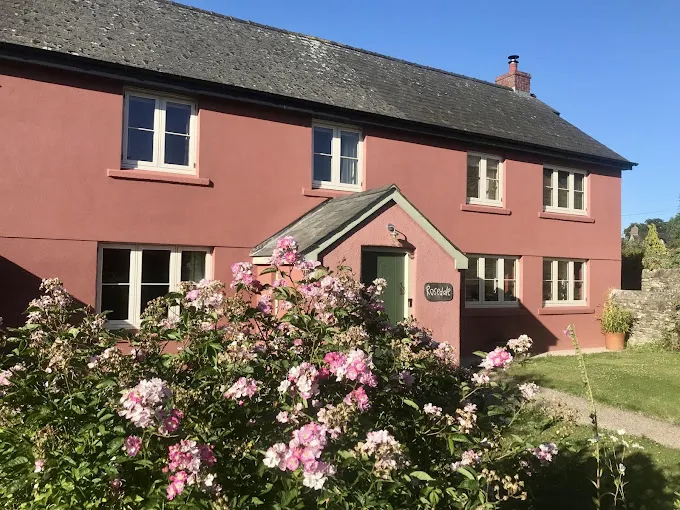
Monocouche Render Guide: Durable Finishes for South Wales

Monocouche render is a single-coat, through-coloured finish for durable, low-maintenance exteriors. Learn costs, application, and South Wales expertise from Coloured Rendering South Wales.
Table of Contents
- What Is Monocouche Render and How Does It Work?
- How Much Does Monocouche Render Cost in the UK?
- What Are the Main Benefits of Monocouche Render?
- Why Is Monocouche Render Ideal for South Wales Homes?
- What People Are Asking
- Comparison of Render Systems
- Coloured Rendering South Wales
- Practical Tips for Choosing Monocouche Render
- The Bottom Line
Key Takeaway
Monocouche render is a one-coat, through-coloured external render system that combines basecoat and finish in a single application. It delivers a weather-resistant, maintenance-free facade that eliminates the need for painting, making it a popular choice for South Wales properties.
Quick Stats: Monocouche Render
- BBA-certified monocouche render systems have a design life of at least 25 years without major repair (British Board of Agrément, 2014)[1].
- Through-coloured and monocouche renders represented 38% of the total external render market by value in 2023 (Builders Merchants Federation, 2023)[2].
- Spray-applied monocouche render achieves up to 100 square metres per day with a two-person team (Weber (Saint-Gobain), 2023)[3].
- External wall insulation finished with through-colour render reduces heat loss through solid walls by up to 45% (Energy Saving Trust, 2024)[4].
Monocouche render is the preferred exterior finish for property owners across Swansea, Cardiff, and South Wales. Coloured Rendering South Wales, a leading spray rendering specialist based in Swansea, has installed monocouche render on hundreds of homes since 1998. This guide explains what monocouche render is, how much it costs, why it outperforms traditional renders, and how it performs in the Welsh climate. You will also find a comparison of render systems, practical selection tips, and answers to common questions.
What Is Monocouche Render and How Does It Work?
Monocouche render is a single-coat, through-coloured external render system that combines the basecoat and finish coat into one application, unlike traditional two-coat sand-and-cement renders. This cement-based render arrives pre-coloured throughout its thickness, so the colour never fades or requires painting. The term ‘monocouche’ comes from the French for ‘single coat,’ which accurately describes the application process.
Modern monocouche render systems are formulated with high-quality cements, carefully graded aggregates, water-repelling additives, and reinforcing fibres. These ingredients create a weather-resistant, flexible finish that adhers strongly to brick, block, and concrete substrates. The material is applied by spray or by hand, although professional spray rendering is the most efficient method. According to Weber (Saint-Gobain), a two-person spray team can cover up to 100 square metres per day, roughly three times faster than traditional hand application (Weber (Saint-Gobain), 2023)[3].
Call Us
How Monocouche Render Is Applied
The application of monocouche render involves preparing the substrate, applying the render in a single pass, and then finishing the surface with a texture or scrape finish. The through-colour formulation means that any minor surface imperfections are scraped back without exposing a differently coloured base layer. Coloured Rendering South Wales uses professional spray equipment to achieve consistent thickness and a uniform finish across large wall areas.
Before application, the wall must be clean, sound, and primed where necessary. For properties with existing damaged render, the old material is removed or stabilised before the monocouche system is installed. The single-coat application reduces labour time and project duration, which is particularly valuable for occupied homes and commercial premises. UK building regulations require that external renders comply with relevant standards, and the UK Building Regulations – Approved Documents provide guidance on suitable systems.
Unlike painted sand-and-cement render, monocouche render does not need a separate decorative topcoat. The colour is integral to the material, which means it does not flake or peel like paint. This feature, combined with the system’s durability, makes monocouche render a practical long-term facade solution for both new builds and renovation projects.
How Much Does Monocouche Render Cost in the UK?
Monocouche render costs vary by wall area, substrate condition, access requirements, and whether external wall insulation is included, but the system’s low maintenance profile delivers measurable long-term savings. A typical homeowner saves approximately £4,500 in maintenance costs over 25 years by using monocouche through-colour render instead of traditional painted sand-and-cement render (Homebuilding & Renovating, 2024)[5]. This saving arises because the render never needs repainting and requires only occasional cleaning.
External rendering increases a property’s value by up to 5%, with through-colour renders being the most desirable among buyers according to a Royal Institution of Chartered Surveyors survey (RICS, 2022)[6]. For a typical South Wales home valued at £250,000, that represents a potential uplift of £12,500, making the initial investment in monocouche render financially attractive.
When comparing quotes, it is important to check whether the price includes substrate preparation, scaffolding, disposal of old render, and any necessary repairs. Coloured Rendering South Wales provides detailed quotations that outline the scope of work, materials to be used, and project timelines. The company’s free property assessments help homeowners understand which render system suits their property type, location, and budget.
In South Wales, additional cost factors include access for spray equipment, coastal exposure, and the presence of architectural features that require careful detailing. Properties in exposed coastal locations such as Mumbles or Porthcall benefit from premium silicone-enhanced monocouche formulations, which add a slightly higher material cost but offer superior salt resistance and flexibility. A reputable local applicator will always specify a system matched to the specific microclimate rather than a one-size-fits-all solution.
What Are the Main Benefits of Monocouche Render?
The main benefits of monocouche render include a low-maintenance through-coloured finish, excellent weather resistance, and application speeds up to three times faster than traditional rendering. Paul Testa, Director of HEM Architects, notes that through-colour renders offer a low-maintenance, durable facade that can suit a range of styles, from traditional stone textures to contemporary smooth finishes, removing the need for painting altogether (Paul Testa, 2024)[7].
Monocouche render is waterproof yet breathable, allowing moisture vapour to escape from the substrate while preventing rainwater penetration. This breathability is critical for older solid-wall properties in South Wales, where trapped moisture can lead to damp and structural deterioration. The render’s flexibility also helps it resist cracking caused by minor building movement or thermal expansion, a common problem with rigid sand-and-cement finishes.
The through-coloured composition eliminates the need for external painting, which is both a financial saving and an environmental benefit. Homeowners avoid the recurring cost of scaffolding, paint, and labour every five to seven years. A life-cycle assessment by the University of Bath found that through-colour monocouche renders reduce whole-life carbon emissions of a facade by approximately 25% over 60 years compared to a traditional painted render system (University of Bath, 2023)[8].
For property developers and landlords, the speed of application is a significant advantage. The ability to complete a typical semi-detached house in two days rather than four or five reduces labour costs and minimises disruption to tenants or neighbouring properties. The consistent colour and texture achieved by spray application also improve the overall finish quality, which enhances kerb appeal and rental income. Coloured Rendering South Wales has used this method to complete housing developments across Cardiff and Bridend, helping developers meet tight construction schedules.
Why Is Monocouche Render Ideal for South Wales Homes?
Monocouche render is ideal for South Wales homes because its weatherproof, flexible formulation withstands high rainfall, coastal salt air, and freeze-thaw cycles common to the region. The Welsh climate, with its persistent wind-driven rain and seasonal temperature swings, demands a render that handles moisture without cracking or spalling. Building Research Establishment testing demonstrated that modern polymer-modified monocouche renders passed 150 freeze-thaw cycles with no significant deterioration, far exceeding the 50 cycles typical for standard sand-and-cement renders (Building Research Establishment, 2023)[9].
Coastal areas such as Swansea Bay, Mumbles, and Porthcall expose buildings to salt-laden air that accelerates the deterioration of traditional painted renders. Monocouche render’s dense, through-coloured surface resists salt crystallisation and does not rely on a paint film that can blister and peel. The self-cleaning properties of some silicone-enhanced monocouche systems help keep facades looking fresh with minimal maintenance, even in maritime environments.
For older solid-wall homes common in Victorian terraces across Swansea and Cardiff, combining monocouche render with external wall insulation (EWI) dramatically improves energy efficiency. Mike Thornton, Chief Executive of the Energy Saving Trust, states that external wall insulation combined with through-colour render is one of the most effective ways to upgrade the energy performance of solid-wall homes, cutting heat loss by up to 45% and significantly reducing energy bills (Mike Thornton, 2024)[4]. This dual benefit of thermal improvement and facade renewal is particularly valuable in a region with older housing stock and rising energy costs.
Coloured Rendering South Wales understands the specific challenges of Welsh architecture and weather. The company’s 25 years of local experience means they specify renders suited to each property’s exposure, substrate, and style. For example, a seafront property in Mumbles requires a flexible silicone-enhanced monocouche, while a sheltered terrace in Pontcanna can use a standard through-colour system. This local expertise avoids specification errors that lead to premature render failure.
What People Are Asking
How long does monocouche render last?
BBA-certified monocouche render systems have a design life of at least 25 years without major repair (British Board of Agrément, 2014). This lifespan assumes correct application and occasional cleaning, and many installations in South Wales perform well beyond 25 years when maintained by experienced professionals.
Is monocouche render waterproof?
Monocouche render is waterproof yet breathable, meaning it prevents rainwater ingress while allowing moisture vapour to escape from the substrate. This balance protects the wall structure from damp and condensation, making it suitable for the wet Welsh climate.
Is monocouche render applied over existing render?
Monocouche render is installed over existing render only after confirming the surface is sound, well-adhered, and primed. Where the existing render is cracked, hollow, or failing, it should be removed first to ensure the new finish performs correctly.
Does monocouche render need painting?
Monocouche render does not need painting because the colour runs through the entire thickness of the material. This eliminates repainting costs and means the finish cannot flake, peel, or fade like a painted surface, providing a permanently coloured facade.
Comparison of Render Systems
Choosing the right external render system depends on project goals, substrate type, budget, and desired maintenance level. Monocouche render competes with traditional sand-and-cement render, thin coat silicone render, and one coat cement render. The table below compares these systems across key performance factors, using data from the cited sources where available.
| System | Application Speed | Durability | Maintenance | Relative Cost |
|---|---|---|---|---|
| Monocouche render | Up to 100 m²/day with spray (Weber, 2023)[3] | 25+ years design life (BBA, 2014)[1] | None beyond occasional cleaning | Mid-range |
| Sand and cement render (painted) | Slower hand application | 20-30 years with repainting | Repainting every 5-7 years | Lower initial, higher lifetime |
| Thin coat silicone render | Fast spray application | Excellent flexibility and crack resistance | Very low, self-cleaning | Higher |
| One coat cement render | Moderate spray application | Good weather resistance | Requires painting to achieve colour | Lower initial, higher lifetime |
For South Wales homeowners seeking a permanently coloured, low-maintenance facade, monocouche render offers an optimal balance of cost, performance, and longevity. Coloured Rendering South Wales can advise on which system best suits a specific property after a free assessment.
Coloured Rendering South Wales
Coloured Rendering South Wales has provided plastering and spray rendering services across Swansea, Cardiff, Newport, and the wider South Wales region since 1998. The company specialises in monocouche through-colour render, thin coat silicone render, one coat cement render, internal plastering, and rendering repairs. As a Baumit Approved EW I Applicator with City & Guilds Assured accreditation, the team installs premium silicone render and external wall insulation systems with manufacturer-backed warranties of up to 25 years.
Homeowners choose Coloured Rendering South Wales for their proven local expertise and perfect 5.0 Google rating. Their spray rendering technology enables projects to be completed two to three times faster than traditional hand application, reducing disruption for families and businesses. You can learn more about their services on the Coloured Rendering Swansea page or view their Rendering Repairs South Wales guide.
“We’re 100% happy and wouldn’t hesite to recommend Jeff. His workmanship is excellent and we’re also very happy with the product he recommended to eradicate the penetrating damp and give our house a great new look and lease of life.” — Alistair Legge
“When I need something plastering or general building work, Geoff is always my first call. Very professional and does great work. Highly recommended.” — Hywel Morrish
For a free consultation and quotation, contact Coloured Rendering South Wales on 07815 868070 or via the contact page.
Practical Tips for Choosing Monocouche Render
Selecting the right applicator and system is key to getting the long-term performance promised by monocouche render. Follow these practical recommendations to ensure a successful project on your South Wales property.
- Verify that the applicator is experienced with spray-applied monocouche systems and can provide recent local examples of completed work in your area.
- Choose a BBA-certified render system and confirm that the quoted warranty covers both materials and workmanship for at least 10 years.
- If your property has solid walls, ask about combining monocouche render with external wall insulation to improve thermal efficiency and reduce energy bills by up to 45%.
- Request a detailed written quotation that includes substrate preparation, scaffolding, removal of old render, and making good around windows and doors.
- For coastal or exposed locations in South Wales, ask about silicone-enhanced formulations that offer better salt resistance and flexibility than standard monocouche renders.
Coloured Rendering South Wales offers free property assessments and can advise on the most suitable monocouche render system for your home. Visit their home page to see examples of recent spray rendering and repair work across the region.
The Bottom Line
Monocouche render delivers a durable, through-coloured, low-maintenance finish that protects South Wales homes from the region’s demanding weather while eliminating the need for painting. With a design life of at least 25 years, application speeds three times faster than traditional rendering, and potential energy savings when combined with external wall insulation, it represents a sound long-term investment for homeowners, landlords, and developers.
Coloured Rendering South Wales brings over 25 years of local experience, a perfect 5.0 Google rating, and certified Baumit applicator status to every project. To discuss your rendering project or arrange a free assessment, call 07815 868070 or email geoff@colouredrenderingsouthwales.com today.
Sources & Citations
- BBA Certificate 14/5132. British Board of Agrément.
https://www.bbacerts.co.uk/certificates/14/5132/ - Builders Merchants Market Report 2023. Builders Merchants Federation.
https://www.bmf.org.uk/news/2023/builders-merchants-market-report-2023/ - Weber Monocouche Application Guide. Weber (Saint-Gobain).
https://www.uk.weber/files/uk/2023-06/webermonocouche-application-guide.pdf - External Wall Insulation Advice. Energy Saving Trust.
https://energysavingtrust.org.uk/advice/insulation/external-wall-insulation/ - External Rendering Costs. Homebuilding & Renovating.
https://www.homebuilding.co.uk/advice/external-rendering-costs - Residential Property Price Impact of Home Improvements 2022. Royal Institution of Chartered Surveyors.
https://www.rics.org/globalassets/rics-website/media/research/residential-property-price-impact-of-home-improvements-2022.pdf - Return of render. RIBA Journal.
https://www.ribaj.com/intelligence/return-of-render-august-2024 - Render Sustainability Study 2023. University of Bath.
https://www.bath.ac.uk/announcements/render-sustainability-study-2023/ - BRE Freeze-Thaw Testing of Renders. Building Research Establishment.
https://www.bre.co.uk/page.jsp?id=3722 - New funding to upgrade homes with external wall insulation. Department for Energy Security and Net Zero.
https://www.gov.uk/government/news/new-funding-to-upgrade-homes-with-external-wall-insulation
