
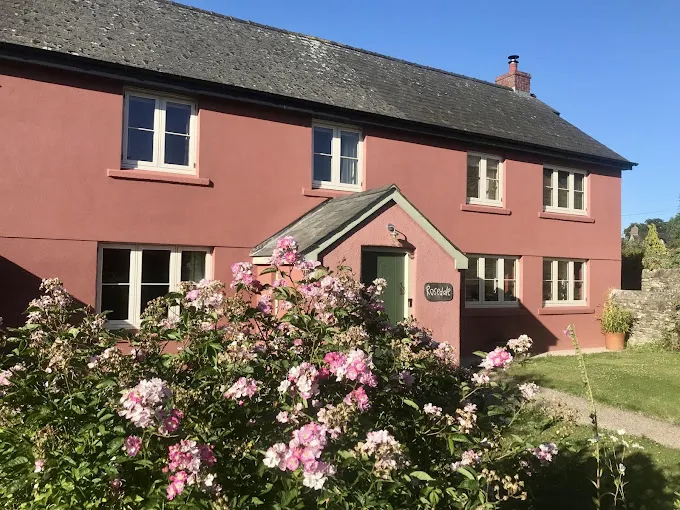
Spray Applied Render: The Complete Guide

Spray applied render is a modern external wall finishing method that delivers faster coverage, more consistent results, and longer-lasting protection than traditional hand application – here is everything you need to know before choosing a render system for your property.
Table of Contents
- What Is Spray Applied Render?
- How the Spray Rendering Process Works
- Types of Spray Applied Render Systems
- Benefits for South Wales Properties
- Frequently Asked Questions
- Spray Applied vs Hand Applied Render
- Coloured Rendering South Wales
- Practical Tips for Choosing Spray Render
- The Bottom Line
- Sources & Citations
Article Snapshot
Spray applied render is a machine-driven external wall coating system that atomises render mix through a nozzle for even, rapid coverage. It delivers a more uniform finish than hand application, suits silicone, mineral, and monocouche systems, and provides durable weather protection lasting 20-40 years on correctly prepared substrates.
Spray Applied Render in Context
- Spray application achieves 200-300 square metres per day, versus 50-100 square metres per day for hand application (Simple Solutions 4 U, 2023)[1]
- A spray rendering crew requires just 2 operators, compared with 3-4 renderers for equivalent hand-applied coverage (Simple Solutions 4 U, 2023)[1]
- On projects exceeding 300 square metres, spray application reduces overall costs by 20-30% (Simple Solutions 4 U, 2023)[1]
- Modern silicone and mineral spray applied render systems have a lifespan of 20-40 years (Plasterer Dorset, 2023)[2]
What Is Spray Applied Render?
Spray applied render is an external wall coating delivered through a machine that mixes and atomises the render before ejecting it evenly across the substrate surface. Unlike traditional hand application, which relies on a hawk and trowel, the spray process uses compressed air or a pump mechanism to project a consistent layer of material onto the wall at controlled pressure and volume. This approach eliminates the variability inherent in manual application, producing a uniform coat thickness from the first pass.
Coloured Rendering South Wales has used spray rendering technology throughout South Wales for over 25 years, applying it across residential renovations, new-build developments, coastal properties, and commercial buildings where finish consistency and project speed matter.
The technique is compatible with several render chemistries. Silicone renders, mineral renders, monocouche through-colour systems, and acrylic finishes are all applied by machine. The spray process is not simply a faster alternative to hand work – it fundamentally changes how the material bonds to the substrate by ensuring an even distribution of polymer binders and aggregates across the entire surface area rather than in overlapping trowel strokes.
Call Us
As Roger, a Spray Rendering Installer at SkillBuilder, explains: “A render spray machine allows one to apply render incredibly quickly and spread it evenly. The render is atomised before being ejected from the nozzle, therefore ensuring an even spread.” (EWI Pro, 2023)[3]
For property owners in South Wales – particularly those in coastal locations such as Mumbles, Swansea Bay, or the Gower – the uniform coverage achieved by spray application is especially relevant. Wind-driven rain and salt-laden air exploit any inconsistency in render thickness, so machine application that guarantees an even coat provides a meaningful structural advantage over hand work on exposed elevations.
How the Spray Rendering Process Works
The spray rendering process begins with substrate preparation, which is the single most important factor determining how well any render system performs over time. Before the machine is set up, the existing wall surface must be assessed for loose material, contamination, damp, or structural movement. On masonry and block walls, this involves mechanical cleaning, the application of a bonding agent or primer, and in some cases the installation of reinforcing mesh – particularly on EWI systems or where the substrate is variable.
Once the wall is prepared, the render machine is loaded with pre-bagged dry mix, water is added at the correct ratio, and the machine paddles the material to a consistent working consistency. The mix is then pumped through a hose to the spray gun, where compressed air atomises it into fine particles before they reach the wall. The operative controls nozzle distance, angle, and movement speed to build the specified coat thickness in a single consistent pass.
Texture and finish are managed during and immediately after application. A machine-applied coat is left as-sprayed for a rough texture, or it is laid off with a float or sponge to produce a finer finish. On silicone thin-coat systems, the finish layer is worked in a circular motion after spraying to activate the aggregate pattern. Monocouche renders are scratched back to expose the aggregate and produce the characteristic riven or scraped texture that is popular on new-build and renovation projects across Cardiff, Newport, and the wider South Wales region.
EWI Store, an external wall insulation and rendering solutions provider, notes: “Spray rendering significantly speeds up the application process, allowing for quick coverage of large areas, which can greatly reduce the time required to complete a project.” (EWI Store, 2023)[4]
Drying and curing time depends on the render chemistry, coat thickness, ambient temperature, and humidity. In the Welsh climate, where cool and damp conditions are common for much of the year, silicone-based renders are favoured because their open texture allows moisture to escape from the substrate during the curing phase rather than becoming trapped behind an impermeable coating. Proper curing is important before painting or any subsequent finish work is carried out.
Types of Spray Applied Render Systems
Spray applied render covers several distinct product families, each with different performance characteristics, aesthetic options, and suitability for particular substrate types and environmental conditions. Selecting the right system requires matching the render chemistry to the building’s construction, the property’s exposure to weather, and the desired finished appearance.
Thin Coat Silicone Render
Thin coat silicone render is the most widely specified spray applied finish for residential and commercial properties in the UK. It is applied at 1.5-3mm thickness over a reinforced basecoat and adhesive primer, and it combines several performance properties that suit the South Wales climate particularly well. The silicone polymer binder makes the render highly water-repellent while remaining vapour-permeable, so rain beads off the surface rather than soaking in, but any moisture within the wall breathes out. Self-cleaning additives in many silicone formulations help the surface shed dirt with rainfall, keeping the finish looking fresh with minimal maintenance. Colour is integral throughout, so there is no paint layer to crack, peel, or require periodic repainting. You can visit Baumit’s guide to facade renders and paints for a detailed comparison of silicone and mineral options from one of the leading manufacturers.
Monocouche Through Colour Render
Monocouche render is a cement-based single-coat system in which colour pigment runs through the full thickness of the material. Applied by spray at 15-20mm, it combines the basecoat and finish coat in one pass, reducing application time and eliminating the need for subsequent painting. The through-colour design means that minor surface chips or scratches do not expose a different-coloured material beneath. Monocouche suits traditional and contemporary architecture and is a popular choice for housing developments across South Wales where consistent appearance across multiple plots is required.
Mineral Render Systems
Mineral or silicate renders use a potassium silicate binder that chemically bonds with mineral substrates such as brick, stone, and concrete. They are highly breathable and durable, and they are frequently specified on heritage and conservation projects where the wall structure needs maximum moisture management. Mineral renders are spray applied over EWI boards or directly onto masonry and are available in a wide range of grain sizes and textures. Corksol, a spray render solutions provider, highlights that “using a sprayed render solution makes it much easier to get walls completely level and uniform – with the right training, of course.” (Corksol, 2023)[5]
One Coat Cement Render
Traditional cement renders modernised with spray application technology provide a cost-effective solution where a painted finish is acceptable. The spray process ensures an even coat thickness that hand application cannot consistently achieve, and the cured render provides a solid, paintable base for any exterior masonry paint. One coat cement render is well suited to properties where budget is the primary consideration and the owner intends to repaint on a periodic schedule.
Benefits for South Wales Properties
Spray applied render delivers measurable practical benefits for properties throughout South Wales, where the combination of high annual rainfall, Atlantic winds, and coastal salt air places external wall finishes under sustained stress that render systems in drier inland climates do not experience to the same degree.
The primary structural benefit is weather resistance. A correctly applied spray render seals the external face of the wall against water penetration while allowing the wall to breathe, preventing the freeze-thaw cracking and interstitial damp that cause older renders to fail prematurely. Properties in exposed coastal areas – Mumbles, the Gower Peninsula, Porthcawl, and Barry Island, for example – particularly benefit from silicone render systems formulated for salt air environments, where the flexible polymer binder accommodates the micro-movement caused by thermal cycling and moisture variation without cracking.
Speed of application is a benefit with direct commercial value. On a typical semi-detached or detached house, spray application completes in one to two days what would take a hand-applied team three to four days. For property developers running phased projects, landlords scheduling work between tenancies, and homeowners wanting minimal disruption, this matters considerably. Simple Solutions 4 U (2023) records that spray application achieves 200-300 square metres per day compared with 50-100 square metres per day for hand application[1], representing a productivity ratio of two to four times faster depending on substrate conditions.
Finish quality is another concrete benefit. Simple Solutions 4 U (2023) notes that “spray systems atomise render for an ultra-consistent build, eliminating hawk lines. Perfect for sleek, contemporary architecture.”[1] The absence of trowel joints and lap marks is particularly relevant on large, uninterrupted wall areas where hand application would show join lines in raking light conditions.
Long-term durability reduces maintenance costs. Modern silicone and mineral spray applied systems last 20-40 years with no need for repainting (Plasterer Dorset, 2023)[2], compared with painted cement render that requires repainting every five to ten years. For landlords managing multiple properties in Bridgend, Swansea, or Newport, the elimination of regular exterior painting cycles represents a significant reduction in long-term maintenance expenditure. You can find further guidance on external wall performance and building fabric standards from the UK Building Regulations Approved Documents.
Your Most Common Questions
How long does spray applied render last on an external wall?
The lifespan of spray applied render depends primarily on the product type and the quality of substrate preparation. Modern silicone and mineral render systems applied to a correctly prepared surface last 20-40 years without requiring repainting (Plasterer Dorset, 2023)[2]. J and H Lynch (2023) similarly record a 20-30 year or longer lifespan for these systems[6]. Traditional one coat cement renders have a shorter aesthetic life because they require periodic repainting, around every five to ten years, though the render substrate itself remains structurally sound for considerably longer if the paint film is maintained.
Longevity is strongly influenced by local exposure conditions. Properties on the South Wales coast face higher rainfall intensity, salt-laden air, and wind-driven moisture than sheltered inland locations. Selecting a render system specifically rated for high-exposure environments – such as a silicone thin coat over a reinforced EWI basecoat – rather than a generic cement render will significantly extend service life in these conditions. Correct preparation of the substrate before application and appropriate priming for the specific render chemistry are equally important: even the best product will underperform on a poorly prepared or damp wall.
Is spray applied render suitable for all property types?
Spray applied render is compatible with the vast majority of external wall substrates found in UK residential and commercial construction, including brick, block, concrete, stone, and external wall insulation boards. The system and substrate must be matched correctly: for instance, silicone thin coat requires an EWI or a primed masonry substrate, while monocouche cement renders are applied directly to block or brick at greater thickness. Timber frame and lightweight steel frame construction requires specialist attention to movement joints and breather membrane detailing before any render system is applied.
Heritage and listed buildings need careful consideration. In conservation areas across South Wales, planning consent is required before rendering a previously unrendered facade, and the choice of render type is restricted to breathable lime or mineral systems that are sympathetic to older masonry. Properties with significant structural movement, active cracking, or penetrating damp should have these issues investigated and resolved before render application, as no render system performs well over an unstable substrate. A professional assessment of the wall’s condition before specification is advisable, and it is standard practice for reputable rendering contractors in the region.
What is the cost difference between spray applied and hand applied render?
On smaller projects, the cost difference between spray and hand application is modest because the setup, masking, and material costs are similar regardless of coverage area. The economic advantage of spray application becomes more pronounced as project size increases. Simple Solutions 4 U (2023) records that on projects exceeding 300 square metres, spray application reduces overall costs by 20-30% compared with equivalent hand-applied work[1], primarily through reduced labour time – a two-operative spray crew achieves coverage that would require three to four hand renderers to match[1].
The upfront equipment investment for spray rendering machines ranges from £5,000 to £20,000 (Simple Solutions 4 U, 2023)[1], which is why the technique is most cost-effective when operated by specialist contractors who spread that investment across a high volume of work rather than purchasing equipment for a single project. For property owners, the relevant cost comparison is the total project price rather than the day rate, and obtaining quotes that specify exactly which render system and application method are included allows like-for-like comparisons to be made.
Does spray applied render require any maintenance after installation?
The maintenance requirements for spray applied render vary significantly by render type. Silicone and mineral renders are inherently low maintenance because their colour is integral rather than painted on, and many silicone formulations include self-cleaning additives that cause rainfall to sheet off the surface and carry dirt with it. In practical terms, these systems require nothing more than an occasional wash-down with clean water to remove any persistent surface soiling, particularly in areas sheltered from direct rainfall such as under eaves or window sills. There is no requirement for periodic repainting.
One coat cement render with a painted finish has higher ongoing maintenance demands. The paint film is the primary protection layer, and once it begins to crack, flake, or lose adhesion – after five to ten years in South Wales weather conditions – water penetrates behind the coating and accelerates deterioration. Repainting before the film fails completely is important to preserving the render beneath it. Render of any type should be inspected periodically for cracking around window and door reveals, at movement joints, and at abutments with other building elements, as these are the areas most susceptible to water ingress. Early repair of minor cracks is significantly more cost-effective than allowing water to penetrate and cause progressive damage to the render or the wall structure behind it.
Spray Applied vs Hand Applied Render: Key Differences
Choosing between spray applied and hand applied render involves weighing application speed, finish quality, labour requirements, cost on different project scales, and the practical constraints of each method. The table below sets out the key differences across the criteria most relevant to property owners and developers in South Wales.
| Factor | Spray Applied Render | Hand Applied Render |
|---|---|---|
| Daily coverage area | 200-300 m² per day (Simple Solutions 4 U, 2023)[1] | 50-100 m² per day (Simple Solutions 4 U, 2023)[1] |
| Crew size | 2 operators (Simple Solutions 4 U, 2023)[1] | 3-4 renderers (Simple Solutions 4 U, 2023)[1] |
| Finish consistency | Highly uniform; no hawk lines or trowel joints | Variable; skill-dependent; lap marks possible |
| Cost on large projects (>300 m²) | 20-30% lower overall cost (Simple Solutions 4 U, 2023)[1] | Higher labour cost for equivalent coverage |
| Suitable render types | Silicone, mineral, monocouche, acrylic, cement | Cement, lime, monocouche, acrylic |
| Equipment requirement | Specialist spray machine required | Standard plastering tools |
| Typical system lifespan | 20-40 years for silicone/mineral systems (Plasterer Dorset, 2023)[2] | Comparable when applied correctly; more skill-sensitive |
Expert Spray Rendering Across South Wales
Coloured Rendering South Wales has delivered professional spray applied render services throughout the region since 1998. Based in Swansea, we work across South Wales – from Cardiff and Newport in the east to the Gower Peninsula and Pembrokeshire coast in the west – bringing over 25 years of experience to residential renovations, new-build developments, commercial properties, and external wall insulation projects.
We hold Baumit Approved EWI Applicator status with City & Guilds Assured accreditation, which certifies us to install Baumit StarTop premium silicone render and complete EWI systems with manufacturer-backed warranties of up to 25 years. That accreditation means your render installation is not simply covered by a contractor’s own guarantee but by a documented manufacturer warranty on the full system – which matters if you are planning to sell, rent, or refinance the property.
Our spray rendering service covers thin coat silicone render, monocouche through colour render, one coat cement render, and full EWI Specialists South Wales – expert external wall insulation installations for energy efficiency. We also carry out Rendering Repairs South Wales – professional repairs and maintenance for external wall renders for properties with existing render damage or deterioration.
Clients across South Wales consistently recognise the quality and reliability of our work. “With over 15 years in the building trade I have experienced several different plasterers all offering different styles and finishes. Geoff’s thin coat spray finish render would rival the best and I can’t recommend his team enough to someone thinking of using him.” – Keri Hopkins, Google Review
“Excellent finish. Geoff worked in my house, both an outside render and throughout the house. Couldn’t be happier with the finish and completely reliable. Would recommend this company 100%. Maybe not the cheapest quote I had but worth every penny.” – David Lamb, Google Review
To discuss your project and receive a free, no-obligation quotation, contact us on 07815 868070, email geoff@colouredrenderingsouthwales.com, or use our Contact Coloured Rendering South Wales for a free quote or consultation on your rendering project page.
Practical Tips for Choosing and Specifying Spray Render
Matching the right spray applied render system to your property requires clear thinking about several practical factors before you approach any contractor or request a quotation.
Assess your property’s exposure category first. South Wales properties in coastal or exposed upland locations require render systems rated for severe exposure, such as silicone thin coat or polymer-modified mineral renders. Properties in sheltered urban locations have more flexibility, and a monocouche or one coat cement system is entirely adequate. Do not allow cost to be the sole driver of system selection – a cheaper render on a coastal wall will fail significantly sooner than a correctly specified one, and the cost of remediation will exceed the initial saving.
Confirm substrate condition before agreeing a specification. Any competent contractor should inspect the wall before committing to a render type. Active damp, failed bonding on existing render, and structural movement joints all influence which system is appropriate and what preparatory work is needed. Be cautious of any quote that does not include a site visit and condition assessment.
Understand what the warranty covers. System warranties from manufacturers such as Baumit cover the full installed system – insulation board, basecoat, mesh, primer, and finish coat – only when installed by an approved applicator using the manufacturer’s complete product range. Mixing products from different manufacturers within a nominally warrantied system voids the cover. Ask your contractor to confirm their approved applicator status and the warranty terms in writing before work begins.
Plan for the masking and protection work. Spray application requires thorough masking of windows, doors, soffits, gutters, and adjacent surfaces before the machine is switched on. Budget time for this in your project programme – on a typical house it adds half a day to the schedule but is important for a clean result and to protect neighbouring properties.
Consider colour selection carefully. Through-coloured systems such as silicone thin coat and monocouche do not require repainting, so the initial colour choice is a long-term decision. Most manufacturers provide large sample boards – request these rather than relying on small colour chips, as render aggregate creates a texture that reads differently at scale than on a small swatch. View samples on the actual wall in both overcast and direct sunlight before making a final decision.
The Bottom Line
Spray applied render is the most efficient and consistently high-quality method for applying modern external render systems to both residential and commercial properties. It covers two to four times the area of hand application in the same time, produces a uniform finish free of trowel marks and lap lines, and is compatible with the silicone and mineral systems that deliver 20-40 year service lives with minimal ongoing maintenance. For South Wales properties facing Atlantic weather, coastal salt air, and high annual rainfall, selecting the right spray render system – and having it installed by a certified, experienced contractor – is one of the most effective investments you can make in long-term property protection.
Coloured Rendering South Wales has been delivering these results since 1998. Browse our completed projects at the Home page of Coloured Rendering South Wales – expert spray rendering and external wall insulation services across South Wales, or call us directly on 07815 868070 to arrange a free property assessment and quotation.
Sources & Citations
- Spray-On Render vs Hand-Applied – Ultimate 7-Point Guide. Simple Solutions 4 U.
https://simplesolution4ushop.co.uk/spray-on-render-vs-hand-applied/ - What Are the Benefits of Spray Rendering? Plasterer Dorset.
https://plastererdorset.co.uk/blog/what-are-the-benefits-of-spray-rendering/ - Case Study – Spray Rendering. EWI Pro.
https://ewipro.com/2023/08/09/case-study-spray-rendering/ - Spray Rendering or Hand Application – What’s Better? EWI Store.
https://ewistore.co.uk/spray-rendering-or-hand-application-whats-better/ - Spray Render vs Traditional Application – Which is Better? Corksol.
https://corksoluk.com/help-articles/spray-render-vs-traditional-application-which-is-better/ - Eco-Friendly Spray Rendering. J and H Lynch.
https://jandhlynch.co.uk/eco-friendly-spray-rendering/
