
Expert Rendering Cardiff: Complete Property Guide

Rendering Cardiff properties with the right system protects walls from driving rain, transforms kerb appeal, and eliminates decades of repainting costs – this guide explains every option available to Cardiff homeowners and developers.
Table of Contents
- What Is Rendering and Why Cardiff Properties Need It
- Render Types Available for Cardiff Properties
- Spray Application vs Hand Application in Cardiff
- Rendering Cardiff: Costs, Planning and What to Expect
- Frequently Asked Questions
- Comparing Render Systems for Cardiff Properties
- Coloured Rendering South Wales: Cardiff Services
- Practical Tips for Your Cardiff Rendering Project
- The Bottom Line
- Sources & Citations
Article Snapshot
Rendering Cardiff is the process of applying a protective and decorative coating to external walls, shielding brickwork from rain, wind, and coastal moisture while improving a property’s appearance. Modern silicone and monocouche systems offer through-colour finishes that require minimal maintenance for 20 years or more.
Rendering Cardiff in Context
- Rendering services in Cardiff start from £10 per square metre plus materials, with full property refurbishment reaching £29,500 (PRD Cardiff, 2026)[1]
- Wall plastering services in Cardiff start from £150 (PRD Cardiff, 2026)[1]
- Coloured Rendering South Wales has served South Wales including Cardiff for 25 years (Coloured Rendering South Wales, 2026)[2]
- The Welsh Government forecast an average cost of £23,000 per dwelling for social housing renewal including external works in Wales to 2035 (Welsh Government, 2019)[3]
What Is Rendering and Why Cardiff Properties Need It
Rendering Cardiff buildings is the application of a protective mortar or polymer-based coat to external masonry walls, sealing the substrate against moisture penetration while delivering a clean, finished appearance. Coloured Rendering South Wales, which has served Cardiff and the wider South Wales region for over 25 years, works with homeowners and developers across the city to specify the most appropriate system for each building type and exposure level.
Cardiff’s geography makes rendering a practical necessity for many properties rather than purely a cosmetic choice. The city sits in a coastal basin where prevailing south-westerly winds drive rain directly onto exposed elevations. Terraced and semi-detached Victorian and Edwardian properties in suburbs such as Roath, Canton, and Splott frequently have ageing lime or sand-and-cement renders that have cracked over decades, allowing moisture to reach the masonry behind. Left unaddressed, this leads to internal damp, frost-spalling of bricks, and ultimately more expensive remedial work.
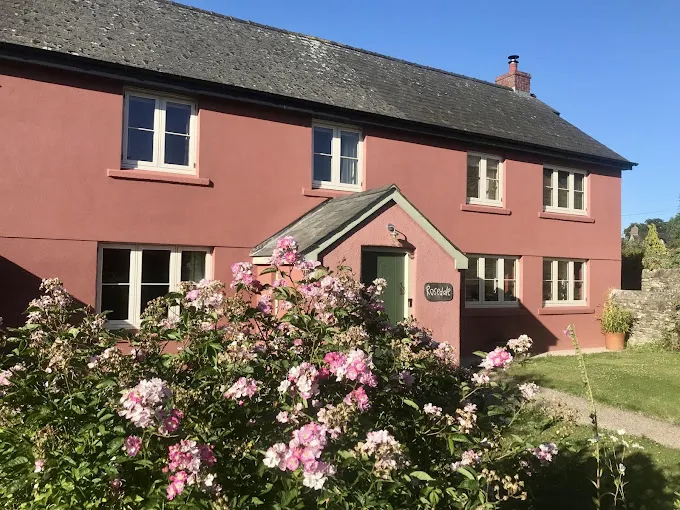
Beyond protection, modern external rendering systems deliver substantial improvements to kerb appeal. As noted by MyJobQuote Editors: “Having your property rendered can revitalise the building’s exterior visually and also better protect it against the elements. Even better, it can even increase its kerb appeal.” (MyJobQuote, 2026)[4]
Call Us
Cardiff’s housing stock is unusually diverse, ranging from Victorian bay-fronted terraces and inter-war semis through to 1960s concrete-framed flats and contemporary new-build developments. Each construction type presents different substrate conditions, movement characteristics, and aesthetic requirements that directly influence render specification. A rigid sand-and-cement coat suited to a solid stone wall in the Vale of Glamorgan will crack rapidly on a concrete-framed apartment block in Cardiff Bay where thermal movement is far greater. Understanding substrate compatibility is therefore the starting point of every sound rendering Cardiff project.
Older solid-wall properties in areas such as Cathays and Grangetown also present a specific consideration: breathability. These walls manage moisture by allowing vapour to pass through the wall structure. Applying an impermeable coating traps moisture, leading to accelerated deterioration. Modern silicone renders are specifically formulated to be waterproof on the surface while remaining vapour-permeable, making them the preferred choice for pre-1920 Cardiff terraces.
Render Types Available for Cardiff Properties
Selecting the correct render system for a Cardiff property depends on the substrate condition, the level of weather exposure, the desired aesthetic, and the long-term maintenance budget available to the owner.
Thin Coat Silicone Render
Thin coat silicone render is currently the most widely specified external rendering system for residential properties throughout Cardiff. Applied at a thickness of 1.5 mm to 3 mm over a reinforced basecoat, it delivers a seamless, through-coloured finish that requires no painting. The silicone polymer binder makes the surface hydrophobic, repelling rainwater, while the open matrix structure allows water vapour to escape from the substrate. This combination is well suited to Cardiff’s high annual rainfall and the solid-wall Victorian terraces that dominate inner suburbs.
The self-cleaning characteristic of silicone render is particularly valued in Cardiff’s urban environment, where atmospheric pollution and road dust discolour lighter finishes on hand-applied systems. Silicone’s low surface energy means dirt particles are washed away by rain rather than bonding to the surface, keeping properties looking fresh between cleans. Colour stability is also superior to painted finishes: pigments are locked into the polymer matrix rather than sitting on a surface film exposed to UV degradation.
For coastal-influenced locations such as Cardiff Bay and properties near the Severn Estuary, silicone render’s resistance to salt-laden air gives it a clear advantage over cement-based systems. The flexibility of the cured coat accommodates minor substrate movement without cracking, which is important on the converted Victorian warehouses and new-build apartment blocks that populate the Bay area. Manufacturer-backed warranties on certified silicone render installations extend to 25 years when applied by accredited contractors.
Monocouche Through Colour Render
Monocouche render is a factory-batched, cement-based system where colour pigment is distributed uniformly throughout the full thickness of the coat. Applied in a single pass at 15 mm to 20 mm, it combines basecoat and finish coat in one operation, reducing labour time compared to traditional multi-coat approaches. Because the colour runs through the full depth, minor surface chips or abrasion do not expose a contrasting underlayer, and the system requires no painting throughout its service life.
Monocouche is a popular choice for housing developers working on Cardiff new-build schemes, as the consistent batched colour eliminates the variability that occurs when site-mixed renders are tinted. It is compatible with brick, dense block, and concrete substrates and is finished with a scraped texture for a contemporary look or a roughcast texture for a more traditional appearance suited to period properties in areas such as Pontcanna and Penarth Road.
One Coat Cement Render
One coat cement render remains a cost-effective solution where the final finish will be painted or where budget constraints make through-coloured systems impractical. The system provides sound weather resistance and is applied to almost any masonry substrate with appropriate priming. Spray application improves consistency of coverage compared to traditional hand application, producing a more uniform base for paint systems. Properties in Cardiff that already have established painted elevations use this approach to maintain visual continuity with neighbouring buildings.
External Wall Insulation Systems
For the large proportion of Cardiff’s pre-1940 solid-wall housing stock, EWI Specialists South Wales – expert external wall insulation installations for energy efficiency combine thermal improvement with a fresh rendered finish in a single installation. Insulation boards are mechanically fixed to the existing wall, a reinforcement mesh and basecoat are applied over the boards, and a silicone or acrylic finish coat completes the system. The result improves the property’s Energy Performance Certificate rating, reduces heating bills, and eliminates surface condensation, all while giving the building a completely renewed external appearance.
Spray Application vs Hand Application in Cardiff
Spray rendering application delivers a consistently faster and more uniform finish than traditional hand application, making it the method of choice for professional rendering Cardiff contractors working on residential and commercial projects alike.
In spray application, the mixed render is pumped through a hose and discharged through a nozzle at controlled pressure, producing an even coat across the wall surface in a single pass. The operator adjusts nozzle distance and angle to maintain consistent thickness, and the continuous feed eliminates the natural variation in coat thickness that occurs when render is applied by hand trowel in discrete batches. For large or complex elevations, spray application is two to three times faster than equivalent hand work, which translates directly into shorter programme durations and less disruption for Cardiff households.
Hand application retains advantages in specific circumstances. Small patch repairs, intricate architectural detailing around bay windows, cornices, and cills, and situations where access equipment cannot be positioned for spray equipment are all scenarios where skilled hand application remains the appropriate method. The two approaches are therefore complementary rather than competing: a typical Cardiff terraced house will have the main elevation spray rendered for speed and consistency while detailed work around window surrounds is finished by hand.
The About us – Learn more about our experienced team and rendering expertise page of Coloured Rendering South Wales explains how the company’s investment in spray equipment allows projects to be completed within timeframes that would be impossible for hand-only teams, a significant practical benefit for Cardiff households where scaffolding hire costs accumulate daily and neighbours prefer minimal disruption.
For Cardiff property developers managing multi-unit schemes, the programme savings from spray application are substantial. A monocouche render applied by hand to a terrace of ten houses requires four to five working days per property; spray application halves that figure, allowing developers to meet handover deadlines and reduce preliminaries costs. The uniform finish quality across all units also simplifies quality sign-off and reduces the likelihood of remedial work on individual plots.
Rendering Cardiff: Costs, Planning and What to Expect
Rendering Cardiff costs vary considerably depending on the system selected, the condition of the existing substrate, the size and complexity of the property, and whether scaffolding is required – understanding these variables helps you plan your budget accurately before requesting quotes.
Published market data shows that rendering services in Cardiff start from £10 per square metre plus materials, while full property refurbishment packages incorporating rendering reach £29,500 (PRD Cardiff, 2026)[1]. Wall plastering services in Cardiff start from £150 (PRD Cardiff, 2026)[1]. These figures illustrate the wide range of investment levels, which is why obtaining detailed, itemised quotations from experienced local contractors is important before committing to any programme of work.
Substrate preparation is the single biggest variable in rendering Cardiff costs that homeowners tend to underestimate. If existing render is hollow, delaminating, or contaminated with algae or efflorescence, it must be removed entirely before the new system is applied. The cost of hacking off old render, disposing of waste, and preparing the bare masonry adds materially to the contract sum and should be assessed and priced as a distinct item in any quotation. Contractors who omit this assessment and simply quote for the finish coat encounter problems on site that generate variation claims.
Scaffolding is required for any elevation above ground floor level and represents a fixed cost that does not scale proportionally with wall area. For a standard three-bedroom Cardiff terrace, scaffold erection and hire for a two-week render programme is a meaningful proportion of the total project cost. Combining rendering work with other external maintenance – fascia and soffit replacement, window installation, or gutter clearance – allows this fixed cost to be spread across multiple scopes of work, improving overall value.
Most rendering systems in Cardiff do not require planning permission unless the property is listed or within a conservation area. Canton, Pontcanna, and parts of Cardiff Bay contain designated conservation areas where permitted development rights for external alterations are restricted. If your property falls within such an area, confirm with Cardiff Council before committing to a particular system or colour. A competent rendering contractor should be aware of these constraints and raise them during the initial site assessment.
Your Most Common Questions
How long does rendering Cardiff last?
The service life of rendering Cardiff depends primarily on the system used and the quality of installation. Thin coat silicone render applied by a certified contractor carries manufacturer-backed warranties of up to 25 years and performs well beyond this in typical South Wales conditions. Monocouche through colour render has a comparable service life when properly applied to a sound substrate. Traditional sand-and-cement renders have shorter service lives, 15 to 20 years, and are more prone to cracking as the substrate moves or as carbonation reduces flexibility over time. One coat cement renders finished with paint require repainting every five to eight years, which adds ongoing maintenance costs that through-coloured systems avoid entirely. Coastal locations such as Cardiff Bay and properties with westerly exposure to the prevailing weather experience accelerated weathering, and in these situations, a premium silicone or polymer-modified system is a more cost-effective long-term choice than a lower-cost cement render that requires repair or replacement within a decade.
Do I need planning permission for rendering Cardiff properties?
Most rendering Cardiff projects fall within permitted development rights and do not require a formal planning application, provided the property is not listed and does not sit within a designated conservation area. Cardiff contains a number of conservation areas, including parts of Canton, Pontcanna, Roath, and Cardiff Bay, where permitted development rights for external alterations to dwellinghouses are restricted or withdrawn by a local Article 4 Direction. In these areas, changing the external appearance of a property – including rendering a previously unrendered elevation or significantly changing the colour of an existing render – requires consent. If you are uncertain about your property’s status, the Cardiff Council planning portal allows you to check whether your address falls within a conservation area or Article 4 zone. A reputable rendering contractor will ask about planning constraints during the initial site visit and should be able to help you with the pre-application enquiry process if consent is needed.
What is the best render system for a Victorian Cardiff terrace?
Victorian terraced houses in Cardiff – particularly those in Roath, Cathays, Canton, and Grangetown – are constructed with solid brick or stone walls that manage moisture through vapour diffusion. The most appropriate render system for these properties is a breathable, flexible coating that allows moisture vapour to escape from the wall while preventing liquid water from entering. Thin coat silicone render meets both criteria: its polymer binder is hydrophobic on the surface, repelling rain, while the open microstructure of the cured coat allows vapour to pass through. This prevents the trapped moisture and associated interstitial condensation that impermeable coatings cause in solid-wall construction. If the property also suffers from poor thermal performance – common in solid-wall Victorian terraces where there is no cavity for conventional insulation – an External Wall Insulation system with a silicone finish coat addresses both the moisture management and the energy efficiency requirements in a single installation, improving the property’s EPC rating and reducing heating costs simultaneously.
How do I maintain rendered walls in Cardiff after installation?
Modern render systems installed in Cardiff require minimal ongoing maintenance compared to painted finishes. Through-coloured silicone and monocouche renders do not need repainting; their colour is stable and the surface sheds airborne dirt with rainfall due to the hydrophobic finish. The primary maintenance task is an annual visual inspection of the render surface, paying attention to any cracks at movement joints, around window and door frames, or at abutments with other materials such as soffits and cills. Small hairline cracks that do not penetrate to the substrate should be monitored; cracks wider than 0.5 mm, or any crack associated with a hollow sound when tapped, should be assessed by a rendering specialist promptly to prevent water ingress behind the render. Biological growth – moss, algae, or lichen – establishes on north-facing or shaded elevations in Cardiff’s damp climate. A biocidal wash applied every few years is sufficient to control this and restore the render’s appearance. Coloured Rendering South Wales provides maintenance advice for all systems it installs, and the team at Rendering Repairs South Wales – professional repairs and maintenance for external wall renders assess any areas of concern and carry out remedial work before deterioration becomes extensive.
Your Most Common Questions
How long does rendering Cardiff last?
The service life of rendering Cardiff depends primarily on the system used and the quality of installation. Thin coat silicone render applied by a certified contractor carries manufacturer-backed warranties of up to 25 years and performs well beyond this in typical South Wales conditions. Monocouche through colour render has a comparable service life when properly applied to a sound substrate. Traditional sand-and-cement renders have shorter service lives, 15 to 20 years, and are more prone to cracking as the substrate moves or as carbonation reduces flexibility over time. One coat cement renders finished with paint require repainting every five to eight years, which adds ongoing maintenance costs that through-coloured systems avoid entirely. Coastal locations such as Cardiff Bay and properties with westerly exposure to the prevailing weather experience accelerated weathering, and in these situations, a premium silicone or polymer-modified system is a more cost-effective long-term choice than a lower-cost cement render that requires repair or replacement within a decade.
Do I need planning permission for rendering Cardiff properties?
Most rendering Cardiff projects fall within permitted development rights and do not require a formal planning application, provided the property is not listed and does not sit within a designated conservation area. Cardiff contains a number of conservation areas, including parts of Canton, Pontcanna, Roath, and Cardiff Bay, where permitted development rights for external alterations to dwellinghouses are restricted or withdrawn by a local Article 4 Direction. In these areas, changing the external appearance of a property – including rendering a previously unrendered elevation or significantly changing the colour of an existing render – requires consent. If you are uncertain about your property’s status, the Cardiff Council planning portal allows you to check whether your address falls within a conservation area or Article 4 zone. A reputable rendering contractor will ask about planning constraints during the initial site visit and should be able to help you with the pre-application enquiry process if consent is needed.
What is the best render system for a Victorian Cardiff terrace?
Victorian terraced houses in Cardiff – particularly those in Roath, Cathays, Canton, and Grangetown – are constructed with solid brick or stone walls that manage moisture through vapour diffusion. The most appropriate render system for these properties is a breathable, flexible coating that allows moisture vapour to escape from the wall while preventing liquid water from entering. Thin coat silicone render meets both criteria: its polymer binder is hydrophobic on the surface, repelling rain, while the open microstructure of the cured coat allows vapour to pass through. This prevents the trapped moisture and associated interstitial condensation that impermeable coatings cause in solid-wall construction. If the property also suffers from poor thermal performance – common in solid-wall Victorian terraces where there is no cavity for conventional insulation – an External Wall Insulation system with a silicone finish coat addresses both the moisture management and the energy efficiency requirements in a single installation, improving the property’s EPC rating and reducing heating costs simultaneously.
How do I maintain rendered walls in Cardiff after installation?
Modern render systems installed in Cardiff require minimal ongoing maintenance compared to painted finishes. Through-coloured silicone and monocouche renders do not need repainting; their colour is stable and the surface sheds airborne dirt with rainfall due to the hydrophobic finish. The primary maintenance task is an annual visual inspection of the render surface, paying attention to any cracks at movement joints, around window and door frames, or at abutments with other materials such as soffits and cills. Small hairline cracks that do not penetrate to the substrate should be monitored; cracks wider than 0.5 mm, or any crack associated with a hollow sound when tapped, should be assessed by a rendering specialist promptly to prevent water ingress behind the render. Biological growth – moss, algae, or lichen – establishes on north-facing or shaded elevations in Cardiff’s damp climate. A biocidal wash applied every few years is sufficient to control this and restore the render’s appearance. Coloured Rendering South Wales provides maintenance advice for all systems it installs, and the team at Rendering Repairs South Wales – professional repairs and maintenance for external wall renders assess any areas of concern and carry out remedial work before deterioration becomes extensive.
Comparing Render Systems for Cardiff Properties
Choosing between render systems for a Cardiff property involves balancing upfront cost, long-term maintenance requirements, substrate compatibility, and aesthetic flexibility. The table below summarises the key differences between the four principal systems in use across the city.
| Render System | Typical Application | Maintenance Requirement | Breathability | Typical Service Life |
|---|---|---|---|---|
| Thin Coat Silicone Render | Spray over reinforced basecoat | Very low – no repainting required | High – ideal for solid-wall Victorian terraces | 25+ years with certified installation[2] |
| Monocouche Through Colour Render | Single coat spray or hand applied | Low – through-colour eliminates painting | Moderate – depends on formulation | 20-30 years |
| One Coat Cement Render | Spray or hand applied, painted finish | Medium – repainting every 5-8 years | Low – traps moisture if impermeable | 15-20 years |
| EWI with Silicone Finish | Full system over insulation boards | Very low – silicone finish coat | High – system designed for vapour management | 25+ years with certified installation |
Coloured Rendering South Wales: Cardiff Services
Coloured Rendering South Wales has delivered professional rendering Cardiff services for over 25 years, working across the full range of property types the city presents – from Victorian terraces in Roath and Canton to new-build developments in Cardiff Bay and commercial premises in the city centre. As a Baumit Approved EWI Applicator with City & Guilds Assured accreditation, we install Baumit StarTop premium silicone render and complete EWI systems backed by manufacturer warranties of up to 25 years, giving Cardiff property owners documented long-term protection from a certified specialist.
Our spray rendering capability sets us apart from contractors who rely solely on hand application. Spray technology allows us to cover large elevations quickly and consistently, reducing programme duration, minimising scaffolding hire costs, and limiting disruption to household occupants. The same equipment handles thin coat silicone render, monocouche, and acrylic finish coats, meaning we bring consistent quality to every system we specify.
“With over twenty-five years of experience serving the South Wales region, we have established ourselves as a leading provider of professional rendering services throughout Cardiff and the surrounding areas.” – Coloured Rendering South Wales Team
“We’re 100% happy and wouldn’t hesitate to recommend Jeff. His workmanship is excellent and we’re also very happy with the product he recommended to eradicate the penetrating damp and give our house a great new look and lease of life.” – Alistair Legge, Google Review
“With over 15 years in the building trade I have experienced several different plasterers all offering different styles and finishes. Geoff’s thin coat spray finish render would rival the best and I can’t recommend his team enough to someone thinking of using him.” – Keri Hopkins, Google Review
We provide free initial consultations and site assessments for Cardiff properties. To discuss your project, visit our Home page of Coloured Rendering South Wales – expert spray rendering and external wall insulation services across South Wales, explore our Coloured Rendering Swansea – durable and attractive rendering solutions for residential and commercial properties page, or Contact Coloured Rendering South Wales for a free quote or consultation on your rendering project. You can also call us directly on 07815 868070 or email geoff@colouredrenderingsouthwales.com.
Practical Tips for Your Cardiff Rendering Project
Planning a rendering Cardiff project carefully at the outset avoids the most common causes of cost overruns, programme delays, and finish quality problems. The following guidance is based on the practical experience of working across Cardiff’s diverse housing stock over more than two decades.
Commission a substrate survey before accepting a quotation. Any reputable rendering Cardiff contractor will assess the existing wall surface before pricing the job. If a contractor quotes without visiting the site or inspects only briefly, the price is unlikely to account for substrate defects that will need to be addressed before the new render is applied. Hollow, contaminated, or friable surfaces must be prepared correctly, and this work takes time and materials.
Check credentials and certifications. For EWI installations in Cardiff, confirm that the contractor holds current accreditation from the system manufacturer. Certified installers carry manufacturer-backed warranties that protect your investment; uncertified installation voids the product warranty and leaves you without recourse if the system fails. The UK Building Regulations – Approved Documents also set minimum standards for thermal performance in EWI installations that certified contractors are trained to meet.
Consider the season and weather window. Most render systems have temperature restrictions on application: standard thin coat silicone render should not be applied when substrate or air temperature is below 5°C, and should not be applied in direct strong sunlight or when rain is forecast within 24 hours of application. Cardiff’s autumn and winter months bring frequent rain and the risk of frost; scheduling work for late spring through early autumn gives the best conditions for achieving the specified finish quality.
Plan colour selection carefully. Through-coloured render colours are permanent. Modern render manufacturers offer extensive colour ranges, and digital visualisation tools show how your chosen colour will look on your specific property. Take time with this decision, consider how the colour will sit alongside neighbouring properties – particularly relevant in Cardiff’s terraced streets – and request physical colour samples in addition to digital images before confirming your specification. The Choose The Perfect Facade, Renders & Paints guide from Baumit provides useful guidance on colour selection for rendered exteriors.
Factor in scaffolding logistics. In Cardiff’s densely built terraced streets, scaffolding erection requires consideration of pedestrian access, adjacent property boundaries, and highway licensing. Your contractor should manage these arrangements, but confirm this is included in the contract to avoid unexpected additional charges.
The Bottom Line
Rendering Cardiff properties with the correct system delivers lasting protection against the city’s wet, wind-driven climate, eliminates recurring painting costs, and adds measurable value to residential and commercial buildings alike. The choice between thin coat silicone render, monocouche, cement render, and EWI systems is not one-size-fits-all: substrate type, wall construction, exposure level, and long-term maintenance budget all determine the right specification for each property.
Getting the specification and installation right from the start is far more cost-effective than remedying a failed render system years later. Coloured Rendering South Wales brings over 25 years of Cardiff and South Wales experience, certified EWI applicator status, and professional spray rendering technology to every project we undertake.
To arrange a free site assessment and quotation for your Cardiff rendering project, call us on 07815 868070, email geoff@colouredrenderingsouthwales.com, or use the contact form at colouredrenderingsouthwales.com/contact.
Sources & Citations
- Plastering, Rendering & House Refurbishment Cardiff – PRD. PRD Cardiff.
https://prd-cardiff.co.uk - Expert Cardiff Rendering Services for Modern Properties. Coloured Rendering South Wales.
https://www.colouredrenderingsouthwales.com/cardiff-rendering/ - Welsh Housing Quality Standards Social Housing Renewal Cost Estimates. Welsh Government.
https://www.gov.wales/sites/default/files/statistics-and-research/2019-07/051201-whqs-social-housing-renewal-en.pdf - Rendering Near Me | Find Local Rendering Companies. MyJobQuote.
https://www.myjobquote.co.uk/nearme/renderers
