
Select Insulation Services in Port Talbot Guide

Select insulation services in Port Talbot help homeowners reduce energy bills, improve comfort, and protect their properties – discover the right system, funding options, and local expertise for your needs.
Table of Contents
- What Are Select Insulation Services in Port Talbot?
- Types of Insulation Systems for Port Talbot Properties
- Funding Schemes and Financial Support
- External Wall Insulation and Rendered Finishes
- Frequently Asked Questions
- Comparing Insulation Approaches
- How Coloured Rendering South Wales Can Help
- Practical Tips for Choosing Insulation in Port Talbot
- The Bottom Line
- Sources & Citations
Article Snapshot
Select insulation services in Port Talbot is the process of identifying and installing the correct insulation solution – cavity wall, loft, or external wall – for your specific property type. The right choice depends on your wall construction, EPC rating, and eligibility for Welsh Government funding schemes, and delivers significant savings on energy bills.
Market Snapshot
- 280 measures installed under the Great British Insulation Scheme in Neath Port Talbot by February 2025 (Department for Energy Security and Net Zero, 2025)[1]
- 5,183 households in Neath Port Talbot received a home energy improvement package under the Warm Homes Nest scheme in 2023-2024 (Welsh Government, 2024)[2]
- Average annual energy bill saving of £595 per household delivered through the Nest scheme (Welsh Government, 2024)[2]
- 70% of detached houses in England and Wales have roofs rated “good” or above for insulation, compared with 55% of terraced houses (Office for National Statistics, 2022)[3]
What Are Select Insulation Services in Port Talbot?
Select insulation services in Port Talbot refer to professionally assessed and installed insulation solutions tailored to the property types, climate conditions, and funding opportunities specific to this part of South Wales. Port Talbot sits within the Neath Port Talbot local authority area, a region that has seen measurable progress in upgrading residential wall insulation ratings in recent years. Coloured Rendering South Wales provides external wall insulation systems that combine thermal performance improvements with high-quality rendered finishes, making them a practical option for Port Talbot homeowners seeking both energy efficiency and improved kerb appeal.
The term “select” insulation services matters because not every insulation product suits every property. A Victorian terraced house in Port Talbot has fundamentally different wall construction – typically solid masonry – from a 1970s semi-detached with a cavity wall. Selecting the wrong system risks moisture problems, reduced effectiveness, and wasted expenditure. Professional assessment of your wall construction, current EPC rating, and property condition is the necessary starting point for any insulation project.
The Office for National Statistics reported in 2022 that Neath Port Talbot achieved the largest increase in the rate of existing houses with a wall insulation rating of “average” or above among all local authority districts – a sign that the region is actively improving its housing stock. That progress creates both opportunity and a benchmark: if your property has not yet been upgraded, you are leaving meaningful energy savings on the table.
Call Us
Insulation decisions in Port Talbot must also account for the Welsh coastal climate. Properties close to the seafront or in exposed upland positions face wind-driven rain and salt-laden air that degrade poorly specified systems. The correct render finish for an external wall insulation installation here is not the same as one appropriate for a sheltered midlands property – local knowledge of material selection is important.
External Wall Insulation as a Select Insulation Solution
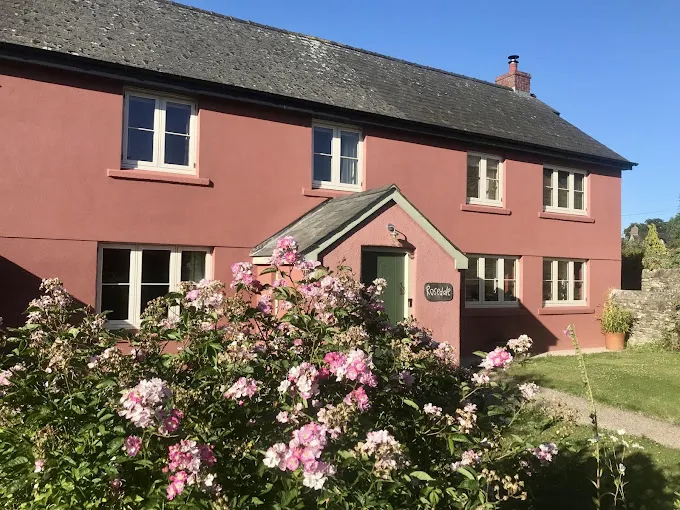
External wall insulation has become one of the most requested select insulation services for Port Talbot’s older housing stock. Solid-walled properties – which cannot be retrofitted with cavity fill – account for a substantial proportion of the pre-1930s terraced streets common throughout the town. EWI addresses this gap by adding insulation boards to the outside of the building, then applying a render or cladding finish over the top. The result is improved thermal performance, weather protection, and a refreshed external appearance, all achieved without reducing internal room sizes.
Types of Insulation Systems for Port Talbot Properties
The main insulation systems available to Port Talbot homeowners each suit different wall constructions, budgets, and property conditions. Understanding the distinctions between them is the foundation of selecting the right service for your home.
Cavity wall insulation is the most widely installed measure under national schemes. Government data shows that cavity wall insulation accounted for 24,800 measures – 42% of the total 59,000 measures installed under the Great British Insulation Scheme by December 2024 (Department for Energy Security and Net Zero, 2025)[1]. This system involves injecting insulating material – typically mineral wool beads or expanded polystyrene – into the gap between the inner and outer leaf of a cavity wall. It suits homes built broadly from the 1920s through to the 1990s where the cavity is clean, unobstructed, and of adequate width. A Property Care Association registered installer should assess cavity suitability before any work proceeds, as failed cavity fill in exposed or damp-prone locations is a documented cause of moisture transfer.
Loft insulation represents the second most common measure, with 16,300 loft insulation installations recorded under the Great British Insulation Scheme by December 2024 (Department for Energy Security and Net Zero, 2025)[1]. For properties with accessible loft spaces, increasing the depth of mineral wool or blown fibre insulation to 270mm or more is the most cost-effective single improvement available. Roof insulation ratings vary significantly by property type: 70% of detached houses have roofs rated “good” or above, falling to 55% for terraced houses (Office for National Statistics, 2022)[3]. Given the proportion of terraced housing in Port Talbot, loft upgrades remain an important priority for a large share of local properties.
Solid Wall and External Wall Insulation
Solid wall properties – those without a cavity – require either internal wall insulation or external wall insulation to achieve meaningful thermal improvement. Internal insulation reduces room dimensions and requires careful detailing around electrics and joinery. External wall insulation avoids these disruptions entirely, and when combined with a silicone or monocouche render finish, it delivers weather resistance alongside thermal gain. For Port Talbot properties facing the prevailing south-westerly winds and coastal conditions, a breathable, water-repellent render system is important to the long-term performance of the insulation beneath it.
Underfloor insulation is a further option relevant to properties with suspended timber ground floors. This involves fitting rigid insulation boards or blown mineral wool between the joists from below, and while it addresses a smaller proportion of overall heat loss than walls or roofs, it contributes meaningfully to whole-house comfort, particularly in older Port Talbot terraces where draughty ground floors are common.
Funding Schemes and Financial Support
Funding availability is one of the most important factors when selecting insulation services in Port Talbot, and Welsh residents have access to a range of schemes not available elsewhere in the UK.
The Warm Homes Nest scheme is the primary Welsh Government programme for home energy improvements. In the 2023-2024 programme year, 5,183 households in Neath Port Talbot received a home energy improvement package under Nest (Welsh Government, 2024)[2]. The scheme targets households in or at risk of fuel poverty and provides fully funded measures including insulation, heating system upgrades, and renewable energy installations. The Welsh Government Nest Scheme Team reported that “Nest home energy efficiency improvements has delivered estimated energy bill savings averaging £595 per household per year, making a real difference to fuel-poor households” (Welsh Government, 2024)[2]. Eligibility is based on household income, current EPC rating, and benefit status – an online eligibility check through the Nest website takes only a few minutes.
The Great British Insulation Scheme (GBIS) operates alongside Nest and targets properties with an EPC rating of D or below. Up to the end of February 2025, 55,600 households across Great Britain had been upgraded under GBIS (Department for Energy Security and Net Zero, 2025)[4]. Within Neath Port Talbot specifically, 280 measures had been installed under the scheme by that date (Department for Energy Security and Net Zero, 2025)[1]. GBIS is delivered through registered energy companies and local authority referral routes – your energy supplier is often the starting point for an eligibility referral.
ECO4 and Local Authority Flex
The Energy Company Obligation scheme (ECO4) remains available to households on qualifying benefits and low incomes. Local authority flex provisions allow councils to refer households that do not meet the standard benefit criteria but are assessed as living in fuel poverty – a route that Port Talbot residents explore through Neath Port Talbot County Borough Council’s housing and energy teams. Stacking multiple funding sources – for example, combining ECO4 funding with Nest top-up support – is a strategy increasingly used to fund external wall insulation on solid-walled properties where a single scheme does not cover the full cost.
For homeowners who do not qualify for grant funding, privately funded insulation installations remain a worthwhile investment. The payback period for external wall insulation ranges from 10 to 20 years depending on property size, heating type, and energy prices – with the added benefit of an improved EPC rating that increases property value and reduces mortgage costs under green mortgage products now offered by several UK lenders.
External Wall Insulation and Rendered Finishes
External wall insulation fitted with a high-performance rendered finish represents the most comprehensive single upgrade available to Port Talbot’s solid-walled properties, addressing thermal performance, weather resistance, and appearance in a single installation.
The process begins with a full survey of the existing wall – checking for damp, structural integrity, and any detailing challenges around windows, doors, bay projections, and soffits. Insulation boards – typically expanded polystyrene (EPS) or mineral wool – are mechanically fixed to the wall, followed by a basecoat embedded with reinforcing mesh, and then the chosen render finish. The entire system thickness adds 80-120mm to the external wall face, which requires careful attention to window reveals, roof overhangs, and drainage details to maintain weather tightness.
The choice of render finish on an EWI system is not merely cosmetic. In a coastal and high-rainfall environment such as Port Talbot, a silicone-based thin coat render offers significant advantages over acrylic or cement-based alternatives. Silicone renders are water-repellent yet vapour-permeable – they shed driving rain from the surface while allowing any moisture within the wall to escape as vapour. This breathability is important for the long-term performance of the insulation and the structural health of the wall beneath. Self-cleaning properties in silicone renders also help maintain appearance in Port Talbot’s damp, algae-prone climate without the need for regular repainting.
Specifying the Right Render for Port Talbot
Monocouche through-colour renders offer an alternative for EWI projects where a more textured, traditional finish is preferred. These cement-based renders are pre-coloured throughout their thickness, eliminating the need for painting and providing a durable finish suited to the Welsh climate. For properties where a painted appearance is acceptable, one coat cement render provides a cost-effective base that is redecorated as required. The correct specification depends on the property’s exposure rating, the insulation system manufacturer’s requirements, and the homeowner’s aesthetic preferences – all factors that a qualified installer should advise on at the survey stage.
Manufacturer warranties on EWI systems run from 10 to 25 years when installed by a certified applicator. These warranties cover both the insulation system performance and the render finish, providing documented long-term protection that informal or uncertified installation work cannot offer. Verifying an installer’s certification status before committing to any EWI project is a basic but important step.
Your Most Common Questions
How do I know whether my Port Talbot property needs cavity wall or external wall insulation?
The answer depends on your wall construction. Properties built from the 1920s onwards have cavity walls – two separate leaves of brick or block with a gap between them – and are suitable for cavity fill insulation, provided the cavity is in good condition and the exposure rating of the site permits it. Properties built before the 1920s, and many Welsh terraces up to the 1940s, have solid masonry walls with no cavity. These require either internal dry-lining or external wall insulation. The most reliable way to determine your wall type is a professional survey, which any reputable insulation installer carries out before recommending a system. Your property’s EPC certificate also notes the wall construction type and its current insulation status, giving a useful starting point. Do not assume wall type based on appearance alone – some older properties were built with cavity walls, and some newer ones with solid walls, depending on the builder and era.
What funding is available for select insulation services in Port Talbot?
Port Talbot residents have access to several funding routes. The Welsh Government’s Warm Homes Nest scheme provides fully funded measures for eligible households in or at risk of fuel poverty – eligibility is assessed online and considers income, EPC rating, and benefit status. The Great British Insulation Scheme (GBIS) targets homes with EPC ratings of D or below and is delivered through energy company referral routes. The Energy Company Obligation scheme (ECO4) provides additional funding for households on qualifying benefits, and local authority flex provisions allow Neath Port Talbot Council to refer households that fall outside standard criteria. For homeowners who do not qualify for grant support, privately funded installations remain available and deliver strong returns through reduced energy bills and an improved EPC rating. Stacking multiple schemes is possible in some circumstances and is worth exploring with a registered energy advisor or through the Nest helpline.
How long does external wall insulation last, and will it require maintenance?
External wall insulation systems installed to manufacturer specification and with a quality render finish last 30 years or more with minimal maintenance. The render surface is the primary maintenance consideration: silicone renders have self-cleaning properties that help resist algae and dirt build-up in Port Talbot’s damp coastal climate, reducing the need for regular washing or repainting. Systems installed by a certified applicator carry manufacturer-backed warranties of 10 to 25 years, covering both the insulation performance and the render finish. Periodic visual inspections – checking for cracks at expansion joints, damage around window reveals, and the condition of detailing at soffits and sills – are recommended every few years. Any minor damage should be repaired promptly to prevent water ingress behind the system. Choosing an installer with certified status and a clear warranty offer is the best way to protect your investment over the full system lifespan.
Does external wall insulation increase property value in Port Talbot?
External wall insulation contributes to increased property value through two main routes: an improved EPC rating and enhanced external appearance. A higher EPC rating makes a property more attractive to buyers and unlocks green mortgage products offered by several UK lenders at preferential rates. Properties with an EPC rating of C or above are preferred by buyers and tenants aware of ongoing energy costs. The rendered finish applied over the insulation also refreshes the external appearance, which has a direct impact on kerb appeal and buyer first impressions. In Port Talbot’s housing market, where a large proportion of properties are older terraced homes, a freshly rendered exterior meaningfully differentiates a property. The combination of lower running costs, a strong EPC rating, and an attractive finish makes EWI one of the few home improvements that simultaneously reduces bills, enhances appearance, and supports resale value.
Comparing Insulation Approaches for Port Talbot Homes
Choosing between insulation systems requires weighing cost, suitability for your wall type, potential disruption, and long-term performance. The table below compares the four main approaches relevant to Port Talbot properties to help you identify the right starting point for your own assessment.
| Insulation Type | Wall Suitability | Typical Funding Route | Render Finish Required | Disruption Level |
|---|---|---|---|---|
| Cavity Wall Insulation | Cavity walls only (post-1920s) | GBIS, ECO4, Nest | No | Low – drilled externally |
| Loft Insulation | Any property with accessible loft | GBIS, ECO4, Nest | No | Very low |
| External Wall Insulation | Solid walls and cavity walls | ECO4, Nest, private | Yes – silicone or monocouche recommended[1] | Medium – external scaffold required |
| Internal Wall Insulation | Solid walls | ECO4, Nest, private | No (internal dry-lining) | High – room by room, decoration required |
How Coloured Rendering South Wales Can Help
Coloured Rendering South Wales has provided plastering and spray rendering services across South Wales since 1998, bringing over 25 years of practical experience to properties throughout the region – including Port Talbot and the wider Neath Port Talbot area. As a Baumit Approved EWI Applicator with City & Guilds Assured accreditation, we are certified to install Baumit StarTop premium silicone render and complete external wall insulation systems, with manufacturer-backed warranties of up to 25 years. That certification matters: it means the system installed on your property meets manufacturer requirements, qualifies for full warranty coverage, and is specified by someone with documented training rather than informal experience.
Our EWI installations for Port Talbot properties use render systems specifically chosen for the Welsh coastal climate – breathable, water-repellent silicone finishes that perform in driving rain and salt air without sacrificing the clean, modern appearance that many homeowners are looking for. We also offer monocouche through-colour renders for clients who prefer a more traditional textured finish, and one coat cement render where a painted exterior is the right solution for the property.
“With over 15 years in the building trade I have experienced several different plasterers all offering different styles and finishes. Geoff’s thin coat spray finish render would rival the best and I can’t recommend his team enough to someone thinking of using him. His professionalism and work ethic has stood out from many of the others we have worked with.” – Keri Hopkins, Google Review
“We’re 100% happy and wouldn’t hesitate to recommend Jeff. His workmanship is excellent and we’re also very happy with the product he recommended to eradicate the penetrating damp and give our house a great new look and lease of life.” – Alistair Legge, Google Review
Whether you are exploring select insulation services for the first time or ready to move ahead with an EWI installation, we are happy to carry out a free property assessment and discuss the right system for your home. View our completed projects in our Gallery – View examples of our high-quality spray rendering and repair work, or find out more about our full range of services on the Home page of Coloured Rendering South Wales – expert spray rendering and external wall insulation services across South Wales. To arrange your free consultation, visit our Contact Coloured Rendering South Wales for a free quote or consultation on your rendering project page or call us directly on 07815 868070.
Practical Tips for Choosing Insulation in Port Talbot
Start with your EPC certificate. Your Energy Performance Certificate lists your current wall, roof, and floor insulation ratings and identifies the measures most likely to improve your rating. If you do not have a current EPC, an accredited energy assessor produces one for a modest fee. This document is also the primary eligibility document for most funding schemes, so having it to hand speeds up the application process significantly.
Check funding eligibility before committing to any cost. Given the scale of Nest activity in Neath Port Talbot – 5,183 households received improvements in 2023-2024 alone (Welsh Government, 2024)[2] – there is a real chance that your property qualifies for fully or partially funded measures. Use the Nest eligibility checker and contact your energy supplier about GBIS referral routes before agreeing to any privately funded work.
Verify installer certification for EWI projects. External wall insulation is a significant structural intervention. Choosing a Baumit Approved or equivalent certified applicator ensures the system is installed to manufacturer specification and carries a valid warranty. Ask to see the installer’s certification documentation before signing any contract.
Consider the render finish as part of the insulation specification. In Port Talbot’s coastal and high-rainfall environment, the render applied over an EWI system is not cosmetic – it is part of the weather-resistance strategy. Silicone renders are the recommended choice for exposed locations. Discuss exposure rating with your installer and ensure the specified product is appropriate for your property’s position.
Plan for detailing around openings and projections. Window reveals, sills, soffits, and bay windows require careful detailing when EWI adds depth to the wall. A thorough pre-installation survey should identify all detailing challenges and include them in the quotation. Unexpected detailing costs are a common source of budget overrun on poorly specified EWI projects.
Think about the full package. Combining loft insulation improvements with EWI – where both are needed – delivers greater energy savings than either measure alone and opens access to additional funding under some scheme combinations. A whole-house approach to thermal improvement achieves the best EPC outcome and the strongest payback on investment. Our EWI Specialists South Wales – expert external wall insulation installations for energy efficiency page provides further detail on the full EWI process.
The Bottom Line
Select insulation services in Port Talbot are most effective when they begin with a professional assessment of your property’s wall construction, current EPC rating, and funding eligibility. The Neath Port Talbot area has already seen significant progress in housing insulation improvements, and Welsh-specific funding schemes – including the Warm Homes Nest scheme and GBIS – mean that many local homeowners access measures at reduced or no cost. For solid-walled properties where cavity fill is not an option, external wall insulation paired with a high-performance silicone render finish is the most comprehensive upgrade available, delivering thermal gains, weather protection, and a refreshed exterior in a single installation. With the right installer, the right system, and the right render specification for South Wales’ coastal climate, the results last for decades with minimal ongoing maintenance. Contact Coloured Rendering South Wales on 07815 868070 or email geoff@colouredrenderingsouthwales.com to arrange your free property assessment today.
Sources & Citations
- Great British Insulation Scheme Release February 2025 and April 2025. Department for Energy Security and Net Zero.
https://assets.publishing.service.gov.uk/media/67b4ddd34a80c6718b55bf5e/GBIS_Release_February_2025.xlsx - Warm Homes Nest scheme: annual report 2023 to 2024. Welsh Government.
https://www.gov.wales/warm-homes-nest-scheme-annual-report-2023-2024-html-0 - Insulation of Housing in England and Wales. Office for National Statistics.
https://www.ons.gov.uk/peoplepopulationandcommunity/housing/articles/insulationandenergyefficiencyofhousinginenglandandwales/2022 - Great British Insulation Scheme Release April 2025. Department for Energy Security and Net Zero.
https://assets.publishing.service.gov.uk/media/67ff8a51b73354468d13551f/GBIS_Release_April_2025.xlsx
