
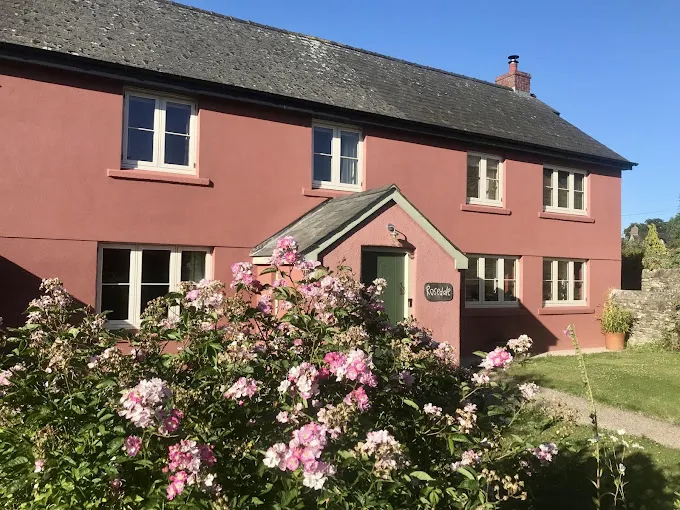
Essential Guide to External Rendering in South Wales

External rendering improves and protects your property’s walls. Learn about types, benefits, costs, and how to choose a reliable rendering specialist in South Wales.
Table of Contents
- What Is External Rendering?
- The Benefits of External Rendering
- Types of External Rendering Systems
- Key Considerations When Hiring a Contractor
- Your Most Common Questions
- Rendering System Comparison
- Your Local Rendering Specialist
- Practical Tips for Homeowners
- Before You Go
Key Takeaway
External rendering is the process of applying a durable, weather-resistant coating to a building’s external walls, combining protection with improved energy efficiency and kerb appeal for UK properties. Modern spray-applied renders offer faster installation and a low-maintenance finish that lasts over 25 years.
By the Numbers
- Uninsulated solid walls account for up to 45 per cent of a property’s total heat loss (Energy Saving Trust, 2024)[1].
- Installing external solid wall insulation saves a detached home up to £410 per year on heating bills (Energy Saving Trust, 2024)[1].
- External wall insulation increases a property’s value by up to 11 per cent (RICS, 2021)[2].
- A properly applied external render extends the lifespan of a building’s exterior wall by up to 30 years (NHBC, 2024)[3].
What Is External Rendering?
External rendering is the application of a protective, decorative coating to the exterior walls of a building. This multi-layered system shields the underlying brickwork or blockwork from rain, wind, and temperature fluctuations while dramatically improving a property’s appearance. In South Wales, where driving rain and coastal salt air are common, rendering serves as an important barrier against moisture ingress that leads to structural decay and damp indoor conditions.
Modern rendering systems have moved far beyond simple sand-and-cement mixes. Today, formulations include polymers, silicone, and other advanced additives that boost flexibility, breathability, and longevity. Spray application technology has also changed the industry, allowing contractors like Coloured Rendering South Wales to deliver uniform, blemish-free finishes across entire facades in a fraction of the time required by hand-trowelling. This speed does not compromise quality; it ensures consistent thickness and adhesion, two factors needed for avoiding cracks and water traps later.
A complete external rendering system comprises several layers: a bonding agent or primer, one or more base coats that embed reinforcing mesh for crack resistance, and a final decorative coat. The top coat determines the colour and texture, and when you choose a through-coloured or pigmented render, the finish stays vibrant without ever needing painting. Joanna O’Loan, Knowledge Manager at Energy Saving Trust, highlights this dual role: “Improving the thermal performance of walls through external rendering reduces fuel bills and improves comfort, but it is important to ensure the work is done by a competent installer to avoid damp issues.” (Energy Saving Trust, 2024)[4].
Call Us
Whether you own a solid-walled Victorian terrace in Swansea or a modern block-built home in Cardiff, external rendering offers a bespoke solution that balances regional weather demands with aesthetic goals. The key is matching the system to the substrate and local climate, a task that benefits from the deep local knowledge an experienced South Wales contractor brings.
The Benefits of External Rendering for Your Property
External rendering delivers a powerful combination of weather protection, thermal efficiency, kerb appeal, and long-term durability all in a single project. For homeowners across South Wales, these benefits translate directly into lower bills, higher comfort, and increased property value.
Weatherproofing and moisture defence. The UK’s wet climate, especially in coastal areas like Mumbles and the Gower Peninsula, exposes walls to relentless moisture. A high-quality rendered facade acts as a waterproof yet breathable skin, allowing internal water vapour to escape while preventing driving rain from penetrating. This two-way function is important for older solid-wall properties that have no cavity to drain water away. A properly applied silicone-based render, for example, repels liquid water on the surface while maintaining permeability at a molecular level.
Energy efficiency gains. Solid walls account for up to 45 per cent of a home’s total heat loss (Energy Saving Trust, 2024)[1]. External rendering, especially when combined with an insulation layer in an External Wall Insulation (EWI) system, dramatically slows this loss. The Energy Saving Trust calculates that insulating a typical detached house with solid-wall EWI saves up to £410 annually on heating (Energy Saving Trust, 2024)[1], while also improving the home’s Energy Performance Certificate (EPC) rating. In a market where buyers increasingly scrutinise running costs, this is a tangible financial argument for the upgrade.
Kerb appeal and property value. First impressions matter, and a crisp, clean render lifts a tired exterior from dated to contemporary. Miles Shipside, Property Expert at Rightmove, notes: “Properties with well-maintained external rendering and a fresh, modern finish attract up to 10% more interest from buyers, as kerb appeal is a top priority.” (Rightmove, 2024)[5]. Meanwhile, the Royal Institution of Chartered Surveyors reports that EWI boosts a home’s resale value by up to 11 per cent (RICS, 2021)[2]. These figures make rendering more than a maintenance expense; it is a value-adding investment.
Low maintenance and longevity. Once cured, modern coloured renders need nothing more than occasional rinsing with water. There is no paint to peel, no timber to rot, and the colour is integral to the material. The National House Building Council confirms that a properly applied external render extends the lifespan of a building’s exterior wall by up to 30 years (NHBC, 2024)[3]. For South Wales homeowners facing wind-whipped rain and salty air, that kind of strong, carefree protection is a major improvement.
Types of External Rendering Systems Available in South Wales
Choosing the right external rendering system depends on your substrate, budget, desired finish, and the specific environmental conditions of your location. A coastal property in Swansea Bay will have different requirements to a sheltered inland home in the Swansea Valley. The three principal systems used across the region are thin coat silicone render, monocouche through-colour render, and one coat cement render, with an important fourth option being External Wall Insulation (EWI) when thermal performance is a priority.
Thin coat silicone render is the premium modern choice and the go-to specification for many South Wales projects. A silicone-based top coat, spray-applied over a mesh-reinforced base, delivers exceptional flexibility and crack resistance, critical in areas where temperature swings and wind-driven rain attack facades. The surface is hydrophobic, causing rain to bead and run off, yet vapour-permeable so trapped moisture escapes. Best of all, silicone renders are available in a wide palette of UV-stable colours that will not fade. For the home a few hundred metres from the sea, this system provides the highest level of salt-spray resistance. One advanced version, the Baumit StarTop premium silicone render, carries a manufacturer-backed warranty of up to 25 years when installed by a certified applicator, offering unrivalled peace of mind.
Monocouche through-colour render is a single-coat, pre-coloured cement-based render that combines base and finish in one application. It is a workhorse of the industry, particularly popular on new builds and large residential developments. Because the pigment runs through the full thickness, scratches and minor chips are almost invisible, and the render never needs painting. Spray application speeds installation by up to 50 per cent compared with hand-trowelling, making it a cost-effective solution where consistent colour, durability, and speed matter. Dr Chris Gorse, Professor of Construction Engineering at Loughborough University, confirms: “Spray applied renders offer consistent coverage and significantly reduce the installation time of external wall insulation systems, making them more cost-effective for large-scale retrofit projects.” (Specification Online, 2024)[6].
One coat cement render is the closest modern successor to traditional sand-and-cement. Applied as a single spray-applied layer, it provides an even surface that accepts paint in any colour once cured. While less flexible than silicone, it offers an affordable route to a refreshed exterior and remains a solid choice for many inland properties where the environment is less aggressive. The system is finished smooth or textured, giving architects and homeowners flexibility.
External Wall Insulation (EWI) deserves a special mention. This system fixes rigid insulation boards directly to the wall, over which a reinforced base coat and a decorative render are applied. EWI tackles the 45 per cent heat loss problem head-on and is the only option that genuinely meets modern thermal performance standards for solid-walled buildings. In South Wales, where an estimated 8.5 million UK homes have solid walls (Energy Saving Trust, 2024)[1], EWI is becoming the preferred upgrade path. Combining insulation with a silicone or acrylic render gives the best of both worlds, lower bills and a stunning, modern facade.
Each system has its place, and the correct specification depends on a careful survey of your property. A proudly independent local contractor like Coloured Rendering South Wales guides you through these options, drawing on over 25 years of experience with Swansea rendering projects to ensure your render choice matches both your home’s needs and the South Wales climate. Also check the latest UK Building Regulations Approved Documents to confirm compliance before starting work.
Key Considerations When Hiring an External Rendering Contractor
Selecting the right contractor for external rendering is as important as choosing the render system itself. A poor installation fails within a few seasons, trapping moisture and causing damage that costs far more to repair than the original work. When you evaluate potential installers in South Wales, focus on five key areas: local knowledge, verifiable accreditations, proven quality, transparent quotations, and post-job support.
Local knowledge matters. The South Wales climate, from the salt-laden winds of the coast to the damp, mild valleys, varies more than many national product datasheets acknowledge. A contractor who has worked in Swansea, Cardiff, Newport, and the surrounding areas for decades understands how different exposures influence render performance. They know that a north-facing gable in Brynmill needs a different detailing approach to a south-facing wall in Penarth. This hands-on familiarity ensures the specification is not just theoretically sound but practically resilient.
Accreditations guarantee standards. Look for manufacturer-approved installer status and recognised trade certifications. For instance, a City & Guilds Assured Baumit Approved EWI Applicator has passed rigorous assessments and installs premium silicone render systems with a full manufacturer warranty. These warranties, 10-25 years for complete EWI systems, give you documented long-term protection that informal or uncertified work cannot provide. Always verify accreditation credentials and ask to see copies of certificates.
Reviews and portfolio. A perfect or near-perfect online rating from real customers speaks louder than any sales pitch. Read the reviews for specific mentions of tidiness, communication, and aftercare, not just the final look. Look for consistency: a contractor who has maintained a 5.0 Google rating across dozens of reviews over many years is delivering on promises repeatedly. Also request to see completed projects similar to yours, whether through a gallery or a drive-by visit.
Detailed quotes. A professional quotation breaks down the scope clearly: surface preparation, primer, reinforcing mesh, base coat, top coat colour and texture, insulation if included, and any scaffolding costs. It also states start and completion dates and specifies how waste will be managed. Beware of vague one-line estimates; they hide corners that will be cut once the job begins.
Ongoing support. Enquire about aftercare. Will the contractor return to check the render after the first winter? Is there a maintenance guide? A company that stands by its work will offer a straightforward defect period and remain contactable for advice years later.
Coloured Rendering South Wales, founded in Swansea in 1998, embodies these principles. With over two decades of specialist experience, a perfect 5.0 Google rating, and Baumit Approved Applicator status, the team delivers external rendering that meets the highest standards. Their spray application technology means less time on site and minimal disruption, while their local expertise ensures the render you get is the render your home genuinely needs.
Your Most Common Questions
How much does external rendering cost in the UK?
External rendering costs £60 to £120 per square metre in the UK, including materials and labour, and varies by type, wall condition, access, and location. For an average semi-detached house, a full monocouche render ranges from £7,000 to £12,000, while a silicone render or an EWI system sits toward the higher end of the scale. Complex features like bay windows, decorative banding, or high-level work increase the total. Always obtain at least three detailed, written quotes and check what is included, such as scaffolding, waste removal, and any repairs to the substrate before work begins. A thorough cost breakdown from your contractor helps avoid surprises and ensures you compare like for like.
How long does external rendering last?
A properly installed, high-quality external render lasts 25 to 30 years or more, with silicone and monocouche systems at the top of the longevity scale. Silicone renders resist cracking and repel water while allowing the wall to breathe, while through-coloured monocouche renders hide minor surface wear because the pigment runs through the full layer. The lifespan depends on correct application, adequate mesh reinforcement, and good detailing around windows, doors, and roof edges to prevent water ingress. Regular visual inspections and a gentle pressure wash every few years help the render reach its full design life. Choosing an accredited installer who follows manufacturer specifications is the single most important factor in achieving a multi-decade, low-maintenance finish.
Can external rendering be applied over existing render?
Yes, external rendering is applied over existing render if the old surface is sound, clean, and well-adhered, but this approach requires a careful survey first. A bonding primer or a mechanical key coat is needed to ensure the new layers stick properly. If the existing render has widespread cracks, hollow patches, or signs of damp, it is safer to strip it back to the original substrate before starting fresh. Rendering over a failing base risks trapping moisture and causing the new finish to fail prematurely, so a professional assessment, ideally from an experienced local contractor, is necessary. A partial repair or full removal and re-rendering is the longer-lasting solution.
What is the difference between external rendering and external wall insulation?
External rendering applies a weatherproofing and decorative coating directly to the wall’s surface, while external wall insulation (EWI) adds insulation boards beneath a render finish. Standard rendering focuses on protection and appearance; EWI upgrades the wall’s thermal performance, slashing heat loss and fuel bills. A rendered finish is either purely cosmetic or part of an EWI system, but EWI always includes insulation. For solid-walled homes, EWI is the only way to meet modern building regulations for energy performance, and it delivers benefits that straightforward rendering alone cannot, making it a comprehensive improvement rather than a simple refresh.
Rendering System Comparison
Selecting the right external rendering system means balancing cost, durability, maintenance, and suitability for South Wales’ climate. The table below compares three popular systems, thin coat silicone, monocouche, and one coat cement, so you see at a glance how they stack up. All three are spray-applied for speed and consistency, and each has a legitimate role depending on your property’s exposure and your long-term goals.
| Feature | Thin Coat Silicone | Monocouche | One Coat Cement |
|---|---|---|---|
| Expected lifespan | 25-30 years | 25-30 years | 20-25 years |
| Colour retention | Excellent (UV-stable, integral colour) | Excellent (through-coloured) | Good (requires painting) |
| Flexibility & crack resistance | High (silicone-based) | Moderate | Lower |
| Breathability | High (vapour permeable) | Moderate | Moderate |
| Maintenance | Very low (self-cleaning) | Low (no painting) | Medium (periodic repainting) |
| Best suited for | Coastal and exposed locations | General residential, new builds | Budget-sensitive inland projects |
| Application speed | Fast (spray applied) | Fast (spray applied) | Fast (spray applied) |
Note that all three systems integrate into an External Wall Insulation (EWI) package. In that case, the insulating layer is fixed to the wall first, then the chosen render system forms the protective and decorative finish. The lifespan figures quoted assume correct specification and installation by a competent, accredited contractor.
Your Local Rendering Specialist
Coloured Rendering South Wales has been serving homeowners and developers across the region since 1998. With over 25 years of hands-on experience, the company specialises in spray-applied external rendering, delivering faster, cleaner, and more consistent finishes than traditional hand application. Based in Swansea, the team understands the local housing stock, from Victorian solid-walled terraces to modern estates, and the unique demands of South Wales weather.
The company’s range covers all the major systems: thin coat silicone render for premium, long-lasting protection; monocouche through-colour render for a single-coat, no-paint solution; one coat cement render for cost-effective refurbishments; and comprehensive External Wall Insulation (EWI) packages that combine thermal performance with a beautiful finish. As a City & Guilds Assured Baumit Approved EWI Applicator, Coloured Rendering South Wales installs Baumit StarTop silicone render with a manufacturer-backed warranty of up to 25 years, giving you documented protection that uncertified work simply cannot match.
What truly sets the company apart is its reputation. A perfect 5.0 Google rating, earned from dozens of independent reviews, reflects an unwavering commitment to quality, reliability, and customer care. “Fantastic plastering done in the hallway, landing and bedroom of my 1930s house, as well as repair work to the external render/dashing. The work was of a very high quality and done in a clean and professional manner.” – Darren Fergusson. “Geoff did some tiling for us in our Kitchen. Fantastic job – very neat work.” – 15Evie. Whether the project is a full EWI installation or a targeted render repair, the team treats every home with the same meticulous attention to detail.
For a free, no-obligation consultation, get in touch or call 07815 868070. Explore completed projects on the gallery page and see for yourself why so many South Wales property owners trust Coloured Rendering South Wales.
Practical Tips for Homeowners Considering External Rendering
Before committing to an external rendering project, a little preparation goes a long way. Follow these practical pointers to set your project up for success and avoid common pitfalls.
1. Assess your property’s construction. Know whether your walls are solid brick, cavity, or constructed from stone, concrete, or timber frame. This determines which render systems are suitable and whether insulation is added. If you are unsure, a local surveyor or experienced renderer identifies the build type in minutes. Solid-walled homes, for example, are ideal candidates for EWI, while cavity walls only need a weatherproofing render.
2. Match the render to your location. Coastal properties in Swansea, Porthcawl, or Tenby need the highest level of water repellency and salt resistance, and silicone renders are the clear choice. Inland, less exposed homes perform well with monocouche or even a well-applied cement render. Discuss microclimate factors with your contractor; they should know which south-facing elevations suffer sun damage and which north-facing walls stay damp longest.
3. Time the work carefully. Rendering is weather-sensitive. Most manufacturers specify application between 5°C and 30°C and advise against working in direct sunlight, heavy rain, or frost. In South Wales, late spring to early autumn offers the most reliable weather windows. Plan ahead; good contractors are booked months in advance for these prime slots.
4. Inspect adjoining details. Rendering is not just about the flat wall. Window sills, roof overhangs, gutter fixings, and service pipes all need careful detailing to ensure water is shed effectively. Request explicit line items in your quote for these key junctions; poorly finished edges are where render failure begins.
5. Keep a record. Once the work is complete, retain product data sheets, warranty documents, and photos of the stages. Should you ever need to sell or make an insurance claim, this documentation proves the system used and the standard of installation, backing up the value you have added to your home.
Before You Go
External rendering is one of the most impactful home improvements available in South Wales, blending strong weather defence with modern, low-maintenance aesthetics. Whether you are seeking to stop heat escaping through solid walls, refresh a tired facade, or add lasting kerb appeal before a sale, the right rendering system, installed by a skilled, local contractor, delivers benefits that repay the investment many times over.
The key to a successful outcome lies in pairing the correct render with the unique demands of your property and its location. With over 25 years of experience, perfect customer feedback, and accreditation from industry-leading manufacturers, Coloured Rendering South Wales is ready to help you make that decision with confidence. Call 07815 868070 or visit the contact page to arrange a free survey and take the next step toward a warmer, smarter-looking home.
Sources & Citations
- Solid Wall Insulation. Energy Saving Trust.
https://energysavingtrust.org.uk/advice/solid-wall-insulation/ - Value of Home Improvements. RICS.
https://www.rics.org/globalassets/rics-website/media/knowledge/research/insights/value-of-home-improvements.pdf - NHBC Standards. National House Building Council.
https://www.nhbc.co.uk/standards/ - Solid Wall Insulation: Everything You Need to Know. Energy Saving Trust.
https://energysavingtrust.org.uk/solid-wall-insulation-everything-you-need-to-know/ - Kerb Appeal: How Rendering Adds Value. Rightmove.
https://www.rightmove.co.uk/news/articles/property-news/external-rendering-kerb-appeal/ - Spray Renders Boost Retrofit Efficiency. Specification Online.
https://www.specificationonline.co.uk/spray-renders-boost-retrofit-efficiency
