
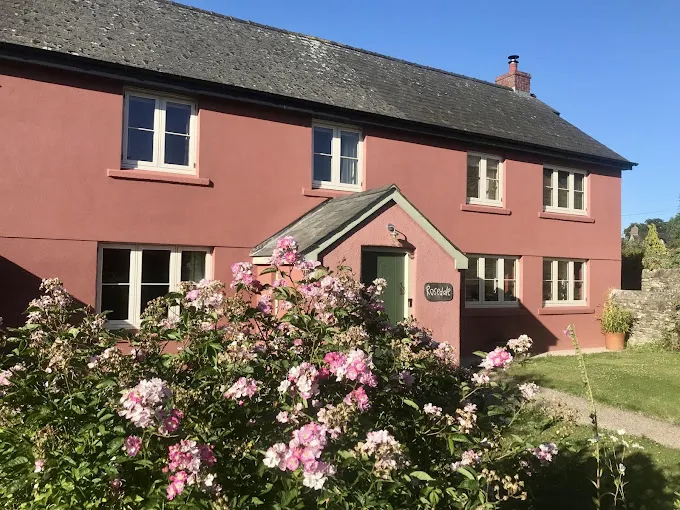
Expert External Rendering South Wales Guide

External rendering South Wales protects and transforms property exteriors – discover render types, costs, application methods, and how to choose the right specialist for your home or building.
Table of Contents
- What Is External Rendering and Why It Matters in South Wales
- Render Types Suited to the Welsh Climate
- External Rendering Costs and Project Timelines
- Choosing an External Rendering Specialist in South Wales
- Frequently Asked Questions
- Render System Comparison
- Coloured Rendering South Wales
- Practical Tips for Property Owners
- The Bottom Line
- Sources & Citations
Article Snapshot
External rendering South Wales is the application of a protective and decorative coating to exterior walls, shielding properties from the region’s persistent rainfall, coastal salt air, and temperature fluctuations. Modern render systems – including silicone, monocouche, and cement-based options – provide durable, low-maintenance finishes suitable for South Wales conditions.
External Rendering South Wales in Context
- Average cost to render a house in the UK: £5,000 (MyJobQuote, 2025)[1]
- Silicone render costs £30–£70 per m² installed (MyJobQuote, 2025)[1]
- A typical professional rendering project takes 7–10 days to complete (MyJobQuote, 2025)[1]
- 50% of cavity wall insulation failures were recorded in surveyed Welsh properties (TheGreenAge, 2025)[2]
What Is External Rendering and Why It Matters in South Wales
External rendering South Wales is the process of applying a protective mortar or polymer-based coating to the outer surface of a building’s walls, providing weather resistance, structural protection, and aesthetic improvement. For South Wales property owners, this is not simply a cosmetic upgrade – it is an important defence against one of the most challenging climates in the UK.
South Wales receives some of the highest annual rainfall figures in England and Wales, and coastal areas from Swansea to Mumbles face the added burden of salt-laden air driven inland by Atlantic weather systems. Properties throughout Swansea, Cardiff, Newport, and Bridgend are regularly exposed to persistent moisture, wind-driven rain, and freeze-thaw cycles that erode untreated masonry and cause unprotected cement or lime renders to crack, hollow, and fail prematurely.
Coloured Rendering South Wales has been addressing these challenges since 1998, specifying and applying render systems that are matched to local conditions rather than relying on generic mainland UK approaches. The distinction matters: a render appropriate for a sheltered suburban street in the English Midlands is wholly inadequate for a semi-detached home in Pontarddulais or a terraced row in the Rhondda Valley.
Call Us
As Rendering Experts noted, “The Welsh climate presents unique challenges for external finishes. Properties throughout South Wales face persistent rainfall, occasional coastal storms, and varying temperatures that can cause traditional renders to crack or fail” (Rendering Experts, 2025)[3]. This reality shapes every decision around material selection, substrate preparation, and application method for external wall rendering in the region.
Beyond protection, external rendering delivers immediate kerb appeal improvements. A freshly rendered property in a neutral or through-coloured finish transforms the appearance of a 1930s semi, a Victorian terrace, or a 1980s commercial block. When combined with external wall insulation, rendering also delivers measurable thermal performance gains – reducing heating costs and improving Energy Performance Certificate ratings, which carries increasing importance for landlords and sellers in the Welsh property market.
Render Types Suited to the Welsh Climate
Selecting the correct render system for a South Wales property requires matching material properties to the specific exposure conditions, substrate type, and aesthetic outcome required by the owner.
Thin Coat Silicone Render
Thin coat silicone render is the most technically advanced finish available for external wall rendering, and it performs exceptionally well in the Welsh climate. Silicone’s molecular structure gives it inherent flexibility, allowing the render to accommodate minor structural movement without cracking – a critical advantage in older South Wales properties where thermal expansion and contraction cycles are severe. The material is simultaneously waterproof and breathable, preventing moisture ingress while allowing water vapour trapped within the wall to escape. Self-cleaning properties mean that rainfall washes surface dirt away, keeping the finish looking fresh without periodic repainting. Silicone render costs £30–£70 per m² installed (MyJobQuote, 2025)[1], reflecting its superior performance characteristics. For coastal properties in Mumbles, the Gower Peninsula, or Porthcawl, silicone render is the recommended specification. You can explore facade render and paint systems from leading manufacturers to understand the full range of silicone formulations available.
Monocouche Through Colour Render
Monocouche render – the term derives from the French for “single coat” – is a cement-based product supplied pre-coloured throughout its full thickness. Applied in a single pass, it eliminates the need for a separate painted finish, with colour consistent from surface to substrate. This means minor chips or surface abrasion do not reveal a contrasting undercoat. Monocouche is well suited to new-build developments and housing schemes across South Wales where consistent appearance across multiple properties is required, and where maintenance-free performance over decades is a priority. “Cement rendering is the modern industry standard for external wall rendering,” according to MyJobQuote Analysts (MyJobQuote, 2025)[1], and monocouche represents the most refined expression of that standard.
One Coat Cement Render
One coat cement render remains a cost-effective and proven choice for South Wales properties where the owner intends to paint the finished surface. Using spray application technology, a consistent thickness is achieved across large wall areas more rapidly than traditional hand application allows. Cement render from £10 per m² (MyJobQuote, 2025)[1] offers an accessible entry point for property owners working within tighter budgets, with the flexibility to change exterior colour through repainting as preferences or market conditions change. Proper substrate preparation and priming remain important to achieving a durable bond, particularly on older South Wales masonry where previous render or paint layers need removal before a new system is applied.
External Wall Insulation with Render Finish
External wall insulation (EWI) combines a thermal insulation board fixed to the outer wall with a reinforced render finish applied over the top. In South Wales, where a significant proportion of housing stock comprises pre-1920 solid wall construction, EWI offers the only practical route to meaningful fabric heat loss reduction. Under permitted development rules applicable in Wales, EWI systems project up to 16 centimetres from the original wall without requiring planning permission in most cases (Welsh Government, 2018)[4]. The Welsh Government has highlighted that a whole-block approach across terraced or semi-detached rows reduces the visual impact of EWI systems on street character (Welsh Government, 2018)[4]. TheGreenAge has noted that “South Wales is particularly susceptible to cavity wall insulation failure because of its characteristically wet weather!” (TheGreenAge, 2025)[2], making EWI with a quality render finish a more reliable long-term solution for many Welsh properties. You can read more about external wall insulation options in South Wales for further guidance on system selection.
External Rendering Costs and Project Timelines
Understanding the realistic costs and timescales for external rendering in South Wales helps property owners plan projects effectively and evaluate quotations with confidence.
The average cost to render a house in the UK sits at approximately £5,000 (MyJobQuote, 2025)[1], though this figure covers a wide range of property sizes, render types, and site conditions. A compact two-bedroom terraced house requiring one coat cement render will sit at the lower end of the cost range, while a larger detached property specified for thin coat silicone render over an EWI system represents a considerably higher investment. Silicone render is priced at £30–£70 per m² supply and install (MyJobQuote, 2025)[1], with variation driven by finish texture, colour, manufacturer system, and scaffolding requirements.
Where pebbledash removal is required before new render is applied – a common situation with older South Wales properties – the average removal cost is £4,950 (MyJobQuote, 2025)[1]. This preparation work is non-negotiable: applying new render over failing or poorly adhered existing finishes is one of the most common causes of premature render failure.
In terms of project duration, a professional rendering team completes a standard house rendering project in 7–10 days (MyJobQuote, 2025)[1]. EWI installations involving full insulation board fixing, mesh reinforcement, and finish coat application take longer. TheGreenAge Contractors advise that EWI work “normally takes about 2-3 weeks to complete (weather permitting)” (TheGreenAge, 2025)[2]. The weather caveat is particularly relevant in South Wales, where rain interrupts external work – a factor experienced local contractors account for in their project scheduling. Spray rendering technology accelerates application compared to hand methods, reducing on-site time without compromising finish quality, which is particularly valuable when scaffolding hire is a significant component of project cost.
Choosing an External Rendering Specialist in South Wales
Selecting the right rendering contractor for a South Wales property is as important as choosing the right render system – poor workmanship with premium materials still produces poor results.
What Qualifications and Accreditations Matter
For EWI installations, look for contractors holding recognised accreditations such as Baumit Approved EWI Applicator status with City and Guilds Assured certification. These qualifications indicate that the installer has been assessed against the manufacturer’s technical standards and is authorised to install systems that carry manufacturer-backed warranties of 10–25 years. Uncertified EWI installation voids product warranties and leaves property owners without recourse if failures occur. For standard external rendering projects, membership of relevant trade bodies and a demonstrable portfolio of completed work in South Wales conditions are the most reliable indicators of competence. Always request references from previous clients and, where possible, inspect completed projects in person before committing.
Spray Application Versus Hand Application
Spray rendering applies the render mix to the wall surface using pressurised equipment, achieving consistent coverage and texture across large areas in a fraction of the time required by hand application. For property developers completing multiple units on a South Wales housing scheme, or landlords upgrading a portfolio of Bridgend rental properties during tenant changeovers, spray application delivers material cost and time savings that translate directly into project economics. Hand application remains appropriate for smaller areas, intricate detailing around windows and architectural features, and repair work where matching an existing texture is required. An experienced contractor will advise on the most appropriate method for each specific project, rather than applying a single approach to every job.
Red Flags to Avoid
Be cautious of contractors offering unusually low prices without a clear explanation of materials and specification. External rendering is not an area where cutting corners on materials or preparation goes unnoticed – failures become visible within one to two years, and remediation costs exceed the original project cost. Verify that any contractor you engage carries appropriate public liability insurance, and ensure that a written quotation clearly identifies the render system, manufacturer, coverage area, and warranty terms before any work begins. Local knowledge of South Wales substrates, existing render types, and coastal exposure conditions is an asset that contractors based in the region consistently show over those operating from further afield.
Your Most Common Questions
How long does external rendering last in South Wales?
The lifespan of external rendering in South Wales depends heavily on the render system chosen and the quality of the initial application. Thin coat silicone render, when properly applied to a correctly prepared substrate, performs for 20–30 years with minimal maintenance. Its flexibility and self-cleaning properties make it particularly well suited to the persistent moisture and temperature fluctuation cycles common across South Wales. Monocouche through colour render has a comparable lifespan when applied to sound masonry, with through-colouring ensuring the finish remains consistent even as minor surface weathering occurs. One coat cement renders over a painted finish require repainting every 8–12 years depending on exposure, but the render substrate itself lasts considerably longer when the paint layer is maintained. EWI systems with silicone or acrylic top coats carry manufacturer-backed warranties of 10–25 years from approved applicators, providing documented performance guarantees. Properties in highly exposed coastal locations – on the Gower Peninsula or along the Swansea Bay frontage, for example – experience accelerated weathering compared to sheltered inland sites, which is why correct render specification for the specific site exposure is so important rather than applying a generic standard to every property.
Do I need planning permission for external rendering in Wales?
In most cases, applying render to a house in Wales does not require planning permission, as it falls within permitted development rights. However, there are important exceptions. Properties in conservation areas, listed buildings, and certain designated areas require consent before external finishes are altered, since render colour and texture can materially affect the character of a street or historic environment. If you live in a terrace or semi-detached property in a Welsh conservation area – many of which exist in towns across the South Wales valleys and coastal settlements – contact your local planning authority before proceeding. For EWI systems, permitted development rules in Wales permit projection of up to 16 centimetres from the original wall face without planning permission in most circumstances (Welsh Government, 2018)[4]. Beyond that projection, or where the property falls within a restricted area, a planning application will be required. Your rendering contractor should be able to advise on this as part of the initial consultation, and reputable South Wales specialists will flag any potential planning considerations before work begins.
What is the best render for a coastal property in South Wales?
Thin coat silicone render is the most suitable finish for coastal properties in South Wales. Its polymer-modified formulation provides outstanding resistance to water penetration, salt air, and the micro-cracking that results from thermal expansion and contraction – all of which are intensified in exposed coastal environments such as the Gower Peninsula, Mumbles, Porthcawl, and Barry Island. Silicone’s breathability is equally important: coastal properties experience fluctuating humidity levels, and a render that traps internal moisture accelerates masonry deterioration rather than protecting it. The self-cleaning properties of silicone render mean that salt deposits and organic growth from coastal air are washed away by rainfall, maintaining the property’s appearance without regular manual cleaning. Acrylic renders perform adequately in coastal conditions but offer less flexibility than silicone and lack the same level of self-cleaning capability. Traditional sand and cement render is not recommended for exposed coastal sites in South Wales, as its rigidity makes it susceptible to cracking from structural movement and thermal cycling, allowing salt water ingress at crack points that accelerates deterioration of the masonry behind.
Can external rendering fix damp problems in a South Wales property?
External rendering addresses certain types of damp – specifically penetrating damp caused by water ingress through the outer wall face. When the existing render or masonry surface has cracked, deteriorated, or become porous, rainwater driven against the wall by South Wales weather conditions works through to internal surfaces. A correctly specified new render system, particularly silicone-based products, creates a strong waterproof barrier that stops this mechanism of water ingress. However, rendering is not a universal damp solution: rising damp caused by a failed or absent damp proof course, condensation caused by insufficient ventilation, and internal plumbing leaks all require separate diagnosis and treatment. Applying render over these problems without addressing their root cause will not resolve the damp and conceals it until more serious structural damage occurs. Note that 50% of cavity wall insulation failures were recorded in surveyed Welsh properties (TheGreenAge, 2025)[2], and failed cavity insulation causes precisely the kind of internal dampness that is sometimes misdiagnosed as penetrating damp. A thorough survey by an experienced South Wales rendering specialist will identify the correct cause before recommending a solution.
Render System Comparison for South Wales Properties
Different render systems offer distinct advantages depending on property type, budget, and exposure conditions. The table below compares the four main options available to South Wales property owners across the most important decision criteria.
| Render System | Cost per m² | Maintenance Level | Coastal Suitability | Lifespan |
|---|---|---|---|---|
| Thin Coat Silicone Render | £30–£70 (MyJobQuote, 2025)[1] | Very Low – self-cleaning | Excellent | 20–30 years |
| Monocouche Through Colour Render | Mid-range | Low – no painting required | Good | 20–25 years |
| One Coat Cement Render | From £10 per m² (MyJobQuote, 2025)[1] | Moderate – periodic repainting | Moderate | 15–20 years (painted) |
| EWI with Render Finish | Higher – system cost | Low – with silicone top coat | Good to Excellent | 10–25 year warranty |
Coloured Rendering South Wales
Coloured Rendering South Wales has delivered external rendering south wales services since 1998, building a portfolio of completed projects across Swansea, Cardiff, Newport, Bridgend, and the wider South Wales region. With over 25 years of hands-on experience, the company applies spray rendering technology to achieve consistent, high-quality finishes for both residential and commercial clients – completing projects in significantly less time than traditional hand application methods allow.
The company holds Baumit Approved EWI Applicator status with City and Guilds Assured accreditation, authorising installation of Baumit StarTop premium silicone render and complete EWI systems with manufacturer-backed warranties of up to 25 years. This certification matters to property owners because it provides documented long-term protection that informal or uncertified work cannot offer. The company’s service range covers thin coat silicone render, monocouche through colour render, one coat cement render, rendering repairs, and full external wall insulation systems – meaning clients receive consistent expert advice across every stage of a property’s exterior.
“With over 15 years in the building trade I have experienced several different plasterers all offering different styles and finishes. Geoff’s thin coat spray finish render would rival the best and I can’t recommend his team enough to someone thinking of using him. His professionalism and work ethic has stood out from many of the others we have worked with.” – Keri Hopkins, Google Review
“We’re 100% happy and wouldn’t hesitate to recommend Jeff. His workmanship is excellent and we’re also very happy with the product he recommended to eradicate the penetrating damp and give our house a great new look and lease of life.” – Alistair Legge, Google Review
To learn more about the team and the company’s approach, visit the About us – Learn more about our experienced team and rendering expertise page. For EWI projects specifically, the EWI Specialists South Wales – expert external wall insulation installations for energy efficiency page provides full details of available systems and manufacturer warranties. Contact the team on 07815 868070 or email geoff@colouredrenderingsouthwales.com, or use the Contact Coloured Rendering South Wales for a free quote or consultation on your rendering project page to request your free quotation.
Practical Tips for Property Owners
Acting on sound practical advice before, during, and after an external rendering project in South Wales makes a meaningful difference to the durability and appearance of the finished result.
Prioritise substrate assessment before specifying a render system. The condition of the wall behind the render determines which systems are suitable and what preparation is required. Hollow, blown, or contaminated existing render must be removed before new materials are applied. Skipping this step is the single most common cause of early render failure across South Wales properties.
Time your project around the weather calendar. External rendering requires dry, frost-free conditions for proper curing. In South Wales, this means avoiding the deep winter months and planning ahead for spring or autumn application windows. Discuss your contractor’s weather contingency approach before signing a contract – experienced local teams will build flexibility into project scheduling.
Choose through-coloured or self-coloured systems if you want to minimise long-term maintenance. Silicone and monocouche renders require no periodic repainting, which delivers tangible cost savings over a 20-year ownership period. A landlord managing a portfolio of Bridgend properties, for example, eliminates a significant recurring maintenance cost by switching from painted cement render to a through-coloured system.
Consider EWI at the same time as re-rendering. If your property has solid walls and rising energy costs are a concern, combining EWI with a new render finish addresses both problems in a single project. The disruption and scaffolding costs are incurred once rather than twice, and the thermal improvements deliver ongoing savings that contribute to the project’s return on investment.
Check your property’s planning status before proceeding. Properties in conservation areas, on the Gower Area of Outstanding Natural Beauty, or in certain listed building designations require consent before external finishes are changed. Confirm this with your local authority or with your rendering contractor before committing to materials or colours. The UK Building Regulations Approved Documents provide reference guidance on relevant compliance requirements for external wall systems.
Request a written specification with your quotation. A credible contractor will specify the render manufacturer, system name, coverage area, application method, and warranty terms in writing. This protects you if disputes arise and confirms that the materials proposed match your requirements. For completed project examples, the Rendering Repairs South Wales – professional repairs and maintenance for external wall renders page presents the range of work undertaken across the region.
The Bottom Line
External rendering South Wales is a meaningful investment that protects masonry from the region’s challenging climate, improves property appearance, and – when combined with external wall insulation – delivers measurable energy efficiency improvements. The right render system, correctly specified for the site’s exposure conditions and substrate type, provides two to three decades of low-maintenance performance without repainting or significant upkeep.
Selecting a contractor with proven local experience, relevant accreditations, and a transparent written specification process is as important as the material choice itself. Coloured Rendering South Wales has built its reputation since 1998 on exactly those foundations – local knowledge, certified installation standards, and consistent quality across every project.
Contact Geoff and the team today on 07815 868070 or email geoff@colouredrenderingsouthwales.com for a free property assessment and quotation. Alternatively, visit Home page of Coloured Rendering South Wales – expert spray rendering and external wall insulation services across South Wales to explore the full range of services available.
Sources & Citations
- How Much Does It Cost to Render a House in 2025? MyJobQuote.
https://www.myjobquote.co.uk/costs/rendering-a-house - External Wall Insulation in South Wales. TheGreenAge.
https://www.thegreenage.co.uk/external-wall-insulation-in-south-wales/ - Best Renderers in South Wales: Expert Guide to Quality. Coloured Rendering South Wales.
https://www.colouredrenderingsouthwales.com/best-renderers-in-south-wales/ - External Solid Wall Insulation. Welsh Government.
https://www.gov.wales/sites/default/files/publications/2018-09/external-solid-wall-insultation.pdf
