
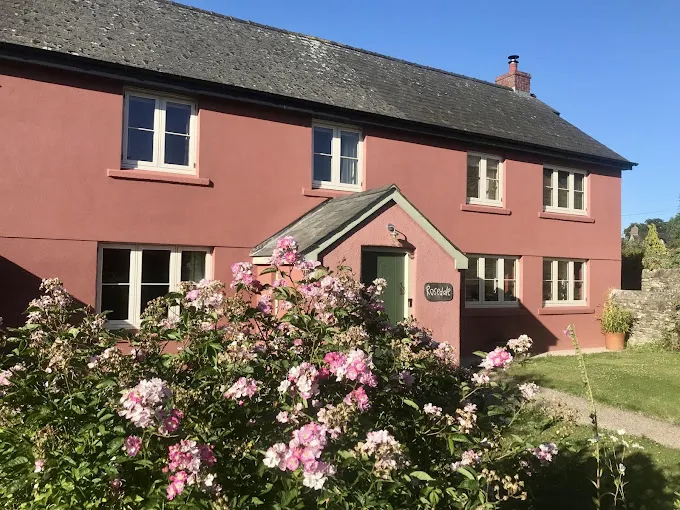
Monocouche Rendering Bridgend: Durable Through-Colour Render Finish

Learn about monocouche rendering Bridgend, a single-coat through-coloured render that provides a weatherproof, low-maintenance finish. Discover benefits, costs, and expert spray application for your South Wales home.
Table of Contents
- What Is Monocouche Rendering?
- Benefits of Monocouche Rendering for Bridgend Properties
- The Spray Application Process: Faster and More Efficient
- Cost and Long-Term Value of Monocouche Rendering in Bridgend
- What People Are Asking
- Monocouche Render vs. Other External Finishes
- Your Local Monocouche Rendering Specialist
- Practical Tips for Choosing Monocouche Rendering in Bridgend
- Final Thoughts on monocouche rendering bridgend
Key Takeaway
Monocouche rendering Bridgend is a single-coat, through-coloured render system that provides a durable, weather-resistant finish without the need for ongoing painting. It combines basecoat and finish in one application, delivering a low-maintenance external wall solution ideal for South Wales properties.
Quick Stats: monocouche rendering bridgend
- Around a third of heat in an uninsulated home is lost through the walls, which external wall insulation and modern render systems help reduce (Energy Saving Trust, 2025)[1].
- Around 8.5 million dwellings in England have solid walls, a construction type that commonly relies on external rendering to manage moisture and weather resistance (Department for Levelling Up, Housing and Communities, 2022)[2].
What Is Monocouche Rendering and How Does It Work?
Monocouche rendering Bridgend is a modern, single-coat cement-based render that is pre-coloured throughout its entire thickness. Unlike traditional multi-layered renders, a monocouche system combines the basecoat and decorative finish into one application, eliminating the need for separate painting or topcoats. The word “monocouche” translates from French as “single coat,” and the material is applied in a single pass – either by trowel or, more efficiently, by professional spray equipment – to a thickness of around 15–20 mm. Once cured, the render forms a weather-resistant, breathable shell that protects the underlying masonry while allowing trapped moisture to escape. Because the colour is integral to the render mix, it does not fade, peel, or flake like painted surfaces, delivering a consistent appearance that lasts for decades. Coloured Rendering South Wales, serving homeowners across Bridgend and the wider South Wales region, has been applying monocouche render for over 25 years, using spray techniques that ensure a uniform, flawless finish every time.
The chemistry of monocouche relies on high-quality white cement, carefully graded aggregates, and advanced polymer additives. These components give the render excellent adhesion to brick, block, and concrete substrates, and the reinforced matrix resists cracking far better than traditional sand and cement. When applied correctly, the system is suitable for properties in Bridgend’s variable climate, where driving rain and damp conditions quickly degrade inferior external coatings. The through-coloured formulation means that if the surface is ever scratched or chipped, the exposed colour remains the same as the outer finish, making repairs virtually invisible. This combination of durability, low maintenance, and aesthetic flexibility has made monocouche a popular choice for both new-build developments and renovation projects across South Wales.
Benefits of Monocouche Rendering for Bridgend Properties
Monocouche rendering Bridgend delivers a range of practical and aesthetic benefits that directly address the challenges of the local climate and housing stock. The first and most immediate advantage is the elimination of regular external painting. Because the colour is integral to the render, there is no paint to blister, crack, or fade under Bridgend’s frequent rain and UV exposure. Homeowners in areas such as Bridgend, Porthcawl, and the Llynfi Valley encounter strong winds and salt-laden air, yet a properly specified monocouche render remains stable and colourfast for at least 25 years. This longevity translates into significantly reduced lifetime maintenance costs compared to painted masonry or traditional sand and cement renders that require repainting every 5–7 years.
Call Us
Another key benefit is the render’s breathability. Monocouche systems are formulated to be waterproof yet vapour-permeable, meaning they repel rain and driven moisture while allowing water vapour from inside the property to escape. This is especially important for solid-wall properties, which make up a large proportion of Bridgend’s housing stock. Without a breathable render, trapped moisture leads to penetrating damp, mould growth, and eventual structural degradation. The material’s high flexibility also helps it to accommodate minor thermal movement, reducing the risk of hairline cracking that plagues cement renders. The smooth, contemporary finish – available in a palette of whites, creams, greys, and pastel shades – improves kerb appeal, potentially increasing a property’s market value. For Bridgend homeowners looking to update a tired exterior, a monocouche render offers a modern look that also provides strong protection against the Welsh elements.
The Spray Application Process: Faster and More Efficient
Monocouche rendering Bridgend is most effectively applied using professional spray equipment, a technique that Coloured Rendering South Wales has perfected over more than two decades. The process begins with thorough preparation of the substrate: old, loose paint or render is removed, cracks are repaired, and the wall is cleaned to ensure a sound key. A primer or bonding agent is applied to improve adhesion, and any necessary expansion joints are installed. The monocouche render is then mixed on-site to the required consistency and pumped through a high-pressure spray gun. The operator applies the material in a single, even coat to the desired thickness – around 15–20 mm – working methodically across the elevation. Once the render has been sprayed, it is left to firm up slightly before being scraped back to a flat, uniform surface using a purpose-designed rule. The surface is then finished with a float or plastic trowel to achieve the chosen texture, from a smooth, contemporary appearance to a light, sand-textured grain.
Spray application offers significant advantages over traditional hand-trowelling. It is much faster, reducing the time a property is exposed to the weather during the works, and it delivers a consistent, uniform thickness that is difficult to achieve by hand. This uniformity is critical for the render’s long-term performance, as uneven thickness leads to differential drying and cracking. For a typical semi-detached house in Bridgend, a skilled spray team completes the rendering in as little as 4–5 days, compared to 7–10 days for hand application. The speed of the process also minimises disruption to the occupants, and the professional finish enhances the property’s appearance immediately. Coloured Rendering South Wales’s spray rendering expertise ensures that every job meets the manufacturer’s specifications and UK building standards, giving homeowners confidence that their investment is protected.
Cost and Long-Term Value of Monocouche Rendering in Bridgend
Monocouche rendering Bridgend represents a mid-range investment in external wall finishes, with costs falling between £50 and £100 per square metre depending on the project’s size, access, and the condition of the substrate. For a standard three-bedroom semi-detached house, the total cost is likely to be in the region of £6,000–£10,000, including preparation, materials, and labour. While this is higher than the upfront cost of a painted sand and cement render, the lifetime value of a monocouche system is far superior. The absence of recurring painting costs – around £2,000–£3,000 per repaint cycle – means that over a 25-year period, the total cost of ownership is lower than that of a traditional render. A well-executed monocouche finish adds tangible value to a property, with estate agents reporting that a fresh, modern render improves saleability and the final sale price by several thousand pounds.
When evaluating the cost, consider what is included in the quotation. A reputable installer like Coloured Rendering South Wales will provide a detailed breakdown that covers scaffolding, substrate preparation, rendering, and any necessary finishing details such as window reveals and expansion joints. The company offers free, no-obligation quotes and consultations, allowing Bridgend homeowners to understand exactly what is involved before committing. External factors such as the need for planning permission in conservation areas, or the inclusion of external wall insulation beneath the render, also affect the final price. However, for most properties, monocouche rendering is a cost-effective way to achieve a durable, attractive finish that will protect the home for decades and eliminate the headache of ongoing external maintenance.
What People Are Asking
What is monocouche rendering and how does it differ from traditional sand and cement render?
Monocouche rendering is a single-coat, through-coloured render that combines basecoat and decorative finish in one application, whereas traditional sand and cement render is applied in multiple layers and then painted. Monocouche eliminates the need for repainting, is more flexible and crack-resistant, and provides a consistent colour that will not fade, peel, or flake over time. The integral colour also means that any scratches or chips are less noticeable, and the breathable formulation helps to manage moisture within the walls, making it superior for solid-wall properties common in Bridgend.
How long does monocouche rendering last on a property in Bridgend?
Monocouche rendering lasts 25 years or more on a Bridgend property when correctly installed by a professional. The render’s durability is due to its polymer-modified formulation, which resists cracking, colour fading, and water penetration. The South Wales climate, with its heavy rainfall and coastal winds, demands a strong external finish, and monocouche provides a long-term solution with minimal maintenance. Regular inspections and occasional cleaning are sufficient to keep the render in good condition for decades.
Is monocouche rendering suitable for coastal properties near Bridgend?
Yes, monocouche rendering is suitable for coastal properties near Bridgend, provided the correct specification is chosen. The render is waterproof and breathable, repelling rain and salt spray while allowing moisture to escape. For homes in exposed locations such as Porthcawl or Ogmore-by-Sea, select a render with enhanced water-repellent additives and use a specialist primer. Regular washing down with fresh water also helps remove salt deposits and prolongs the life of the finish. A local rendering expert advises on the best formulation for the specific coastal environment.
How much does monocouche rendering cost for a typical 3-bedroom house in Bridgend?
Monocouche rendering for a typical 3-bedroom house in Bridgend costs £6,000 to £10,000, depending on wall area, access, and existing substrate condition. This price includes scaffolding, preparation, the render application, and finishing details. The exact cost will vary, so obtain a free, no-obligation quote from a local specialist like Coloured Rendering South Wales, who surveys the property and provides a detailed breakdown tailored to the specific project.
Monocouche Render vs. Other External Finishes
Choosing the right external finish for a Bridgend home involves weighing up the cost, durability, and maintenance requirements of each option. Monocouche rendering Bridgend sits in a sweet spot between traditional painted renders and high-end silicone systems. To help you compare, we have summarised the key characteristics of four common external finishes in the table below.
| Finish | Application | Maintenance | Durability | Relative Cost |
|---|---|---|---|---|
| Traditional Sand/Cement Render | Multiple coats, hand-applied | Requires repainting every 5–7 years | 10–15 years before major repairs | Low initial cost, high lifetime cost |
| Monocouche Rendering Bridgend | Single coat, spray or trowel | No painting required; occasional cleaning | 25+ years | Moderate initial cost, very low lifetime cost |
| Thin Coat Silicone Render | Base coat plus thin top coat, spray-applied | Self-cleaning; minimal maintenance | 25+ years | Higher initial cost, low lifetime cost |
| Painted Brickwork | Paint applied to existing masonry | Repainting every 3–5 years | 5–10 years for paint system | Very low initial cost, high ongoing cost |
As the table shows, monocouche rendering offers an excellent balance of cost and longevity, making it a popular choice for homeowners across Bridgend who want to avoid the repeated expense and hassle of repainting.
Your Local Monocouche Rendering Specialist
If you are considering monocouche rendering Bridgend, Coloured Rendering South Wales brings over 25 years of local expertise to every project. Founded in 1998 in Swansea, the company has built a reputation for high-quality plastering and spray rendering across the region, including Bridgend, Cardiff, Newport, and the South Wales valleys. The team specialises in monocouche through-colour render, thin coat silicone render, and one coat cement render, applied using professional spray equipment that delivers a faster, more consistent finish than traditional hand application. As a EWI Specialists South Wales – expert external wall insulation installations for energy efficiency, the company also combines external wall insulation with monocouche render to improve your home’s energy performance while giving it a fresh, modern look.
Customer satisfaction is at the heart of the business, evidenced by a perfect 5.0 Google rating from many reviews. David Lamb, a satisfied client, says: “Excellent finish. Geoff worked in my house, both an outside render and throughout the house. Couldn’t be happier with the finish and completely reliable. Would recommend this company 100%. Maybe not the cheapest quote I had but worth every penny.” – David Lamb. Another long-term customer, Hywel Morrish, adds: “When I need something plastering or general building work, Geoff is always my first call. Very professional and does great work. Highly recommended.” – Hywel Morrish. The company also offers Rendering Repairs South Wales – professional repairs and maintenance for external wall renders, ensuring that any existing render problems are addressed before a new monocouche system is applied. For a free, no-obligation quote on monocouche rendering Bridgend, call 07815 868070 or visit the contact page to arrange a consultation.
Practical Tips for Choosing Monocouche Rendering in Bridgend
Selecting the right monocouche rendering system and installer will ensure a high-quality finish that lasts for decades. Here are some practical tips for Bridgend homeowners:
- Assess your property’s substrate. Brick, block, and concrete walls all suit monocouche rendering, but the condition of the existing masonry matters. Cracks and damp patches should be investigated and repaired before rendering begins. A professional survey identifies any issues that affect the render’s performance.
- Choose a reputable installer with local experience. Look for a company with a proven track record in Bridgend and South Wales. Check online reviews, ask for references, and verify that the installer is manufacturer-trained and insured. A local expert will understand the specific weather and building conditions that affect render performance in the area.
- Consider the colour and finish carefully. Monocouche render is available in a wide range of colours, from bright whites to soft greys and creams. The colour you choose will be permanent, so it is worth viewing samples on a large area and in different lighting conditions. A lighter colour helps reflect heat and keep the property cooler in summer, while darker shades create a striking contemporary look.
- Ask about warranties and guarantees. A professional installer should provide a written guarantee for their workmanship, and the render manufacturer offers a product warranty of 10 years or more. Ensure you understand what is covered and for how long before work begins.
Final Thoughts on monocouche rendering bridgend
Monocouche rendering Bridgend offers a compelling combination of durability, aesthetic appeal, and low maintenance that is ideally suited to the South Wales climate. The single-coat, through-coloured system eliminates the need for regular painting, resists cracking and water penetration, and improves the appearance of any property. Whether you are renovating an older solid-wall house or finishing a new build, a professional monocouche render provides a long-term, cost-effective solution that protects and enhances your home. To discuss your project and receive a free, tailored quote, contact Coloured Rendering South Wales on 07815 868070 or visit the contact page today.
Useful Resources
- Solid wall insulation. Energy Saving Trust.
https://energysavingtrust.org.uk/advice/solid-wall-insulation/ - English Housing Survey 2021 to 2022: headline report. Department for Levelling Up, Housing and Communities.
https://www.gov.uk/government/statistics/english-housing-survey-2021-to-2022-headline-report
