
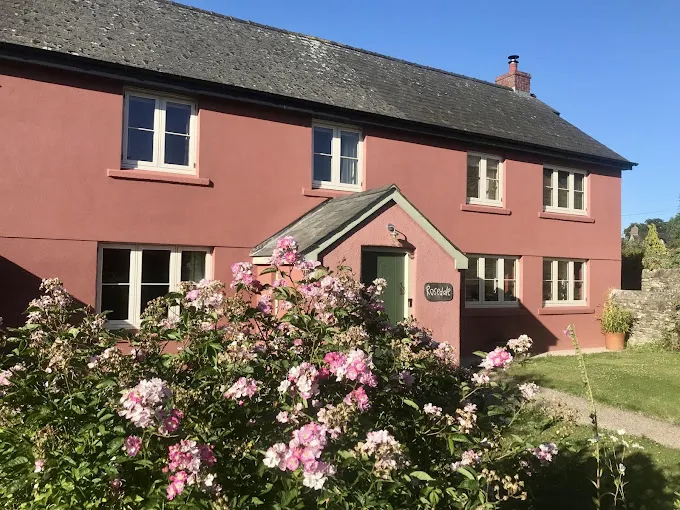
Silicone Rendering Port Talbot: Expert Guide

Silicone rendering Port Talbot delivers a weatherproof, low-maintenance external wall finish suited to the coastal climate of South Wales – discover the systems, benefits, and application methods that protect properties for decades.
Table of Contents
- What Is Silicone Rendering?
- Why Port Talbot Properties Need It
- Silicone Rendering Systems and Application
- Costs, Longevity, and Property Value
- Frequently Asked Questions
- Comparing External Render Systems
- Coloured Rendering South Wales
- Practical Tips for Property Owners
- The Bottom Line
- Sources & Citations
Article Snapshot
Silicone rendering Port Talbot is a premium external wall coating system that bonds to masonry surfaces and cures into a flexible, waterproof, and breathable finish. It resists cracking, repels driving rain and salt air, requires minimal maintenance, and holds colour for decades without repainting.
What Is Silicone Rendering?
Silicone rendering Port Talbot is a modern external wall finish that uses polymer-modified silicone resins to create a highly durable, weather-resistant coating on brick, block, concrete, and insulation boards. Unlike traditional sand-and-cement renders, silicone render is pre-mixed, factory-coloured, and applied in a thin coat – between 1.5 mm and 3 mm – over a prepared substrate or reinforced basecoat. Coloured Rendering South Wales has been specifying and installing silicone render systems throughout the Port Talbot and wider South Wales area since 1998, giving property owners access to over 25 years of localised expertise.
The chemistry behind silicone render explains its performance advantages. Silicone polymers create a hydrophobic surface that causes water to bead and run off rather than penetrate the wall, yet the finish remains vapour-permeable – meaning moisture within the wall structure escapes outward. This combination of waterproofing and breathability is important for older masonry properties common in Port Talbot, where trapping moisture behind an impermeable coating accelerates deterioration rather than preventing it.
Silicone render is available in a wide range of through-colours, meaning the pigment runs through the full depth of the material rather than sitting on the surface. As a result, minor surface abrasion does not expose a different colour beneath, and the finish does not require painting at any point during its service life. Self-cleaning properties further reduce maintenance: the hydrophobic surface prevents airborne dirt and algae from adhering, so rainfall gradually rinses the facade clean.
Call Us
For Port Talbot properties in particular – where westerly Atlantic weather, industrial proximity, and coastal salt air combine to place heavy demands on external finishes – silicone render offers a level of protection that traditional cement render and painted systems struggle to match over the long term. Its flexibility accommodates minor structural movement without cracking, making it well-suited to the mix of Victorian terraces, inter-war semi-detached homes, and post-war housing stock found across the town.
Why Port Talbot Properties Need Silicone Render
Port Talbot’s geography and climate create some of the most demanding conditions for external wall finishes in South Wales. The town sits in a coastal strip between Swansea Bay and the Afan Valley, directly exposed to south-westerly winds that carry salt-laden moisture off the Bristol Channel. Annual rainfall in the area is substantial, with prolonged periods of wind-driven rain that probe any weakness in an external render system.
Salt air is particularly destructive to traditional cement renders. Chloride ions carried in the marine aerosol penetrate micro-cracks in rigid cement finishes, accelerating the carbonation of the substrate and causing spalling, cracking, and hollow patches. Properties within a kilometre of the shoreline – including much of Aberavon and the beachfront areas – experience accelerated render degradation that reduces the effective lifespan of a standard sand-and-cement coat to as little as ten to fifteen years before significant repairs or replacement become necessary.
Silicone render addresses these vulnerabilities directly. Its flexibility means it accommodates the micro-movement that rigid cement renders resist until they crack. Its hydrophobic surface repels salt-moisture penetration rather than absorbing it. And because it is applied over a reinforced mesh basecoat, the finished system distributes stress across the wall surface rather than concentrating it at weak points. For a coloured rendering solution in coastal South Wales, silicone systems represent the most specification-appropriate choice available.
Beyond the coastal challenge, Port Talbot’s housing stock presents practical reasons to choose silicone render. Many properties are solid-walled, built before the cavity wall became standard practice in the mid-twentieth century. Solid walls conduct heat more readily than cavity walls, and their external surfaces bear the full force of weather without the buffer a cavity provides. Applying silicone render – particularly as part of an external wall insulation system – addresses both weather protection and thermal performance simultaneously, delivering dual benefits that a repaint or a traditional sand-and-cement repair cannot offer.
Kerb appeal is a further consideration for Port Talbot homeowners. Properties with cracked, stained, or mismatched render finishes suffer at valuation and take longer to sell. A fresh silicone render in a contemporary colour transforms a tired facade and signals to buyers that the property has been properly maintained and protected.
Silicone Rendering Systems and Application
Silicone render systems installed in Port Talbot and across South Wales consist of several coordinated layers, each performing a specific function in the overall protective assembly. Understanding the system structure helps property owners evaluate quotations and distinguish between genuine thin coat silicone render installations and cheaper alternatives marketed using similar terminology.
A standard thin coat silicone render system begins with surface preparation. Existing render must be checked for hollow patches by tapping across the face – hollow areas must be cut out and repaired with compatible material before any new system is applied. Loose, friable, or contaminated surfaces are cleaned or treated. Where the substrate is a smooth-faced block or dense concrete, a bonding agent or specialist primer is applied to ensure adequate adhesion of the basecoat.
The basecoat – sometimes called the reinforcing coat – is a polymer-modified adhesive mortar applied to the prepared wall. A fibre-reinforced mesh is pressed into the wet basecoat and embedded, creating a tensile layer that bridges minor cracks in the substrate and provides mechanical resistance to impact. Once cured, a primer coat compatible with the chosen silicone render is applied. The primer serves to even out the absorbency of the basecoat surface and improve adhesion of the finish coat.
The silicone render finish coat is then applied, either by spray or by hand. Spray application – the method used by our team at Coloured Rendering South Wales – produces a highly consistent texture and thickness across the wall surface, eliminating the variation in coverage that hand application introduces over large areas. Spray application is also significantly faster: a wall area that would take two experienced operatives a full day to hand-apply is sprayed to a finished standard in a few hours, reducing overall project duration and the associated disruption to occupants.
For Port Talbot properties requiring improved thermal performance as well as weather protection, silicone render is available as the finish coat in a full external wall insulation system. In this configuration, insulation boards are mechanically fixed and adhesively bonded to the existing wall before the basecoat, mesh, primer, and silicone finish are applied over them. The result is a composite assembly that improves the wall’s U-value, eliminates cold bridging at the wall face, and delivers a fresh, durable external finish – all in a single coordinated installation. Our team are certified as a Baumit Approved EWI Applicator with City & Guilds Assured accreditation, enabling installations backed by manufacturer warranties of up to 25 years.
Detailing at junctions – around window reveals, door frames, soffits, and at the base of walls – requires particular care in exposed coastal locations like Port Talbot. Poorly detailed junctions are the primary entry point for water in render systems, regardless of how well the field areas of render have been applied. Correct use of stop beads, starter tracks, and flexible sealants at these junctions is what separates a system that performs for twenty-five years from one that begins to fail within five.
Costs, Longevity, and Property Value
Silicone rendering Port Talbot represents a higher upfront investment than repainting or applying a traditional sand-and-cement coat, but the whole-life cost calculation consistently favours the silicone system when maintenance requirements and service life are properly accounted for.
A traditional sand-and-cement render applied to a typical three-bedroom semi-detached house in Port Talbot requires repainting every five to eight years to maintain acceptable appearance and provide continued weather resistance. Exterior masonry paint costs money to supply and apply, scaffolding must be erected for upper floors, and each repainting cycle compounds the cost of keeping the property looking presentable. Over a twenty-year period, the cumulative painting and repair costs often exceed the premium paid for a silicone system installed at the outset.
Silicone render, by contrast, requires no repainting during its service life. The through-colour remains stable because UV-resistant pigments are integrated throughout the material rather than applied as a surface coating. Self-cleaning properties keep the facade looking fresh with nothing more than natural rainfall. The only routine maintenance required is an annual visual inspection of junctions and beads, with any small sealant repairs attended to promptly – work that takes a professional a short visit rather than a full scaffold-and-paint campaign.
Service life for properly installed silicone render systems on South Wales properties ranges from twenty to thirty years before any consideration of replacement, depending on exposure severity and system specification. Coastal properties in Aberavon or Sandfields, Port Talbot, at the more exposed end of the range, benefit from specifying a system with a higher silicone content and a coastal-grade primer. Properties on more sheltered inland streets in the town reasonably expect the upper end of that service range.
From a property value perspective, a professionally rendered facade in a contemporary colour with no visible cracking, staining, or maintenance requirement signals to prospective buyers that the home has been well maintained. Estate agents consistently note that kerb appeal influences first impressions at viewing and affects perceived value. For landlords managing rental properties in Port Talbot, the combination of improved tenant appeal and eliminated exterior painting maintenance represents a clear investment case – particularly when spread across a portfolio of properties where painting contracts recur regularly.
When requesting quotations for silicone rendering in Port Talbot, property owners should ensure that quotations specify the full system: preparation, basecoat, mesh, primer, and finish coat – not just the material and labour for applying the top coat. A quotation that omits the reinforcing layer or skips the primer appears competitive but delivers a system that will not perform to the standards silicone render achieves.
Your Most Common Questions
How long does silicone render last on a Port Talbot property?
A properly installed thin coat silicone render system on a Port Talbot property has a service life of twenty to thirty years, depending on the level of coastal exposure and the specification of the system used. Properties in Aberavon or directly facing Swansea Bay experience more aggressive salt-laden air and driving rain than those on sheltered streets further inland, so specifying a higher-grade silicone render with a coastal primer is worthwhile for the most exposed locations. The key factor determining longevity is the quality of installation rather than the material alone – a full system including a reinforced basecoat, embedded mesh, compatible primer, and correctly detailed junctions at windows and soffits will consistently outperform a finish coat applied directly over inadequate preparation. Routine maintenance is minimal: an annual check of sealant joints and edge beads, with prompt attention to any small gaps, is sufficient to protect the system for its full expected life. There is no requirement for repainting at any point, which is a significant advantage over painted cement renders that need attention every five to eight years.
Can silicone render be applied over existing cement render in Port Talbot?
Silicone render is applied over existing cement render only if the existing render is thoroughly assessed and confirmed to be sound, well-bonded, and free from hollow patches before any new system is installed. The standard test is to tap across the entire wall face – a hollow sound indicates delamination, meaning that area must be cut out and made good with a compatible repair mortar before any overcoating proceeds. Applying silicone render over hollow or failing cement render traps the problem rather than solving it, and the new system will eventually fail along the same fault lines as the render beneath. Where an existing render is largely sound but has surface contamination, algae, or friable areas, these must be cleaned and treated before the new system is applied. If the existing render is extensively damaged, full removal and re-rendering from the substrate is the correct approach and will deliver a better long-term result than attempting to save a compromised base. An experienced rendering specialist will assess the condition of your existing walls honestly and recommend the most appropriate course of action rather than overcoating problems that will return.
What colours are available for silicone rendering in Port Talbot?
Silicone render is available in an extensive range of through-colours, with most leading manufacturers offering hundreds of standard shades and the ability to match colours to standard reference systems. For Port Talbot and South Wales properties, popular choices include light neutrals such as white, cream, and light grey, which maximise light reflection and maintain a clean appearance in the coastal light, as well as contemporary mid-tones such as warm stone, anthracite grey, and sage green that suit both traditional and modern property styles. Because the pigment runs through the full depth of the material, the colour remains stable over decades without fading in the same way that surface-applied paint does. UV-resistant pigments are integral to quality silicone render formulations, ensuring that even strong colours retain their appearance in the exposed conditions of coastal South Wales. When selecting a colour, view manufacturer sample boards in natural daylight at your property, as render colours shift slightly in tone depending on surrounding light conditions. Our team assists with colour selection and provides samples to help you make a confident choice before any material is ordered.
Is silicone rendering suitable for older Port Talbot properties with solid walls?
Silicone rendering is particularly well-suited to older solid-walled properties, which represent a significant proportion of the housing stock in Port Talbot and the surrounding area. Solid walls built from brick or stone before cavity wall construction became standard conduct heat more readily than modern cavity walls, and their external faces are fully exposed to weather without the protection a cavity provides. Silicone render applied over a reinforced basecoat provides a strong weather barrier that reduces moisture ingress into the wall structure, which is especially important for solid masonry that absorbs and retains water. For solid-walled properties where thermal performance is a priority, silicone render applied as the finish coat of a full external wall insulation system delivers a significant improvement in the wall’s insulating value alongside the weather protection, reducing heating costs and improving comfort levels without requiring any internal works. The breathability of silicone render is particularly important for older properties: unlike impermeable coatings such as smooth masonry paint or some acrylic renders, silicone render allows moisture that enters the wall through other pathways to escape outward, reducing the risk of trapped dampness causing deterioration of the wall structure or internal condensation.
Comparing External Render Systems
Choosing the right external render for a Port Talbot property means weighing up cost, performance, maintenance, and suitability for coastal exposure. The table below compares four common approaches to help you understand the trade-offs involved.
| Render System | Typical Service Life | Maintenance Required | Coastal Suitability | Colour Retention |
|---|---|---|---|---|
| Thin coat silicone render | 20-30 years | Minimal – no repainting required | Excellent – flexible and hydrophobic | Excellent – through-colour, UV stable |
| Monocouche through-colour cement render | 15-25 years | Low – no painting, occasional cleaning | Good – weather-resistant but less flexible | Good – through-colour but fades over time |
| One coat cement render (painted) | 10-15 years before repainting | High – exterior painting every 5-8 years | Moderate – rigid, prone to cracking in exposed areas | Poor – surface paint fades and peels |
| External wall insulation with silicone finish | 25+ years | Minimal – no repainting required | Excellent – full composite system | Excellent – premium silicone finish coat |
Coloured Rendering South Wales
Coloured Rendering South Wales has delivered professional spray rendering and plastering services throughout South Wales since 1998. Based in Swansea and operating across the region – including Port Talbot, Bridgend, Cardiff, and Newport – our team brings over 25 years of experience to every project, from single-property silicone render installations through to large-scale external wall insulation programmes for developers and landlords.
We specialise in thin coat silicone render, monocouche through-colour render, one coat cement render, and full EWI systems. As a certified EWI Specialists South Wales – expert external wall insulation installations for energy efficiency, we are approved to install Baumit StarTop premium silicone render with manufacturer-backed warranties of up to 25 years. Our spray application technology enables faster project completion with consistently uniform coverage – a genuine advantage for property owners who want quality results with minimal disruption.
Our team’s work speaks for itself in the reviews left by clients across South Wales. “With over 15 years in the building trade I have experienced several different plasterers all offering different styles and finishes. Geoff’s thin coat spray finish render would rival the best and I can’t recommend his team enough to someone thinking of using him. His professionalism and work ethic has stood out from many of the others we have worked with.” – Keri Hopkins, Google Review
“We’re 100% happy and wouldn’t hesitate to recommend Jeff. His workmanship is excellent and we’re also very happy with the product he recommended to eradicate the penetrating damp and give our house a great new look and lease of life.” – Alistair Legge, Google Review
Whether you are a homeowner in Port Talbot looking to protect a coastal property, a developer finishing a new build scheme, or a landlord upgrading a rental portfolio, we provide a free consultation and detailed quotation tailored to your property and objectives. Contact Coloured Rendering South Wales for a free quote or consultation on your rendering project – call us on 07815 868070 or email geoff@colouredrenderingsouthwales.com.
Practical Tips for Port Talbot Property Owners
Getting the most from a silicone render installation starts before any material is applied. The following guidance helps property owners in Port Talbot plan effectively and protect their investment for the long term.
Assess your existing render honestly before overcoating. If your current render sounds hollow in places, has visible cracking, or shows signs of delamination, commission a full condition survey before accepting any quotation that proposes to work over the top of it. Silicone render applied over a failing substrate will not save the underlying problem – it will simply delay and worsen it.
Specify the full system, not just the finish coat. A genuine thin coat silicone render installation includes substrate preparation, a polymer-modified basecoat, embedded fibre-reinforcement mesh, a compatible primer, and the silicone finish. Any quotation that omits the reinforcing layer or the primer to reduce cost is not quoting the same system and should be queried directly.
Pay attention to junction detailing. In coastal Port Talbot, the most common point of water entry in a render system is at the junctions: around window frames, at the base of walls, at soffits, and where the render meets other materials. Ensure your specification includes appropriate movement beads, starter tracks, and flexible sealants at all these junctions. Review this detailing on Baumit’s guidance on facade renders and paints to understand what a compliant installation should include.
Choose colour with future flexibility in mind. Very light colours show algae growth more readily in damp coastal conditions, while very dark colours make thermal movement more noticeable. Mid-tones and contemporary neutrals balance aesthetics and practicality well for most Port Talbot properties.
Time your installation for suitable weather. Silicone render should not be applied in freezing conditions or when rain is forecast within the initial curing period. Spring and early autumn are the most suitable periods for render installations in South Wales, offering moderate temperatures and lower rainfall probability than the winter months.
Plan for access requirements early. Scaffold or mobile access platforms must be in place before rendering begins. For terraced properties common in Port Talbot, access logistics and neighbour liaison should be confirmed well in advance of the start date. Check UK Building Regulations Approved Documents to understand any notification requirements for work affecting party wall boundaries or public footpaths.
Ask about warranties and certification. Quality silicone render systems from manufacturers such as Baumit carry material warranties of up to 25 years when installed by approved applicators. Confirm that your chosen contractor holds the relevant accreditation and can provide documented warranty coverage for the system being installed – not just a verbal assurance.
The Bottom Line
Silicone rendering Port Talbot delivers a weatherproof, low-maintenance external finish that is genuinely well-matched to the demands of the local coastal climate. Its combination of flexibility, breathability, hydrophobic surface performance, and through-colour stability makes it the specification of choice for properties exposed to salt air, driving rain, and the temperature cycling that South Wales winters bring.
The whole-life cost advantage over painted cement systems is clear when maintenance cycles are properly counted: no repainting, no recurring scaffold costs, and a service life of twenty to thirty years with nothing more than routine junction checks. For solid-walled properties, the option to combine silicone render with external wall insulation adds meaningful thermal performance improvements to the weather protection and aesthetic benefits.
To arrange a free assessment and quotation for your Port Talbot property, call Coloured Rendering South Wales on 07815 868070, email geoff@colouredrenderingsouthwales.com, or visit the home page of Coloured Rendering South Wales – expert spray rendering and external wall insulation services across South Wales.
Sources & Citations
- Choose The Perfect Facade, Renders & Paints. Baumit.
https://baumit.co.uk/guides/facade-renders-and-paints - UK Building Regulations – Approved Documents. GOV.UK.
https://www.gov.uk/guidance/approved-documents
