
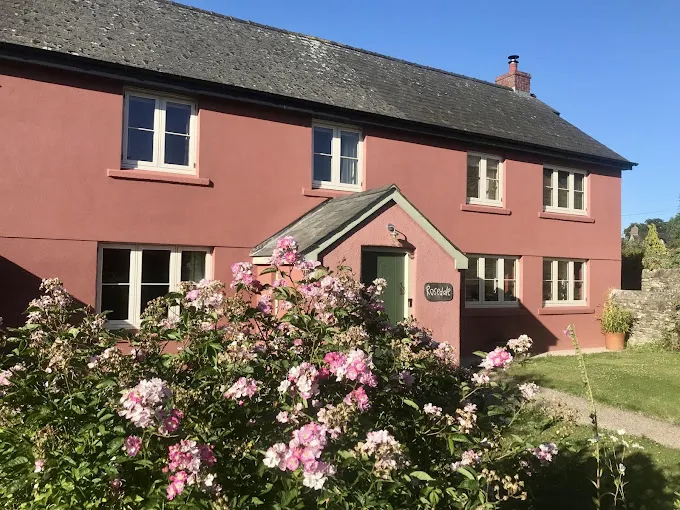
Rendering Contractors Mumbles: Complete Guide

Rendering contractors Mumbles homeowners and property developers trust must combine technical expertise with an understanding of the area’s challenging coastal climate – here is everything you need to know before hiring.
Table of Contents
- What Rendering Contractors in Mumbles Do
- Render Types Suited to Coastal Mumbles Properties
- How to Choose the Right Rendering Contractor
- Costs, Timelines, and What to Expect
- Frequently Asked Questions
- Comparison: Render Systems for Coastal Properties
- Coloured Rendering South Wales
- Practical Tips for Mumbles Property Owners
- The Bottom Line
- Sources & Citations
Article Snapshot
Rendering contractors Mumbles is the search term for professionals who apply protective and decorative external wall coatings to properties in this coastal Swansea village. Choosing the right contractor means verifying experience with salt-air exposure, silicone render systems, and spray application – all important for long-term performance on the Gower coastline.
Market Snapshot
- The Remodelling Market Index (RMI) stood at 59 points in Q3 2025, the second time it has fallen below 60 since the survey began (National Association of Home Builders, 2025)[1]
- The number of remodelling contractors grew by 25 percent between 2017 and 2022, compared to 12 percent growth for builders over the same period (US Census Bureau, 2022)[2]
- Concrete material costs rose by 5 percent nationally in Q3 2025, reflecting ongoing pressure on external wall treatment budgets (Clear Estimates, 2025)[1]
What Rendering Contractors in Mumbles Do
Rendering contractors Mumbles specialists provide are trained tradespeople who prepare, apply, and finish external wall coatings that protect and transform the appearance of residential and commercial properties. In Mumbles specifically – a coastal village on the western edge of Swansea Bay – the role extends beyond a standard building finish: contractors must account for salt-laden sea air, high rainfall, and wind-driven moisture that accelerate the failure of poorly specified or incorrectly applied renders.
Coloured Rendering South Wales, based in Swansea and serving the Mumbles area for over 25 years, understands these local conditions firsthand and specifies materials accordingly.
The core work of a rendering contractor covers substrate assessment, surface preparation, primer application, render coat installation, and – where spray technology is used – machine-assisted finishing. External wall renovation of this kind serves multiple functions simultaneously: it seals the underlying masonry against water ingress, provides a decorative finish that improves kerb appeal, and in the case of external wall insulation systems, significantly improves thermal performance.
Call Us
In Mumbles, where many properties date from the Victorian and Edwardian eras, the challenge is often to stabilise ageing masonry that has absorbed decades of coastal moisture before any new render system is applied. A competent contractor will survey the wall for hollow patches, cracked sections, and failed adhesion before specifying a repair strategy – not simply coat over existing problems. This diagnostic phase is what separates experienced local rendering contractors from general builders who offer rendering as a secondary service.
Spray Rendering vs Hand Application in Coastal Settings
Spray rendering has become the preferred method for external wall finishing in coastal areas like Mumbles because it achieves consistent thickness across large surface areas in a single pass. A uniform coat is important where salt-air and driving rain test every weak point in the render film. Hand application, while still used for smaller repair sections and detailed work around windows and reveals, is slower and introduces variation in coat thickness that creates stress points over time. For full re-renders on exposed Mumbles properties, spray application combined with a silicone-modified render is the current best-practice specification.
Render Types Suited to Coastal Mumbles Properties
Selecting the correct render system is the single most consequential decision a Mumbles property owner makes when commissioning external wall work, and the coastal environment narrows the realistic options considerably.
Thin coat silicone render is widely regarded as the most appropriate finish for sea-facing and salt-affected properties in South Wales. The silicone binder gives the cured coat a degree of flexibility that cement-only renders cannot match, reducing the risk of hairline cracking when the substrate moves with seasonal temperature change. Silicone renders are hydrophobic – they repel liquid water at the surface – yet remain vapour-permeable, allowing any moisture already within the wall to escape outward. On a Victorian terrace in Mumbles where solid walls have absorbed decades of coastal moisture, this breathability prevents trapped water from building pressure behind the render film and causing delamination.
Monocouche through-colour render is a cement-based single-coat system where the colour runs throughout the product’s full depth rather than being applied as a surface paint. For Mumbles properties this offers a practical advantage: if the surface is scuffed or chipped, the underlying colour remains visible and the repair is less conspicuous. Monocouche systems are heavier than silicone thin coats and require careful detailing at window and door reveals to manage rainwater run-off, but they deliver a strong, low-maintenance finish suited to less severely exposed elevations.
One coat cement render remains a cost-effective choice for properties on more sheltered elevations or for property owners who prefer the flexibility to repaint the surface at a later date. It requires periodic redecoration – every eight to twelve years – and is more susceptible to surface carbonation and staining in coastal conditions than silicone alternatives. Used with appropriate primer and waterproof additive, it performs adequately on rear or sheltered elevations where direct salt-spray exposure is limited.
External wall insulation (EWI) systems combine a layer of high-performance insulation board with a reinforced render finish coat, addressing both thermal performance and external appearance in a single installation. For Mumbles properties with solid walls and poor EPC ratings, EWI delivers the greatest whole-property impact. The finish coat is a thin coat silicone render, combining the thermal benefits of insulation with the weather resistance of a modern render system. You can read more about EWI Specialists South Wales – expert external wall insulation installations for energy efficiency to understand whether your property qualifies.
Why Silicone Renders Outperform in the Gower Climate
The Gower Peninsula and its approaches through Mumbles receive some of the highest rainfall totals in Wales, combined with persistent south-westerly winds that drive moisture directly against south-facing and west-facing elevations. A silicone render’s self-cleaning behaviour – where rain washes surface contaminants clear rather than allowing them to bond to the coating – keeps rendered properties looking fresh without the algae and tide-marking that mars older cement renders on coastal streets. The long-term colour stability of silicone systems also reduces the repaint cycle, making them a financially sound choice over a ten to twenty-five year horizon.
How to Choose the Right Rendering Contractor
Identifying genuinely capable rendering contractors for Mumbles properties requires more than a quick price comparison, because the local environment makes specification errors costly to correct once the render has cured and adhered to the wall.
The first check is whether the contractor has direct experience with coastal render applications in South Wales specifically – not just general rendering experience from inland locations. Render systems behave differently under salt-air exposure and high humidity, and a contractor who learned their trade in a drier region will not recognise the early indicators of substrate moisture that require treatment before re-rendering. Ask for references from seafront or sea-facing properties and, where possible, visit those projects to inspect the finish after two or more winters.
Certification matters for certain render systems. Contractors approved by render manufacturers to install branded systems – such as Baumit-approved applicators for Baumit StarTop silicone render – can offer manufacturer-backed warranties that extend twenty-five years. A general contractor applying a manufacturer’s product without approved status cannot offer the same warranty, meaning the property owner carries the risk of system failure without recourse. Check whether your preferred contractor holds current approved applicator status with the system they are proposing.
The UK Building Regulations – Approved Documents set out the regulatory framework for external wall work, including requirements for thermal performance in renovation projects. Any contractor working on wall insulation or significant render replacement should show familiarity with the relevant approved documents, particularly Approved Document L for energy efficiency and Approved Document C for site preparation and resistance to contaminants and moisture.
Spray rendering capability is a practical differentiator for larger projects. Contractors equipped with professional spray rigs apply render at a consistent thickness across the full elevation, reducing labour time and eliminating the inconsistency in coat depth that hand application introduces on large flat surfaces. For a full house re-render in Mumbles, spray application reduces the on-site programme by thirty to fifty percent compared to hand application, which also reduces scaffold hire costs and disruption to neighbours in terrace situations.
Red Flags When Evaluating Render Quotes
Be cautious of quotations that do not specify the render product by name, as this makes it impossible to verify the system’s suitability for coastal conditions. Quotes that combine preparation and application into a single line item make it difficult to assess whether adequate remedial work is included. Independent verification of reviews – through Google or a recognised trade body – is more reliable than contractor-supplied testimonials. A reputable contractor should also be able to explain the preparation steps they intend to take on your specific property before any coatings are applied.
Costs, Timelines, and What to Expect
Understanding realistic cost ranges and project timescales helps Mumbles property owners plan budgets and evaluate whether quotations are reasonable, though exact figures vary significantly with property size, substrate condition, and the render system chosen.
For a standard semi-detached property in the Mumbles and Swansea area, a thin coat silicone render applied over a prepared substrate takes three to five days from scaffold erection to completion. A full Victorian terrace requiring substrate repairs before render application takes seven to ten days, particularly if hollow sections need cutting out and patching before the reinforcing mesh basecoat is applied. EWI installations with render finish are longer programmes – two to three weeks for a full house – because the insulation boards need time to cure before the finish coat is applied.
Material costs have continued to rise across the construction sector. Concrete and sand-cement materials rose by 5 percent nationally in Q3 2025 (Clear Estimates, 2025)[1], and this is reflected in the overall cost of renders that use cement-based components. Silicone render products have seen less dramatic price movement because the polymer component costs are more stable than commodity cement and aggregate prices.
The preparation phase carries significant cost implications that are sometimes underestimated in initial quotations. A property with widespread hollow render – common in Mumbles Victorian stock – requires removal and reinstatement of thirty to fifty percent of the existing render area before the new system is applied. Contractors who price only for application without surveying the substrate condition risk either under-quoting or presenting variation orders once on site, which is disruptive and breaks down the client relationship. A thorough survey at quotation stage is the mark of a reliable contractor.
Scaffolding is charged separately in South Wales and forms a material part of the project cost for two-storey properties. For terrace properties in Mumbles where scaffold access affects neighbours or requires pavement licences, allow for additional coordination time and potential local authority fees. Spray rendering’s faster application time directly reduces the scaffold hire period, which is a tangible saving on larger projects.
For an accurate assessment of your specific property, contact Coloured Rendering South Wales for a free quote or consultation on your rendering project – the team surveys properties without obligation before any quotation is issued.
Your Most Common Questions
How long does external render last on a Mumbles coastal property?
The lifespan of external render on a Mumbles property depends almost entirely on the system specified and the quality of preparation, rather than on time alone. A thin coat silicone render applied over a properly prepared and primed substrate in a coastal setting performs without significant maintenance for fifteen to twenty-five years. Manufacturer-backed warranties for certified installation systems – such as Baumit StarTop applied by a Baumit-approved contractor – extend to twenty-five years, providing documented long-term assurance.
Cement-based renders without silicone modification have a shorter service life in high-exposure coastal positions, ten to fifteen years before surface carbonation and salt crystallisation cause surface breakdown. Monocouche systems sit in the middle ground, offering reliable performance for fifteen to twenty years on moderately exposed elevations. The important variable in all cases is substrate preparation: a silicone render applied over a substrate retaining active moisture will still fail prematurely because the render film cannot permanently bond to a saturated surface. Proper drainage, damp-proofing, and surface preparation extend render life far more reliably than simply choosing the most expensive product available.
Do I need planning permission for external rendering in Mumbles?
Most external rendering work on standard residential properties in Mumbles falls within permitted development rights, meaning planning permission is not required. This includes applying new render systems, changing from unpainted to coloured render, and installing external wall insulation with a render finish, provided the works do not materially alter the footprint or height of the building.
However, there are important exceptions. Mumbles sits within the Gower Area of Outstanding Natural Beauty (AONB) and portions of the village are within conservation areas around the village centre. Properties within designated conservation areas are subject to Article 4 Directions that remove standard permitted development rights, and any significant change to the external appearance – including new render or a change in render colour – requires prior approval or full planning consent. Listed buildings require listed building consent for any external alterations regardless of conservation area status. Before commencing any render project, check with the City and County of Swansea Planning Department whether your specific property address is subject to any restrictions. Your rendering contractor should be able to advise on this based on their experience with local properties, though responsibility for planning compliance ultimately rests with the property owner.
What is the difference between spray rendering and hand-applied rendering?
Spray rendering uses a machine to mix and propel render material onto the wall surface at a controlled pressure and flow rate, producing a highly consistent coat thickness across large areas very quickly. Hand application uses a hawk and trowel to manually spread the render, which relies entirely on the plasterer’s skill to maintain even thickness and coverage across the elevation.
For Mumbles coastal properties, spray application offers practical advantages beyond speed. The consistent coat thickness achieved by spray means fewer weak spots in the render film where water finds a pathway through to the substrate. On a large exposed gable or seafront elevation, maintaining manual consistency by hand over a full day’s work is genuinely difficult, and inconsistencies in coat thickness create stress points when the wall expands and contracts with temperature change. Spray application also reduces the project programme significantly – completing a full house elevation in a single day that would take two to three days by hand – which reduces scaffold hire and general on-site disruption. The material is identical in both methods; the difference is entirely in application technique, consistency, and speed. Both approaches require the same substrate preparation standard, and spray application does not remove the need for careful hand finishing around windows, reveals, and external corners.
How do I know if my existing render needs replacing or just repairing?
The decision between render repair and full replacement depends on the extent and cause of the existing render’s deterioration, which requires a physical survey to assess properly. Surface cracking that does not penetrate fully through the render depth and is not accompanied by hollow sections is addressed with crack injection or surface filler and a new decorative coat, extending the life of the existing system at a fraction of full replacement cost.
Hollow sections – identified by a distinctive drum sound when the wall is tapped – indicate that the bond between the render and substrate has broken down, allowing water to enter behind the render film. Where hollow areas are localised and account for less than around twenty to thirty percent of the total wall area, targeted removal, preparation, and patch reinstatement is a practical solution. Where hollow patches are widespread, or where the cause is systemic – rising damp, embedded salt from long-term coastal exposure, or a previous render system that was incorrectly specified for the substrate – full removal and replacement is the more cost-effective long-term approach. A reputable contractor will assess the substrate condition honestly and recommend the appropriate scope rather than defaulting to the higher-value option. You can learn more about appropriate approaches at Rendering Repairs South Wales – professional repairs and maintenance for external wall renders.
Comparison: Render Systems for Coastal Properties
Choosing between render systems for a Mumbles property is not a one-size-fits-all decision. The table below compares the four main options across the criteria that matter most in a coastal South Wales environment, helping you and your contractor identify the right specification for your property’s exposure, age, and budget.
| Render System | Coastal Suitability | Maintenance Requirement | Typical Lifespan | Application Method |
|---|---|---|---|---|
| Thin Coat Silicone Render | Excellent – hydrophobic and vapour-permeable | Very low – self-cleaning surface | 15-25 years | Spray (preferred) or hand |
| Monocouche Through-Colour Render | Good – weather-resistant but less flexible | Low – no repainting required | 15-20 years | Spray or hand |
| One Coat Cement Render | Moderate – suitable for sheltered elevations | Medium – requires repainting every 8-12 years | 10-15 years (coastal) | Spray or hand |
| EWI with Silicone Finish | Excellent – insulated and fully weather-resistant | Very low | 20-25 years | Spray finish coat |
Coloured Rendering South Wales
Coloured Rendering South Wales has been providing specialist rendering and plastering services across Swansea and the wider South Wales region since 1998. With over 25 years of continuous operation, the team brings a depth of practical experience with local properties – Victorian terraces, Edwardian semis, modern new builds, and commercial premises – that is only built through decades of working in South Wales conditions.
The company holds Baumit Approved EWI Applicator status with City and Guilds Assured accreditation, which allows the team to install Baumit StarTop premium silicone render and full external wall insulation systems with manufacturer-backed warranties of up to 25 years. This certification matters for Mumbles property owners because it provides documented long-term protection that informal or uncertified rendering work cannot offer.
For Mumbles and the Gower coastline, the team specifies thin coat silicone render for exposed and sea-facing elevations, recognising that the combination of high rainfall, salt air, and wind-driven moisture demands a render system designed for exactly these conditions. Spray rendering technology allows completion of full house re-renders significantly faster than hand application, reducing scaffold hire periods and minimising disruption – a practical advantage in the tight terrace streets of Mumbles village.
The company carries a perfect 5.0 Google rating across numerous independent reviews. Two reviews capture the quality of service consistently delivered:
“With over 15 years in the building trade I have experienced several different plasterers all offering different styles and finishes. Geoff’s thin coat spray finish render would rival the best and I can’t recommend his team enough to someone thinking of using him.” – Keri Hopkins, Google Review
“We’re 100% happy and wouldn’t hesitate to recommend Jeff. His workmanship is excellent and we’re also very happy with the product he recommended to eradicate the penetrating damp and give our house a great new look and lease of life.” – Alistair Legge, Google Review
To discuss your Mumbles property, explore the full range of services at Home page of Coloured Rendering South Wales – expert spray rendering and external wall insulation services across South Wales, or view completed project examples at Gallery – View examples of our high-quality spray rendering and repair work.
Practical Tips for Mumbles Property Owners
Commissioning rendering work on a coastal Mumbles property involves decisions that have long-term consequences for both your property’s protection and your maintenance budget. The following guidance draws on best practice for properties in exposed coastal settings in South Wales.
Survey your walls before accepting any quotation. Walk around the property and tap the render surface at regular intervals with your knuckle – a hollow drum sound indicates debonded render that will need removing before any new system is applied. If widespread hollow areas are present, a quotation that does not include removal and substrate repair is almost certainly incomplete. A contractor who surveys your property thoroughly before pricing shows the kind of due diligence you want to see in the actual application work.
Request colour samples on your actual wall before committing to a colour. Render colours look different at scale than they do on a small card, and orientation affects how they read in different lighting conditions. On a south-facing Mumbles elevation in summer light, mid-tones appear significantly lighter than expected. Most reputable rendering contractors will apply a sample patch before the full application so you can assess the colour at full scale.
Time your project to avoid the winter months where possible. Render application in temperatures below 5°C or in frost conditions risks compromised curing, and many manufacturers’ warranties specify minimum application temperatures. The South Wales construction season runs most reliably from April through October, though mild winters extend the usable window. Your contractor will advise on the forecast conditions before committing to a start date.
Consider the Baumit guide to facade renders and paints for a detailed technical overview of how different render systems perform in varying climate conditions, which will help you engage more effectively with contractor recommendations. Understanding the fundamentals of the system being proposed allows you to ask better questions about the specification.
If your property is older with solid walls and high heating costs, obtain a current EPC assessment before commissioning a straightforward re-render. An EWI system with render finish qualifies for government grant support and delivers significantly greater whole-property benefit than render alone. The investment horizon for EWI is longer but the annual energy saving makes it the more financially rational choice, particularly for properties spending significantly on heating through the Gower winters.
The Bottom Line
Rendering contractors Mumbles property owners can rely on are those with specific experience of coastal South Wales conditions, verifiable references from exposed properties, and the technical accreditation to install modern silicone render and EWI systems with manufacturer warranty backing. The coastal environment at Mumbles demands a higher specification than is needed inland, and investing in the right system from the outset avoids premature failure and the cost of repeat work.
Coloured Rendering South Wales has over 25 years of experience specifying and applying render systems across Swansea, Mumbles, and the wider South Wales coastline. To arrange a free no-obligation property survey and quotation, call 07815 868070, email geoff@colouredrenderingsouthwales.com, or visit the contact page to submit an enquiry directly.
Sources & Citations
- Remodelers in the Know: Fall 2025 Industry Trends. Clear Estimates.
https://www.clearestimates.com/blog/remodelers-in-the-know-fall-2025-industry-trends - NAHB Remodelers Now Outnumber Home Builders by 65% in the U.S. Build Radicals / US Census Bureau.
https://www.buildradicals.com/industry-news/nahb-remodelers-now-outnumber-home-builders-by-65-in-the-u-s-20251231.html
