
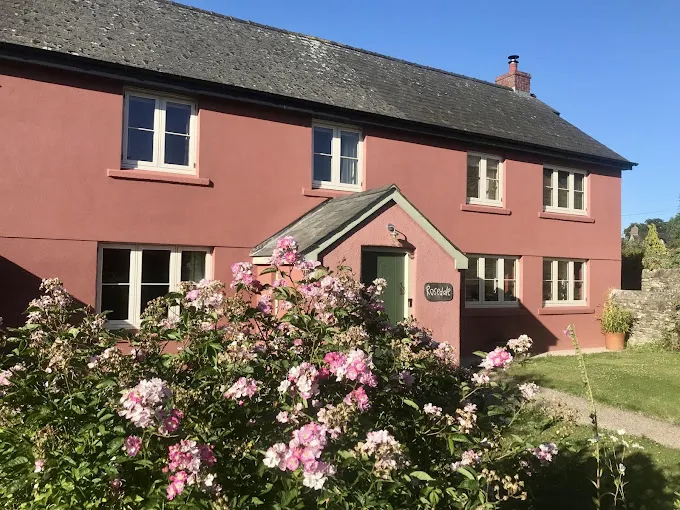
Wall Insulation Kidwelly: Expert External Solutions

Wall insulation Kidwelly homeowners and property owners need combines thermal performance with weather resistance – discover how external wall insulation protects and transforms properties across the Carmarthenshire area.
Table of Contents
- What Is External Wall Insulation?
- Benefits of Wall Insulation for Kidwelly Properties
- Render Systems and Finish Options
- The Wall Insulation Installation Process
- Frequently Asked Questions
- Comparing Wall Insulation Methods
- About Coloured Rendering South Wales
- Practical Tips for Property Owners
- Key Takeaways
Article Snapshot
Wall insulation Kidwelly is a thermal and weatherproofing upgrade applied to external walls, most commonly as an External Wall Insulation (EWI) system combining insulation boards with a protective render finish. It improves energy efficiency, reduces heating costs, and shields properties from Carmarthenshire’s wet Atlantic climate.
Wall Insulation Kidwelly in Context
- Only 9% of solid wall properties in Great Britain had been insulated as of December 2022, compared with 71% of cavity wall properties (Department for Energy Security and Net Zero, 2023)[1]
- 805,000 properties across Great Britain had solid wall insulation installed as of December 2022 (Department for Energy Security and Net Zero, 2023)[1]
- Properly insulated walls can save up to £380 per year on energy bills (WhatCost, 2025)[2]
- 46,900 households were upgraded under the Great British Insulation Scheme to the end of December 2024, with Wales recording 214 upgrades per 100,000 households (Department for Energy Security and Net Zero, 2025)[3]
What Is External Wall Insulation?
Wall insulation Kidwelly in its most effective form is an External Wall Insulation system – a layered solution fixed directly to the outside of a building’s walls to reduce heat loss, block wind-driven rain, and provide a fresh rendered finish. Coloured Rendering South Wales has delivered EWI installations across the Carmarthenshire region, including properties in and around Kidwelly, combining Baumit-certified materials with professional spray application for a durable, high-performance result.
An EWI system consists of three primary components. High-performance insulation boards – mineral wool or expanded polystyrene – are mechanically fixed to the external wall. A reinforcing mesh layer is then applied over the boards, embedded in a base coat to add structural integrity. Finally, a finish render coat is spray-applied to create the weatherproof outer surface. The entire assembly is designed to work as a system, with each layer contributing to both thermal performance and weather resistance.
Kidwelly sits in southwest Wales, close to the Tywi estuary and the Carmarthen Bay coastline. Properties here face persistent Atlantic rainfall, prevailing south-westerly winds, and the additional challenge of salt-laden air from the nearby coast. These conditions accelerate the deterioration of untreated or poorly specified external walls, making a correctly specified EWI system particularly valuable for homes and commercial premises in the area.
Call Us
Unlike internal insulation, which reduces room dimensions and requires internal works including the removal of skirting boards, radiators, and electrical fittings, external wall insulation preserves interior living space entirely. The insulation is added to the outside of the building envelope, meaning occupants can remain in the property during installation in most cases, and the disruption to daily life is significantly reduced.
Understanding the distinction between cavity wall construction and solid wall construction is important, because the two require different insulation approaches. Many properties built after the 1920s have cavity walls – two leaves of masonry with a gap between them – and these are insulated by injecting material into the cavity. Kidwelly has a significant stock of older stone and solid brick properties, particularly in and around the historic town centre, that lack a cavity and therefore require either external or internal insulation to achieve meaningful thermal improvements. EWI is the preferred solution for solid wall properties because it avoids the disruption and space loss associated with internal methods.
Benefits of Wall Insulation for Kidwelly Properties
External wall insulation delivers measurable improvements in energy efficiency, weather protection, and property value that are directly relevant to the conditions and housing stock found in Kidwelly and the wider Carmarthenshire area.
The most immediately quantifiable benefit is the reduction in heating costs. According to WhatCost research analysts, properly insulated walls can wipe £380 a year from your energy bill (WhatCost, 2025)[2]. For a property in Kidwelly that relies on solid masonry walls with no insulation, the heat loss through the wall fabric alone represents a substantial proportion of total energy expenditure. Adding an EWI system with an appropriate insulation thickness creates a continuous thermal barrier that dramatically reduces that loss.
Weather resistance is equally important for Carmarthenshire properties. The region regularly records some of the highest annual rainfall totals in Wales, and Kidwelly’s coastal proximity amplifies the effects of wind-driven rain. A well-specified EWI system with a silicone render finish creates a waterproof yet breathable outer surface. Water cannot penetrate inward, but any residual moisture within the wall structure migrates outward – an important characteristic that prevents the build-up of interstitial condensation and associated damp problems.
“Prior to 2013, Government schemes focused on insulating homes with cavity walls due to the costs involved with insulating solid wall properties. However, the focus has switched in recent years to harder or more expensive to treat properties due to policies like ECO, including solid wall properties,” noted the Department for Energy Security and Net Zero (2024)[4]. This policy shift reflects the growing recognition that solid wall properties – common throughout historic Welsh towns including Kidwelly – represent the next frontier of the UK’s energy efficiency programme.
Beyond energy savings, EWI improves thermal comfort by eliminating cold wall surfaces. Cold surfaces cause radiant heat loss from occupants even when air temperature is adequate, and they create condensation hot spots that lead to mould growth. Once external insulation is installed, internal wall surfaces maintain temperatures much closer to room air temperature, removing these comfort problems entirely.
Property value also benefits from a professionally rendered EWI installation. The fresh external appearance transforms a weathered or visually dated property into one with modern kerb appeal, and an improved Energy Performance Certificate (EPC) rating is increasingly valued by buyers and tenants. For landlords in Kidwelly managing properties subject to Minimum Energy Efficiency Standards, EWI combined with other measures is the difference between a compliant and a non-compliant letting.
Render Systems and Finish Options for Wall Insulation
The choice of render finish applied over an EWI system is as important as the insulation specification itself, directly affecting long-term weather performance, maintenance requirements, and the final appearance of the property.
Thin coat silicone render is the most widely specified finish for EWI systems in coastal and high-rainfall locations such as Kidwelly. Silicone polymers give the render exceptional water repellency while maintaining vapour permeability – the render sheds rain from its surface while still allowing moisture vapour to escape from within the wall. This combination is important in a wet climate. Silicone renders are also pre-coloured throughout their depth, meaning the colour does not rely on a surface coating that could flake or fade. The self-cleaning properties of silicone reduce the accumulation of algae and dirt, keeping the finish looking fresh over many years with minimal maintenance.
For properties where a more traditional appearance is required – a consideration in Kidwelly given its historic character and the presence of listed buildings in the surrounding area – monocouche through colour render offers a cement-based alternative with a textured, through-coloured finish. Monocouche is applied as a single coat that provides both colour and weather protection without any subsequent painting requirement. The finish is specified in a range of textures from fine scratch to more heavily textured profiles, allowing it to complement both traditional Welsh stone cottages and modern construction.
One coat cement render is a more economical option suitable for properties where the owner intends to paint the external surface to a chosen colour. While cement renders are highly durable and well-proven in UK conditions, they do require periodic repainting – at eight to twelve year intervals – to maintain both appearance and water resistance. Spray application of cement render by a trained operative produces a more consistent coating thickness than hand application and reduces project duration, which is particularly valuable when working on larger properties or development schemes.
The selection between these systems should account for the substrate, the level of exposure at the specific location, and the aesthetic requirements of the property. A seafront property in Kidwelly or on the nearby Gower Peninsula demands a different specification from an inland terraced house in Carmarthen. Choosing the right facade render and paint system involves balancing technical performance with aesthetic outcome, and working with an experienced specialist ensures the specification is correct for the conditions. You can also explore coloured rendering options for residential and commercial properties to understand the full range of finishes available.
Colour selection for through-coloured renders warrants careful thought. Darker colours absorb more solar radiation and dry more quickly after rain, but they also show dust and biological growth more readily than lighter tones. Lighter colours, particularly whites and creams, remain popular for traditional Welsh properties, while contemporary greys and anthracites suit modern builds and commercial premises. All colour options are UV-stable in quality silicone systems, maintaining their appearance without the fading associated with painted surfaces.
The Wall Insulation Installation Process
A correctly executed EWI installation follows a structured sequence of preparation, fixing, reinforcement, and finishing stages, each of which contributes to the long-term integrity and performance of the completed system.
Preparation is the foundation of a successful installation. The existing external wall must be assessed for structural defects, including any cracks, loose render, or areas of damp that need to be addressed before insulation is applied. Bridging over existing defects traps problems within the building fabric and compromises the new system. Where existing render is sound, EWI is applied directly over it in many cases. Where it is hollow, cracked, or contaminated, it should be removed and the substrate made good prior to installation. Professional rendering repairs in South Wales address these preparatory requirements as part of a comprehensive project assessment.
Insulation board fixing requires both mechanical and adhesive methods to ensure the boards remain securely attached throughout their service life. Boards are bonded to the wall using a purpose-designed adhesive mortar and then mechanically fixed with approved wall ties or fixings appropriate to the substrate. The number and pattern of mechanical fixings is determined by the height of the building and the wind load zone – exposed coastal locations such as Kidwelly require a higher fixing density than sheltered inland sites to resist the forces acting on the cladding during storm conditions.
Once the insulation boards are fixed, a base coat reinforced with alkali-resistant fibreglass mesh is applied across the entire surface. The mesh overlaps at all joints and is taken around corners and window reveals with additional reinforcement at stress concentration points. This reinforcement layer provides EWI with its impact resistance and prevents cracking at joints between boards. Once the base coat has cured to the appropriate hardness, a primer coat is applied to optimise adhesion and ensure a consistent suction for the finish render.
The finish render is then spray-applied by trained operatives using professional equipment. Spray application delivers significant advantages over hand application in both efficiency and quality – coverage rates are two to three times faster than trowel application, and the spray process produces a more uniform coating thickness across large wall areas. Consistent thickness is important not just for appearance but for performance, as variations in render thickness create stress concentrations that cause premature cracking.
Detailing around windows, doors, and other penetrations requires particular care. Expanding foam, purpose-designed trims, and sealants are used to create weathertight junctions at all openings. Failure to detail these junctions correctly is one of the most common causes of water ingress in EWI systems, so the quality of this work is as important as the quality of the main wall coverage. Upon completion, a thorough inspection confirms that all surfaces are uniformly finished and all junctions are properly sealed before the site is handed back to the client.
Your Most Common Questions
Is wall insulation Kidwelly suitable for older stone properties?
External wall insulation is suitable for most solid wall construction types, including the stone and solid brick properties common in Kidwelly and the surrounding Carmarthenshire countryside. However, older stone properties require careful assessment before installation. The permeability of traditional lime mortars means that some historic buildings need EWI systems specified with vapour-open materials to avoid trapping moisture within the wall fabric. Listed buildings and properties within conservation areas require planning consent before external changes are made, so checking with Carmarthenshire County Council’s planning department before proceeding is important. A specialist who understands both the technical requirements of EWI and the constraints applicable to historic Welsh properties is well placed to advise on the most appropriate approach and materials for your specific building.
How much does external wall insulation cost for a typical Kidwelly home?
The cost of external wall insulation varies depending on the size of the property, the insulation specification, the chosen render finish, and site-specific factors such as access requirements and the condition of existing walls. For a three-bedroom semi-detached home, the cost for solid wall external insulation is approximately £12,000 (WhatCost, 2025)[2]. This figure covers insulation boards, mesh, base coat, primer, and a quality render finish. Properties in exposed coastal locations near Kidwelly require enhanced fixing specifications and higher-performance render systems that affect the overall cost. Savings of up to £380 per year on energy bills (WhatCost, 2025)[2] mean that EWI delivers a return on investment over its service life. Funding support is also available through schemes such as the Great British Insulation Scheme or the Welsh Government’s Warm Homes programme, which can significantly reduce the upfront cost for eligible households.
What render finish works best in Kidwelly’s coastal climate?
Thin coat silicone render is the most appropriate finish for properties in and around Kidwelly given the area’s high annual rainfall, prevailing Atlantic winds, and salt air exposure from Carmarthen Bay. Silicone render offers superior water repellency compared with cement or acrylic alternatives, shedding rain from its surface while remaining vapour-permeable so that moisture within the wall escapes. Its self-cleaning properties reduce biological growth, which is a particular concern in the damp Welsh climate, and the pre-coloured formulation means the finish does not rely on a surface paint film that could crack or peel under repeated wetting and drying cycles. For properties where planning or conservation requirements favour a more traditional appearance, a monocouche through colour render provides a durable, cement-based alternative available in a range of textures. Your installer should specify the render system based on the precise exposure category of your property’s location, not simply on cost alone.
Can wall insulation be combined with a new external render finish?
Yes – external wall insulation and a new render finish are installed as a combined system rather than as separate operations. The insulation boards form the substrate over which the render system is built up in layers: base coat with reinforcing mesh, primer, and finish render. By choosing EWI, you achieve both improved thermal performance and a completely fresh external appearance in a single project. The render finish is specified as part of the EWI system to ensure compatibility between all layers, and system warranties from manufacturers such as Baumit cover the entire assembly rather than individual components. This integrated approach also means the finished surface seals and protects the insulation layer from the elements, so the two functions are inseparable in practice. If your property already has sound external render but lacks adequate insulation, EWI is applied directly over the existing surface following appropriate preparation and priming, avoiding the cost of complete render removal.
Comparing Wall Insulation Methods
Choosing the right insulation approach for a Kidwelly property depends on wall construction type, available space, planning constraints, and budget. The table below compares the three main methods applicable to South Wales housing stock to help you identify which solution suits your property best.
| Method | Best For | Energy Saving Potential | Interior Space Impact | Maintenance |
|---|---|---|---|---|
| External Wall Insulation (EWI) | Solid wall properties, coastal locations, properties requiring fresh render finish | High – continuous insulation layer eliminates thermal bridging; savings up to £380/yr (WhatCost, 2025)[2] | None – all work external | Low – render finish requires no regular repainting with silicone systems |
| Internal Wall Insulation | Properties where external changes are restricted (conservation areas, listed buildings) | High – comparable thermal improvement but with thermal bridging at floors and ceilings | Significant – reduces room dimensions by 75-100mm per wall | Low – internal plasterboard finish is maintenance-free |
| Cavity Wall Insulation | Post-1920s properties with cavity wall construction only | Moderate – effective for properties with unfilled cavities; 71% of eligible properties already treated (DESNZ, 2023)[1] | None – injected from outside | Very low – no visible finish to maintain |
About Coloured Rendering South Wales
Coloured Rendering South Wales is a Swansea-based plastering and spray rendering specialist with over 25 years of experience serving residential and commercial property owners across the region, including Kidwelly, Llanelli, Carmarthen, and the wider South Wales area. Established in 1998, the company has built a strong reputation for quality workmanship and reliable service, reflected in a perfect 5.0 Google rating across multiple independently verified reviews.
As a Baumit Approved EWI Applicator with City & Guilds Assured accreditation, the team is certified to install Baumit StarTop premium silicone render and full EWI systems with manufacturer-backed warranties of up to 25 years. This certification means property owners in Kidwelly receive not just skilled installation but documented, warranted protection for their investment – covering both the insulation system and the render finish.
The company’s core services relevant to wall insulation include External Wall Insulation systems, thin coat silicone render, monocouche through colour render, one coat cement render, and rendering repairs. Spray application technology enables project completion two to three times faster than traditional hand application, reducing disruption for occupants and meeting the timelines required by developers and landlords managing multiple properties.
“With over 15 years in the building trade I have experienced several different plasterers all offering different styles and finishes. Geoff’s thin coat spray finish render would rival the best and I can’t recommend his team enough to someone thinking of using him. His professionalism and work ethic has stood out from many of the others we have worked with.” – Keri Hopkins, Google Review
“We’re 100% happy and wouldn’t hesitate to recommend Jeff. His workmanship is excellent and we’re also very happy with the product he recommended to eradicate the penetrating damp and give our house a great new look and lease of life.” – Alistair Legge, Google Review
For property owners in Kidwelly and Carmarthenshire considering wall insulation, the team offers free initial consultations to assess your property and recommend the most appropriate EWI specification for your building type and location. Visit the EWI Specialists South Wales page for further information, or contact Coloured Rendering South Wales for a free quote or consultation on your rendering project.
Practical Tips for Kidwelly Property Owners
Before commissioning wall insulation for your Kidwelly property, carry out a basic condition survey of the existing external walls. Look for cracks, hollow-sounding sections when tapped, staining from water ingress, or biological growth such as moss and algae. These are indicators of existing problems that should be resolved before new insulation is installed over them. Addressing defects first protects your investment in the new system.
Check whether your property falls within a conservation area or carries listed building status. Kidwelly Castle and the surrounding historic town centre include properties subject to planning restrictions. Carmarthenshire County Council’s planning portal confirms the status of your address and advises on permitted development rights for external alterations.
Obtain at least two or three quotations for any EWI project, but compare them on a like-for-like basis. Quotations should specify the insulation board type and thickness, the render system, the manufacturer, and the warranty provided. A lower price that omits mechanical fixings, uses a non-certified render system, or provides no warranty is not a saving – it is a liability. Ask contractors whether they hold manufacturer certification for the systems they propose to install.
Consider the insulation thickness carefully in relation to your energy efficiency targets. A thicker board delivers a lower U-value and greater energy savings, but it also projects further from the wall face and requires careful detailing around windows and doors. In tight terraced streets, the additional wall thickness affects boundary clearances, so measure carefully before specifying.
Explore available funding before committing to full self-funding. The Great British Insulation Scheme, ECO4, and the Welsh Government’s Warm Homes Nest and Optimised Retrofit programmes all contribute to the cost of EWI for eligible properties and households. Eligibility criteria change regularly, so check current schemes at the time of your project. A certified EWI installer will advise on which schemes their work qualifies under.
Finally, time your project for the right season. Render finishes require appropriate temperature and humidity conditions during application and curing – above 5°C and not during prolonged wet weather. Spring and early autumn are the most reliable periods for external rendering work in South Wales, though professional installers will monitor forecasts and advise on suitable project windows.
Key Takeaways
Wall insulation Kidwelly properties need must account for solid wall construction, coastal weather exposure, and the specific demands of Carmarthenshire’s wet Atlantic climate. External wall insulation with a quality silicone render finish addresses all three factors in a single project – improving thermal performance, protecting against rain and salt air, and transforming the external appearance of the building. With only 9% of solid wall properties in Great Britain currently insulated (Department for Energy Security and Net Zero, 2023)[1], the opportunity to improve your property’s energy efficiency and comfort is significant.
To discuss your Kidwelly property with an experienced EWI specialist, contact Coloured Rendering South Wales directly. Call 07815 868070, email geoff@colouredrenderingsouthwales.com, or visit the home page of Coloured Rendering South Wales – expert spray rendering and external wall insulation services across South Wales to arrange a free site consultation.
Sources & Citations
- Household Energy Efficiency Statistical Release – Mar 23. Department for Energy Security and Net Zero.
https://assets.publishing.service.gov.uk/media/64230bbd3d885d000cdadd20/HEE_Stats_Detailed_Release_-_Mar_23.pdf - Insulation Statistics Guide 2025. WhatCost.
https://whatcost.co.uk/blog/insulation-statistics - GBIS Release February 2025. Department for Energy Security and Net Zero.
https://assets.publishing.service.gov.uk/media/67b4ddd34a80c6718b55bf5e/GBIS_Release_February_2025.xlsx - Household Energy Efficiency Statistics 2024. Department for Energy Security and Net Zero.
https://www.swiga.co.uk/news/post/household-energy-efficiency-statistics-2024/
