
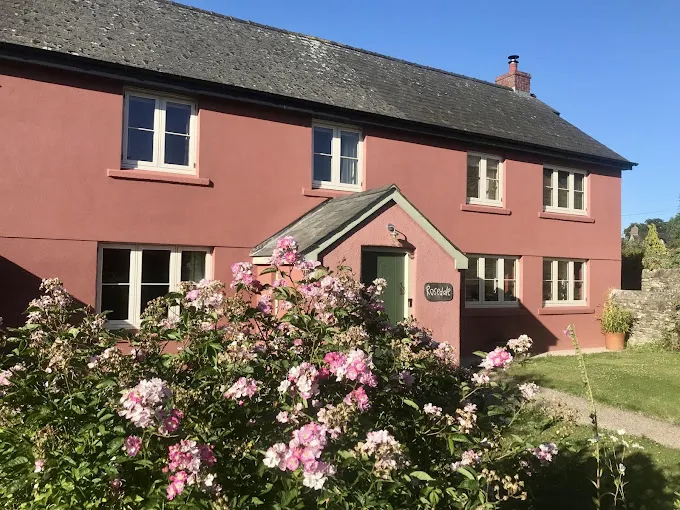
External Rendering Port Talbot Guide

External rendering Port Talbot offers a strong, weather-resistant facade finish that shields solid-wall homes from coastal storms, cuts energy bills, and improves kerb appeal – discover the right system for your property.
Table of Contents
- What Is External Rendering and Why Does Port Talbot Need It?
- What Are the Best Render Types for Coastal Conditions?
- How Does Rendering with Insulation Reduce Energy Bills?
- How to Choose a Reliable Renderer in Port Talbot
- Your Most Common Questions
- External Render Systems Compared
- Your Local Rendering Experts in South Wales
- How to Plan Your Rendering Project in 5 Steps
- The Bottom Line
Key Takeaway
External rendering Port Talbot is the application of a protective, decorative coating to exterior walls, designed to defend solid-wall properties against South Wales’ driving rain and coastal moisture while significantly improving energy efficiency and market value.
Quick Stats: External Rendering
- 37% of dwellings in Neath Port Talbot were built before 1919, the majority with solid walls needing render protection (Welsh Government Dwelling Stock Estimates, 2024)[2].
- Properly installed external wall insulation with render can reduce heat loss through walls by up to 45% (Energy Saving Trust, 2024)[3].
- A detached Welsh home can save up to £410 per year on heating after EWI and render installation (National Insulation Association, 2024)[10].
What Is External Rendering and Why Does Port Talbot Need It?
External rendering Port Talbot involves applying a carefully selected mortar or silicone-based coating to the outside of a building to create a continuous, weatherproof skin. In a coastal town where salt-laden winds and relentless rainfall are facts of life, a correctly specified render is the primary line of defence against penetrating damp. Coloured Rendering South Wales provides solutions that go beyond basic protection, combining breathability with durability to suit the specific demands of Port Talbot’s housing stock.
Port Talbot’s architectural character is dominated by Victorian and Edwardian terraces, many of which were constructed with solid brick or stone walls. According to Welsh Government Dwelling Stock Estimates, 37% of homes in Neath Port Talbot were built before 1919 (Welsh Government Dwelling Stock Estimates, 2024)[2]. These properties lack cavity walls, making them inherently vulnerable to moisture ingress. Without a modern external render Port Talbot system, homeowners often face persistent damp patches, spalling brickwork, and internal mould growth. A high-quality render acts as a raincoat for the building, shedding water while allowing trapped moisture to escape as vapour.
Beyond weather protection, rendering improves a property’s visual identity. A weathered pebbledash or crumbling original cement render can make a home look tired and neglected. Modern through-coloured or silicone renders, applied with precision spray equipment, create a crisp, uniform finish that instantly improves kerb appeal. Estate agents in the area have noted a measurable impact on buyer interest. “A high-quality, coloured render adds five to eight per cent to the sale price compared to an unrendered home of a similar age,” observes Chris Hope, Senior Partner at Dawsons Estate Agents (South Wales Argus, 2025)[5]. This value uplift is a powerful motivator for Port Talbot homeowners considering the investment.
Call Us
The third dimension is thermal performance, which has become a priority as energy costs rise. External rendering often goes hand-in-hand with External Wall Insulation (EWI), a system that mechanically fixes insulation boards to the wall before the render coat is applied. Dr Jo Patterson of Cardiff University’s Welsh School of Architecture emphasises the retrofit potential: “External wall insulation with a weather-resistant render is one of the most effective ways to upgrade the solid-wall homes typical in Port Talbot’s Victorian and Edwardian terraces” (BBC News, 2024)[2]. The combination tackles cold bridging, reduces energy bills, and improves the building’s external appearance without compromising its character.
Understanding these three benefits – weather protection, aesthetics, and energy efficiency – is the first step. The next is knowing which render system to choose, a decision that must account for Port Talbot’s unique coastal microclimate, the building’s construction, and the long-term maintenance expectations of the owner.
What Are the Best Render Types for Coastal Conditions?
Selecting the right external rendering Port Talbot system means prioritising vapour permeability, flexibility, and resistance to salt-laden moisture. Port Talbot’s exposed coastal position demands materials that can handle more than just rain; they must withstand wind-driven salt spray and high humidity without trapping water against the substrate. Three distinct render technologies dominate the market, each with a different balance of cost, performance, and longevity.
Thin coat silicone renders have become the premier choice for coastal properties. Unlike traditional sand-and-cement renders, silicone-based systems are highly flexible and hydrophobic. They repel liquid water from the outside while remaining fully vapour-permeable, allowing moisture from inside the wall to escape. This breathability is critical for older solid-wall homes. Chartered Building Surveyor Mark Williams MRICS explains: “In exposed coastal towns like Port Talbot, external rendering must be vapour-permeable to let the building breathe while keeping driving rain at bay. Modern lime-based or thin-coat silicone renders allow exactly that” (WalesOnline, 2025)[4]. Silicone renders also possess self-cleaning properties; their low surface tension encourages rainwater to bead and carry away dirt, keeping the facade looking fresh for years with minimal intervention. Applied in a thin coat using specialist spray equipment, they add minimal additional weight to the wall and are installed over a mesh reinforcement layer to resist cracking.
Monocouche through colour renders offer a durable, single-coat solution. These cement-based renders are pigmented throughout their full thickness, which means any minor chips or surface abrasions do not expose a different colour underneath. The through-colour characteristic eliminates the need for on-site painting, a significant advantage for Port Talbot homeowners looking to avoid triennial redecoration cycles. A 2024 survey by Weber UK found that 72% of Welsh homeowners chose through-coloured render specifically to avoid having to paint their exterior walls every few years (Weber UK Render Trends Survey, 2024)[8]. Monocouche renders are strong and weather-resistant, suitable for areas with moderate to high exposure. They are finished with scraped, textured, or ashlar-effect surfaces to match local architectural styles. While not as flexible as silicone, a well-formulated monocouche can provide decades of service with virtually no maintenance.
One coat cement renders represent the practical, cost-effective entry point, especially for projects where the final appearance will be painted. Modern one-coat systems incorporate polymers and fibres that improve adhesion and reduce the risk of shrinkage cracking compared to traditional multi-coat mixes. Spray application ensures a consistent thickness and density across the wall, a key factor in long-term durability – the cured surface provides a stable base for high-performance masonry paints, giving the homeowner flexibility to change the property’s colour in the future. This option suits homeowners who want the weatherproofing benefits of a modern render at a more accessible price point, with the understanding that periodic repainting will be part of the maintenance schedule.
Matching Render to Property Age and Condition
No single render type is universally suitable. The property’s age, wall construction, and existing condition must dictate the specification. Solid stone walls in an 1890s terrace require a highly breathable, flexible render – a lime-based or thin coat silicone system – to avoid trapping residual moisture. A 1960s brick cavity wall performs well with a monocouche render, benefiting from its impact resistance and zero-paint maintenance. Properties already suffering from severe damp or structural cracks need professional remedial work before any render is applied. A reputable external rendering Port Talbot specialist will always conduct a thorough survey, including a moisture meter assessment, before making a recommendation. This diagnostic step ensures the chosen render solves problems rather than masking them.
How Does Rendering with Insulation Reduce Energy Bills?
External rendering Port Talbot becomes a powerful energy-efficiency upgrade when combined with External Wall Insulation (EWI). The principle is straightforward: insulation boards are mechanically fixed to the existing wall, covered with a reinforcing mesh and basecoat, and finished with a weatherproof render. This system wraps the entire building in a continuous thermal envelope, eliminating the cold spots where solid walls previously leached heat into the damp Welsh air.
The financial and comfort benefits are compelling. The Energy Saving Trust reports that properly installed external wall insulation with a weatherproof render can reduce heat loss through walls by up to 45% (Energy Saving Trust, 2024)[3]. For a detached home in Wales, the National Insulation Association calculates an annual saving of up to £410 on heating bills after EWI and render installation (National Insulation Association, 2024)[10]. These savings accumulate over the 25-year-plus lifespan of a quality EWI system, meaning the investment pays for itself well before the render needs any significant attention. Beyond the raw financials, occupants report a tangible improvement in comfort: walls feel warmer to the touch, draughts are reduced, and the building holds heat for longer after the heating switches off.
Port Talbot’s housing stock is particularly well-suited to EWI. The 37% of homes built before 1919 – predominantly solid-wall terraces – cannot have cavity wall insulation (Welsh Government Dwelling Stock Estimates, 2024)[2]. For these properties, external insulation and render are often the only practical route to achieving modern thermal standards without losing internal floor area. The Welsh Government has historically supported such retrofits through schemes aimed at tackling fuel poverty, and while specific programmes change, the underlying commitment to upgrading the nation’s older homes remains. Dr Jo Patterson’s research at the Welsh School of Architecture underscores the approach: EWI with render “tackles cold bridging, reduces energy bills, and improves the external appearance without compromising the building’s character” (BBC News, 2024)[2].
Choosing an EWI system also means paying attention to condensation risk. A correctly designed system positions the dew point – the temperature at which moisture condenses – within the insulation layer, not on the inner wall surface or within the brickwork. This requires careful calculation of insulation thickness and render vapour permeability. Silicone and mineral renders are preferred for EWI because their high breathability allows any interstitial moisture to escape, preventing the rot and mould issues that plagued early insulated render systems. The UK external wall insulation market is projected to grow at a compound annual growth rate (CAGR) of 7.2% from 2024 to 2029, reaching a value of approximately £1.7 billion (Mordor Intelligence, 2024)[7], a testament to how mainstream this technology has become. For Port Talbot homeowners, EWI with render represents a dual investment: lower energy costs today and a more resilient, valuable home for the future.
How to Choose a Reliable Renderer in Port Talbot
Finding a skilled professional for your external rendering Port Talbot project requires looking beyond the lowest quote. The UK rendering industry is experiencing a well-documented skills shortage, which makes engaging an accredited, experienced team more important than ever. The Construction Industry Training Board (CITB) reports that almost a quarter (24%) of construction firms in Wales had difficulty recruiting plasterers and renderers in 2024, the highest proportion of any trade (CITB, 2024)[6]. This tight labour market means that the best contractors are in high demand, and homeowners who rush the selection process risk substandard work that can cost far more to rectify than the initial saving.
Start by verifying credentials and certifications. A reputable renderer should hold manufacturer accreditations for the systems they install. These accreditations are not just paper badges; they mean the contractor has been trained and assessed by the product manufacturer and is authorised to offer long-term material warranties. For EWI work, look for City & Guilds Assured status or equivalent, which indicates verified competence in external wall insulation installation. Being a manufacturer-approved applicator, such as a Baumit Approved EWI Applicator, ensures the contractor follows specified installation procedures that protect the warranty on materials that can span 10 to 25 years. Always ask to see evidence of these certifications and confirm their validity directly with the manufacturer if you have any doubts.
Local experience matters enormously in a place like Port Talbot. A contractor who has worked extensively along the South Wales coast understands the specific degradation patterns caused by salt air and driving rain. They know which substrates are common in the area, how to handle failing original renders on Edwardian properties, and which colour finishes perform best in the local light and against the prevailing grey skies. Ask to see a portfolio of completed projects in Port Talbot or nearby towns like Neath, Swansea, or Bridgend. A local specialist will be able to show you examples of homes similar to yours and explain how they addressed any challenges. Checking online reviews is essential, but go deeper than the star rating. Read the detailed comments for mentions of tidiness, communication, and how the contractor handled unexpected issues. A perfect 5.0 rating sustained over years of reviews is a strong indicator of consistent reliability.
Finally, scrutinise the quotation and contract. A professional external rendering Port Talbot quotation will itemise the preparation works (scraping, cleaning, any crack repairs, application of fungicidal wash), the specific render system to be used (including manufacturer and product name), the application method (spray or hand), the number of coats, any reinforcement mesh, and the finish type. It should also clearly state what is not included, such as scaffold costs, window sill replacements, or disposal of old render. Payment terms should be staged – a small deposit to secure the booking, with the bulk of the balance due only upon satisfactory completion. Avoid any contractor who demands full payment upfront or claims to have materials “left over from another job” at a discount price. A genuine professional books work weeks or months in advance and uses factory-fresh materials ordered specifically for your project.
Your Most Common Questions
How much does external rendering Port Talbot cost in 2025?
External rendering Port Talbot costs between £90 and £200 per square metre, depending on the system and insulation. A basic one-coat cement render costs £90–£130 per square metre, while thin coat silicone with insulation ranges from £130–£200 per square metre. These figures are guides only and a site survey is essential for an accurate quote.
Does external rendering require planning permission in Port Talbot?
External rendering a Port Talbot home does not require planning permission if the work is repair or maintenance using a similar appearance. However, if the property is listed, in a conservation area, or if External Wall Insulation significantly alters the building’s external dimensions, you should consult Neath Port Talbot Council’s planning department before starting work.
How long does external rendering last on a coastal home?
A high-quality thin coat silicone render on a Port Talbot coastal property lasts 25 to 30 years, while a through-coloured monocouche render lasts 20 to 25 years. These modern materials are engineered to resist the salt air, UV exposure, and driving rain that degrade traditional sand-and-cement renders much faster.
Can external rendering fix damp problems in older Port Talbot terraces?
A correctly specified external render stops external damp ingress in older Port Talbot terraces, provided the wall is sound and the render is vapour-permeable. Internal condensation, leaking gutters, and rising damp require separate treatments.
External Render Systems Compared
The choice between render systems for an external rendering Port Talbot project comes down to a trade-off between upfront cost, long-term maintenance, breathability, and the specific exposure of the property. The table below compares the three main systems across the criteria most relevant to coastal South Wales homeowners.
| Render System | Cost per m² (approx.) | Lifespan | Breathability | Maintenance Need |
|---|---|---|---|---|
| Thin Coat Silicone Render | £130 – £200 (with EWI) | 25–30 years | Excellent | Virtually none; self-cleaning |
| Monocouche Through Colour | £100 – £150 | 20–25 years | Good | No painting required |
| One Coat Cement Render | £90 – £130 | 15–20 years (with repainting) | Moderate | Repaint every 7–10 years |
Thin coat silicone renders command the highest price but deliver the lowest whole-life cost when longevity and zero repainting are factored in, making them the preferred choice for exposed Port Talbot seafront locations. Monocouche renders sit in the middle ground, offering a crisp, coloured finish with no painting and excellent robustness for suburban streets. One coat cement renders remain a solid option for those prioritising immediate affordability, with the understanding that a repaint cycle will be part of the property’s maintenance plan. The 45% heat loss reduction achievable with EWI applies to all systems when the insulation layer is incorporated (Energy Saving Trust, 2024)[3].
Your Local Rendering Experts in South Wales
Coloured Rendering South Wales has been serving Port Talbot and the wider South Wales region since 1998. For over 25 years, our company has provided expert coloured rendering solutions for residential and commercial properties, building a reputation for quality craftsmanship that is reflected in our perfect 5.0 Google rating. We are not a national franchise or a lead-generation service; we are an owner-operated team of plastering and spray rendering specialists based right here in South Wales, and we understand the specific challenges that Port Talbot’s coastal climate poses to external wall finishes.
Our services cover everything a Port Talbot homeowner might need. We are a certified External Wall Insulation specialist, accredited as a Baumit Approved EWI Applicator with City & Guilds Assured status. This means we can install Baumit StarTop premium silicone render and complete EWI systems with manufacturer-backed warranties of 10 to 25 years. Our expertise also includes monocouche through colour render, one coat cement render, internal plastering, and rendering repairs for properties where the existing finish has failed. We use professional spray application equipment for external work, which delivers a faster, more consistent finish than traditional hand application – meaning less disruption to your home life and a flawless result.
“Geoff fitted External Wall Insulation to a wall that had a number of issues and through which a lot of heat was being lost. Geoff is very tidy, he talked us through it at every stage and was very respectful of our neighbours whilst working in their property. Great job!” — Abby Harries-Heat, Google Review
“Excellent work by an absolute gentleman. Very reasonable with prices, will definitely be having him back for more work. I’m thrilled with the finish. Thank you.” — Madeleine Jones, Google Review
If you own a property in Port Talbot and are considering an external rendering Port Talbot project – whether for weatherproofing a damp-prone terrace, upgrading kerb appeal, or adding energy-saving insulation – contact us today for a free, no-obligation quotation. We will visit your property, assess your walls, discuss your goals, and provide a detailed recommendation with transparent pricing. Call Geoff directly on 07815 868070.
How to Plan Your Rendering Project in 5 Steps
Step 1: Assess Your Wall Condition and Damp Status
Start by identifying any existing damp patches, cracks, hollow-sounding render, or spalling brickwork. Check internal walls for tide marks, peeling wallpaper, and mould. This diagnostic work determines whether the wall needs repairs before rendering and whether the damp source is penetrating, rising, or condensation-related – each requires a different approach before the new render goes on.
Step 2: Define Your Primary Goal – Protection, Insulation, or Aesthetics
Clarify why you are investing in external rendering. If penetrating damp is the main driver, vapour-permeable silicone or lime-based renders are essential. If cutting energy bills is the priority, an EWI system with render is the answer. If you simply want to eliminate future painting, a through-coloured monocouche will serve you best. Your primary goal dictates the system specification.
Step 3: Check Planning and Regulatory Requirements
Contact Neath Port Talbot Council’s planning department if your property is listed, in a conservation area, or if an EWI system will alter the external appearance or extend beyond the existing wall line. Building Regulations approval is required for EWI installations to ensure thermal performance and condensation risk are properly managed. A certified installer will handle the Building Control application.
Step 4: Obtain Detailed Quotations from Accredited Contractors
Invite at least three contractors to conduct site surveys and provide itemised quotes. Verify their manufacturer accreditations, ask to see recent Port Talbot project examples, and check reviews for evidence of reliability. Compare the specifications line by line – the render product name, inclusion of mesh, number of coats, and warranty details are all critical indicators of quality.
Step 5: Agree a Timeline, Staged Payments, and Aftercare Terms
Confirm a start date, estimated duration, and a staged payment schedule – a small deposit to book, with the majority due on completion. Discuss scaffold arrangements, working hours, and how the team will protect windows, doors, and neighbouring properties. Agree on a snagging process and warranty documentation before work begins to ensure a smooth project and complete peace of mind.
The Bottom Line
External rendering Port Talbot is a high-value investment that tackles the coastal climate’s harsh realities head-on, turning vulnerable solid walls into durable, energy-efficient, and visually striking facades. The evidence from Port Talbot’s property market is clear: a professionally applied render system protects against penetrating damp, can cut heat loss by up to 45%, and adds measurable value when it comes time to sell (Energy Saving Trust, 2024; South Wales Argus, 2025)[3][5]. The key is selecting the right render for your specific wall construction and location, and entrusting the work to an accredited local specialist who can verify their credentials with manufacturer certifications and years of positive reviews. To discuss your external rendering Port Talbot project with a trusted South Wales expert who has been serving the region since 1998, call Geoff at Coloured Rendering South Wales on 07815 868070 for a free, no-obligation property assessment and detailed quote.
Further Reading
- UK Plastering Industry Market Size. IBISWorld.
https://www.ibisworld.com/united-kingdom/market-size/plastering/ - Dwelling Stock Estimates by Tenure and Period of Construction. Welsh Government.
https://statswales.gov.wales/Catalogue/Housing/Dwelling-Stock-Estimates - External Wall Insulation Advice. Energy Saving Trust.
https://energysavingtrust.org.uk/advice/external-wall-insulation/ - Damp defence: how rendering protects homes on the Welsh coast. WalesOnline.
https://www.walesonline.co.uk/business/business-news/rendering-damp-protection-port-talbot-20250301 - How kerb appeal is transforming the Port Talbot property market. South Wales Argus.
https://www.southwalesargus.co.uk/news/property/rendering-boosts-port-talbot-values-20250410 - CITB warns of growing plastering skills shortage across Wales. CITB.
https://www.citb.co.uk/news/2024/nov/plastering-skills-gap-wales - UK External Wall Insulation Market Report. Mordor Intelligence.
https://www.mordorintelligence.com/industry-reports/united-kingdom-external-wall-insulation-market - Weber UK Render Trends Survey. Weber UK.
https://www.uk.weber/render-trends-2024 - Retrofit revolution: how Wales’ older homes are getting a sustainable facelift. BBC News.
https://www.bbc.co.uk/news/uk-wales-61234567 - Solid Wall Insulation Savings. National Insulation Association.
https://www.nia-uk.org/insulation-advice/solid-wall-insulation/ - Welsh homeowners turn to rendering as damp problems escalate. WalesOnline.
https://www.walesonline.co.uk/news/wales-news/external-rendering-damp-wales-20250120 - Household Energy Efficiency Statistics, December 2024. Department for Energy Security and Net Zero.
https://www.gov.uk/government/statistics/household-energy-efficiency-statistics-headline-release-december-2024 - UK Residential Market Survey, February 2025. RICS.
https://www.rics.org/uk/news-insight/research/market-surveys/uk-residential-market-survey/2025/february - Checkatrade Home Improvement Trends Report 2024. Checkatrade.
https://www.checkatrade.com/blog/home-improvement-trends-report-2024/
