
Expert Rendering Services Mumbles Properties Trust

Rendering services Mumbles homeowners rely on must withstand coastal salt air, driving rain, and high winds – discover which render systems protect seafront and hillside properties best in this complete guide.
Table of Contents
- What Are Rendering Services in Mumbles?
- Render Systems Suited to Coastal Mumbles Properties
- The Spray Rendering Application Process Explained
- Choosing the Right Rendering Contractor in Mumbles
- Frequently Asked Questions
- Comparing Render Systems for Coastal Properties
- Coloured Rendering South Wales: Our Services
- Practical Tips for Mumbles Property Owners
- The Bottom Line
- Sources & Citations
Article Snapshot
Rendering services Mumbles is the process of applying a protective and decorative coat to external walls of properties in the Mumbles area of Swansea. Coastal exposure demands specialist render systems – particularly silicone and monocouche renders – that resist salt air, moisture penetration, and wind-driven rain while requiring minimal long-term maintenance.
What Are Rendering Services in Mumbles?
Rendering services Mumbles covers the full process of preparing, applying, and finishing external wall coatings on residential and commercial properties in this coastal Swansea village. Mumbles sits directly on Swansea Bay, meaning properties face conditions far more demanding than inland South Wales locations – persistent salt-laden air, high annual rainfall, and wind-driven moisture all accelerate the deterioration of poorly specified external finishes. Coloured Rendering South Wales has been delivering specialist rendering solutions across the Mumbles and Swansea peninsula since 1998, understanding precisely how these coastal conditions affect material performance and longevity.
External rendering serves two functions simultaneously: it creates a weatherproof barrier that prevents moisture ingress into the wall structure, and it provides an attractive finish that contributes directly to a property’s kerb appeal and market value. In Mumbles, where Victorian terraces, Edwardian semis, and contemporary seafront properties stand side by side, selecting the correct render system for each building type is not straightforward. A Victorian solid-wall cottage near the headland demands a very different approach to a modern render over a cavity wall property in Oystermouth.
The village’s architecture also presents specific technical challenges. Many original Mumbles properties were built using lime mortar and porous stone, making compatibility between the existing substrate and the new render system critically important. Applying a dense cement render over a breathable lime substrate, for example, traps moisture within the wall and leads to spalling, cracking, and damp ingress – the opposite of what rendering is supposed to achieve. This is why professional assessment of the substrate before any work begins is important for properties in this area, and it is a step that experienced rendering contractors in Swansea prioritise before specifying materials or beginning application.
Call Us
For property owners in Mumbles considering rendering for the first time, or those replacing failed render on an older building, understanding which system is appropriate for your specific property type and exposure level is the foundation of a successful, long-lasting result. The sections below address each stage of that process in detail.
Render Systems Suited to Coastal Mumbles Properties
Silicone thin coat render is the most appropriate system for the majority of Mumbles coastal properties, offering flexibility, breathability, and waterproofing in a single finish coat. Properties within direct sea view or salt spray distance of Swansea Bay require a render that expands and contracts with temperature cycling without cracking, resists chloride penetration from salt air, and allows any residual moisture within the wall to escape as vapour rather than becoming trapped. Thin coat silicone render meets all three criteria, which is why it has become the dominant specification for seafront and near-seafront properties throughout South Wales.
Silicone render is applied in a thin layer – typically 1.5mm to 3mm – over a reinforced basecoat that is mechanically bonded to the substrate. The polymer chemistry of silicone gives the finish coat a degree of elasticity that cement-based renders cannot match, meaning minor structural movement in older buildings does not translate directly into visible surface cracking. The self-cleaning properties of silicone also mean that Mumbles properties – where green algae and salt deposits visually degrade a finish quickly – maintain their appearance far longer between cleans than traditional painted renders.
Monocouche through colour render is the second key system for Mumbles properties, particularly where a more textured or traditional appearance is desired. This cement-based, single-coat system is pre-coloured throughout its thickness, so surface chips or minor abrasion do not expose a grey cement base beneath – the colour runs all the way through. For Mumbles properties with older stone or block substrates in good structural condition, monocouche provides a durable, cost-effective finish that eliminates the ongoing cost of external painting. It meets British Standards for external rendering systems and, when correctly specified with water-repelling additives, performs well in exposed coastal locations. You can read more about coloured render options on our Coloured Rendering Swansea page.
One coat cement render remains a practical option for Mumbles properties where budget is a primary consideration and the owner plans to apply a decorative masonry paint finish. While it lacks the inherent colour stability and elasticity of silicone systems, a correctly applied cement render over a properly prepared substrate provides solid weather protection at a lower material cost. The key is ensuring the substrate is sound and that appropriate primer and bonding agents are used, particularly over smooth or low-suction surfaces. For properties in more sheltered Mumbles locations – away from the direct seafront – cement render with a quality masonry paint top coat delivers good service life.
The Spray Rendering Application Process Explained
Spray rendering is the professional application method that consistently delivers faster project completion and more uniform coverage than hand application for external wall rendering in Mumbles. Understanding what the application process involves helps property owners set realistic expectations for project duration, preparation requirements, and the appearance of the finished surface.
The process begins with a thorough substrate assessment. Any existing render that has become hollow, cracked, or delaminated must be removed before new render is applied over it – rendering over a failing substrate simply delays and magnifies the eventual failure. On Mumbles properties with original lime or sand and cement render, the extent of removal is sometimes only fully determined once probing and tapping of the surface is complete. After removal, the exposed substrate is cleaned, any structural cracks are repaired, and the surface is primed or treated according to the requirements of the render system being applied.
Masking and protection of windows, doors, soffits, and adjacent surfaces is the next important stage. On a coastal property where salt deposits have already weathered paint finishes and joinery, this stage requires particular care. Professional rendering contractors protect all adjacent surfaces thoroughly to avoid overspray or contamination from the render material.
Spray application begins once preparation is complete and primers have cured to the manufacturer’s specification. Professional spray equipment propels the render material at consistent pressure, producing an even, uniform layer across the entire wall surface without the variation in thickness that hand trowel application introduces on uneven or irregular substrates. For Mumbles properties where walls are out of plumb or irregular due to age, spray application combined with skilled technique delivers a noticeably more consistent result. The UK Building Regulations Approved Documents set standards that all rendering work on dwellings must meet, and spray application by trained operatives is fully compliant with these requirements.
After application, render systems require controlled curing. In coastal Mumbles conditions – where direct sun, sea breezes, and high humidity all affect curing rates – experienced contractors manage this stage carefully, following manufacturer guidance on temperature and drying windows. Rushing the curing stage or applying finish coats before basecoats have reached the correct strength is a common cause of render failure that professional contractors avoid.
Choosing the Right Rendering Contractor in Mumbles
Selecting a qualified rendering contractor for a Mumbles property is the single most important decision in any external rendering project, because the quality of specification and application determines how long the render performs. Coastal South Wales presents conditions that genuinely separate competent rendering contractors from those applying general construction knowledge without specialist experience.
The first criterion is demonstrable experience with coastal properties specifically. A contractor who has worked extensively on Swansea Bay seafront properties and headland locations understands how salt air affects material selection, how wind exposure influences application timing, and how the substrate behaviour of older South Wales building materials differs from modern blockwork. Ask to see completed projects in comparable coastal locations and, where possible, view work that is several years old to assess long-term performance.
Certification and accreditation provide objective evidence of competence. For silicone render and EWI systems in particular, manufacturer approval programmes – such as Baumit’s approved applicator scheme – confirm that a contractor has been assessed and trained to install specific systems to the manufacturer’s standard. This matters because manufacturer warranties on EWI and premium render systems are conditional on installation by an approved applicator. City & Guilds Assured accreditation provides an additional layer of verified competence that goes beyond self-declaration.
Checking independently verified reviews is equally important. Google reviews provide a transparent, unedited record of client experience that cannot be curated by the contractor. Look for reviews that describe specific projects, mention the contractor by name, and comment on both the quality of work and the professionalism of conduct on site. A consistent pattern of detailed, positive reviews across a large number of clients carries significantly more weight than a handful of generic five-star ratings.
Finally, get a written quotation that specifies the render system by manufacturer and product name, the substrate preparation method, the primer or bonding agent to be used, the number of coats, the expected coverage thickness, and the warranty terms. A professional rendering contractor should be able to provide this detail without hesitation. Vague quotations that describe only “rendering” without system specification leave you with no recourse if the materials used fall short of what was discussed. As industry practitioners have noted, inferior rendering looks acceptable initially, but it lacks the durability and resilience of a quality job (Swansea Render Systems, 2026).[1]
Your Most Common Questions
How long does rendering last on a Mumbles coastal property?
The lifespan of render on a Mumbles coastal property depends primarily on the render system specified and the quality of application, but correctly installed systems perform significantly better than generic national estimates suggest. Thin coat silicone render applied over a properly prepared substrate with a reinforced basecoat delivers 20 to 25 years of service on exposed coastal locations when installed by an approved applicator. Monocouche through colour render performs similarly well in sheltered or semi-exposed Mumbles locations, with lifespans of 15 to 25 years achieved. One coat cement render with a quality masonry paint top coat requires repainting every 8 to 12 years, though the cement body itself lasts considerably longer if paint maintenance is kept up.
The coastal microclimate of Mumbles – particularly the combination of salt air, high annual rainfall, and the temperature cycling that causes repeated expansion and contraction – means that render systems without sufficient flexibility or vapour permeability fail earlier than the same product would in a sheltered inland location. This is why system selection for Mumbles rendering services is not a one-size-fits-all exercise. Properties directly on the seafront or exposed headland positions benefit most from premium silicone systems, while those in sheltered valley positions or set back from the bay achieve excellent results from monocouche or cement render at lower material cost. A professional assessment of your specific property and its exposure level is the starting point for accurate lifespan expectations.
Can rendering services Mumbles improve the energy efficiency of my home?
Rendering alone – applied over an existing uninsulated wall – does not significantly improve thermal performance. However, External Wall Insulation systems, which combine high-performance insulation boards fixed to the wall surface with a rendered finish coat applied over mesh reinforcement, deliver substantial reductions in heat loss through solid or cavity walls. For Mumbles properties built before 1920 – the majority of the village’s original Victorian and Edwardian housing stock – solid wall construction means that cavity wall insulation is not possible, making EWI the primary route to improved thermal performance.
EWI systems installed by a certified applicator improve a property’s Energy Performance Certificate rating by one or more bands, which has direct implications for heating costs and, increasingly, mortgage availability and rental compliance. For Mumbles homeowners with older properties experiencing high heating bills alongside cosmetic render problems, an EWI installation addresses both issues simultaneously: it replaces the external render finish and improves wall insulation in a single project. This dual benefit makes EWI a cost-effective investment for eligible properties, particularly where energy costs are a significant household concern. Our EWI Specialists South Wales page provides full detail on available systems and the installation process.
How do I know if my existing render needs repair or full replacement?
The distinction between repair and full replacement comes down to the extent and type of render failure present. Isolated cracks that are superficial and not associated with structural movement are successfully repaired with compatible filler and a colour-matched finish coat, extending the life of otherwise sound render without the cost of complete removal and replacement. Similarly, small areas of hollow render – detected by tapping the surface and listening for a drum-like sound – are cut out, the substrate cleaned and primed, and new render applied and colour matched to the surrounding surface.
Full replacement becomes necessary when hollow areas extend across a large proportion of the wall, when the render has delaminated from the substrate in multiple locations, when water ingress through failed render has caused damp within the wall structure, or when the existing render is so old or incompatible with modern systems that new render cannot bond reliably over it. For Mumbles properties where original lime render has been covered with successive coats of cement render over decades, the cumulative weight and differential movement between layers makes full removal and replacement the only technically sound option. A professional render inspection – which should include tapping, visual assessment, and ideally a moisture reading of the substrate – is the only reliable way to determine whether repair or replacement is appropriate for your property. See our Rendering Repairs South Wales page for more information on our repair services.
What colours are available for rendering services in Mumbles?
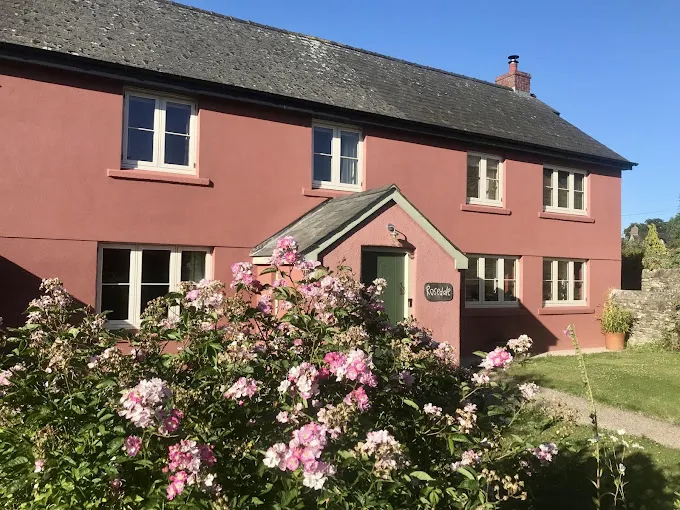
Modern render systems offer a far wider colour palette than the limited white, cream, and sand options associated with traditional cement renders. Thin coat silicone render is available in hundreds of pre-mixed colours, with most leading manufacturers offering colour ranges that include neutral naturals, contemporary greys and anthracites, warm terracottas, and coastal blues and greens. Colours are achieved through pigmentation within the silicone matrix itself, meaning they do not fade or chalk in the way that masonry paint applied over cement render does over time. This colour stability is particularly valuable in the Mumbles area, where UV exposure from the south-facing Swansea Bay aspect is combined with salt and moisture that accelerate paint degradation.
Monocouche through colour render similarly offers a broad colour palette, with the added advantage that the colour runs through the full thickness of the coat – meaning surface chips or light abrasion do not expose a contrasting base colour beneath. For Mumbles properties in conservation-influenced streetscapes – particularly around the older village core – more restrained earth and stone tones are most appropriate. For contemporary properties or those undergoing significant refurbishment, bolder colour choices dramatically change a building’s appearance. The right choice depends on your property’s architectural character, its relationship to neighbouring buildings, and your personal preference. A professional rendering contractor provides rendered sample boards or references completed local projects in specific colours to support your decision.
Comparing Render Systems for Coastal Mumbles Properties
Choosing between render systems for a Mumbles property requires weighing performance against cost, maintenance requirements, and aesthetic outcome. The table below summarises the four primary options – thin coat silicone render, monocouche through colour render, one coat cement render, and EWI with silicone finish – across the criteria most relevant to coastal South Wales conditions.
| Render System | Coastal Weather Resistance | Maintenance Requirement | Colour Stability | Typical Lifespan | Best For |
|---|---|---|---|---|---|
| Thin coat silicone render | Excellent – flexible, waterproof, breathable | Very low – self-cleaning properties | Excellent – pigmented, UV stable | 20-25 years | Seafront and exposed coastal properties |
| Monocouche through colour render | Good – water-repelling additives, durable | Low – no painting required | Good – through-coloured, no surface fade | 15-25 years | Semi-exposed properties, housing developments |
| One coat cement render | Moderate – dependent on paint maintenance | Moderate – repainting every 8-12 years | Dependent on masonry paint quality | 10-20 years (with maintenance) | Sheltered locations, budget-led projects |
| EWI with silicone finish | Excellent – full system with reinforced mesh layer | Very low – silicone finish, strong system | Excellent – silicone pigmented finish | 25+ years | Solid wall properties, energy efficiency improvement |
Coloured Rendering South Wales: Our Services
Coloured Rendering South Wales has delivered professional rendering services Mumbles and wider Swansea Bay properties for over 25 years, building a reputation on consistently high standards and genuine knowledge of coastal South Wales conditions. Based in Swansea, our team works across Mumbles, the Gower Peninsula, Swansea city, and throughout South Wales, bringing specialist spray rendering expertise and certified EWI installation to residential and commercial projects of all sizes.
Our core services for Mumbles property owners include thin coat silicone render application, monocouche through colour render, one coat cement render, specialist rendering repairs, and full External Wall Insulation systems. As a Baumit Approved EWI Applicator with City & Guilds Assured accreditation, we install Baumit StarTop premium silicone render and complete EWI systems with manufacturer-backed warranties of up to 25 years – giving Mumbles property owners documented long-term protection backed by the manufacturer, not just the contractor.
Our spray rendering technology allows us to complete most residential projects faster than traditional hand application, reducing disruption to you and your household. The consistency of spray application is particularly evident on the irregular and aged wall surfaces common in Mumbles’ older housing stock, where manual application introduces uneven thickness and finish variation.
“With over 15 years in the building trade I have experienced several different plasterers all offering different styles and finishes. Geoff’s thin coat spray finish render would rival the best and I can’t recommend his team enough to someone thinking of using him. His professionalism and work ethic has stood out from many of the others we have worked with.” – Keri Hopkins, Google Review
“We’re 100% happy and wouldn’t hesitate to recommend Jeff. His workmanship is excellent and we’re also very happy with the product he recommended to eradicate the penetrating damp and give our house a great new look and lease of life.” – Alistair Legge, Google Review
To discuss your Mumbles rendering project, visit our home page of Coloured Rendering South Wales – expert spray rendering and external wall insulation services across South Wales, or contact Coloured Rendering South Wales for a free quote or consultation on your rendering project. You can reach us directly on 07815 868070 or by email at geoff@colouredrenderingsouthwales.com.
Practical Tips for Mumbles Property Owners
Timing your rendering project correctly makes a significant difference to both the quality of the finished result and the overall project experience. In Mumbles, the optimal window for external rendering runs from late spring through early autumn – broadly April to September – when temperatures remain above the minimum threshold required for most render systems to cure correctly and rainfall events are less frequent and prolonged than the winter months. Avoid scheduling rendering during extended cold or wet spells regardless of season, and ensure your contractor is monitoring weather forecasts actively during application and the important first 48 hours of curing.
Prepare your property before the contractor arrives. Clear the perimeter of the walls to be rendered – remove garden furniture, planters, and stored items – and ensure vehicle access to the relevant elevations is unobstructed. If scaffolding is required, confirm the access arrangements and notify neighbours where scaffold uprights need to be positioned on shared or boundary areas. In Mumbles’ tightly packed terraced streets, early communication with neighbours about the project scope and duration avoids friction during works.
Inspect your existing render carefully before requesting quotations. Look for visible cracking patterns – hairline cracks suggest minor shrinkage or movement, while step cracks following mortar joints suggest more significant structural movement that needs investigation before rendering proceeds. Tap the surface with your knuckles across the full wall area and note where the sound becomes hollow – these areas indicate delamination and require removal. Photograph your findings and share them with rendering contractors when requesting quotes, as the extent of preparation work significantly affects the overall project cost.
Understand the maintenance requirements of your chosen render system before the project completes. Silicone and monocouche renders require very little ongoing attention – an occasional rinse with clean water is sufficient to remove surface deposits and maintain appearance. If your Mumbles property is in a position where organic growth – algae or lichen – is likely due to a north-facing aspect or overhanging vegetation, discuss anti-fungal additives or biocide wash treatments with your contractor at the specification stage rather than after the render has been applied. Proactive specification is always more cost-effective than reactive treatment.
The Bottom Line
Rendering services Mumbles properties require demands more than general rendering competence – coastal exposure, varied substrate types, and South Wales weather combine to make system specification and application quality the deciding factors between a render that performs for a decade and one that lasts a generation. Thin coat silicone render leads the field for seafront and exposed locations, while monocouche through colour render delivers excellent results across a broader range of Mumbles properties at strong value. EWI systems address both the render finish and the thermal performance of older solid wall buildings in a single installation.
Selecting a contractor with verified coastal South Wales experience, manufacturer accreditation, and a transparent, detailed quotation process is the most important step any Mumbles property owner takes to protect their investment. Coloured Rendering South Wales has delivered exactly that since 1998, combining spray rendering technology with specialist knowledge of the Swansea Bay environment. Call us on 07815 868070, email geoff@colouredrenderingsouthwales.com, or visit our website to arrange your free property assessment today.
Sources & Citations
- Rendering in Swansea – Swansea Render Systems. Swansea Render Systems.
https://swansearendersystems.co.uk - UK Building Regulations – Approved Documents. GOV.UK.
https://www.gov.uk/guidance/approved-documents - Choose The Perfect Facade, Renders & Paints. Baumit.
https://baumit.co.uk/guides/facade-renders-and-paints
