
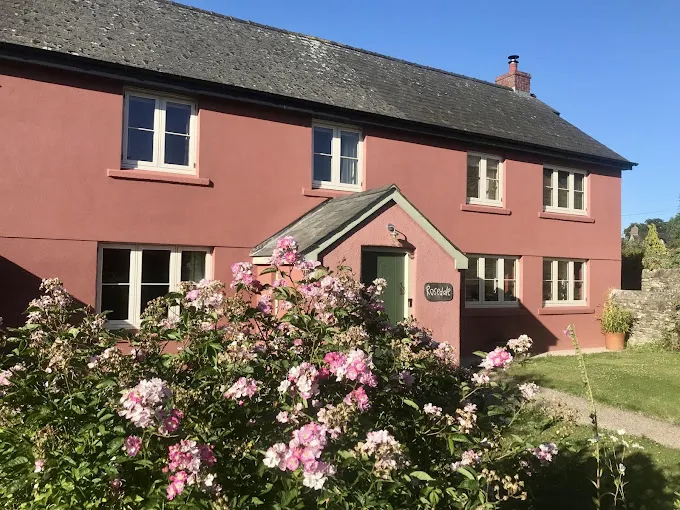
Silicone Render Mumbles: Coastal Property Guide

Silicone render Mumbles specialists explain why this flexible, water-repellent system outperforms traditional renders on exposed coastal properties – and how to choose the right finish for your home.
Table of Contents
- What Is Silicone Render and Why Does It Matter in Mumbles?
- Coastal Performance: How Silicone Render Handles Welsh Weather
- The Silicone Render Application Process Explained
- Longevity, Colour Retention, and Maintenance Expectations
- Frequently Asked Questions
- Silicone Render vs Other External Render Systems
- How Coloured Rendering South Wales Can Help
- Practical Tips for Property Owners in Mumbles
- The Bottom Line
- Sources & Citations
Article Snapshot
Silicone render Mumbles is a hydrophobic, vapour-permeable external wall finish engineered to resist salt air, wind-driven rain, and organic growth. It bonds to most substrates, flexes with minor structural movement, and holds colour for several decades with minimal maintenance – making it the leading choice for coastal properties throughout the Gower Peninsula.
silicone render mumbles in Context
- Silicone render systems last a minimum of 15 years (Homebuilding and Surveying Company, 2025)[1]
- Well-maintained silicone render lasts 25 years or more (Spectrum Specialist Support, 2025)[2]
- Maximum service life reaches 30 years (Homebuilding and Surveying Company, 2025)[1]
- Curing time ranges from 24 to 48 hours depending on weather conditions (GreenCork Ltd, 2025)[3]
What Is Silicone Render and Why Does It Matter in Mumbles?
Silicone render Mumbles is a polymer-modified, thin-coat external wall system that combines silicone resins with fine aggregates to create a flexible, waterproof, and breathable finish. Unlike cement-based renders, which rely on density to resist moisture, silicone render uses hydrophobic chemistry to actively repel water at the surface while still allowing water vapour to escape from within the wall. This dual characteristic – waterproof yet breathable – is precisely what makes it so well suited to properties along the Gower Peninsula coastline.
Coloured Rendering South Wales has been specifying and applying silicone render systems for coastal properties since 1998, and the Mumbles seafront is one of the most demanding environments in South Wales. Properties there face salt-laden air driven off the Bristol Channel, persistent damp from high annual rainfall, and rapid temperature swings that place repeated stress on external wall finishes. Traditional sand-and-cement renders absorb moisture and, over time, allow salt crystals to form within the render matrix, causing delamination, cracking, and water ingress. Silicone render addresses each of those failure modes by design.
The material is applied in a thin top coat – typically just a few millimetres – over a prepared basecoat (WeDoRender, 2025)[4]. This thin profile means minimal additional weight or depth is added to the wall, making the system compatible with both solid stone Victorian terraces and modern cavity-wall construction found throughout the Mumbles and Swansea Bay area. The finish is factory-coloured throughout, so there is no painted surface to chip, peel, or require periodic repainting. Choosing the right facade render system is important for coastal exposures, and silicone-based products consistently perform at the top of independent assessments for salt and UV resistance.
Call Us
As a rendering material for the Welsh coastline, silicone render also addresses the persistent problem of organic growth. Algae, moss, and mould thrive in the damp, mild climate of South Wales, and they discolour and gradually degrade traditional render surfaces. Because silicone render stays dry at the surface – water beads and runs off rather than soaking in – it creates an inhospitable environment for biological colonisation. Many modern silicone render formulations also incorporate biocidal agents as an additional safeguard.
Silicone Render Composition and Substrate Compatibility
Silicone render systems consist of a basecoat reinforced with fibreglass mesh, a primer, and a factory-coloured silicone top coat. The basecoat provides structural adhesion and impact resistance, while the silicone top coat delivers weather protection and aesthetics. The system bonds effectively to brick, block, concrete, EWI insulation boards, and most previously rendered surfaces that are sound and clean. In Mumbles, where many properties are built from local limestone or sandstone rubble, correct substrate preparation – including the removal of friable or hollow render patches – is the key determinant of long-term performance.
Coastal Performance: How Silicone Render Handles Welsh Weather
Coastal performance is the defining advantage of silicone render for properties in Mumbles, where salt air, driving rain, and high humidity combine to accelerate the deterioration of conventional external finishes. The material’s hydrophobic surface repels moisture before it penetrates the render layer, preventing the freeze-thaw and salt crystallisation cycles that fracture cement-based systems.
“Unlike traditional renders that can absorb moisture and deteriorate under salt attack, silicone renders create a hydrophobic barrier that actively repels water,” according to a rendering specialist at Coloured Rendering South Wales (Coloured Rendering South Wales, 2025)[5]. This reflects the underlying chemistry. Silicone polymers are inherently non-polar, meaning water molecules cannot bond to the surface in the way they do with cement or lime-based materials.
Vapour permeability is equally important for coastal properties. Walls in older Mumbles homes – particularly Victorian and Edwardian terraces – contain residual moisture from decades of inadequate weatherproofing. A render system that traps that moisture causes interstitial condensation, spalling, and structural deterioration. Silicone render allows the wall to breathe: moisture vapour migrates outward through the render matrix while liquid water is prevented from entering. “Silicone renders are hydrophobic meaning that they repel water effectively to keep rainwater away from the wall construction. They are also breathable, meaning that they prevent water from entering the structure but allow moisture and condensation within the structure to escape out,” explains a building expert at Insulation Shop (Insulation Shop, 2025)[6].
Thermal movement is another factor that distinguishes coastal locations from sheltered inland sites. Properties in Mumbles experience greater diurnal temperature variation because sea breezes moderate daytime heat but evenings cool rapidly. Repeated expansion and contraction cycles crack rigid renders over time. Silicone render accommodates this movement without fissuring. “Silicone render’s inherent elasticity accommodates minor substrate movements caused by thermal expansion, settlement, or structural loads. Unlike rigid cement renders that crack easily, silicone render flexes without fissuring,” notes a building surveyor at Homebuilding and Surveying Company (Homebuilding and Surveying Company, 2025)[1].
Organic growth resistance is the third pillar of coastal performance. “Due to its hydrophobic and vapour-permeable nature, it is highly resistant to organic growth such as algae, moss or mould. This makes it the perfect render for wet climates as it has excellent weatherproofing properties,” states an industry specialist at Spectrum Specialist Support (Spectrum Specialist Support, 2025)[2]. For property owners on Mumbles Road and the Knab Rock area – where properties face the full force of south-westerly gales – this resistance to biological staining is a practical and financial benefit, eliminating the cost of periodic chemical cleaning that traditional rendered or painted surfaces require.
Salt Air Resistance and Long-Term Structural Protection
Salt air is corrosive to many building materials, but silicone render’s non-absorptive surface provides an effective barrier. Salt particles carried by sea breezes cannot penetrate the hydrophobic matrix, so the crystallisation damage that destroys conventional renders from the inside out does not occur. For properties within close proximity to Mumbles Pier or the seafront promenade, specifying a silicone render system rather than a cement or acrylic alternative is a sound long-term investment in structural protection as well as aesthetics.
The Silicone Render Application Process Explained
The silicone render application process follows a structured sequence of preparation, priming, basecoating, and finishing that ensures the system performs as designed throughout its service life. Proper preparation is the stage that most determines outcome quality – no render system, regardless of material cost, performs well over damaged, contaminated, or inadequately prepared substrates.
The process begins with a thorough survey of the existing wall surface. Hollow or delaminated render is tapped out and removed. Cracks are cut back, treated, and filled with compatible mortar. Any biological growth – lichen, moss, or algae – is treated with a biocidal wash and the residue removed. On Mumbles properties with original lime render or legacy sand-and-cement finishes, this preparatory phase is the most labour-intensive part of the project, but it is non-negotiable for adhesion and durability.
Once the substrate is clean, sound, and dry, a fibreglass mesh-reinforced basecoat is applied across the entire wall surface. This basecoat is 10-15 mm thick and provides both mechanical key for the top coat and impact resistance for the system as a whole. The mesh reinforcement distributes stress across the wall surface, preventing point cracking at joints or fixings. After the basecoat has cured, a silicone primer is applied to optimise adhesion of the finish coat and unify surface porosity.
“Silicone render works by providing the property with a thin, smooth and durable finish. The render is applied using a trowel or specialist spraying machines and then smoothed into a uniform finish,” explains a technical writer at GreenCork Ltd (GreenCork Ltd, 2025)[3]. At Coloured Rendering South Wales, spray application is the standard method for the top coat, delivering faster and more consistent coverage than hand application – an important factor for the large, exposed elevations typical of Mumbles seafront properties. Learn more about our experienced team and rendering expertise and the spray technology we use on every project.
Curing takes between 24 and 48 hours depending on ambient temperature and humidity (GreenCork Ltd, 2025)[3]. In South Wales, where overcast and damp conditions are frequent, scheduling render application during dry weather windows is important. Experienced applicators plan work around the forecast and avoid application when rain is expected within the curing window. Colour selection is made from the manufacturer’s palette prior to application; the factory-coloured product is supplied ready to use, eliminating on-site mixing variations.
Spray Application vs Hand Application for Coastal Elevations
For the large, unbroken wall surfaces common on Mumbles bay-front properties and the terraced streets climbing towards Newton Road, spray application offers a practical advantage over hand trowelling. Spray delivery achieves uniform thickness and texture across the entire elevation in a single pass, reducing labour time and the risk of lap marks or inconsistent coverage. This matters particularly on silicone render, where surface texture consistency directly affects the self-cleaning performance of the hydrophobic finish.
Longevity, Colour Retention, and Maintenance Expectations
Longevity and low maintenance are the principal reasons that property owners in Mumbles choose silicone render over painted cement or acrylic alternatives. A correctly specified and installed silicone render system lasts a minimum of 15 years (Homebuilding and Surveying Company, 2025)[1], with well-maintained installations achieving 25 years or more (Spectrum Specialist Support, 2025)[2], and maximum service life extending to 30 years under favourable conditions (Homebuilding and Surveying Company, 2025)[1].
Colour retention is a significant practical benefit. Because silicone render is factory-coloured throughout its mass, there is no painted surface to fade, peel, or chalk. Modern silicone renders maintain their colour and texture for several decades under British weather conditions (Coloured Rendering South Wales, 2025)[5]. UV-resistant pigments are standard in quality products, so even the lighter shades – popular on Mumbles seafront properties – retain their appearance without annual repainting. This is a direct cost saving compared to painted cement renders, which require repainting every five to ten years.
Maintenance requirements for silicone render are minimal in normal circumstances. The hydrophobic surface prevents dirt adhesion and biological staining, so the render remains clean through natural weathering – rainwater washes the surface rather than soaking into it. In particularly exposed or polluted locations, an occasional low-pressure rinse with water is sufficient to restore appearance. Proprietary biocidal render cleaners are available for any localised biological growth that does develop, though in practice this is rare with modern silicone systems on well-ventilated walls.
The Rendering Repairs South Wales service is available for the rare instances where impact damage, substrate movement, or installation defects require attention. Small areas of silicone render are repaired effectively with compatible materials, and while colour matching on weathered render requires skill, experienced applicators achieve repairs that are effectively invisible. Prompt repair of any damage is the most important maintenance action a property owner takes – addressing small cracks or delaminated patches before water ingress occurs prevents far more costly remediation work later.
Colour Options and Aesthetic Choices for Mumbles Properties
Silicone render is available in an extensive palette – hundreds of standard colours – allowing property owners to match or update the character of their home. In Mumbles, the predominant aesthetic favours clean whites, warm creams, and muted greys that complement the coastal setting and the Victorian or Edwardian architecture of the village. Contemporary properties and recent renovations increasingly use darker greys or charcoal tones for contrast. Through-colour manufacture means that any minor chips from impact damage reveal the same colour throughout the render layer rather than exposing grey cement, preserving appearance between repairs.
Your Most Common Questions
Is silicone render suitable for all property types in Mumbles?
Silicone render is compatible with the vast majority of property types found in Mumbles, including Victorian and Edwardian terraces, inter-war semi-detached homes, modern cavity-wall construction, and commercial buildings. It bonds effectively to brick, block, concrete, and previously rendered surfaces that are structurally sound. For solid stone properties – common in older parts of Mumbles village – correct substrate assessment is important before specification. Walls with active damp ingress from the interior side, failed cavity trays, or bridged cavities should have those issues remedied before any render system is applied. Silicone render is not a solution to structural water problems; it is a weather protection finish for structurally sound walls. Properties with listed building status or in conservation areas require local authority consent before changing external appearance, so checking with Swansea Council’s planning department before proceeding is advisable. In most standard residential cases, however, external rendering falls within permitted development rights.
How does silicone render compare to acrylic render for coastal locations?
Both silicone and acrylic renders are polymer-modified systems that outperform traditional cement render in terms of flexibility and colour retention, but silicone render has specific advantages for coastal locations like Mumbles. Silicone render has a higher vapour permeability rating, meaning it allows walls to breathe more effectively – a important characteristic for older properties with inherent moisture. It is also more resistant to UV degradation over time, maintaining colour and surface integrity longer in exposed positions. Acrylic render is a cost-effective choice for sheltered elevations or inland properties, but for south-facing and west-facing walls that bear the full force of south-westerly gales off the Bristol Channel, silicone render’s superior weather resistance justifies the modest additional cost. The self-cleaning properties of silicone render are also superior to acrylic systems because its surface tension makes it more difficult for dirt particles to adhere.
How long does silicone render installation take for a typical Mumbles property?
The duration of a silicone render installation depends on the size of the property, the condition of the existing substrate, and the application method used. For a standard three-bedroom semi-detached or terraced house in Mumbles, preparation and basecoat application takes one to two days, with the silicone top coat applied on day two or three following basecoat cure. Total project duration for a standard property is three to five days from start to a weather-protected finish. Spray application, as used by Coloured Rendering South Wales, accelerates the top coat stage compared to hand trowelling – covering large elevations in a fraction of the time. Properties requiring extensive preparatory work – removal of failed existing render, treatment of significant cracking, or installation of an EWI insulation layer before the render system – will take longer. Your contractor should provide a project timeline as part of the quotation, along with a clear programme for scaffold erection and removal.
What is the cost of silicone render for a property in Mumbles?
Silicone render costs vary depending on the size of the property, the complexity of the elevation – number of windows, reveals, soffits, and architectural details – the condition of the existing substrate, and whether scaffolding is required. As a premium external wall finish, silicone render carries a higher material cost than sand-and-cement or acrylic alternatives, but the long service life and elimination of repainting costs mean the whole-life cost comparison is favourable. For Mumbles properties, where the coastal environment accelerates deterioration of cheaper render systems, investing in a quality silicone system at the outset avoids the cost of premature failure and re-rendering within a decade. To receive an accurate cost for your specific property, contact Coloured Rendering South Wales for a free on-site assessment. Detailed quotations are provided in writing, outlining materials, scope of work, and project timelines so you can make an informed decision without any pressure.
Silicone Render vs Other External Render Systems
Selecting the right render system for a Mumbles property requires understanding how silicone render compares to the main alternatives across the factors that matter most in a coastal environment: weather resistance, flexibility, maintenance requirements, and long-term cost. The table below sets out a direct comparison of four commonly specified external render systems.
| Render System | Weather Resistance | Flexibility | Maintenance Required | Typical Service Life |
|---|---|---|---|---|
| Silicone Render | Excellent – hydrophobic, breathable, salt-resistant | High – flexes with thermal and structural movement | Minimal – self-cleaning surface | 15-30 years (Homebuilding and Surveying Company, 2025)[1] |
| Acrylic Render | Good – water resistant but lower vapour permeability | Moderate – more flexible than cement, less than silicone | Low – occasional cleaning | 10-20 years |
| Monocouche Through Colour Render | Good – cement-based with water-repelling additives | Low to moderate – cracks under significant movement | Low – no painting required | 20-30 years in sheltered locations |
| Sand-and-Cement Render (Painted) | Poor to moderate – absorbs moisture | Low – prone to cracking | High – repainting every 5-10 years | 10-15 years before major remediation |
How Coloured Rendering South Wales Can Help
Coloured Rendering South Wales has been applying silicone render systems to properties across the Gower Peninsula and Swansea Bay since 1998. With over 25 years of hands-on experience in coastal rendering, the team understands the specific demands that Mumbles and its surrounding areas place on external wall finishes – from the salt-laden south-westerlies at Limeslade Bay to the persistent damp of the Clyne Valley properties above the village.
Our core service for Mumbles homeowners is thin coat silicone render, applied using professional spray equipment for consistent coverage and finish across every elevation. As a Baumit Approved EWI Applicator with City & Guilds Assured accreditation, we are certified to install Baumit StarTop premium silicone render with manufacturer-backed warranties of up to 25 years – giving you documented long-term protection backed by the manufacturer, not just the contractor. For properties that would benefit from thermal improvement alongside weatherproofing, our EWI Specialists South Wales service combines high-performance insulation boards with a silicone render finish in a single installation.
Our Google rating of 5.0 across numerous verified reviews reflects what clients consistently experience: professional workmanship, reliable scheduling, and a clean, tidy site throughout the project. “With over 15 years in the building trade I have experienced several different plasterers all offering different styles and finishes. Geoff’s thin coat spray finish render would rival the best and I can’t recommend his team enough to someone thinking of using him. His professionalism and work ethic has stood out from many of the others we have worked with.” – Keri Hopkins, Google Review
“We’re 100% happy and wouldn’t hesitate to recommend Jeff. His workmanship is excellent and we’re also very happy with the product he recommended to eradicate the penetrating damp and give our house a great new look and lease of life.” – Alistair Legge, Google Review
To arrange a free property assessment and written quotation, contact Coloured Rendering South Wales for a free quote or consultation on your rendering project. You can also call us directly on 07815 868070 or email geoff@colouredrenderingsouthwales.com to discuss your requirements.
Practical Tips for Property Owners in Mumbles
Acting on the right information before commissioning a silicone render project saves time, money, and disappointment. The following guidance applies specifically to the conditions and property types common in Mumbles and the wider Swansea Bay coastal area.
Assess your substrate before selecting a system. Have the existing wall surface checked by an experienced renderer before committing to any specification. Hollow patches, rising damp, or failed pointing behind an existing render will cause any new system to fail prematurely if they are not addressed first. A competent contractor will identify these issues during a free site visit and factor remediation into the quotation.
Choose colour carefully for coastal exposure. Lighter colours – whites, creams, and pale greys – reflect more UV and stay cooler, which reduces thermal movement stress on the render. Very dark colours absorb more heat and increase expansion and contraction cycles on south-facing elevations. Quality silicone render systems are engineered to handle the full colour range – discuss your preferences with your contractor alongside the specific orientation and exposure of your property.
Plan application around the weather forecast. Even the best silicone render system requires a dry curing window of 24 to 48 hours (GreenCork Ltd, 2025)[3]. In Mumbles, where weather changes rapidly, experienced contractors build weather contingency into their scheduling. Avoid the temptation to push ahead with application in marginal conditions to save time – a wash-out during curing compromises the surface finish and adhesion of the top coat.
Inspect and repair promptly. Even the most durable render system suffers localised damage from impact, severe weather events, or minor structural movement. Inspect your render annually – spring is a good time, following winter exposure – and arrange prompt repair of any cracks or hollow areas. Early intervention costs a fraction of the remediation required if water ingress is allowed to progress. The Rendering Repairs South Wales service is available for exactly this kind of targeted maintenance work, keeping your investment in good condition throughout its service life.
Verify contractor credentials for EWI installations. If your project involves external wall insulation beneath the silicone render finish, confirm that your contractor holds appropriate manufacturer approval and accreditation. Baumit Approved EWI Applicator status, for example, is independently assessed and ensures the installation meets the standards required for manufacturer warranty coverage. Unaccredited installations look identical but lack the warranty protection that certified work provides.
The Bottom Line
Silicone render Mumbles is the most appropriate external wall finish for coastal properties exposed to the demanding climate of Swansea Bay and the Gower Peninsula. Its combination of hydrophobic weather resistance, vapour permeability, flexibility, and long service life – from 15 to 30 years – addresses the specific failure modes that defeat cheaper render systems in salt air and high-rainfall environments. Colour retention for several decades and minimal maintenance requirements make it a sound long-term investment for homeowners, landlords, and developers alike.
Coloured Rendering South Wales has the local knowledge, certified credentials, and 25-plus years of coastal rendering experience to specify and install the right system for your property. To take the next step, call us on 07815 868070, email geoff@colouredrenderingsouthwales.com, or contact Coloured Rendering South Wales for a free quote or consultation on your rendering project today.
Sources & Citations
- What Is Silicone Render? Benefits, Uses & Expert Guide. Homebuilding and Surveying Company.
https://homebuildingandsurveyingcompany.co.uk/what-is-silicone-render/ - What is Silicone Render? | South East London | Spectrum. Spectrum Specialist Support.
https://www.spectrumspecialistsupport.co.uk/blog/what-is-silicone-render/ - What Is Silicone Render? A Complete Guide. GreenCork Ltd.
https://greencork.co.uk/what-is-silicone-render/ - What is Silicone Render? WeDoRender.
https://www.wedorender.uk/what-is-silicone-render/ - Silicone Rendering Mumbles: Expert Solutions for Coastal. Coloured Rendering South Wales.
https://www.colouredrenderingsouthwales.com/silicone-rendering-mumbles/ - Silicone Render Explained. Insulation Shop.
https://www.insulationshop.co/blog/silicon-render-explained.html
