
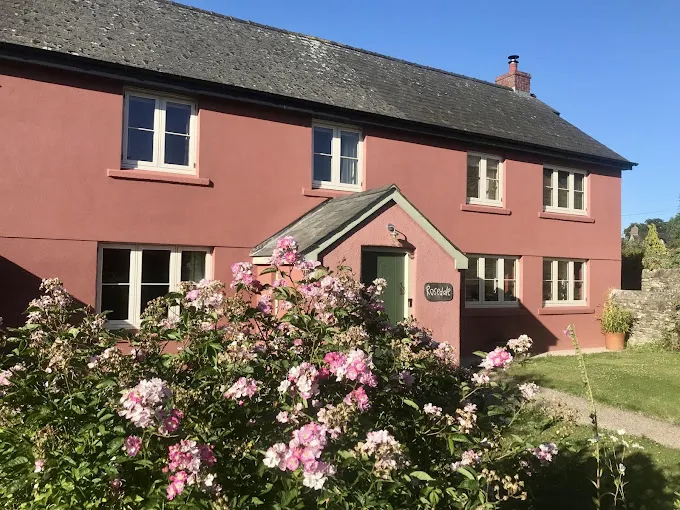
Spray Rendering Port Talbot: Complete Guide
Spray rendering Port Talbot services protect and transform properties across Neath Port Talbot – discover render types, costs, and how to choose the right specialist for your home or commercial building.
Table of Contents
- What Is Spray Rendering?
- Render Types for Port Talbot Properties
- Choosing a Spray Rendering Specialist
- Coastal and Weather Considerations in Port Talbot
- Frequently Asked Questions
- Comparing Rendering Methods
- Coloured Rendering South Wales
- Practical Tips for Your Rendering Project
- The Bottom Line
- Sources & Citations
Article Snapshot
Spray rendering Port Talbot is a professional external wall finishing method that uses powered spray equipment to apply render coatings faster and more consistently than hand application. It suits both new builds and renovation projects, delivering weather-resistant, low-maintenance finishes appropriate for South Wales coastal conditions.
What Is Spray Rendering and Why It Matters in Port Talbot
Spray rendering Port Talbot is a method of applying render to external walls using powered spray equipment rather than traditional hand tools, achieving consistent coverage and significantly faster project completion. Port Talbot properties face particular challenges: the town sits on the coast of Swansea Bay, and its buildings are regularly exposed to salt-laden air, driving rain from the Bristol Channel, and the kind of sustained wind-driven moisture that degrades conventional finishes over time. Choosing the correct render system and application method is therefore not a cosmetic decision – it is a structural one that directly affects how well your walls resist water ingress and how long the finish will last before remedial work is needed.
Coloured Rendering South Wales has been working on properties throughout the region, including Port Talbot, since 1998, providing spray-applied external wall finishes that are specified for the Welsh coastal climate rather than generic mainland conditions. The spray method distributes render at a controlled pressure and thickness across the wall surface, eliminating the inconsistencies that arise with hand application – particularly on large areas where fatigue affects the tradesperson’s technique. The result is a more uniform film thickness, stronger adhesion to the substrate, and a finish that performs predictably across the full wall.
For Port Talbot homeowners and property developers, spray rendering also means shorter project durations. A terraced house that takes four to five days to render by hand is completed in two days using spray equipment. That reduction in disruption matters when occupants remain in the property during the works, and it matters commercially when developers are working to tight handover schedules on new-build sites.
Call Us
Render Types Suited to Port Talbot Properties
Selecting the right render system for a Port Talbot property depends on the wall construction, the building’s exposure to coastal weather, and the aesthetic outcome the owner wants to achieve. Three main systems dominate the South Wales external rendering market, each with distinct performance characteristics suited to different scenarios.
Thin Coat Silicone Render
Thin coat silicone render is the most technically advanced option available for residential and commercial properties in Port Talbot. Applied over a reinforced basecoat system, the silicone finish coat is 1.5 mm to 3 mm thick and contains polymer chemistry that gives the dried film exceptional flexibility. This flexibility allows the render to accommodate minor structural movement – the seasonal expansion and contraction of walls – without cracking, which is a significant advantage for the older stock of semi-detached and terraced housing common across Port Talbot and the surrounding Neath Port Talbot borough.
The silicone content makes the surface hydrophobic, meaning rainwater beads on the face and runs off rather than saturating the render. At the same time, the coating remains vapour-permeable, so moisture already within the wall structure continues to escape outward. This breathable waterproofing characteristic is important in South Wales, where walls hold residual moisture from previous render failures or historic damp, and sealing that moisture in with an impermeable coating causes serious long-term damage. Self-cleaning properties, where surface dirt is washed away by rainfall, mean silicone renders maintain their appearance for longer with minimal intervention, which is particularly useful for properties near the seafront or in industrial areas of Port Talbot where airborne particulates are present.
Spray application suits thin coat silicone render especially well, as the equipment delivers the finish coat at a consistent thickness across complex wall geometries including bay windows, reveals, and soffits. Baumit’s guidance on facade renders and paints outlines how silicone-based systems achieve superior long-term performance compared to acrylic alternatives in high-exposure locations.
Monocouche Through Colour Render
Monocouche render is a cement-based, single-coat system where the pigment runs through the full depth of the material rather than being applied as a surface paint or wash. For Port Talbot properties – particularly new-build housing developments and renovation projects – this creates a durable finish that retains its colour without ongoing repainting. The render is applied at 15 mm to 20 mm thickness and is finished in a range of textures from fine scraped to roughcast, giving architects and homeowners considerable aesthetic flexibility. Spray application of monocouche is faster than hand application and produces more consistent texture across large wall areas, which is particularly important on multi-unit housing developments where visual uniformity between plots is a quality standard.
One Coat Cement Render
One coat cement render provides a cost-effective base for properties where a painted finish is preferred. It is a cement and sand mix applied at around 12 mm to 15 mm thickness, forming a solid substrate that is decorated in any colour once fully cured. This system is common on older Port Talbot properties where the existing substrate is sound and where the owner wants to retain control over colour choice through external masonry paint. Spray application ensures uniform thickness, reducing the risk of differential shrinkage cracking that occurs when hand-applied cement render varies in depth across the wall.
Choosing a Spray Rendering Specialist in Port Talbot
Selecting the right contractor for spray rendering work in Port Talbot requires more than comparing quotation prices – the quality of specification, the contractor’s knowledge of appropriate render systems for coastal exposure, and their verifiable track record are all factors that determine whether your investment delivers long-term value or requires remedial work within a few years.
The first thing to establish is whether the contractor has genuine experience with spray equipment and the specific render systems they are proposing to use. Spray rendering is not simply hand rendering with a machine – it requires training in equipment setup, material mixing ratios, application pressure, and the management of overspray near windows, doors, and boundary features. A contractor who is primarily a hand plasterer and uses a hopper gun occasionally is not equivalent to a specialist who applies render by spray as their primary method.
Certifications and Manufacturer Accreditation
Manufacturer accreditation schemes exist for the major render systems sold in the UK market, and these are worth checking when evaluating contractors. Approved applicator status – such as Baumit Approved EWI Applicator with City & Guilds Assured accreditation – indicates that the contractor has been trained and assessed on the specific product system and is authorised to install it with the manufacturer’s warranty. For property owners in Port Talbot, this matters because it means the render system carries a documented guarantee from the manufacturer, separate from the contractor’s own workmanship warranty, providing an additional layer of protection on the investment. You verify contractor accreditation directly with the manufacturer rather than relying solely on the contractor’s own claims.
Checking independently verified customer reviews – particularly on Google Business – gives a realistic picture of a contractor’s consistency across different property types and client relationships. A high volume of reviews over several years, rather than a cluster of recent submissions, indicates sustained performance rather than a short-term promotional effort. The Property Care Association also offers guidance on selecting qualified tradespeople for external wall work, which helps you frame the right questions when interviewing contractors.
What a Good Quote Should Include
A professional spray rendering quotation for a Port Talbot property should specify the render system by manufacturer and product name, the number of coats and their individual thicknesses, the surface preparation method including priming and beading, and the expected project duration. Vague quotations that describe only the outcome – “full external render in grey” – without specifying the system leave the contractor free to substitute lower-specification materials without the client’s knowledge. Ask for the product data sheet for any render system quoted and check that the specified product is rated for the exposure conditions at your location.
Coastal and Weather Considerations for Port Talbot Spray Rendering
Port Talbot’s position on Swansea Bay makes its properties among the most exposed to marine conditions in South Wales, and any render system applied in this area must be specified with that exposure in mind rather than selected from a generic catalogue. Coastal exposure accelerates the degradation of conventional renders in several ways: salt deposition from sea spray increases the hygroscopic load on the wall surface, cycling between wet and dry states causes render to expand and contract repeatedly, and the prevailing south-westerly winds drive rain against south and west-facing elevations at high pressure.
Traditional sand and cement renders without modern polymer additives are vulnerable in this environment. They absorb moisture readily, their rigidity makes them prone to cracking as walls move, and once cracked, water ingress behind the render causes it to delaminate from the substrate – a process that accelerates dramatically in freeze-thaw conditions during winter months. Properties along the Port Talbot seafront, in Aberavon, and in exposed positions on higher ground above the town are particularly susceptible to this failure mode.
Selecting for Exposure
Silicone render systems are the correct choice for the most exposed elevations on Port Talbot properties. Their water-repellent surface prevents the moisture cycling that damages rigid renders, their flexibility accommodates movement without cracking, and their vapour permeability prevents trapped moisture build-up behind the coating. For properties near the steelworks and industrial areas of Port Talbot, the self-cleaning surface characteristic of silicone renders is an additional practical benefit, as airborne particulates and industrial fallout are washed clear by rainfall rather than accumulating and staining the surface.
For properties in more sheltered positions – terraced streets in the town centre, for instance, where buildings provide mutual shelter from prevailing winds – monocouche or one coat cement render systems are entirely adequate and represent a more cost-effective choice. The key is matching the render specification to the actual exposure of each individual elevation rather than applying a single standard across the whole property. A competent specialist assesses each face of the building separately and recommends different systems or finish coats for south-west-facing elevations compared to sheltered north-facing walls. Coloured Rendering Swansea – durable and attractive rendering solutions for residential and commercial properties provides further detail on how render systems are matched to South Wales coastal and inland conditions.
Preparation and Substrate Assessment
Spray rendering performs to specification only if the substrate beneath it is sound and correctly prepared. On older Port Talbot properties, this means assessing existing render for hollow patches by tapping the surface, cutting out and replacing failed areas, treating any active damp before new render is applied, and ensuring that the substrate is clean and correctly primed for the specific render system being installed. Skipping preparation steps to reduce cost is the most common cause of premature render failure and invariably leads to higher expenditure in the medium term.
Your Most Common Questions
How long does spray rendered finish last on a Port Talbot property?
The lifespan of a spray rendered finish on a Port Talbot property depends primarily on the render system used and the quality of the initial application and substrate preparation. Thin coat silicone render systems applied over a correctly installed reinforced basecoat carry manufacturer warranties of 10 to 25 years depending on the specific product and the installer’s accreditation status. In practice, well-specified and correctly applied silicone renders on South Wales coastal properties remain in good condition for 20 years or more with no maintenance beyond occasional rinsing. Monocouche through colour render systems are similarly long-lived, with the through-colouring meaning that minor surface wear does not affect the visual appearance of the finish. One coat cement renders that are painted require repainting every 5 to 10 years depending on the quality of the masonry paint used and the exposure of the elevation. In all cases, the single biggest variable in lifespan is the thoroughness of substrate preparation and the quality of the application – the same product performs very differently when applied by a specialist versus an inexperienced operative.
What is the typical cost of spray rendering a house in Port Talbot?
The cost of spray rendering a house in Port Talbot varies depending on the size of the property, the render system selected, the condition of the existing substrate, and the access requirements of the site. As a general guide for South Wales, thin coat silicone render systems including basecoat and finish are the most expensive option per square metre, reflecting the higher material cost of the silicone product and the additional basecoat layer. Monocouche render sits in the mid-range, while one coat cement render is the most cost-effective system. For a standard three-bedroom semi-detached house in Port Talbot, the overall project cost is also influenced by whether scaffolding is required and whether significant remedial work on the existing substrate is needed before the new render is applied. The most reliable way to establish an accurate cost for your specific property is to obtain detailed written quotations from at least two or three specialist contractors who have physically assessed the building. Be cautious of very low quotations that do not specify the render system by product name – these often indicate substitution of lower-quality materials or inadequate surface preparation.
Can spray rendering be applied over existing render on a Port Talbot house?
Whether spray rendering is applied over existing render depends entirely on the condition and adhesion of the existing coat. If the existing render is sound – well-bonded to the substrate, free of hollow patches, not significantly cracked, and structurally stable – then it is possible to apply a new thin coat silicone finish system directly over the top after appropriate priming. This approach reduces labour cost and project duration because the removal and disposal of existing render is avoided. However, if the existing render is hollow in places, has suffered water damage, is delaminating from the substrate, or is contaminated with algae or efflorescence, it must be removed before new render is applied. Applying new render over a failing substrate transfers the failure mechanism into the new system and leads to premature breakdown. A thorough tap test of the entire wall area, combined with visual assessment of cracks and any staining patterns that indicate moisture movement, should form part of every contractor’s pre-quotation survey. For Port Talbot properties with a history of damp or previous render failure, it is always worth investing in a professional assessment before committing to any approach.
Does spray rendering improve a property’s energy efficiency in Port Talbot?
Standard spray rendering – applying a render finish coat system to the external wall surface – has a negligible direct effect on a property’s thermal performance. Render coatings are too thin to add meaningful insulation value. However, when spray rendering is combined with an External Wall Insulation system, the thermal improvement is very significant. In an EWI installation, high-performance insulation boards are mechanically fixed to the existing wall before the render basecoat and finish are applied over the top. For Port Talbot properties with solid walls – a construction type common in Victorian and Edwardian terraces throughout the town – EWI is one of the most cost-effective routes to improving the property’s Energy Performance Certificate rating and reducing heating costs. The insulation layer addresses heat loss through the wall fabric, while the render system over the top provides weather protection and the finished external appearance. Homeowners considering this approach should ask contractors specifically about EWI system options and any current government or local authority grant schemes that may be available to offset installation costs, as eligibility criteria change periodically.
Comparing Spray Rendering Methods and Systems
Understanding the differences between the main render approaches available to Port Talbot property owners helps in making an informed decision about which system offers the best value for a specific property, exposure level, and budget. The table below compares the four principal options on the criteria that matter most to homeowners and developers.
| Render System | Application Method | Typical Lifespan | Maintenance Requirement | Best For |
|---|---|---|---|---|
| Thin Coat Silicone Render | Spray over reinforced basecoat | 20+ years with warranty | Very low – self-cleaning surface | Coastal and high-exposure properties |
| Monocouche Through Colour Render | Spray or hand, single coat | 20-30 years | Low – no painting required | New builds and low-maintenance renovation |
| One Coat Cement Render | Spray, finished with masonry paint | 10-15 years before repainting | Medium – periodic repainting needed | Budget-conscious projects with flexible colour |
| EWI with Rendered Finish | Insulation board + spray render | 25 years (system warranty) | Low – render finish as above | Solid-wall properties needing thermal upgrade |
Coloured Rendering South Wales
Coloured Rendering South Wales is a Swansea-based spray rendering and plastering specialist with over 25 years of continuous operation across South Wales since 1998. The company applies the full range of external render systems – thin coat silicone render, monocouche through colour render, one coat cement render, and complete External Wall Insulation systems – to residential properties, commercial buildings, and housing developments throughout the region, including Port Talbot, Swansea, Cardiff, Newport, and Bridgend.
As a Baumit Approved EWI Applicator with City & Guilds Assured accreditation, the team is certified to install Baumit StarTop premium silicone render and full EWI systems, with manufacturer-backed warranties of 10 to 25 years available to clients. That accreditation distinguishes the company from uncertified rendering contractors who use similar products without the training, quality controls, or warranty backing that manufacturer approval provides.
“With over 15 years in the building trade I have experienced several different plasterers all offering different styles and finishes. Geoff’s thin coat spray finish render would rival the best and I can’t recommend his team enough to someone thinking of using him. His professionalism and work ethic has stood out from many of the others we have worked with.” – Keri Hopkins, Google Review
“We’re 100% happy and wouldn’t hesitate to recommend Jeff. His workmanship is excellent and we’re also very happy with the product he recommended to eradicate the penetrating damp and give our house a great new look and lease of life.” – Alistair Legge, Google Review
The company holds a perfect 5.0 Google rating across its full review history, reflecting consistent delivery of quality workmanship across different property types, client circumstances, and project scales. Internal plastering, rendering repairs, and EWI installations sit alongside the core spray rendering service, meaning clients receive expert advice and consistent workmanship across the full lifecycle of their property’s exterior without being referred to different contractors for different elements of the same project.
To discuss your Port Talbot property and receive a free, no-obligation quotation, visit the Contact Coloured Rendering South Wales for a free quote or consultation on your rendering project page, call 07815 868070, or email geoff@colouredrenderingsouthwales.com. You can also explore the EWI Specialists South Wales – expert external wall insulation installations for energy efficiency page for detailed information on insulation and render combined systems.
Practical Tips for Your Port Talbot Rendering Project
Getting the most from a spray rendering investment on a Port Talbot property requires preparation, the right questions for contractors, and a realistic understanding of what the different systems deliver. The following guidance applies whether you are renovating a Victorian terrace in Aberavon or finishing a new-build development in the wider Neath Port Talbot area.
Assess your wall condition before requesting quotes. Walk around the property and note any visible cracks wider than hairline, areas of staining or tide marks that suggest moisture movement, and any sections of render that sound hollow when tapped. Sharing this information with contractors at the enquiry stage helps them quote accurately rather than discovering problems on site that generate additional costs.
Request product data sheets with quotations. Any professional contractor should be able to provide the manufacturer’s technical data sheet for the specific render product they are proposing to use. This document confirms the product’s water absorption rating, vapour permeability, flexibility, and expected service life – the key performance metrics that determine whether the system is appropriate for your property’s exposure conditions.
Check the colour range before committing to a system. Silicone and monocouche renders are available in extensive colour palettes, but the specific colours available vary by manufacturer. If you have a particular colour in mind – or need to match an existing render on an adjacent property – confirm that the proposed system delivers that colour before signing a contract.
Plan for scaffold access. Most two-storey houses in Port Talbot require scaffolding for safe rendering access. Clarify whether scaffolding is included in the quotation or whether it is a separate supply, and factor in the time required to erect and strike the scaffold when planning project timing.
Time the work for appropriate weather conditions. Render requires a minimum ambient temperature during application and curing – above 5°C – and should not be applied in direct bright sunlight or during periods of rain. A contractor who works throughout the year in South Wales understands these constraints and plans project scheduling accordingly. Asking how they manage weather risk in the Welsh climate is a reasonable question when evaluating a specialist.
For homeowners in Port Talbot considering a full exterior upgrade including insulation, the Home page of Coloured Rendering South Wales – expert spray rendering and external wall insulation services across South Wales provides an overview of the full service range and a starting point for planning your project.
The Bottom Line
Spray rendering Port Talbot properties is an investment that pays back through reduced maintenance, improved weather protection, and enhanced kerb appeal – provided the right render system is specified for the property’s exposure and the work is carried out by a qualified specialist using manufacturer-approved materials. Port Talbot’s coastal position on Swansea Bay makes system selection more consequential than in less exposed inland locations, and silicone-based renders are the correct choice for exposed elevations facing the prevailing south-westerly winds and salt air from the Bristol Channel.
If you are ready to take the next step for your Port Talbot property, contact Coloured Rendering South Wales on 07815 868070 or email geoff@colouredrenderingsouthwales.com to arrange a free site assessment and written quotation. With over 25 years serving South Wales and a 5.0 Google rating, the team has the experience and accreditation to specify and apply the right render system for your property’s specific needs.
Sources & Citations
- Neath Port Talbot Council – Port Talbot Harbourside Earthworks Specification. Neath Port Talbot Council, 2023.
https://maps.npt.gov.uk/iDocsPublic/ShowDocument.aspx?id=680990 - Facade Renders and Paints Guide. Baumit UK.
https://baumit.co.uk/guides/facade-renders-and-paints - Property Care Association – Guidance for External Wall Work. Property Care Association.
https://www.propertycare.org/