
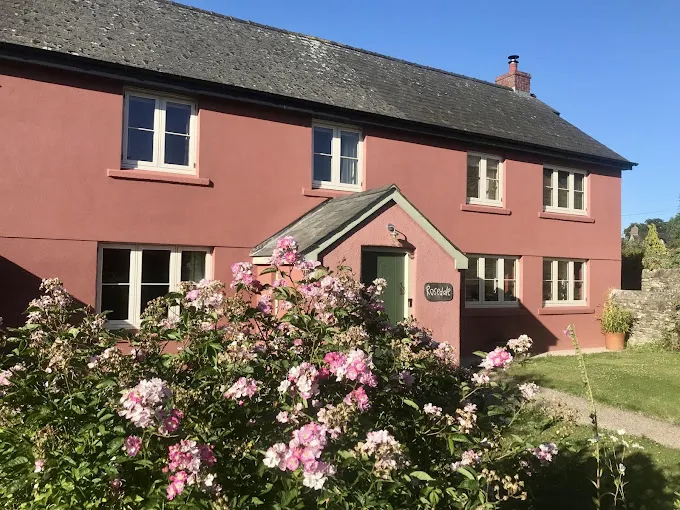
Spray Rendering Neath: Expert Guide to Modern Render
Spray rendering Neath is the modern application method that delivers consistent, weather-resistant external finishes faster than traditional hand techniques – discover how it works and what it means for your property.
Table of Contents
- What Is Spray Rendering and How Does It Work?
- Render Systems Best Suited to Neath Properties
- Spray Application vs Hand Application: Key Differences
- Choosing a Spray Rendering Contractor Near Neath
- Frequently Asked Questions
- Comparison: Render System Options for Neath Homes
- Coloured Rendering South Wales: Serving Neath and Beyond
- Practical Tips for Your Rendering Project
- The Bottom Line
- Sources & Citations
Key Takeaway
Spray rendering Neath is a professional external wall finishing method that uses pressurised equipment to apply render coatings uniformly and efficiently across brick, block, or concrete surfaces. It produces a durable, weather-resistant finish and significantly reduces project time compared to traditional hand application.
Spray Rendering Neath in Context
- Thin Coat Silicone – Application Speed: Fast (Coloured Rendering South Wales, 2026)[1]
- Thin Coat Silicone – Durability Rating: Excellent (Coloured Rendering South Wales, 2026)[1]
- Thin Coat Silicone – Maintenance Requirement: Minimal (Coloured Rendering South Wales, 2026)[1]
- Thin Coat Silicone – Weather Resistance: Superior (Coloured Rendering South Wales, 2026)[1]
What Is Spray Rendering and How Does It Work?
Spray rendering Neath is a mechanised application process that forces render material through specialist equipment to coat external wall surfaces quickly and evenly. Rather than trowelling render by hand in sections, a trained operative uses a spray machine to project the mixed material directly onto a prepared substrate, building up the required thickness in a single controlled pass. Coloured Rendering South Wales has been delivering this technique across South Wales since 1998, serving property owners in Neath, Swansea, Cardiff, and surrounding areas.
The mechanics behind spray application are straightforward. Mixed render is fed through a pump and delivered via a hose and spray nozzle at controlled pressure. The operative moves the nozzle across the wall surface at a consistent distance, ensuring even coverage. Once the spray coat is applied, a float or scraper tool is used to achieve the final texture and level finish before the material cures.
As the Coloured Rendering South Wales Team explains, “Modern spray rendering technology uses specialised equipment to apply render materials uniformly across wall surfaces, creating consistent coverage that would be difficult to achieve through manual application.” (Coloured Rendering South Wales Team, 2026)[1]
Call Us
Preparation is important before any spray coat is applied. Walls must be structurally sound, dry, and free from loose material, organic growth, or contamination. Existing cracks are repaired, and surfaces are primed where required to ensure the render bonds correctly. This preparation stage determines the long-term performance of the finished system – particularly in a region like Neath, where the surrounding Vale of Neath’s high rainfall and river valley humidity put external wall coatings under sustained moisture pressure.
The equipment itself has evolved considerably. Professional-grade rendering machines allow the operative to adjust pressure, material volume, and nozzle type to suit different render formulations and surface conditions. Thin coat silicone renders require different settings to heavier monocouche or cement-based systems. This adaptability means spray application suits a wide range of property types, from post-war semi-detached houses to new-build commercial developments.
Render Systems Best Suited to Neath Properties
The render system you choose for a Neath property should reflect the local climate, the building’s construction type, and your long-term maintenance expectations. Neath sits in a valley environment with significant annual rainfall and occasional exposure to wind-driven moisture from the surrounding hills, making the choice of render formulation genuinely important rather than a cosmetic decision.
Thin coat silicone render is the premium option for most residential and commercial properties in this area. Silicone-based formulations are hydrophobic, meaning they repel liquid water while remaining vapour permeable – moisture that builds up within the wall structure escapes outward without being trapped behind an impermeable coating. This breathability is particularly important in Neath’s older housing stock, where solid brick or stone walls need to manage moisture movement naturally. The self-cleaning properties of silicone render also help maintain appearance over time; rain effectively rinses the surface rather than allowing dirt and algae to accumulate.
According to the Coloured Rendering South Wales Team, “Coverage consistency represents another major benefit of spray application. Hand-applied renders can suffer from variations in thickness and texture, particularly on large wall areas.” (Coloured Rendering South Wales Team, 2026)[1] This is especially relevant for larger properties or housing developments where visual uniformity matters across multiple elevations.
Monocouche through-colour render is a cement-based single-coat system that incorporates pigment throughout its depth. There is no painted surface layer to flake or fade – the colour is integral to the material. This makes it a practical choice for Neath homeowners who want a traditional textured finish without the ongoing cost of external repainting. Monocouche systems are compatible with most substrates and are spray applied for faster coverage on larger projects such as housing developments. The Coloured Rendering Swansea page outlines how through-colour systems compare to painted finishes in practical terms.
One coat cement render remains a cost-effective option where a painted finish is acceptable. It provides solid weather protection and a smooth or textured base coat that is decorated in any colour once cured. For property owners who prefer flexibility to repaint in future or who are working within tighter budgets, cement render applied by spray delivers consistent thickness and faster completion than hand methods.
External Wall Insulation (EWI) systems add a fourth category – insulation boards mechanically fixed to the wall and overcoated with a reinforced render and silicone finish. This approach is particularly relevant in Neath’s older housing, where solid walls without cavity insulation lose heat rapidly. Upgrading to EWI improves both thermal performance and external appearance in a single project, and contributes to improved EPC ratings under current UK Building Regulations Approved Documents.
Spray Application vs Hand Application: Key Differences
Spray and hand application are not interchangeable methods – each has distinct characteristics that affect project speed, finish quality, material suitability, and overall cost. Understanding the practical difference helps property owners in Neath make informed decisions when comparing contractor quotations.
Speed is the most immediately apparent difference. A spray operative covers significantly more wall area per day than a plasterer working by hand. This is not simply a matter of effort; spray application eliminates the multiple trowel passes and levelling sequences required in hand work. The Coloured Rendering South Wales Team notes that “The speed of application reduces labour costs and project timelines, making it an attractive option for both residential renovations and commercial developments.” (Coloured Rendering South Wales Team, 2026)[1] For a typical Neath semi-detached house, spray application reduces the external rendering programme from several days to one or two, depending on surface preparation requirements.
Material efficiency is another practical advantage. As the team explains, “Material waste reduction through precise spray application techniques contributes to overall project economy. Professional spray equipment enables accurate material delivery with minimal waste.” (Coloured Rendering South Wales Team, 2026)[1] Hand application, particularly on irregular surfaces, generates more waste through over-application and material dropping from trowels.
Consistency of coverage is a more technical distinction. Hand application relies heavily on operative skill to maintain even thickness across a wall, and fatigue affects quality on large areas. Spray application delivers material at a controlled rate, and the finishing pass with a float or rule creates a uniform surface. This is particularly valuable on long elevations, gable ends, and commercial facades where any variation in texture or thickness would be visually noticeable.
When Hand Application Remains Appropriate
Hand plastering and rendering retains clear advantages in specific situations. Intricate work around window reveals, door surrounds, and architectural mouldings requires the precision of hand tools. Internal plastering is nearly always carried out by hand, as spray equipment is not well suited to confined spaces or the fine skim coats used on interior walls. Repair work – filling cracks, patching hollow areas, or matching small sections of existing render – is done by hand to achieve accurate integration with the surrounding surface. For rendering repairs across South Wales, hand techniques remain standard practice for localised patch repairs.
Choosing a Spray Rendering Contractor Near Neath
Selecting the right contractor for spray rendering in Neath determines both the quality of the finished result and your experience throughout the project. Several practical criteria separate reliable rendering specialists from general builders who offer rendering as an additional service.
Verified experience with spray application equipment is a starting point. Spray rendering requires different skills and equipment to hand plastering – a contractor experienced only in hand methods cannot be expected to achieve the same results with spray machinery. Ask specifically about the equipment they use, the render systems they are certified to install, and whether they carry current proof of insurance. For EWI projects, look for manufacturer accreditation such as Baumit Approved Applicator status, which confirms the contractor meets manufacturer standards for installation quality and entitles the property owner to system warranties.
Local track record matters considerably in South Wales. Contractors familiar with Neath’s building stock – its mix of Victorian terraces, inter-war semis, and post-war housing – understand the substrate challenges that affect render specification and adhesion. Properties in the valley areas around Neath also present issues with ground moisture and residual dampness that must be addressed before any render system is applied.
Review evidence should be independently verified rather than taken from a contractor’s own website. Google reviews, for example, are submitted by customers independently and cannot be edited by the business owner. A contractor with a consistent record of five-star reviews across a significant number of projects provides stronger assurance than one or two testimonials on a company’s own pages.
Quotation detail is a useful indicator of professionalism. A thorough quotation should specify the render system to be used (manufacturer, product name, and thickness), surface preparation requirements, the number of application stages, and any warranty terms. Vague quotations that reference only a price per square metre without system details make it difficult to compare like for like and offer less protection if disputes arise over the finished work.
Your Most Common Questions
How long does spray rendering last on a property in Neath?
The lifespan of a spray-applied render system depends primarily on the render type and the quality of surface preparation. Thin coat silicone render systems installed with appropriate priming and reinforcement mesh carry manufacturer warranties of 10 to 25 years, and real-world performance exceeds this where preparation and application are carried out correctly. Monocouche through-colour renders have a comparable lifespan. One coat cement renders, particularly those in painted finish, require repainting every several years, though the render body itself lasts considerably longer. In Neath’s wet valley climate, systems that are waterproof yet vapour permeable – such as silicone renders – outperform purely cement-based coatings over time because they allow moisture movement without trapping water behind the render skin. Properties close to the River Neath or in areas with high groundwater levels require specific primer treatments before render application to manage residual moisture in the substrate. Choosing a contractor with specific experience in South Wales conditions ensures appropriate system specification from the outset.
Can spray rendering be applied to any type of wall?
Spray rendering is compatible with most common wall substrates found in Neath properties, including brick, concrete block, dense concrete, and existing rendered surfaces. The critical factor is substrate condition rather than substrate type. Walls must be structurally sound, free from rising or penetrating damp, and free from loose or friable material. Surfaces with significant organic growth, oil contamination, or poorly bonded existing render need to be treated or stripped before any new render system is applied. Hollow or delaminating existing render must be removed – applying a new render over a failing surface transfers the problem rather than resolving it. Some substrates, particularly dense concrete or engineering brick, require a bonding agent or specialist primer to achieve adequate adhesion. Your contractor should carry out a thorough survey before quoting, and the quotation should specify any preparatory work required. If a contractor provides a quotation without inspecting the property, treat that with caution.
What colours and finishes are available with spray rendering?
Modern render systems offer a wide palette of colours across both silicone and monocouche product ranges. Silicone renders are available in hundreds of standard shades and are tinted to match specific colour references from standard paint systems. Monocouche renders come in a more limited but still broad range of through-colours covering everything from traditional white and cream to contemporary grey, anthracite, and terracotta tones. Texture options include fine, medium, and coarse grain finishes, as well as scratch-textured effects that suit traditional property styles common in the Neath area. For cement renders that will be painted, the finish coat is smooth or textured, and the choice of colour is unlimited once the surface has cured. EWI systems with silicone finish coats offer the full silicone render palette. Your contractor supplies sample boards so you assess colours against your property before committing. Bear in mind that render colours are best assessed in natural light and appear different on a large wall area compared to a small sample.
Does spray rendering require planning permission in Neath?
In most cases, applying render to the external walls of a standard residential property in Neath does not require planning permission, as it falls within permitted development rights. However, there are important exceptions. Properties in conservation areas, listed buildings, and some estate developments with specific covenants or planning conditions require prior approval before external finishes are changed. Neath town centre and several surrounding villages contain conservation area designations where changes to external appearance are regulated. It is always advisable to check with Neath Port Talbot County Borough Council’s planning department before proceeding if there is any uncertainty. Your contractor should be aware of these requirements and advise on common situations, though formal planning guidance should come from the local authority. EWI installations have additional considerations under permitted development rules relating to changes to the external appearance and increased wall thickness near boundaries. Checking before you start avoids the cost and disruption of retrospective applications or required removal of work.
Comparison: Render System Options for Neath Homes
Choosing the right render system for a Neath property involves balancing cost, durability, maintenance requirements, and aesthetic goals. The table below compares the three principal systems used in spray rendering applications across the area, helping you understand the practical trade-offs before requesting quotations.
| Render System | Application Speed | Durability | Maintenance | Weather Resistance | Finish Options |
|---|---|---|---|---|---|
| Thin Coat Silicone Render | Fast[1] | Excellent[1] | Minimal[1] | Superior[1] | Wide colour range, fine to medium texture |
| Monocouche Through-Colour Render | Very Fast[1] | Very Good | Low – no painting required | Good | Through-colour, various textures |
| One Coat Cement Render | Fast | Good | Moderate – requires periodic repainting | Moderate | Smooth or textured, painted finish |
Coloured Rendering South Wales: Serving Neath and Beyond
Coloured Rendering South Wales has provided professional spray rendering and plastering services across South Wales since 1998. Based in Swansea, the team regularly works throughout the Neath and Neath Port Talbot area, bringing over 25 years of hands-on experience to residential and commercial projects of all sizes. As a Baumit Approved EWI Applicator with City & Guilds Assured accreditation, we are certified to install Baumit StarTop premium silicone render and complete EWI systems with manufacturer-backed warranties of up to 25 years – giving property owners documented long-term protection that informally applied renders cannot match.
Our service range covers the full spectrum of external rendering requirements. For Neath homeowners concerned about damp penetration or dated external finishes, our thin coat silicone render systems address both problems in a single application – providing a waterproof yet breathable barrier with a contemporary appearance. For landlords and developers working across multiple properties, our spray application capability enables faster project completion without compromising on quality or consistency. We also carry out rendering repairs across South Wales for properties where a full re-render is not yet necessary, and full EWI installations in South Wales where thermal performance needs to be addressed alongside external appearance.
Our Google rating of 5.0 reflects what clients experience throughout their project. “With over 15 years in the building trade I have experienced several different plasterers all offering different styles and finishes. Geoff’s thin coat spray finish render would rival the best and I can’t recommend his team enough to someone thinking of using him. His professionalism and work ethic has stood out from many of the others we have worked with.” – Keri Hopkins, Google Review
“Excellent finish. Geoff worked in my house, both an outside render and throughout the house. Couldn’t be happier with the finish and completely reliable. Would recommend this company 100%. Maybe not the cheapest quote I had but worth every penny.” – David Lamb, Google Review
To discuss your Neath property and receive a free quotation, contact Coloured Rendering South Wales on 07815 868070 or email geoff@colouredrenderingsouthwales.com.
Practical Tips for Your Spray Rendering Project
Planning a spray rendering project in Neath goes more smoothly when you know what to expect at each stage. The following guidance covers the key decisions and preparations that affect both the outcome and your experience during the work.
Get your walls surveyed before accepting a quotation. Spray rendering over a damp or structurally compromised wall will fail prematurely regardless of the render quality. Any contractor who provides a firm price without inspecting the wall in person cannot fully account for preparation requirements. A proper survey identifies damp sources, hollow existing render, and any masonry repairs needed before the render system is applied.
Confirm the render system specification in writing. Your quotation should name the manufacturer, product, thickness, and primer to be used. This information allows you to verify the specification independently, check manufacturer guidelines, and understand what warranty terms apply. Generic descriptions such as “silicone render” without a named product and system are insufficient.
Allow appropriate access. Spray rendering requires scaffolding for properties above single-storey height. Factor scaffold erection and removal time into your project planning. Spray equipment also requires a water supply connection and clear access for hoses and machinery – discuss practical logistics with your contractor before the work starts to avoid delays on the day.
Consider the full system, not just the top coat. The visible finish layer is only part of a render system. Priming, mesh reinforcement (particularly important on EWI systems), and the correct render thickness all contribute to long-term performance. Cutting costs on preparation or specification to achieve a lower headline price results in earlier failure and higher remedial costs.
Plan around weather windows. Render should not be applied in freezing conditions, heavy rain, or intense direct sun. Spring and early autumn are the most reliable seasons in the Neath area for external rendering work. Your contractor will advise on weather constraints for the specific system being used, and reputable operatives will reschedule rather than apply render in unsuitable conditions. Learn more about our full service range on the Coloured Rendering South Wales home page.
The Bottom Line
Spray rendering Neath delivers faster application, more consistent coverage, and lower long-term maintenance than traditional hand methods – qualities that matter in a region where high rainfall, valley humidity, and coastal proximity place real demands on external wall finishes. The right render system, correctly specified and professionally applied, protects your property for decades and reduces ongoing maintenance expenditure significantly.
Whether you are dealing with failing existing render on a Victorian terrace, planning a new build development in the Neath Port Talbot area, or looking to improve your property’s thermal performance through external wall insulation, the system specification and contractor experience you choose will determine the outcome. Coloured Rendering South Wales has been doing this work across South Wales since 1998, and we welcome the opportunity to assess your property and provide honest, detailed advice.
Call us on 07815 868070, email geoff@colouredrenderingsouthwales.com, or use our online contact form to arrange a free site survey and quotation.
Sources & Citations
- Expert Spray Render Near Me Services. Coloured Rendering South Wales.
https://www.colouredrenderingsouthwales.com/spray-render-near-me/ - UK Building Regulations – Approved Documents. GOV.UK.
https://www.gov.uk/guidance/approved-documents