
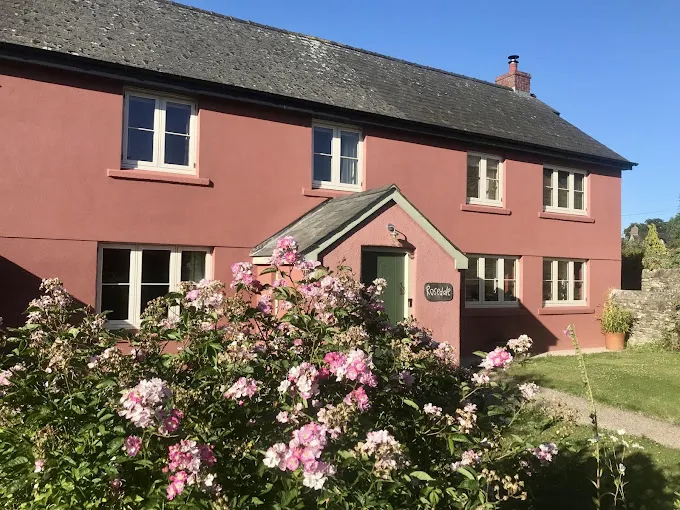
Find Spray Render Near Me in South Wales
Spray render near me searches help South Wales property owners connect with qualified rendering contractors who can protect and transform external walls with durable, weather-resistant finishes suited to the local climate.
Table of Contents
- What Is Spray Render and How Does It Work?
- Choosing a Spray Render Contractor Near You
- Render Types and Which One Suits Your Property
- Spray Rendering Considerations for South Wales Properties
- Frequently Asked Questions
- Spray Render Application Methods Compared
- Coloured Rendering South Wales
- Practical Tips for Your Spray Rendering Project
- The Bottom Line
- Sources & Citations
Article Snapshot
Spray render near me is a search used by homeowners and property developers seeking local rendering contractors who apply machine-sprayed render coatings to external walls. Spray-applied systems deliver faster, more consistent coverage than hand application and are available in silicone, monocouche, and cement formulations for lasting weather protection.
By the Numbers
- Over 25 years: the length of time Coloured Rendering South Wales has served property owners across South Wales since 1998.
- 5.0 stars: the perfect Google rating maintained by Coloured Rendering South Wales across all verified client reviews.
- 10-25 years: the manufacturer-backed warranty period available on Baumit EWI systems installed by a Baumit Approved Applicator.
- 40% reduction: estimated heating cost saving reported by a Swansea Victorian terrace homeowner after external wall insulation with silicone render was installed.
What Is Spray Render and How Does It Work?
Spray render near me refers to a machine-applied external wall coating system in which a render mix is pumped through a specialist spray gun and deposited onto a prepared wall surface at consistent pressure and depth. Unlike traditional hand rendering, which relies on a plasterer applying and levelling material by trowel, spray application uses mechanical equipment to achieve uniform thickness across large wall areas in a fraction of the time. Coloured Rendering South Wales has used professional spray rendering technology throughout South Wales since 1998, helping homeowners, developers, and landlords achieve durable, attractive external finishes efficiently.
The spray rendering process begins with surface preparation. Existing render that is hollow, cracked, or contaminated must be removed. Substrates including brick, block, and concrete are then cleaned, repaired, and primed so the new render bonds correctly. A basecoat or reinforcing mesh is applied depending on the system chosen before the spray finish coat is deposited. Once cured, the render provides a continuous, weather-resistant barrier across the wall surface.
Machine spray application offers several practical advantages over hand rendering. The spray gun delivers render at a controlled rate, eliminating the natural variation in thickness that even skilled hand applicators produce over large areas. Coverage speed is two to three times faster than traditional methods, which reduces both labour costs and the amount of time scaffolding is needed on site. For property developers working across multiple units – such as the Cardiff housing development described in our use cases, where each house was completed in two days rather than the four to five required by hand – this efficiency difference is commercially significant.
Call Us
Spray Render Systems Available in South Wales
Spray rendering technology is compatible with all the principal external render types used on South Wales properties. Thin coat silicone render is among the most widely spray-applied systems: its polymer-modified formulation flows well through spray equipment and cures to a flexible, waterproof yet breathable finish. Monocouche through-colour render is also spray or hand applied, delivering a pre-coloured finish that eliminates the need for painting. One coat cement render is another option suitable for spray application, particularly where a painted finish is the intended outcome. The choice of system depends on the substrate, the property’s exposure conditions, the desired aesthetic, and the client’s long-term maintenance expectations.
Choosing a Spray Render Contractor Near You
Selecting a competent spray render contractor is the single most important decision in any external rendering project, because poor specification or application will result in premature failure regardless of the quality of the render product used. When searching for spray render near me in South Wales, property owners should assess potential contractors on experience, verifiable client reviews, knowledge of local conditions, and the range of systems they can correctly specify and install.
Experience matters because spray rendering requires both equipment expertise and a thorough understanding of render chemistry. A contractor who has worked across a wide variety of substrates – Victorian brick terraces, modern blockwork, rendered concrete panels – will understand how different surfaces behave, how preparation requirements vary, and which render systems are appropriate for each scenario. A contractor familiar specifically with South Wales properties will also understand the regional exposure conditions that influence system selection, particularly in coastal areas and west-facing elevations where wind-driven rain is a constant challenge.
Verified reviews provide independent confirmation of the quality claims a contractor makes about their own work. Google reviews are particularly useful because they cannot be filtered or selectively displayed by the business owner. When reviewing testimonials, pay attention to comments about preparation quality, tidiness on site, and the finish standard rather than solely focusing on price satisfaction. A contractor who arrives on time, protects adjacent surfaces, and cleans up thoroughly after completion is more likely to have followed correct technical procedures throughout the project.
Certifications and Warranties to Look For
Professional render contractors should hold appropriate trade certifications and, where they install complete render systems from named manufacturers, should be approved applicators for those systems. Approved applicator status – such as Baumit Approved EWI Applicator accreditation with City & Guilds Assured recognition – confirms that the installer has been assessed and trained by the manufacturer to install their systems correctly. This matters because manufacturer-backed product warranties of 10-25 years are only available when the system is installed by an approved contractor. A rendering job completed by an uncertified installer using the same materials will not carry the same warranty protection.
You should also confirm that any contractor you engage holds adequate public liability insurance and that their quotation clearly specifies the render system to be used, the preparation work included, and the expected project duration. A detailed, written quotation protects both parties and provides a reference point if any disputes arise. UK Building Regulations Approved Documents set the standards for external wall systems, including those incorporating insulation, and your contractor should be familiar with the relevant provisions.
Render Types and Which One Suits Your Property
The render system selected for your property should be matched to the substrate, the local climate, the desired finish, and your long-term maintenance preferences – and each of the principal systems available has distinct characteristics that make it more or less appropriate for a given situation.
Thin coat silicone render is widely regarded as the leading modern external render for residential properties in exposed locations. Its silicone-modified polymer binder gives it a degree of flexibility that cement-only renders lack, allowing it to accommodate minor substrate movement without cracking. It is hydrophobic – it repels water from the surface – while remaining vapour-permeable, so moisture within the wall substrate can still escape. This breathability is important on older properties where some residual moisture movement is inevitable. Silicone renders are also available in a wide range of stable colours with self-cleaning properties that help the finish stay presentable between wet weather cycles. For coastal properties in areas such as Mumbles or the Gower, where salt air accelerates the degradation of standard renders, silicone systems provide measurably superior durability.
Monocouche through-colour render suits property owners who want a traditional or textured appearance without the ongoing cost of repainting. Because the colour runs through the full depth of the coating, surface weathering does not expose a different coloured substrate underneath. This render type is popular with housing developers building multiple units to the same specification, and with landlords seeking to reduce long-term maintenance budgets. Baumit’s guide to facade renders and paints provides a useful overview of how different render formulations behave across varying exposure conditions.
One coat cement render remains a cost-effective choice for properties where the intended finish is a painted exterior. Its lower material cost compared to silicone or monocouche systems makes it attractive where budget is the primary constraint, though property owners should factor in the ongoing expense of repainting every five to eight years when calculating whole-life costs.
External Wall Insulation with Rendered Finish
External wall insulation systems combine a thermal insulation layer – mineral wool or expanded polystyrene boards – mechanically fixed to the wall, with a reinforced basecoat and spray-applied render finish. EWI is suited to older solid-wall properties that cannot be insulated from the inside without significant loss of internal floor area. The insulation layer dramatically reduces heat loss through the walls, and the rendered outer surface provides a continuous weatherproof barrier. For South Wales homeowners dealing with the dual challenge of damp external walls and high heating costs, an EWI installation addresses both problems simultaneously and transforms the appearance of a dated property at the same time.
Spray Rendering Considerations for South Wales Properties
South Wales presents a specific set of environmental conditions that distinguish it from many other parts of the UK and that must inform render specification decisions made by any competent local contractor. The region’s Atlantic climate delivers high annual rainfall, persistent westerly winds, and – particularly along the coast from Swansea Bay through the Gower to Mumbles – significant exposure to salt-laden air. Properties in these locations experience far greater stress on their external render than equivalent buildings in sheltered inland areas, and a render system that performs adequately in a city centre location will fail prematurely on a seafront elevation.
Rain penetration through failed or inadequate render is one of the most common causes of damp in South Wales homes. Solid-wall Victorian and Edwardian terraces – which form a substantial proportion of the housing stock in Swansea, Cardiff, Newport, and the South Wales valleys – were originally built with lime-based renders that allowed moisture to move through the wall and evaporate. Modern cement renders, applied without adequate preparation or with insufficient coverage, trap moisture behind the render layer, accelerating deterioration and leading to spalling and hollow patches. Specifying a breathable render system and ensuring correct preparation of the substrate are therefore not optional refinements but fundamental requirements for render longevity in the South Wales context.
The Welsh Government’s broader push towards improving residential energy efficiency, and the availability of grant funding for qualifying properties, has increased demand for EWI systems across South Wales. Landlords managing properties in lower EPC bands face increasing pressure to improve ratings, and EWI with a rendered finish is one of the most effective available measures for solid-wall properties. A contractor with specific experience of EWI installation in South Wales will understand the detailing requirements around window reveals, soffit junctions, and rainwater goods that are important to long-term performance in a high-rainfall environment.
Surface Preparation Standards for South Wales Renders
Correct surface preparation is consistently identified by rendering professionals as the primary determinant of system longevity. Before any spray render is applied, existing failing render must be removed back to a sound substrate, efflorescence and contamination treated, cracks filled with compatible materials, and an appropriate primer or bonding agent applied. In areas with significant existing dampness – which is common in South Wales given the high rainfall and prevalence of older solid-wall construction – the source of moisture ingress must be identified and addressed before new render is applied, or the new system will fail by the same mechanism as the old one. A thorough survey of the wall condition, including tapping for hollow render and checking for active water ingress points, should precede any rendering proposal.
Your Most Common Questions
How much does spray rendering cost per square metre in South Wales?
Spray rendering costs in South Wales vary depending on the render system chosen, the condition of the existing substrate, access requirements, and the total area to be covered. Thin coat silicone render systems cost more per square metre than one coat cement render, reflecting the higher material cost of the silicone product. External wall insulation systems, which include insulation boards, reinforcing mesh, basecoat, and finish render, carry a higher total cost per square metre than surface render systems applied directly to existing walls. Surface preparation work – including the removal of failing existing render, crack repairs, and priming – adds to the overall project cost and should always be included in any accurate quotation. For an accurate figure specific to your property, a site visit and detailed quotation from a local specialist is essential. Contact Coloured Rendering South Wales on 07815 868070 for a free no-obligation assessment and written quotation.
How long does a spray render application take compared to hand rendering?
Spray render application is two to three times faster than equivalent hand rendering for the same wall area. A standard semi-detached house that takes four to five days to render by hand is completed in two days using professional spray equipment. This speed advantage benefits property owners by reducing the time scaffolding is in place, minimising disruption to occupants, and lowering overall labour costs. For developers and landlords working to programme schedules or managing tenant changeovers, the time saving is particularly valuable. The speed advantage does not come at the cost of quality: spray application produces a more consistent render thickness than hand application because the mechanical process eliminates the natural variation introduced by manual trowelling. Curing time after application is determined by the render system and ambient weather conditions rather than the application method, and remains the same regardless of whether spray or hand application was used.
What are the signs that my existing render needs replacing rather than repairing?
Several indicators suggest that repair work alone will not provide a satisfactory long-term outcome and that full re-rendering is the more cost-effective solution. Widespread hollow render – identified by a dull thud when the surface is tapped, compared to the solid sound of well-bonded render – indicates that adhesion has been lost across large areas and the coating is at risk of falling away. Extensive cracking that forms a map or crazing pattern across the wall surface suggests that the existing render has reached the end of its useful life and that patch repairs will be visible and likely to fail. Persistent dampness appearing on internal walls despite no obvious roof or plumbing cause indicates that the external render has failed as a weather barrier. In these situations, full removal of the existing render and application of a new system is more economical over a ten to fifteen year horizon than repeated repair interventions. A professional rendering survey will identify which approach is appropriate for your property. Our Rendering Repairs South Wales page explains the options in detail.
Is planning permission required for external rendering in Wales?
In most cases, applying render to the external walls of a house in Wales falls within permitted development rights and does not require planning permission, provided the property is not in a designated area such as a conservation area or national park, and is not a listed building. However, if your property is in a conservation area – which applies to many older streets in Swansea city centre, Cardiff, and various other South Wales towns – permitted development rights are restricted, and you need to obtain prior approval or formal planning permission before altering the external appearance of the building. Properties that are listed buildings always require listed building consent for any works that affect their character or appearance, including re-rendering. Check with your local planning authority before proceeding with external rendering works on any property where there is doubt about its designation. A reputable rendering contractor will raise this issue during the initial survey and help you identify whether any consents are required before work begins.
Spray Render Application Methods Compared
Choosing the right application method and render system for your property depends on balancing speed, cost, finish quality, and long-term maintenance requirements. The table below sets out the principal approaches available to South Wales property owners.
| Method / System | Application Speed | Maintenance Requirement | Best Suited To | Longevity |
|---|---|---|---|---|
| Spray-applied silicone thin coat render | Fast – 2-3x hand speed | Very low – self-cleaning, no repainting | Exposed coastal and high-rainfall locations; modern or renovated properties | 25+ years with correct installation |
| Spray or hand-applied monocouche render | Moderate to fast | Low – through-colour eliminates repainting | New builds, housing developments, landlord portfolios | 20-30 years |
| Spray-applied one coat cement render | Fast | Moderate – requires repainting every 5-8 years | Budget-conscious projects; properties where colour flexibility is desired | 15-20 years substrate protection |
| External wall insulation with render finish | Slower – multi-stage installation | Very low once installed | Solid-wall properties with energy efficiency or damp issues | 10-25 years (manufacturer warranty dependent) |
Coloured Rendering South Wales
Coloured Rendering South Wales is a Swansea-based plastering and spray rendering specialist serving property owners across South Wales since 1998. With over 25 years of hands-on experience, the company delivers external spray rendering, thin coat silicone render, monocouche through-colour render, one coat cement render, internal plastering, rendering repairs, and full external wall insulation systems for residential and commercial clients across Swansea, Cardiff, Newport, Bridgend, and the wider South Wales region.
The team holds Baumit Approved EWI Applicator status with City & Guilds Assured accreditation, enabling installation of Baumit StarTop premium silicone render and complete EWI systems with manufacturer-backed warranties of up to 25 years. This certification provides property owners with documented long-term protection backed by the product manufacturer – not simply a contractor’s own guarantee.
“With over 15 years in the building trade I have experienced several different plasterers all offering different styles and finishes. Geoff’s thin coat spray finish render would rival the best and I can’t recommend his team enough to someone thinking of using him. His professionalism and work ethic has stood out from many of the others we have worked with.” – Keri Hopkins, Google Review
“We’re 100% happy and wouldn’t hesitate to recommend Jeff. His workmanship is excellent and we’re also very happy with the product he recommended to eradicate the penetrating damp and give our house a great new look and lease of life.” – Alistair Legge, Google Review
To explore the full range of services and completed project examples, visit the home page of Coloured Rendering South Wales – expert spray rendering and external wall insulation services across South Wales or browse the EWI Specialists South Wales – expert external wall insulation installations for energy efficiency page for information on insulation systems. To arrange a free site assessment and written quotation, contact Coloured Rendering South Wales for a free quote or consultation on your rendering project, call 07815 868070, or email geoff@colouredrenderingsouthwales.com.
Practical Tips for Your Spray Rendering Project
Getting the most from a spray rendering project requires preparation on the part of the property owner as well as the contractor. The following guidance will help you approach the process with realistic expectations and make informed decisions at each stage.
Obtain at least two detailed written quotations. A genuine comparison between contractors requires that quotations cover the same scope – the same render system, the same preparation work, and the same access arrangements. A quotation that appears lower than others may be omitting preparation steps or specifying a cheaper render system. Ask each contractor to specify the brand and product name of the render they propose to use, and check the manufacturer’s technical data sheet to confirm it is appropriate for your property’s exposure conditions.
Assess substrate condition before committing to a system. The most common cause of premature render failure is inadequate surface preparation rather than product quality. Before any rendering work begins, the existing wall surface should be surveyed for hollow areas, active cracks, contamination, and moisture ingress. If a contractor does not carry out a thorough substrate assessment before quoting, treat that as a warning sign. Our team at Coloured Rendering South Wales provides a detailed property assessment as part of every free consultation.
Plan for scaffold access and parking. Spray rendering requires a scaffold to be erected around the elevations being treated. You will need to arrange with neighbours if the scaffold needs to cross a boundary, and to manage vehicle access to your property during the project. Your contractor should advise on scaffold requirements as part of the quotation process and coordinate with the scaffold supplier on erection and strike dates.
Consider the season and weather window. Renders must be applied within specific temperature ranges – most systems specify a minimum of 5°C and should not be applied to frozen or saturated substrates. South Wales winters, with their combination of frost, rain, and low temperatures, restrict the viable rendering season. Planning your project for spring or early autumn provides the best conditions for application and curing. A good contractor will monitor forecasts and advise on suitable application windows.
Check that your chosen contractor is registered on Google Business. Verified Google reviews provide the most reliable independent indication of contractor quality. Check the volume of reviews, the consistency of ratings over time, and whether the contractor has responded professionally to any less positive feedback. A perfect rating across a large number of verified reviews – such as the 5.0 rating maintained by Coloured Rendering South Wales – provides strong evidence of consistent performance.
The Bottom Line
Spray render near me is the starting point for finding a local specialist who can protect and transform your property’s external walls with a durable, professionally applied render system. In South Wales, where high rainfall, coastal salt air, and a large stock of older solid-wall properties combine to create specific rendering challenges, choosing a contractor with genuine local expertise and verifiable credentials is important to achieving a result that lasts.
Coloured Rendering South Wales brings over 25 years of regional experience, Baumit Approved EWI Applicator accreditation, and a perfect 5.0 Google rating to every project. Whether you need a fresh silicone finish on a coastal home, a monocouche render across a new development, or a full external wall insulation system to tackle damp and heat loss, the team delivers expert results with minimal disruption.
Call 07815 868070, email geoff@colouredrenderingsouthwales.com, or visit the Coloured Rendering Swansea – durable and attractive rendering solutions for residential and commercial properties page to find out more and arrange your free site assessment today.
Sources & Citations
- UK Building Regulations – Approved Documents. GOV.UK.
https://www.gov.uk/guidance/approved-documents - Choose The Perfect Facade, Renders & Paints. Baumit.
https://baumit.co.uk/guides/facade-renders-and-paints