
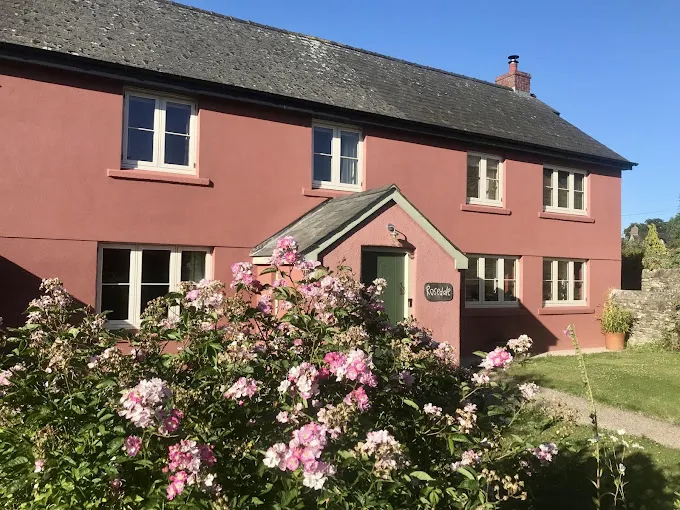
Spray Cork Render Cost: Full UK Price Guide
Spray cork render cost in the UK ranges from £30 to £100 per square metre depending on surface type, property size, and application complexity – this guide explains every pricing factor you need to know.
Table of Contents
- What Is Spray Cork Render and How Is It Priced?
- Factors That Affect Spray Cork Render Cost
- Spray Cork Render vs Traditional Rendering Systems
- Energy Savings and Return on Investment
- Frequently Asked Questions
- Comparison of Rendering Systems
- Coloured Rendering South Wales
- Practical Tips for Your Rendering Project
- The Bottom Line
- Sources & Citations
Article Snapshot
Spray cork render cost is the price per square metre charged for applying a natural cork-based coating to internal or external walls. In the UK, costs range from £30 to £100 per m², varying by surface texture, location, and project scale. The finish delivers insulation, weatherproofing, and long-lasting colour in a single application.
Spray Cork Render Cost in Context
- Smooth surface spray cork render costs from £30/m² (iTube Developments, 2025)[1]
- Residential exterior walls cost £50/m² for spray cork application (Easy Coatings, 2025)[2]
- General spray cork pricing in the UK ranges between £60 and £100/m² (GreenCork Ltd, 2025)[3]
- Cork render application reduces energy bills by 30% based on a Dutch University study (iTube Developments, 2025)[1]
What Is Spray Cork Render and How Is It Priced?
Spray cork render cost is determined by applying a natural cork granule compound to a wall surface using specialist spray equipment, producing a textured, insulating, and weather-resistant finish. Coloured Rendering South Wales, with over 25 years of rendering experience across South Wales, regularly advises clients comparing cork render against silicone, monocouche, and cement systems when planning external wall upgrades.
Cork render is derived from the bark of the cork oak tree, ground into granules and suspended in an acrylic or silicone binder. The compound is spray-applied in one or more coats, bonding directly to brick, block, concrete, and previously rendered surfaces. Unlike traditional sand-and-cement systems requiring multiple coats and a painted finish, spray cork delivers colour, texture, insulation, and waterproofing in a single process.
Pricing in the UK is quoted per square metre and varies considerably depending on surface condition, the depth of cork applied, the chosen texture grade, and whether the application is internal or external. A smooth surface external application starts at around £30/m² (iTube Developments, 2025)[1], while residential exterior walls with standard cork insulation thickness are priced at £50/m² (Easy Coatings, 2025)[2]. At the upper end, specialist or complex applications reach £60-£100/m² depending on the contractor and specification (GreenCork Ltd, 2025; Veramut Ltd, 2025)[3][4].
Call Us
For properties in South Wales – particularly coastal locations around Swansea, Mumbles, and the Gower – the choice of external render system matters greatly. Spray cork’s natural breathability and flexible bond make it well suited to the region’s combination of high rainfall, coastal salt air, and wind-driven moisture. The self-sealing texture also reduces the risk of cracking that afflicts rigid cement finishes in exposed Welsh conditions.
Labour costs make up the largest proportion of the overall spray cork render cost. Spray application is faster than hand-applied systems, which reduces the labour element, but specialist equipment and trained operators command a skilled trades rate. Materials – the cork compound, primer, and any mesh reinforcement – account for the remainder of the project cost.
Internal and External Application Pricing
Spray cork render is used both externally and internally. External applications on residential walls are the most common use case in the UK, protecting against weathering while providing a decorative finish. Internal cork render is applied to walls affected by condensation, cold bridging, or damp, where its insulating and breathable properties address moisture problems from the inside. Internal spray cork render starts at approximately £30/m² for smooth finishes (iTube Developments, 2025)[1], rising to around £70/m² for internal wall insulation applications incorporating thicker cork layers (TWI Cork Spray, 2025)[5].
Factors That Affect Spray Cork Render Cost
Several variables shift the final spray cork render cost significantly, and understanding them helps you obtain accurate quotes and avoid budget surprises. The key drivers are surface condition, texture specification, project size, access requirements, and the installer’s level of experience and certification.
Surface condition is the most immediate cost variable. Walls that are structurally sound, clean, and free from hollow or crumbling render require only priming before cork application. Walls with existing damage – cracked render, hollow patches, damp ingress, or biological growth – need preparatory work that adds cost. A thorough survey of the substrate before quoting is important, particularly on older South Wales properties where Victorian brickwork or lime render needs specialist preparation.
Texture grade affects material consumption and therefore price. A smooth surface application uses less cork compound per square metre and is faster to achieve, keeping costs lower. A very textured surface requires more material built up in layers, and very textured finishes are priced accordingly – iTube Developments report a move from approximately £30/m² for smooth to £35/m² for heavily textured surfaces (iTube Developments, 2025)[1]. Custom colours, particularly darker shades, require additional coats to achieve full coverage, nudging costs upward.
Project scale has a significant effect on the per-square-metre rate. Small patch repairs or single elevations on a semi-detached house cost more per square metre than full whole-house applications, because mobilisation, equipment setup, and scaffolding are spread across fewer square metres. Larger housing developments or commercial projects benefit from economies of scale, and contractors offer reduced rates for consistent repeat work.
Access and scaffolding add cost to any external rendering project. A standard two-storey house in Swansea or Cardiff requires scaffolding for safe access to gable ends and upper elevations. Scaffolding hire is quoted separately and adds several hundred pounds to the overall project. Properties with complex roof lines, bay windows, or ground-level obstacles increase the time required for safe erection and the associated cost.
The installer’s certification and experience level influences both the price quoted and the quality of the outcome. A certified render system applicator familiar with specific product warranties will price at a professional rate, but the manufacturer-backed guarantee that comes with accredited installation provides long-term assurance that a lower-cost, uncertified installation cannot match. In Wales, where weather conditions are demanding, this distinction matters considerably.
Getting Accurate Quotes for Spray Cork Render
To obtain meaningful quotes, have the following information ready before contacting contractors: the total wall area in square metres, the number of storeys and likely access requirements, the current condition of existing render or masonry, whether internal or external application is needed, and your preferred finish texture and colour. Providing the same information to multiple contractors allows like-for-like comparison rather than comparing estimates based on different scopes of work.
Spray Cork Render vs Traditional Rendering Systems
Spray cork render occupies a distinct position among external wall finish options, combining insulation, decoration, and weatherproofing in a single system, yet its spray cork render cost sits above conventional cement or silicone render on a per-square-metre basis.
Traditional sand-and-cement render is the lowest-cost external wall finish and remains widely used on properties throughout South Wales. It requires two or three coats, dries to a hard surface, and must be painted to achieve a coloured finish. It offers no inherent thermal benefit and is prone to cracking in freeze-thaw conditions, which occur regularly across upland areas of Wales. Rendering repairs South Wales – professional repairs and maintenance for external wall renders – are frequently needed on cement-rendered properties within ten to fifteen years of application.
Thin coat silicone render, such as Baumit StarTop applied by a Baumit Approved EWI Applicator, sits in the mid-range and is one of the most popular modern alternatives. It is flexible, breathable, self-cleaning, and available in a wide colour range. It does not provide significant thermal insulation on its own but when installed over an External Wall Insulation (EWI) board system it delivers the best thermal performance of any external finish option. The combined EWI-plus-silicone-render system is priced similarly to the upper range of spray cork render cost per square metre, but delivers certified insulation values and manufacturer warranties of up to 25 years.
Monocouche through-colour render is a cement-based single-coat system that eliminates the need for painting. It is cost-effective for large developments, durable across UK weather conditions, and widely used on housing developments in Cardiff, Newport, and Bridgend. Its thermal performance is similar to traditional cement render – limited – but its low long-term maintenance cost makes it attractive for landlords and developers.
Spray cork render’s advantage over all of these systems is its combination of thermal insulation, flexibility, and decorative finish without the need for separate insulation boards or a painting programme. Its natural material composition also appeals to sustainability-focused property owners. The trade-off is that it sits at a higher material cost than cement or monocouche render, and fewer UK contractors are certified to apply it correctly.
Energy Savings and Return on Investment
The energy-saving potential of spray cork render is a central part of its value proposition and a key factor when assessing whether the spray cork render cost represents a worthwhile investment for your property.
Cork is a naturally insulating material, with air trapped within its cellular structure providing thermal resistance. When applied to external or internal walls at sufficient thickness, it reduces the rate of heat transfer through the wall fabric. This matters most for older properties with solid walls – the type common in Victorian and Edwardian terraces across Swansea, Newport, and the South Wales valleys – where there is no cavity to fill with standard blown-fibre insulation.
As the iTube Developments Team note: “An official study carried out at a Dutch University has found that the application of Cork render can reduce energy bills by 30%.” (iTube Developments, 2025)[1] This figure is consistent with wider estimates: TWI Cork Spray report an average energy bill reduction of 25-40% from cork spray insulation (TWI Cork Spray, 2025)[5].
To calculate a simple payback period, consider a typical South Wales semi-detached property with an annual heating bill of £1,800. A 30% reduction saves £540 per year. If the full spray cork application to external walls costs £6,000, the payback period is approximately eleven years – consistent with the system’s expected performance life. For properties with higher energy costs or larger wall areas, the payback period shortens.
Spray cork render’s insulation effect depends on the thickness applied. A purely decorative thin application achieves weatherproofing and colour but limited thermal gain. A thicker insulating application – the type priced at the upper range of £60-£100/m² – is where the energy saving figures are most applicable. Contractors should specify the expected thermal resistance (R-value or U-value improvement) when quoting insulating cork applications, allowing comparison with alternative systems such as EWI.
For coastal properties in South Wales, the breathability of cork render offers an additional benefit: it allows moisture vapour to pass through the wall from inside to outside, reducing the risk of interstitial condensation that leads to damp, mould, and structural deterioration. This is a genuine performance advantage over impermeable coatings in the Welsh climate, where driving rain and high relative humidity are year-round challenges.
Your Most Common Questions
How much does spray cork render cost for a typical house in the UK?
Spray cork render cost for a typical UK house varies considerably depending on the property size, wall condition, and the specification chosen. At the lower end, smooth surface applications start at around £30/m² (iTube Developments, 2025)[1], while standard residential exterior wall applications are priced at £50/m² (Easy Coatings, 2025)[2]. For thicker insulating applications or complex surfaces, costs rise to £60-£100/m² (GreenCork Ltd, 2025; Veramut Ltd, 2025)[3][4]. For a semi-detached house with approximately 80-120m² of external wall area, budget between £4,000 and £12,000 for a full external spray cork render installation, including preparation, primer, and labour. Always obtain at least three quotes from experienced applicators and ensure the scope of work – including surface preparation and access – is clearly defined in each quotation.
Is spray cork render worth the cost compared to standard silicone render?
Spray cork render is worth the additional cost over standard silicone render for properties where insulation is a primary objective – particularly solid-wall properties with no cavity. Cork render delivers thermal resistance, weatherproofing, and a decorative finish in a single application without requiring separate insulation boards. Standard silicone render is more cost-effective as a purely decorative and weatherproof finish but provides little thermal benefit unless installed as part of an EWI system. For properties in South Wales where energy bills are high, heating costs are the main driver, and the wall structure rules out conventional cavity or EWI solutions, spray cork render’s higher upfront cost is offset by energy savings of 25-40% annually (TWI Cork Spray, 2025)[5]. For properties where thermal performance is less important, silicone or monocouche render offers better value per pound spent.
What factors cause spray cork render costs to vary between quotes?
Spray cork render costs vary between quotes for several reasons. Surface condition is the most significant – walls requiring repair, cleaning, or specialist priming before cork application will cost more than sound, clean substrates. The thickness and texture grade of the cork application affects material volume and therefore price; very textured finishes use more product per square metre than smooth applications. Project scale matters: smaller areas cost more per square metre because mobilisation, equipment hire, and scaffolding are spread across fewer square metres. The contractor’s certification, insurance, and use of warranted product systems affect their pricing structure. Access complexity – multi-storey properties, tight urban sites, or coastal locations with wind restrictions – adds to scaffolding and time costs. Finally, the region of the UK influences labour rates, with contractors in South Wales pricing competitively relative to London and the South East.
Can spray cork render be applied to older Welsh properties with existing render?
Spray cork render is applied over existing render in sound condition, making it a practical upgrade option for older Welsh properties without the cost of full render removal. The key requirement is that the existing render is structurally bonded – free from hollow patches, active damp, and loose or crumbling areas. A competent contractor will carry out a tap test survey across the wall before quoting. Where patches are hollow or failing, these are cut out and repaired with a compatible mortar before the cork primer and finish coats are applied. Victorian and Edwardian terraces common in Swansea, Cardiff, and the valleys often have lime-based original renders that require specialist assessment to confirm compatibility. In some cases, particularly where damp problems are active or the existing render has failed broadly, full removal and re-rendering is more cost-effective than applying cork over a compromised substrate. A thorough survey at the quoting stage protects against budget surprises on site.
Comparing External Render Systems for South Wales Properties
Choosing the right external render system depends on balancing upfront spray cork render cost against long-term performance, maintenance demands, and energy efficiency outcomes. The table below compares the four main systems used on residential properties in the UK, using cost data sourced from the research above.
| Render System | Typical Cost (£/m²) | Insulation Benefit | Maintenance Requirement | Best Suited For |
|---|---|---|---|---|
| Spray Cork Render | £30-£100 (iTube Developments, 2025; Veramut Ltd, 2025)[1][4] | Moderate to high (natural cork thermal resistance) | Very low – no repainting required | Solid-wall properties, coastal and exposed locations |
| Thin Coat Silicone Render | £20-£45 | Low (decorative only unless over EWI) | Very low – self-cleaning properties | New builds and renovation with modern aesthetic |
| Monocouche Through Colour Render | £25-£50 | None | Low – no painting required | Housing developments, traditional properties |
| EWI with Silicone Render Finish | £60-£120 | High (certified insulation boards) | Very low – manufacturer warranty up to 25 years | Solid-wall properties prioritising maximum thermal performance |
Coloured Rendering South Wales
Coloured Rendering South Wales has been delivering professional plastering and spray rendering services across South Wales since 1998. Based in Swansea, we bring over 25 years of hands-on experience to every project, from single-elevation repairs on Victorian terraces in the valleys to full external rendering programmes on new build developments in Cardiff and Newport.
Our service range covers the full spectrum of external wall finishes: thin coat silicone render, monocouche through colour render, one coat cement render, rendering repairs, and External Wall Insulation (EWI) systems. As a Baumit Approved EWI Applicator with City & Guilds Assured accreditation, we are certified to install Baumit StarTop premium silicone render and complete EWI systems with manufacturer-backed warranties of 10-25 years. We use professional spray application equipment throughout, delivering faster project completion and consistent finish quality compared to traditional hand application methods.
We understand the specific demands of the South Wales climate – the combination of coastal salt air, high annual rainfall, and wind-driven moisture that affects properties from Mumbles to Monmouth. Every render system we specify is chosen with these conditions in mind, not generic mainland UK standards. Whether you are a homeowner considering a full external upgrade, a landlord looking to reduce maintenance costs across your portfolio, or a developer needing efficient rendering across a new build scheme, we provide straightforward advice tailored to your property and your budget.
“With over 15 years in the building trade I have experienced several different plasterers all offering different styles and finishes. Geoff’s thin coat spray finish render would rival the best and I can’t recommend his team enough to someone thinking of using him. His professionalism and work ethic has stood out from many of the others we have worked with.” – Keri Hopkins, Google Review
“Excellent finish. Geoff worked in my house, both an outside render and throughout the house. Couldn’t be happier with the finish and completely reliable. Would recommend this company 100%. Maybe not the cheapest quote I had but worth every penny.” – David Lamb, Google Review
Explore our full range of services on the home page of Coloured Rendering South Wales – expert spray rendering and external wall insulation services across South Wales, or visit our EWI Specialists South Wales – expert external wall insulation installations for energy efficiency page to learn more about insulating render solutions. To discuss your project and request a free quote, contact Coloured Rendering South Wales for a free quote or consultation on your rendering project.
Practical Tips for Managing Your Spray Cork Render Project
Preparing thoroughly before committing to a spray cork render project reduces the risk of cost overruns, delays, and performance problems after completion. The following guidance applies to residential and commercial projects across South Wales.
Obtain a written survey before accepting any quote. A contractor who quotes without inspecting the wall surface in person cannot accurately price preparation work, access requirements, or material volumes. A written survey protects you if disputes arise and provides a documented record of the substrate condition before work begins.
Request product data sheets for the cork compound being used. Different cork render products have different cork granule sizes, binder compositions, and application thicknesses, which affect thermal performance, texture, and durability. Knowing the exact product specified allows you to verify its suitability for your property type and climate exposure, and to confirm whether manufacturer warranties apply.
Factor scaffolding into your budget from the outset. For properties above single storey, safe external rendering requires erected scaffolding, and this is a real cost that varies by property height and configuration. Some contractors include scaffolding in their quoted price; others quote it separately. Confirm this clearly when comparing quotes.
Consider timing relative to Welsh weather. Spray cork render should not be applied in temperatures below 5°C, in direct strong sunlight, or during rain. In South Wales, the late spring and summer months provide the most reliable application windows. Planning your project for April through September gives the best chance of uninterrupted application and proper curing conditions.
Check the UK Building Regulations – Approved Documents if your project includes insulating render applied to a listed building, a building in a conservation area, or if the application significantly changes wall thickness. In some cases, permitted development rights or planning consent are required. Your contractor should be able to advise on this, but confirming independently protects you.
After completion, follow the contractor’s maintenance guidance. Modern cork render systems require minimal maintenance – no repainting, no annual treatment. However, periodic inspection for any mechanical damage at low levels, checking of sealant around windows and doors, and clearing of any organic growth in sheltered areas will extend the system’s life and keep it performing as specified.
The Bottom Line
Spray cork render cost in the UK spans a broad range – from £30/m² for smooth surface applications up to £100/m² for specialist insulating installations – and the right choice depends entirely on your property’s wall construction, your energy efficiency objectives, and the climate exposure of your location. For solid-walled properties in South Wales, where conventional cavity insulation is not an option and the weather demands a genuinely flexible, breathable, and waterproof finish, spray cork render offers a strong combination of performance and long-term value.
Understanding the full cost picture – preparation, materials, labour, scaffolding, and the long-term saving from reduced energy bills and zero repainting – is the key to making a sound decision. An energy bill reduction of 25-40% (TWI Cork Spray, 2025)[5] over the system’s service life substantially offsets the upfront investment.
Coloured Rendering South Wales provides free consultations and detailed written quotations for rendering projects across South Wales. Call us on 07815 868070, email geoff@colouredrenderingsouthwales.com, or use our online contact form to arrange a no-obligation survey of your property.
Sources & Citations
- Spray Cork Render Costs. iTube Developments.
https://www.itubedevelopments.co.uk/news/spray-cork-render-costs - Cork Spray Insulation: Benefits and Cost in the UK. Easy Coatings.
https://easycoatings.co.uk/cork-spray-insulation-benefits-and-cost-in-the-uk/ - Spray Cork Cost Guide. GreenCork Ltd.
https://greencork.co.uk/spray-cork-cost-guide/ - How Much Does it Cost to Render a House? Veramut Ltd.
https://www.veramutltd.uk/post/how-much-does-it-cost-to-render-a-house - Cork Spray Insulation Costs in 2025: A Complete Price Guide. TWI Cork Spray.
https://www.tiwicorkspray.co.uk/post/cork-spray-insulation-costs-in-2025-a-complete-price-guide