
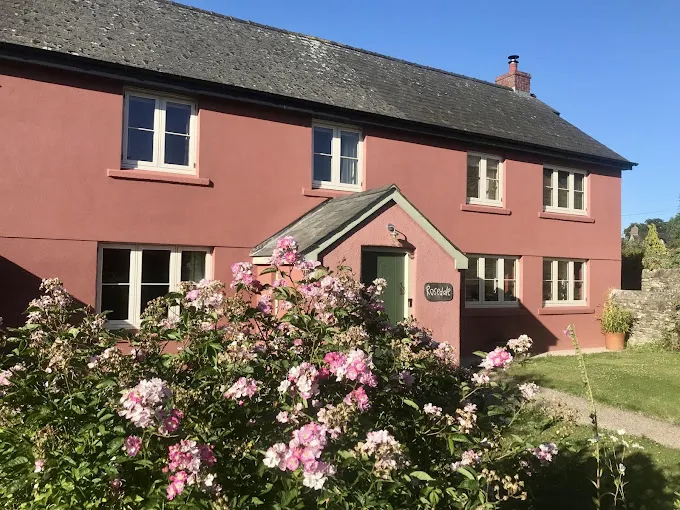
Spray Cork Render: Benefits, Costs & Performance
Spray cork render is a natural, flexible external wall finish that outperforms traditional renders in durability, thermal efficiency, and weather resistance – here’s everything South Wales property owners need to know.
Table of Contents
- What Is Spray Cork Render?
- Performance and Durability in Welsh Conditions
- Thermal and Energy Benefits of Spray Cork Render
- Application, Installation and Costs
- Frequently Asked Questions
- Spray Cork Render vs Traditional Rendering Systems
- Coloured Rendering South Wales: Expert Rendering Services
- Practical Tips for Property Owners Considering Spray Cork
- The Bottom Line
- Sources & Citations
Article Snapshot
Spray cork render is a breathable, flexible external wall coating made from natural cork granules bonded in an acrylic or water-based matrix. It resists cracking, repels water, provides thermal insulation, and lasts 25-30 years with minimal maintenance – making it a compelling alternative to conventional cement or silicone renders for UK properties.
Spray Cork Render in Context
- Spray cork render lasts 25-30 years in UK conditions, compared to 10-15 years for traditional renders (Green Cork, 2025)[1]
- Thermal conductivity of spray cork is just 0.035-0.045 W/m·K – up to 71% lower than conventional rendering options (Green Cork, 2025)[1]
- Spray cork reduces heat loss by up to 30% in tested setups, acting as an extra thermal barrier (Spray Cork UK, 2025)[2]
- Typical application thickness is just 4-6 mm, and most installations are completed within 2-3 days (Green Cork, 2025)[1]
What Is Spray Cork Render?
Spray cork render is an external wall finish composed of natural cork granules suspended in a water-based or acrylic binder, applied to a building’s exterior using specialist spray equipment. Unlike conventional cement or silicone renders, cork is an entirely natural material harvested from the bark of cork oak trees, making this system one of the most sustainable external finishes available in the UK market. Coloured Rendering South Wales understands the growing demand for modern, high-performance exterior finishes and provides informed guidance on the full range of rendering systems suited to South Wales properties.
The cork granules give the finish its distinctive texture and its most valuable mechanical properties: natural elasticity, water repellence, and thermal resistance. When applied by spray, the material bonds tightly to the substrate and forms a textured coating that moves with the building rather than cracking under stress. This elastic quality sets cork-based render apart from rigid mineral or cement systems that are prone to hairline cracking over time.
Spray cork external wall coating is available in a wide range of colours, pre-mixed during manufacture so the colour runs throughout the material rather than being applied as a surface coat. This through-colouring approach means the finish retains its appearance even where minor surface wear occurs. For homeowners in exposed coastal locations around Swansea and the Gower Peninsula, or in the high-rainfall valleys of South Wales, this combination of colour stability and weather resistance is particularly relevant.
Call Us
The system is suitable for application over most standard substrates including brick, concrete block, existing render, insulation board, and timber frame with appropriate backing. It is compatible with External Wall Insulation (EWI) systems, making it a viable finish coat for properties undergoing energy efficiency upgrades. Its thin application profile – typically just 4-6 mm – adds negligible weight or bulk to a wall, which is an important consideration for retrofit projects on older buildings with limited structural tolerance.
Performance and Durability in Welsh Conditions
Spray cork render delivers measurably superior durability compared to conventional external renders, particularly in the challenging climate conditions found across South Wales. The Welsh coastline and valleys experience some of the highest rainfall totals in England and Wales, combined with salt-laden air along the coast, wind-driven moisture, and significant temperature variation between seasons. These conditions accelerate the deterioration of rigid render systems, making the elastic, water-repellent properties of cork-based coatings especially valuable.
Cork’s natural cellular structure is inherently hydrophobic, meaning water beads on the surface rather than being absorbed into the material. This water-repellent external wall coating property prevents the freeze-thaw cycling that causes traditional cement renders to crack and spall over successive winters. In areas like Mumbles, Porthcawl, or the exposed hillside properties above the Rhondda Valley, this resistance to moisture ingress directly extends the service life of the render and protects the underlying wall structure from damp.
As Spray Cork UK notes, “Cork is naturally elastic, which means it doesn’t crack or flake like rigid materials. This is invaluable in areas prone to building movement or shifting temperatures (which, let’s face it, is most of the UK).” (Spray Cork UK, 2025)[2] This elasticity is particularly relevant for older South Wales properties – Victorian terraces, 1930s semi-detached houses, and stone-built cottages – where subtle structural movement is common and rigid renders frequently develop cracks at corners, window reveals, and expansion joints.
CorkSol UK adds that “Cork spray render is naturally more hard-wearing and has a much longer lifespan thanks to its weather-proof qualities. Unlike many other external renders, cork spray requires no maintenance for a much longer period of time.” (CorkSol UK, 2025)[3] The typical service life of 25-30 years for spray cork in UK conditions, compared with just 10-15 years for traditional renders, means property owners face significantly fewer reapplication cycles over the lifetime of a building (Green Cork, 2025)[1].
The cork render’s self-cleaning properties also reduce visible soiling in South Wales’s frequently wet conditions. Rain effectively washes the surface clean, preventing the build-up of algae and lichen that discolours older cement or pebbledash finishes in humid, sheltered locations. This matters particularly for landlords managing rental properties or developers maintaining the appearance of housing schemes where repainting budgets are a recurring cost.
Thermal and Energy Benefits of Spray Cork Render
Spray cork render provides genuine thermal insulation at the point of application, distinguishing it clearly from standard decorative coatings that offer no meaningful contribution to a building’s energy performance. Cork’s thermal conductivity of just 0.035-0.045 W/m·K is substantially lower than that of conventional renders, representing a reduction of up to 71% compared with standard rendering materials (Green Cork, 2025)[1]. While a thin application of cork render cannot replicate the full insulating effect of a dedicated EWI system with 100 mm insulation boards, it provides a measurable reduction in heat loss through the wall surface.
Spray Cork UK reports that “Spray cork acts as an extra thermal barrier. Tests show it can reduce heat loss by up to 30% in some setups, helping homes stay warmer in winter and cooler in summer.” (Spray Cork UK, 2025)[2] For South Wales homeowners heating older solid-wall properties, this additional thermal resistance at the wall face translates into a noticeable reduction in heating bills, particularly during the region’s long, mild but damp winters.
The breathable render properties of cork are equally important. Unlike impermeable coatings that trap moisture within the wall structure, cork allows water vapour to pass outward from the interior while preventing liquid water ingress from outside. This breathability is important for older solid masonry properties where moisture management is complex, and where applying an impermeable external coating leads to internal damp problems and fabric deterioration. For the large stock of Victorian and Edwardian terraced housing across Swansea, Cardiff, and Newport, a breathable insulating finish is the most technically appropriate choice.
Veramut Ltd summarises the broader value proposition well: “Spray cork isn’t just a new fad in exterior rendering. It’s a proven, high-performance solution that outshines traditional materials like pebbledash or lime render with better energy efficiency, lasting good looks, and sustainable sourcing.” (Veramut Ltd, 2025)[4] When combined with a full EWI Specialists South Wales – expert external wall insulation installations for energy efficiency system, spray cork as the finish coat delivers both the aesthetic and thermal benefits of a comprehensive external upgrade in a single programme of work.
The environmental credentials of cork also appeal to property owners focused on sustainability. Cork is harvested by stripping bark from living trees, which regrow their bark without felling, making it a genuinely renewable resource. The production process has a lower embodied carbon footprint than cement-based renders, and the material’s long service life further reduces the environmental cost associated with periodic reapplication.
Application, Installation and Costs
Spray cork render installation is a rapid, specialist process that differs significantly from traditional hand-applied rendering in its method, timeline, and skill requirements. The material is mixed to a consistent slurry and applied using purpose-built spray equipment that delivers a uniform thickness across the wall surface. This spray application method achieves coverage rates that hand application cannot match, allowing large wall areas to be completed far more efficiently. A Coloured Rendering Swansea – durable and attractive rendering solutions for residential and commercial properties specialist with spray equipment experience is well placed to advise on whether cork render is the right system for a specific property.
The typical application thickness of 4-6 mm means spray cork is considerably thinner than traditional multi-coat cement render systems, which build to 15-20 mm. This matters for properties with window reveals, door frames, and architectural detailing where additional thickness would require costly adjustment work. The thin profile also means the material dries quickly, with most installations completed within 2-3 days for an average-sized residential property (Green Cork, 2025)[1]. Reduced installation time limits disruption to occupants and reduces scaffolding hire costs, both of which are significant factors in the overall project budget.
Preparation remains as important for spray cork as for any render system. The substrate must be clean, sound, and free from loose material, organic growth, and contamination. Existing failed render should be removed. Cracks and voids in the substrate require filling before the cork coat is applied. On smooth substrates, a primer or bonding coat is necessary to achieve adequate adhesion. Appropriate Rendering Repairs South Wales – professional repairs and maintenance for external wall renders carried out before the cork coat is applied will significantly extend the finished system’s service life.
In terms of cost, spray cork render runs at £60-80 per square metre in the UK (ProGuard Exteriors, 2025)[5]. This is higher than basic cement render but reflects the material cost, the specialist equipment required, and the substantially longer service life. Green Cork notes that “Spray Cork offers superior long-term value through reduced maintenance, extended lifespan, energy savings, and shorter installation time, making it more economical over the building’s lifetime.” (Green Cork, 2025)[1] When the cost is amortised across a 25-30 year service life with no repainting requirement, the cost per year of protection compares favourably with systems that require repainting every 5-10 years.
Your Most Common Questions
Is spray cork render suitable for coastal properties in South Wales?
Spray cork render is particularly well suited to coastal properties in South Wales, including those in Swansea Bay, the Gower Peninsula, and along the Glamorgan Heritage Coast. Cork’s natural hydrophobic properties mean it repels water rather than absorbing it, which directly counters the effects of driving rain and salt-laden coastal air that rapidly deteriorate conventional cement or mineral renders. The material’s elasticity prevents the cracking that follows repeated cycles of thermal expansion and contraction, which are accelerated in exposed coastal locations. Its breathable render characteristics also allow moisture that enters the wall structure to escape outward, preventing the internal damp problems that impermeable coatings cause on solid masonry properties. For a Victorian terrace in Swansea or a detached house on the Gower, spray cork represents a technically appropriate, long-lasting external finish that eliminates the need for regular repainting or patch repairs associated with more conventional systems. Professional installation on a properly prepared substrate is important to achieving the full 25-30 year service life that the material delivers in these demanding conditions.
Can spray cork render be applied over existing render?
Spray cork render can be applied over existing render in certain circumstances, but the condition of the underlying surface is the determining factor. If the existing render is sound – meaning it is firmly bonded to the substrate, free from hollow patches, and structurally intact – a cork finish coat can be applied over it after appropriate surface preparation and priming. This makes cork an attractive option for upgrading the appearance and performance of an older rendered property without the cost and disruption of complete removal. However, if the existing render is hollow in areas, cracked, or showing signs of detachment, those sections must be removed and the substrate made good before the cork system is applied. Applying any render, including cork, over a failed substrate will replicate the underlying problems in the new finish. A professional survey of the existing render condition is the starting point for any such project, and this is something a specialist South Wales rendering contractor can carry out as part of an initial property assessment. Where repairs are needed beforehand, addressing them properly will ensure the new cork coating performs to its full potential.
How does spray cork render compare to silicone render for energy efficiency?
Both spray cork render and thin coat silicone render are breathable, water-repellent external finishes, but they differ in their thermal contribution. Silicone render is primarily a protective and decorative finish – it offers excellent water repellence and colour retention but adds minimal insulation value on its own. Spray cork, by contrast, has a thermal conductivity of just 0.035-0.045 W/m·K, which is significantly lower than conventional renders and provides a measurable reduction in heat loss through the wall surface. Tests show spray cork reduces heat loss by up to 30% in tested configurations. For a property where improving thermal performance is a priority alongside weather protection, spray cork offers a functional advantage over silicone render alone. That said, silicone render remains the preferred finish coat for full External Wall Insulation systems, where the insulation boards themselves do the primary thermal work. The right choice depends on the property’s current construction, existing EPC rating, and the owner’s objectives – a conversation best had with a specialist who can assess the building and recommend the most appropriate system for the specific circumstances.
How long does spray cork render installation take on a typical South Wales home?
Most spray cork render installations on a typical South Wales residential property are completed within 2-3 days from start to finish, assuming the substrate has been properly prepared in advance. This rapid turnaround is one of the material’s practical advantages over traditional multi-coat cement systems, which require curing time between coats and take considerably longer to complete. The spray application method allows large wall areas to be covered quickly and consistently, and the thin 4-6 mm application profile means drying times are short. Scaffolding is in place for a shorter period than with conventional rendering work, which reduces hire costs and limits disruption to the household. For properties in busier urban areas of Swansea or Cardiff where neighbours are in close proximity, a shorter installation window is a meaningful benefit. Preparation work – which includes removing failed areas of existing render, repairing cracks, treating organic growth, and applying primer – is carried out before the cork coat and extends the overall programme depending on the property’s condition. A professional contractor can provide an accurate project timeline once the building has been assessed.
Spray Cork Render vs Traditional Rendering Systems
Choosing the right external render system for a South Wales property requires comparing the key performance characteristics of available options across durability, thermal performance, maintenance requirements, and cost. The table below compares spray cork render with the three most common alternative systems to help property owners understand the trade-offs involved.
| Render System | Service Life | Thermal Performance | Maintenance Requirement | Typical Cost (£/m²) |
|---|---|---|---|---|
| Spray Cork Render | 25-30 years (Green Cork, 2025)[1] | 0.035-0.045 W/m·K; up to 30% heat loss reduction (Green Cork, 2025)[1] | Minimal; no repainting required | £60-80[5] |
| Thin Coat Silicone Render | 20-25 years | Minimal insulation value; breathable | Low; self-cleaning properties | £40-60 |
| Monocouche Through Colour Render | 15-20 years | Negligible | Low; no painting required | £30-50 |
| One Coat Cement Render | 10-15 years (Green Cork, 2025)[1] | Negligible | Regular repainting every 5-8 years | £20-35 |
Coloured Rendering South Wales: Expert Rendering Services
Coloured Rendering South Wales has been delivering professional plastering and spray rendering services across South Wales since 1998. With over 25 years of experience, the company offers comprehensive external rendering solutions for residential and commercial properties, from traditional cement systems through to modern silicone and cork-based finishes. As a Baumit Approved EWI Applicator with City & Guilds Assured accreditation, the team is certified to install full external wall insulation systems with manufacturer-backed warranties of up to 25 years.
The company’s expertise spans the full range of rendering options relevant to South Wales property owners – thin coat silicone render, monocouche through colour render, one coat cement render, rendering repairs, and complete EWI systems. Spray application technology ensures faster project completion and consistent finish quality across all render types. This efficiency is particularly valuable for developers and landlords managing multiple properties, where programme timelines and budget control are important.
“With over 15 years in the building trade I have experienced several different plasterers all offering different styles and finishes. Geoff’s thin coat spray finish render would rival the best and I can’t recommend his team enough to someone thinking of using him. His professionalism and work ethic has stood out from many of the others we have worked with.” – Keri Hopkins, Google Review
“We’re 100% happy and wouldn’t hesitate to recommend Jeff. His workmanship is excellent and we’re also very happy with the product he recommended to eradicate the penetrating damp and give our house a great new look and lease of life.” – Alistair Legge, Google Review
Whether you are a homeowner in Swansea dealing with failed render, a property developer working on a Cardiff housing scheme, or a landlord seeking a low-maintenance finish for your rental portfolio, Coloured Rendering South Wales provides the local expertise and proven track record to deliver the right solution. Visit the Home page of Coloured Rendering South Wales – expert spray rendering and external wall insulation services across South Wales to learn more about available services, or Contact Coloured Rendering South Wales for a free quote or consultation on your rendering project – call 07815 868070 or email geoff@colouredrenderingsouthwales.com.
Practical Tips for Property Owners Considering Spray Cork
Getting the best outcome from a spray cork render installation requires preparation, realistic expectations, and the right specification for your property’s circumstances. These practical points will help you plan effectively.
Assess your substrate before committing to any system. The condition of what is behind the render matters as much as the render itself. Tap the existing surface to identify hollow patches, check for active damp, and inspect corners and reveals for structural cracks. A professional survey before obtaining quotes ensures the specification is accurate and avoids budget surprises once work is under way. For properties with significant existing damage, Rendering Repairs South Wales – professional repairs and maintenance for external wall renders is the appropriate first step before a full re-render is considered.
Consider the thermal upgrade opportunity. If your property has solid walls and a poor EPC rating, combining a spray cork finish with an EWI system addresses both the aesthetic and energy performance objectives in a single project. The two systems are compatible, and the combined investment delivers greater long-term value than either approach alone. The NBS – National Building Specification provides technical guidance on specifying EWI systems that is useful when reviewing contractor proposals.
Check that your contractor has appropriate spray equipment experience. Spray cork requires dedicated application equipment and operator skill to achieve the consistent thickness and texture that the material requires. Ask to see examples of completed cork render projects and confirm that the contractor has hands-on experience with the specific product they are proposing to use. Accreditations and manufacturer approvals are a reliable indicator of genuine expertise.
Plan for scaffold access. Even on a modest two-storey property, safe scaffold access is important for spray cork work. Factor scaffold hire into your cost comparison between render systems, and consider whether the project timeline can be extended to include other external maintenance – gutters, fascias, window painting – while the scaffold is in place.
Verify colour samples in situ before finalising. Cork render colours appear different on small sample cards compared to a full wall elevation in Welsh daylight. Wherever possible, obtain a physical sample applied to a small section of your actual wall before committing to a colour. The Choose The Perfect Facade, Renders & Paints guide from Baumit offers useful practical advice on colour selection for exterior finishes.
The Bottom Line
Spray cork render is a proven, high-performance external wall finish that addresses the specific challenges of South Wales property ownership – persistent rainfall, coastal salt air, building movement, and the desire for a low-maintenance, long-lasting result. With a service life of 25-30 years, genuine thermal insulation properties, and no requirement for periodic repainting, it offers a compelling long-term value case compared with conventional cement or silicone systems.
Selecting the right render system for your property depends on your substrate condition, thermal performance objectives, budget, and aesthetic preferences. A specialist with direct experience of South Wales conditions will ensure the specification is appropriate for your specific building and location.
To discuss whether spray cork render or another external finish is the right choice for your property, contact Coloured Rendering South Wales on 07815 868070, email geoff@colouredrenderingsouthwales.com, or use the contact form at colouredrenderingsouthwales.com/contact to arrange a free consultation.
Sources & Citations
- How Long Does Spray Cork Last? Green Cork, 2025.
https://greencork.co.uk/how-long-does-spray-cork-last/ - Spray Cork vs Traditional Render: How Long Does It Last? Spray Cork UK, 2025.
https://spraycorkuk.co.uk/news/spray-cork-vs-traditional-render-how-long-does-it-last/ - Why Architects Can Benefit From Specifying Cork Spray Render. CorkSol UK, 2025.
https://corksoluk.com/help-articles/cork-spray-benefits/ - Pebbledash vs Spray Cork. Veramut Ltd, 2025.
https://www.veramutltd.uk/post/pebbledash-vs-spray-cork - Spray Cork vs Traditional Renders: A Side-by-Side Comparison. ProGuard Exteriors, 2025.
https://www.proguardexteriors.co.uk/spray-cork-vs-traditional-renders-a-side-by-side-comparison/