
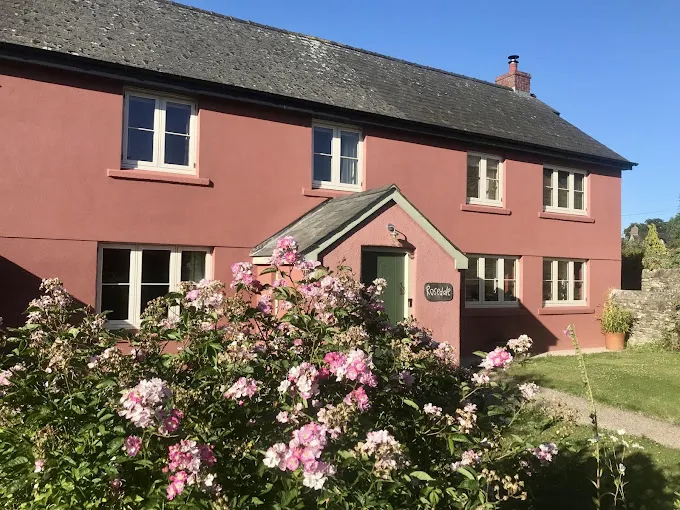
Spray Cement Render Swansea: Complete Guide
Spray cement render Swansea services deliver durable, weather-resistant external wall finishes for residential and commercial properties – discover which system suits your property and budget in this complete guide.
Table of Contents
- What Is Spray Cement Render?
- Render Systems for Swansea Properties
- Why Spray Rendering Suits the South Wales Climate
- Costs, Timelines, and Practical Considerations
- Frequently Asked Questions
- Comparing Spray Render Application Methods
- Coloured Rendering South Wales
- Practical Tips for Your Render Project
- Key Takeaways
- Sources & Citations
Article Snapshot
Spray cement render Swansea is a machine-applied external wall coating that delivers consistent coverage, faster installation, and durable weather protection compared to hand-applied alternatives. Modern systems – including silicone, monocouche, and one-coat cement renders – protect South Wales properties from rain, coastal salt air, and driving wind for decades with minimal maintenance.
By the Numbers
- Cement render material costs approximately £10 per m², while monocouche render costs around £35 per m² (MyJobQuote, 2025)[1]
- Silicone render ranges from £30 to £70 per m², and spray render pricing for UK homeowners spans £30 to £100 per m² depending on system and specification (MyJobQuote, 2025; Coloured Rendering South Wales, 2025)[1][2]
- Homes with modern rendering techniques command a price premium of up to 15% compared to similar, unrendered properties (House Rendering in Swansea, 2025)[3]
- The global sprayed concrete market is projected to reach USD 9.85 billion in 2025, growing at a CAGR of 6% (Mordor Intelligence, 2025)[4]
What Is Spray Cement Render and How Does It Work?
Spray cement render Swansea is a machine-applied external coating system that forces render material through a spray gun at controlled pressure, depositing an even layer across the wall surface. Unlike traditional hand application using a trowel and float, spray equipment ensures consistent thickness from the first pass, which reduces the risk of weak spots, cracking, and uneven cure times across large or complex wall areas. Coloured Rendering South Wales has been applying these systems across Swansea, Cardiff, Newport, and the wider South Wales region since 1998, combining machine precision with experienced craftsmanship.
The term “spray cement render” covers several product categories, each with distinct performance characteristics. One-coat cement render is the most straightforward: a Portland cement-based mix applied in a single pass, left to cure, and then painted to the desired colour. Monocouche render – derived from the French for “single coat” – is a pre-coloured, through-tinted cement-based product that combines the basecoat and finish in one application, eliminating the need for painting. Silicone thin-coat render, the most technically advanced option, uses a polymer-modified silicone binder to deliver flexibility, breathability, and self-cleaning properties that cement-only systems cannot match.
Spray application suits all three product types. The machine mixes material to a consistent slump, maintains even pressure, and deposits the render at a rate of coverage that would take a hand plasterer considerably longer to match. “Unlike traditional hand application methods, spray rendering ensures consistent thickness and coverage while significantly reducing installation time. This technology benefits properties with complex architectural features or large surface areas, where maintaining uniform application would be challenging using conventional methods,” noted a rendering technology expert in 2025.[5]
Call Us
For Swansea homeowners and property developers, spray application means shorter scaffolding hire periods, reduced labour time on site, and a more uniform finish across the entire facade. These advantages are relevant on Victorian terraces, 1930s semi-detached houses, and large commercial elevations – the property types most commonly rendered in the South Wales region. Coloured Rendering Swansea – durable and attractive rendering solutions for residential and commercial properties provides further detail on product selection for specific property types in the area.
Render Systems for Swansea Properties
Choosing the right external render system for a Swansea property requires matching product performance to the specific demands of the local environment, the building’s substrate, and the owner’s long-term maintenance expectations. Three systems dominate the South Wales market: one-coat cement render, monocouche through-colour render, and thin-coat silicone render.
One-Coat Cement Render
One-coat cement render is the most cost-effective entry point for external wall protection. Material costs run at approximately £10 per m² (MyJobQuote, 2025)[1], making it well-suited to projects where budget is the primary constraint. The finished surface is hard, strong, and accepts masonry paint in any colour. The trade-off is that painted finishes require repainting every five to eight years, and cement render is less flexible than polymer-modified alternatives, meaning it is more susceptible to hairline cracking as buildings settle or move seasonally.
Spray application of one-coat cement render is effective on large, uninterrupted wall areas such as flat-fronted mid-century houses and commercial units. The machine maintains consistent wet-on-wet coverage, preventing the cold joints and thickness variations that hand application introduces. For properties in sheltered inland locations around Swansea and the Swansea Valley, one-coat cement render provides reliable protection at a lower initial outlay – though the whole-life cost picture changes once repainting intervals are factored in.
Monocouche Through-Colour Render
Monocouche render costs around £35 per m² for materials (MyJobQuote, 2025)[1] and eliminates the repainting requirement entirely, since the colour is integral throughout the product’s thickness. This makes it popular with property developers completing housing developments in Cardiff, Newport, and Bridgend, where consistent appearance across multiple units is important and ongoing maintenance budgets need to be minimal. Spray application is valuable on these larger development projects, enabling each house to be completed in approximately two days rather than the four to five days required by hand.
Monocouche products are cement-based and reinforced with water-repelling additives and fibres. They meet British Standards for external rendering and are compatible with brick, block, and most concrete substrates. The through-colour design means minor surface chips or scratches do not expose a white undercoat, keeping the facade looking consistent throughout its service life. Textures range from fine scraped finishes to rougher aggregate effects, offering aesthetic flexibility to suit both traditional Welsh cottages and contemporary new builds. You can view completed monocouche projects in our Gallery – examples of our high-quality spray rendering and repair work.
Thin-Coat Silicone Render
Thin-coat silicone render represents the premium end of the spray rendering market, with material costs ranging from £30 to £70 per m² depending on the system and specification (MyJobQuote, 2025)[1]. “Silicone renders represent the pinnacle of modern rendering technology, combining exceptional durability with self-cleaning properties. These systems remain flexible throughout their lifespan, accommodating building movement without cracking,” according to a rendering material specialist writing in 2025.[5] The silicone binder makes the surface hydrophobic – water beads and runs off rather than soaking in – while micro-pores allow water vapour from inside the wall to escape, preventing trapped moisture and the associated risks of damp and mould. This combination of properties makes silicone render the specification of choice for coastal properties in Mumbles, the Gower, and exposed western-facing elevations across Swansea.
Leading systems such as Baumit’s facade renders and paints are manufactured to exacting European standards and carry manufacturer-backed warranties of up to 25 years when installed by certified applicators. Coloured Rendering South Wales holds Baumit Approved EWI Applicator status with City & Guilds Assured accreditation, ensuring every silicone render installation meets the manufacturer’s full warranty requirements.
Why Spray Rendering Suits the South Wales Climate
South Wales receives some of the highest annual rainfall of any urban area in the UK, and Swansea’s coastal position exposes properties to salt-laden air, south-westerly gales, and rapid temperature fluctuations throughout the year. These conditions accelerate the deterioration of poorly specified or inadequately applied external renders, making both product selection and application quality important for Swansea homeowners.
Spray application of cement-based and silicone renders directly addresses the climate challenge through consistent material placement. Hand application produces micro-variations in coat thickness, and thinner areas cure differently, shrink at different rates, and become the first points of failure under freeze-thaw cycling and wind-driven rain. Machine spray eliminates most of these variations, producing a coat that performs uniformly across the entire elevation.
Moisture Management and Breathability
Breathability is as important as water resistance for Swansea properties. Older solid-wall properties – the Victorian and Edwardian terraces that line much of Swansea’s residential streets – rely on their walls’ ability to absorb and release moisture as part of their natural hygrothermal behaviour. Sealing these walls with an impermeable render traps moisture inside the masonry, causing damp problems more severe than the original render failure. “Research indicates that silicone render is advantageous in regions with high humidity, as its breathable properties prevent moisture entrapment, thereby reducing the risk of mould and mildew growth,” confirmed a climate and rendering expert in 2025.[3]
Modern silicone renders are engineered to be simultaneously water-repellent on the surface and vapour-permeable through their thickness, resolving this apparent contradiction. For a Victorian terraced house in Swansea’s Uplands or St Thomas areas, this means the external wall sheds driving rain without trapping the moisture that migrates through from the living spaces inside.
Salt Air and Coastal Durability
Properties within two kilometres of the Swansea Bay coastline face additional stress from airborne salt particles, which accelerate carbonation in standard cement renders and contribute to surface cracking and spalling. Silicone-modified and polymer-enhanced renders are formulated to resist this form of deterioration. A coastal property in Mumbles that had experienced repeated render failures with traditional sand-and-cement systems showed no signs of deterioration after five years with a thin-coat silicone system – a direct result of matching the render specification to the exposure conditions of its seafront location.
The self-cleaning properties inherent in silicone renders are also valuable in the coastal environment, where algae, lichen, and airborne pollution cause significant visual degradation of conventional render surfaces. The hydrophobic surface causes rainfall to carry contaminants away from the wall face rather than allowing them to colonise the surface. As a result, white and light-coloured silicone finishes retain their appearance far longer than equivalent painted cement renders in the same coastal conditions.
Costs, Timelines, and Practical Considerations
Spray render pricing for UK homeowners ranges from £30 to £100 per m² for a complete installed system, depending on the product type, substrate preparation requirements, and project complexity (Coloured Rendering South Wales, 2025)[2]. This range reflects the significant variation between a straightforward one-coat cement render on a well-prepared blockwork new build and a full silicone render system on a weathered Victorian property requiring extensive substrate repair before any render is applied.
Factors That Affect Your Final Cost
Substrate condition is the single largest variable in render project costs. A property where the existing render is sound, well-bonded, and correctly keyed requires only cleaning and priming before the new system is applied. A property with extensive hollow sections, cracks penetrating to the masonry, or failed previous patch repairs requires significant remedial work before the new render coat is installed. Attempting to render over a compromised substrate without addressing these issues leads to premature system failure, so thorough preparation is always the correct starting point rather than a cost to minimise.
Scaffolding represents a substantial element of the project budget for most properties. Spray rendering requires safe working platforms at all elevations, and scaffolding hire periods are calculated by the week. Spray application’s speed advantage directly reduces scaffolding costs: completing a standard semi-detached house in two days rather than five means a shorter hire period and lower overall project cost, partially offsetting the higher day rate of spray operatives compared to hand plasterers.
Property value considerations also inform the investment decision. “Homes with modern rendering techniques can command a price premium of up to 15% compared to similar, unrendered properties,” according to a house rendering industry expert citing 2025 data.[3] For a Swansea property valued at £200,000, a 15% uplift represents a £30,000 increase in market value – a return that makes even a premium silicone render system financially compelling when viewed over a ten to twenty-year ownership period. Our detailed guide on Rendering Repairs South Wales – professional repairs and maintenance for external wall renders covers how addressing existing render damage before a full overcoat reduces total project costs substantially.
Your Most Common Questions
How long does spray cement render last on a Swansea property?
The service life of a spray cement render depends primarily on the product system used and the severity of the exposure conditions. Standard one-coat cement render, when correctly applied and maintained with periodic repainting, protects a wall for 20 to 30 years before requiring full replacement, though the painted finish itself needs refreshing every five to eight years. Monocouche through-colour render, with its integral pigmentation and water-repelling additives, is designed to remain maintenance-free for 25 to 30 years under typical South Wales conditions. Thin-coat silicone render systems installed by certified applicators carry manufacturer-backed warranties of up to 25 years and regularly exceed their warranted service life in practice, in sheltered locations. For Swansea coastal properties exposed to salt air and driving south-westerly rain – as experienced in areas such as Mumbles and the Gower – selecting the highest-performance silicone system is the most reliable route to long-term durability. In all cases, correct substrate preparation before application is the most significant determinant of how long the system performs: a silicone render applied over a compromised substrate will not achieve its warranted service life, while a standard cement render applied over a thoroughly prepared wall delivers excellent longevity.
Is spray rendering better than hand-applied rendering for my home?
Spray rendering offers several practical advantages over hand application for most residential properties in Swansea, though the two methods are not mutually exclusive – experienced rendering contractors frequently combine spray and hand techniques to achieve the best result on complex elevations. Machine spray delivers consistent coat thickness across large, flat wall areas more reliably than hand application, which reduces the likelihood of differential cracking at thickness variations as the render cures. Spray application is also significantly faster: a standard semi-detached house that would take five days to hand-render is completed in two days using spray equipment. This speed reduction lowers overall project costs by reducing labour time and shortening scaffolding hire. Hand finishing techniques remain valuable for intricate detailing around windows, doors, and architectural features, as well as for small patch repairs where setting up spray equipment would not be practical or cost-effective. For new-build developments and whole-house rendering projects in the Swansea area, spray application is the most efficient and cost-effective approach when delivered by a contractor with the appropriate equipment and training.
What is the difference between cement render and silicone render?
Cement render and silicone render differ in their binder chemistry, flexibility, breathability, and long-term maintenance requirements. Standard cement render uses Portland cement as its binder and produces a hard, rigid coating that adheres well to masonry substrates. Its rigidity is also its main limitation: cement render cannot flex with seasonal building movement, making hairline cracks more likely to develop over time. These cracks allow water ingress, which then accelerates deterioration through freeze-thaw cycling – a particular concern in the wetter, colder months that Swansea regularly experiences. Silicone render incorporates a silicone polymer binder that remains flexible throughout the system’s life, accommodating building movement without cracking. The silicone surface is hydrophobic, causing water to bead and run off, yet the system is vapour-permeable, allowing moisture from inside the wall to escape. This breathable, waterproof combination is beneficial for older solid-wall properties in South Wales, where impermeable coatings risk trapping moisture. Silicone renders also carry self-cleaning properties that help maintain their appearance without periodic repainting. The higher initial material cost of silicone render is offset by the elimination of repainting cycles over the system’s service life.
Do I need planning permission to have my house rendered in Swansea?
In most cases, re-rendering an existing rendered property or rendering a property that has previously been rendered does not require planning permission, as it falls within permitted development rights under UK building regulations. However, there are important exceptions that apply to a number of properties in Swansea and the wider South Wales area. Properties located within a Conservation Area – which includes several of Swansea’s historic residential neighbourhoods – require prior approval before any change to the external appearance, including the addition or alteration of render. Listed Buildings require Listed Building Consent for any external alterations, regardless of their conservation area status. If your property is subject to an Article 4 Direction, permitted development rights are also restricted. For External Wall Insulation systems, building regulations compliance is required to show that the installation meets thermal performance standards and does not compromise fire safety – relevant for properties above a certain height. Before committing to any rendering project, verify your property’s planning status with Swansea Council’s planning department or seek advice from a qualified contractor familiar with local regulations. Coloured Rendering South Wales advises on the likely regulatory requirements for your specific property and location as part of an initial consultation.
Comparing Spray Render Application Methods
Selecting the right render application method and product system is a decision that balances upfront cost against long-term performance, maintenance burden, and the specific exposure conditions of each property. The table below compares the three principal approaches used for Swansea properties, highlighting where each method is best suited.
| Method / System | Material Cost (per m²) | Application Speed | Maintenance Required | Best Suited For |
|---|---|---|---|---|
| Spray – One-Coat Cement Render | ~£10[1] | Fast (machine applied) | Repainting every 5-8 years | Budget-conscious projects, sheltered inland locations |
| Spray – Monocouche Through-Colour | ~£35[1] | Fast – single coat eliminates finishing stage | Minimal – no repainting required | New builds, housing developments, low-maintenance requirements |
| Spray – Thin-Coat Silicone Render | £30-£70[1] | Very fast – thin coat cures quickly | Very low – self-cleaning surface | Coastal properties, older solid-wall buildings, premium finishes |
| Hand Application – Cement Render | ~£10[1] | Slow – 2-3x longer than spray | Repainting every 5-8 years | Small repairs, areas inaccessible to spray equipment |
Coloured Rendering South Wales
Coloured Rendering South Wales has been delivering expert spray cement render Swansea services since 1998, building a reputation across the region for consistent quality and reliable project delivery. Based in Swansea, the team works across South Wales – from Cardiff and Newport to Bridgend, the Gower, and the Swansea Valley – providing the full range of external rendering and internal plastering services that property owners, developers, and landlords need.
The company holds Baumit Approved EWI Applicator status with City & Guilds Assured accreditation, enabling installation of Baumit StarTop premium silicone render and complete External Wall Insulation systems with manufacturer-backed warranties of up to 25 years. This certification is important for property owners who need documented evidence of installation quality for mortgage, insurance, or re-sale purposes. As an owner-operated business, every project carried out by Coloured Rendering South Wales carries direct personal accountability – a level of commitment that larger, multi-crew rendering contractors cannot replicate.
The company’s perfect 5.0 Google rating across numerous independent reviews reflects a track record built over 26 years of continuous trading in South Wales. Clients consistently highlight the quality of the finished work, the tidiness of the team on site, and the clarity of communication throughout each project.
“With over 15 years in the building trade I have experienced several different plasterers all offering different styles and finishes. Geoff’s thin coat spray finish render would rival the best and I can’t recommend his team enough to someone thinking of using him.” – Keri Hopkins, Google Review
“Excellent finish. Geoff worked in my house, both an outside render and throughout the house. Couldn’t be happier with the finish and completely reliable. Would recommend this company 100%. Maybe not the cheapest quote I had but worth every penny.” – David Lamb, Google Review
Services include thin-coat silicone render, monocouche through-colour render, one-coat cement render, internal plastering, rendering repairs, and full EWI systems. To discuss your project and receive a free, no-obligation consultation, visit the Contact Coloured Rendering South Wales for a free quote or consultation on your rendering project page, call 07815 868070, or email geoff@colouredrenderingsouthwales.com. Learn more about our experience and approach on the About us – Learn more about our experienced team and rendering expertise page.
Practical Tips for Your Spray Render Project
Preparing thoroughly before your spray render installation begins is the most reliable way to ensure your new finish performs as expected and achieves its full service life. The following guidance draws on over 25 years of project experience across South Wales properties.
Assess your substrate honestly. Before accepting any quote, ask your contractor to carry out a thorough inspection of the existing wall surface. Tap the existing render to identify hollow areas, check for rising or penetrating damp, and look for cracks wider than 0.5mm. Any of these issues need to be resolved before new render is applied. A contractor who quotes without inspecting the substrate carefully is not providing an accurate price.
Match the render system to your exposure zone. Swansea properties within a kilometre of the coast – in Mumbles, Sketty, Blackpill, and along the Bay – face significantly more aggressive exposure conditions than properties in sheltered inland areas. In coastal zones, silicone render is the appropriate specification. Applying a standard cement render to a seafront property to save money on materials results in accelerated failure and higher long-term costs.
Choose colour carefully and realistically. Very dark colours absorb more solar heat, which increases thermal movement and stress at the render surface over time. Very pale colours show surface soiling more readily in urban areas. Mid-tone shades – warm greys, taupes, and muted creams – perform well aesthetically over long periods on South Wales properties. Silicone renders retain their colour far better than painted cement finishes, so the colour selected at installation remains close to the finished appearance for the life of the system.
Plan scaffolding and access carefully. For terraced properties in Swansea’s dense residential streets, scaffolding logistics often require advance notification to neighbours and coordination with Swansea Council’s highways team for any necessary pavement licences. Build this lead time into your project planning, in particular if you are working to a deadline such as a property sale or tenancy change.
Consider EWI if energy efficiency is a priority. If your property has solid walls and high heating costs, combining a render upgrade with External Wall Insulation addresses both the aesthetic and the thermal performance in a single project. The EWI Specialists South Wales – expert external wall insulation installations for energy efficiency page explains the insulation systems available and potential energy savings in detail.
Request a detailed written specification. Your quotation should name the specific product system, the number of coats, the primer being used, and the expected coverage rate per m². This detail protects you as a client and ensures the contractor is held to a defined scope of work. Vague quotations referring only to “rendering” without product names are a warning sign that the contractor substitutes cheaper materials after acceptance.
Key Takeaways
Spray cement render Swansea projects deliver faster installation, more consistent coverage, and longer-lasting protection than hand-applied alternatives – provided the right product system is matched to your property’s exposure conditions and the substrate is correctly prepared. For coastal and high-exposure locations in Swansea, thin-coat silicone render is the preferred specification, offering self-cleaning performance, breathability, and flexibility that cement-only systems cannot provide. Monocouche render is the cost-effective solution for new builds and development projects requiring a maintenance-free, through-coloured finish. And for properties with existing render in reasonable condition, targeted repairs extend service life without the full cost of system replacement.
To find out which system is right for your property, contact Coloured Rendering South Wales for a free on-site assessment. Call 07815 868070, email geoff@colouredrenderingsouthwales.com, or visit Home page of Coloured Rendering South Wales – expert spray rendering and external wall insulation services across South Wales to get started.
Sources & Citations
- How Much Does It Cost to Render a House in 2025? MyJobQuote.
https://www.myjobquote.co.uk/costs/rendering-a-house - Spray Render Prices. Coloured Rendering South Wales.
https://www.colouredrenderingsouthwales.com/spray-render-prices/ - House Rendering in Swansea | Exterior Wall Render. House-Rendering.uk.
https://house-rendering.uk/near-me/swansea/ - Sprayed Concrete Market Size & Share. Mordor Intelligence.
https://www.mordorintelligence.com/industry-reports/sprayed-concrete-market - Ultimate Best House Rendering Swansea Services Guide. Coloured Rendering South Wales.
https://www.colouredrenderingsouthwales.com/best-house-rendering-swansea/