
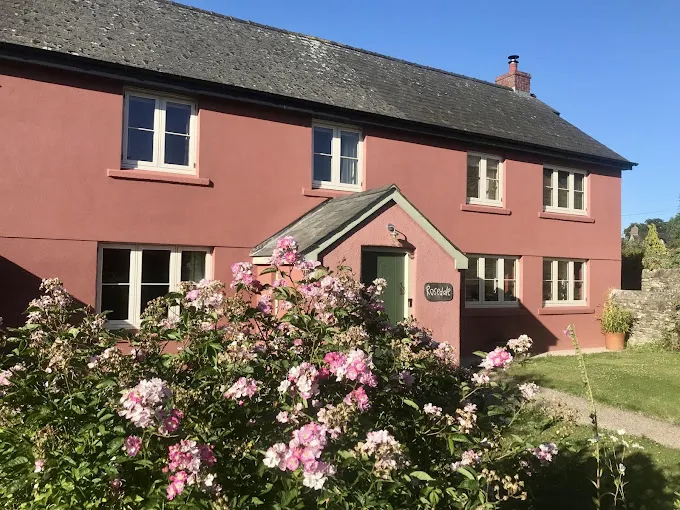
Expert Parex Spray Render Swansea Services
Parex spray render Swansea homeowners and developers rely on delivers weather-resistant, low-maintenance finishes that protect properties against South Wales’ demanding coastal climate – read on to find out what makes it the right choice for your project.
Table of Contents
- What Is Parex Spray Render?
- Parex Render Systems Suited to Swansea Properties
- Why Spray Application Delivers Better Results
- Costs, Planning, and What to Expect
- Frequently Asked Questions
- Comparing Parex Render Options
- How Coloured Rendering South Wales Can Help
- Practical Tips for Your Parex Render Project
- The Bottom Line
- Sources & Citations
Article Snapshot
Parex spray render Swansea is a professional-grade external wall coating system applied using mechanised spray equipment to provide fast, consistent, and durable finishes. Parex products – including monocouche, silicone, and acrylic renders – offer excellent weather resistance and low maintenance, making them well suited to South Wales coastal conditions.
Parex Spray Render Swansea in Context
- Parex render costs range from £20 to £60 per m² depending on system type and project complexity (MyJobQuote, 2026)[1]
- Silicone render – comparable to Parex’s premium silicone systems – costs between £30 and £70 per m² installed (MyJobQuote, 2026)[1]
- Monocouche rendering for a typical semi-detached house of 200 m² costs approximately £7,000 (MyJobQuote, 2026)[1]
- Polymer rendering for an equivalent property runs to around £6,000 (MyJobQuote, 2026)[1]
What Is Parex Spray Render?
Parex spray render Swansea contractors apply is a high-performance external render manufactured by Parex, the UK leader in construction chemicals and one of the most established names in the rendering industry. Parex produces a comprehensive range of render systems – including monocouche, silicone, and acrylic products – used across residential buildings, commercial properties, and large-scale infrastructure such as bridges and railways. Coloured Rendering South Wales has worked with premium render systems including Parex-compatible products for over 25 years, helping Swansea property owners protect and transform their homes with technically sound external finishes.
As the MyJobQuote Research Team explains, “In the world of construction, Parex is a well-known brand name. They produce render, but also do construction repairs, hard landscaping, highway maintenance and are the UK leader in construction chemicals.” (MyJobQuote Research Team, 2026)[1]
Spray application of Parex products uses mechanised rendering machines to project the mixed render material onto a prepared substrate at controlled pressure and thickness. This method produces a more uniform finish than hand application and significantly reduces labour time on larger projects. For Swansea properties – which face salt-laden air from the Bristol Channel, frequent rain, and wind-driven moisture – correctly specified and applied Parex render offers protection that outlasts inferior systems by many years.
Call Us
The core principle behind Parex render technology is that the coating must be simultaneously waterproof and breathable. Water must not penetrate the wall from outside, yet moisture within the masonry must be able to escape as vapour. Systems that fail to balance these two requirements either allow water ingress or trap moisture, both of which lead to premature failure. Parex products are engineered to achieve this balance using advanced polymer and silicone chemistry, making them particularly appropriate for the South Wales climate where walls face persistent exposure to driving rain.
Parex Brand Heritage and Technical Standards
Parex operates across the UK construction sector with a product range that includes not only decorative renders but also structural repair mortars, waterproofing systems, and tile adhesives. This breadth of technical expertise informs the quality standards applied to their render products. The MyJobQuote Research Team notes that Parex offers products used “in buildings, but also in large infrastructure – such as bridges, roads and railways” (MyJobQuote Research Team, 2026)[1], which gives confidence that the same engineering rigour applied to civil infrastructure is present in residential render systems.
For Swansea property owners, this translates to render products that have been tested for UV stability, frost resistance, and salt air exposure – conditions that regularly affect properties in coastal areas like Mumbles, the Gower, and the city’s western seafront districts. Parex renders comply with relevant British Standards for external rendering systems, and installation by a qualified applicator ensures that the manufacturer’s performance guarantees apply.
Parex Render Systems Suited to Swansea Properties
Several distinct Parex render systems are available, and selecting the correct one depends on the substrate, the desired aesthetic, the property’s exposure to weather, and the owner’s maintenance preferences. Each system has specific technical characteristics that make it more or less appropriate for a given project in the Swansea area.
Parex Monorex Monocouche Render
Parex Monorex is a through-coloured, single-coat render that combines weather resistance with decorative finish in one application. Product Specialists at The Render Depot describe it as “a through coloured, one coat, semi-lightweight, weather resistant and breathable decorative render” (Product Specialists, 2026)[2]. The through-coloured nature of the product means that colour runs throughout the full depth of the render rather than being applied as a surface coating, so minor surface wear does not expose a different colour beneath. This makes it ideal for Swansea properties where abrasion from wind-borne grit and salt spray would otherwise cause rapid cosmetic deterioration in a painted finish.
Monocouche render is particularly well suited to traditional brick and block substrates common in South Wales housing stock from the 1930s through to the 1980s. Its single-coat application reduces the number of site operations and shortens the project programme. When spray applied, Monorex achieves consistent thickness across large wall areas – a result that is difficult to replicate by hand on textured or uneven masonry. The Coloured Rendering Swansea – durable and attractive rendering solutions for residential and commercial properties page provides further detail on monocouche applications across the Swansea area.
Parex Silicone and Acrylic Thin Coat Systems
Parex also manufactures thin coat silicone and acrylic render systems designed for application over insulated substrates or as a finish coat over a basecoat render. These products are used extensively in External Wall Insulation (EWI) systems, where the render finish is the visible, protective outer layer over insulation boards. Silicone renders offer enhanced hydrophobicity – water beads on the surface rather than being absorbed – while still allowing vapour to pass outward through the wall. This self-drying characteristic is particularly valuable on north-facing elevations in Swansea where walls receive less direct sunlight and dry more slowly after rainfall.
Acrylic render systems from Parex offer comparable flexibility and colour stability and are used where a smoother, more uniform finish is required. Both silicone and acrylic thin coat products are available in a wide range of colours, allowing property owners to specify finishes that complement the architectural style of their property without the maintenance burden of periodic repainting. Colour stability under UV exposure is engineered into the product formulation, so facades maintain their appearance for many years in South Wales conditions. You can explore our EWI Specialists South Wales – expert external wall insulation installations for energy efficiency service for more on silicone finish options over insulation.
Why Spray Application Delivers Better Results
Spray application of Parex render provides measurable advantages over traditional hand application in both quality and efficiency, particularly for the property types and project scales common across Swansea and the wider South Wales region.
The mechanised spray process forces the render mix into the surface texture of the substrate under controlled pressure, producing a mechanical bond that is more consistent and thorough than hand-applied render. On the irregular surfaces of older Welsh stone or brick properties, this penetration of the substrate is particularly important for adhesion. Voids and recesses that hand application bridges over are filled by the spray, eliminating hollow patches before they form. NBS – National Building Specification standards recognise consistent substrate bond as a primary factor in render longevity.
From a programme perspective, spray application completes a standard three-bedroom semi-detached property in roughly half the time required by hand. For a Swansea homeowner, this means fewer days of scaffolding on site, reduced labour costs, and less disruption to daily life. Property developers working on multiple units in Cardiff, Newport, or Bridgend benefit even more significantly from the programme savings when rendering entire streets or housing phases.
Technical Requirements for Spray-Applied Parex Render
Achieving a good result with spray-applied Parex render requires correct machine setup, appropriate mix consistency, and suitable weather conditions. Application temperature requirements are specific: Parex specifies application in dry, frost-free conditions – at minimum +5°C for light colours and +8°C for dark colours (Product Specialists, 2026)[3]. In Swansea’s autumn and winter months, these temperature thresholds influence when render work proceeds safely and underscore the importance of working with an experienced local contractor who understands the South Wales seasonal climate.
Substrate preparation is equally important. The wall surface must be sound, clean, and free from loose material, organic growth, or incompatible coatings. Parex primer systems are applied before the render coat to optimise adhesion and regulate suction from the substrate, preventing premature drying of the render surface that would impair bonding. Beads and stop ends are installed at openings and junctions to create clean, straight arrisses and prevent water tracking at window reveals and soffit lines. All of this groundwork, carried out by a skilled applicator, is what separates a render installation that performs for decades from one that begins to crack and delaminate within a few years. View our Rendering Repairs South Wales – professional repairs and maintenance for external wall renders page for information on what happens when preparation or application standards fall short.
Costs, Planning, and What to Expect
Understanding the cost structure of Parex spray render in Swansea allows property owners to budget accurately and evaluate quotations on a like-for-like basis. Several variables affect the final project cost, and knowing what drives those variables helps you ask the right questions when obtaining competitive quotes.
Material costs for Parex render are at the premium end of the render market, reflecting the product quality and performance characteristics. Installed costs across all Parex render types range from £20 to £60 per m² (MyJobQuote, 2026)[1], with silicone systems at the higher end of the range. Silicone render costs between £30 and £70 per m² installed (MyJobQuote, 2026)[1]. For a typical Swansea semi-detached house with approximately 200 m² of external wall area, a monocouche render system would cost in the region of £7,000 (MyJobQuote, 2026)[1], while a polymer-based system runs to approximately £6,000 (MyJobQuote, 2026)[1]. These figures cover supply and installation but will vary based on scaffold requirements, substrate condition, and the complexity of window and door detailing.
Planning Considerations for Swansea Properties
Most external rendering work in Swansea falls within permitted development rights, meaning planning permission is not required. However, properties in conservation areas, listed buildings, and certain designated zones are subject to restrictions on external appearance changes. If your property in Swansea, the Gower, or another designated area is affected, your rendering contractor should advise you on this before work begins. Properties clad with External Wall Insulation systems exceeding certain thicknesses require building regulations approval for thermal performance compliance. A competent rendering contractor will assess these requirements during the initial site visit and ensure the project proceeds correctly within the relevant regulatory framework.
Your Most Common Questions
Is Parex spray render suitable for coastal properties in Swansea?
Yes, Parex spray render is particularly well suited to coastal properties in Swansea and across the Gower Peninsula. The salt-laden air and wind-driven rain that affect seafront and near-coastal properties in areas such as Mumbles and Langland are conditions that Parex silicone and monocouche systems are engineered to resist. The hydrophobic nature of silicone renders repels salt-bearing moisture rather than absorbing it, preventing the salt crystallisation within the render matrix that causes cracking and spalling in less resistant systems. Parex products also offer UV-stable pigmentation, meaning colours hold their appearance despite the bright, exposed conditions common on south and west-facing elevations in South Wales. For properties in the most exposed locations, a thin coat silicone render over an appropriate basecoat is the recommended specification, combining flexibility to accommodate thermal movement with maximum resistance to water penetration. An experienced local contractor will assess your property’s specific exposure and recommend the correct product grade accordingly.
How long does Parex spray render last on a Swansea property?
When correctly specified and applied, Parex render systems are designed to last 20 to 25 years or more on typical residential properties in South Wales. Longevity depends on several factors: the render system chosen, the quality of substrate preparation, the competence of the applicator, and the severity of the property’s exposure to weather. Silicone renders outperform standard acrylic systems in longevity because their inherent flexibility accommodates the thermal movement of the substrate without cracking, and their hydrophobic surface prevents moisture accumulation. Monocouche systems similarly offer excellent durability when applied to appropriate substrates in the correct conditions. The key risk factors that reduce render lifespan are inadequate substrate preparation, application outside the specified temperature range, incorrect mixing ratios, and failure to install expansion joints where required. Choosing a certified and experienced applicator – rather than the lowest quote – is the single most important decision a property owner makes to maximise the return on their rendering investment.
What colours are available in Parex render for Swansea homes?
Parex offers an extensive colour range across its render product lines, spanning hundreds of shades from traditional whites and creams through to contemporary greys, anthracites, and earth tones. Through-coloured systems such as Parex Monorex allow colour selection from a standard palette, with the chosen colour running throughout the full depth of the render coat. Thin coat silicone and acrylic finishes offer even greater colour flexibility and are available in both standard and custom tints. In Swansea, popular choices include bright white and off-white finishes that reflect the coastal character of properties in areas like Sketty and West Cross, and contemporary grey and slate tones that suit modern render styles on new builds and refurbished commercial properties. Your applicator will provide colour chips or fan decks during the consultation phase, and viewing colours on a test area in daylight before committing to a full application is advisable, as colours appear different on a wall surface compared to a small swatch card.
Can Parex spray render be applied over existing render?
In certain circumstances, Parex thin coat systems are applied over existing sound render as a remedial or cosmetic overcoat. The critical prerequisite is that the existing render is structurally sound – fully bonded to the substrate with no hollow, cracked, or delaminating sections. Any areas of failed render must be cut out and repaired with a compatible material before the new Parex system is applied. If the existing render is in poor overall condition, complete removal and fresh application is nearly always the better long-term solution, as an overlay applied to a compromised base will fail along with the underlying material. A competent contractor will carry out a tap survey of the existing render to identify hollow areas before advising on whether an overlay is viable. Where existing render is sound and a change of colour or texture is desired, a Parex silicone or acrylic thin coat provides an effective and cost-efficient solution. Your contractor will also assess the suction characteristics of the existing surface and apply an appropriate primer to ensure the new coat bonds correctly.
Comparing Parex Render Options
Choosing between Parex render systems for a Swansea property requires weighing performance characteristics, cost, and maintenance requirements against your specific project goals. The table below summarises the key differences between the three main Parex render types to help you and your contractor identify the most appropriate specification.
| Render System | Application | Colour System | Typical Installed Cost | Best For |
|---|---|---|---|---|
| Parex Monorex (Monocouche) | Single coat, spray or hand | Through-coloured, no painting needed | ~£35 per m² / £7,000 for 200 m²[1] | Traditional masonry, housing developments, low-maintenance priority |
| Parex Silicone Thin Coat | Finish coat over basecoat or EWI | Surface colour, wide palette, UV stable | £30-£70 per m²[1] | Coastal properties, EWI systems, maximum weather resistance |
| Parex Acrylic Thin Coat | Finish coat over basecoat or EWI | Surface colour, smooth or textured finish | £20-£60 per m²[1] | Smooth contemporary finishes, commercial buildings, paintable surface |
How Coloured Rendering South Wales Can Help
Coloured Rendering South Wales has delivered professional spray rendering services across Swansea and the wider South Wales region since 1998. With over 25 years of hands-on experience applying premium render systems including Parex-compatible monocouche, silicone, and thin coat products, we bring technical knowledge and local understanding to every project – from a single terraced house in Sketty to multi-unit developments across Cardiff and Newport.
As a Baumit Approved EWI Applicator with City & Guilds Assured accreditation, we are certified to install premium silicone render and full External Wall Insulation systems with manufacturer-backed warranties of up to 25 years. This formal accreditation means you receive documented long-term protection – not just a tradesperson’s assurance – and ensures your installation meets the standards required under UK building regulations.
“Geoff’s thin coat spray finish render would rival the best and I can’t recommend his team enough to someone thinking of using him. His professionalism and work ethic has stood out from many of the others we have worked with.” – Keri Hopkins, Google Review
“We’re 100% happy and wouldn’t hesitate to recommend Jeff. His workmanship is excellent and we’re also very happy with the product he recommended to eradicate the penetrating damp and give our house a great new look and lease of life.” – Alistair Legge, Google Review
Our process begins with a free site assessment where we evaluate your property’s substrate condition, exposure classification, and aesthetic requirements before recommending the most appropriate render system. We provide a detailed written quotation covering materials, preparation, and programme so you can compare options with full transparency. Visit our Home page of Coloured Rendering South Wales – expert spray rendering and external wall insulation services across South Wales to learn more about our services, or Contact Coloured Rendering South Wales for a free quote or consultation on your rendering project to arrange your site visit today.
Practical Tips for Your Parex Render Project
Getting the best outcome from a Parex spray render project in Swansea starts well before the applicator arrives on site. The following guidance will help you prepare effectively and make informed decisions throughout the process.
Schedule work for the correct season. Parex render requires dry, frost-free conditions with minimum temperatures of +5°C for lighter colours and +8°C for darker shades. In South Wales, the safest windows for render application are April through October, though mild spells in winter months are also suitable. Avoid booking render work immediately before a forecast cold snap or prolonged rain event – the curing period requires stable conditions.
Invest in thorough substrate preparation. The single biggest factor affecting render longevity is not the product chosen but the quality of the surface it is applied to. Ensure your contractor carries out a tap survey to identify hollow sections, removes any existing failed render, treats organic growth with an appropriate biocide, and applies the correct primer system before the render coat. Cutting corners at preparation stage costs significantly more to rectify later than it saves upfront.
Choose your colour carefully. Dark colours require higher minimum application temperatures and show thermal cracking more visibly on exposed elevations. Lighter colours are more forgiving in the South Wales climate and reflect more heat, reducing thermal stress on the render layer. Request on-site colour testing before committing to the final specification.
Discuss detailing at the outset. Render performance is compromised not in the main wall areas but at junctions – around windows, at soffits, at ground level, and at corners. Ensure your contractor specifies appropriate movement beads, render stop beads, and sealant at all junctions. These details are what separate a professionally installed render system from a cosmetic application that allows water ingress within a few years.
Ask about warranties. Certified applicators using approved Parex-compatible systems provide manufacturer-backed warranties. Request written warranty documentation and clarify what it covers before signing a contract.
The Bottom Line
Parex spray render Swansea property owners choose delivers proven performance against the demanding coastal and wet climate of South Wales, backed by advanced polymer chemistry and a product range suited to every property type – from Victorian terraces in Swansea city centre to exposed seafront homes on the Gower. The difference between a render installation that lasts two decades and one that begins failing within a few years comes down to correct product specification, thorough preparation, and skilled application by a contractor who understands local conditions.
Coloured Rendering South Wales has provided exactly that level of expertise across Swansea and South Wales for over 25 years. To discuss your property and get a free, no-obligation quote, call us on 07815 868070, email geoff@colouredrenderingsouthwales.com, or use our online contact form to arrange a convenient site visit.
Sources & Citations
- How Much Does It Cost to Render a House in 2026? MyJobQuote.
https://www.myjobquote.co.uk/costs/rendering-a-house - Parex Monorex GM – 25kg – The Render Depot. The Render Depot.
https://www.therenderdepot.co.uk/product/sika-monorex-gm/ - Parex EHI GF – 25kg – The Render Depot. The Render Depot.
https://www.therenderdepot.co.uk/product/parex-ehi-gf-25kg/