
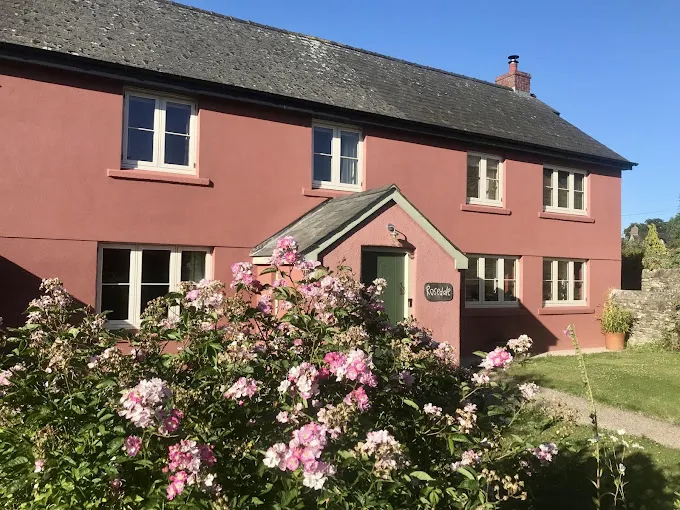
Monocouche Rendering Swansea: Complete Guide

Monocouche rendering Swansea homeowners and developers rely on delivers a through-coloured, single-coat cement finish that protects external walls for decades – discover costs, benefits, and how to choose the right installer.
Table of Contents
- What Is Monocouche Rendering and How Does It Work?
- Benefits of Monocouche Render for Swansea Properties
- Monocouche Rendering Costs and Project Planning
- Choosing a Monocouche Rendering Installer in Swansea
- Frequently Asked Questions
- Monocouche vs Other Render Systems
- Coloured Rendering South Wales
- Practical Tips for Your Rendering Project
- The Bottom Line
- Sources & Citations
Article Snapshot
Monocouche rendering Swansea is a single-coat, through-coloured cement render system applied directly to external walls, providing weather protection and colour without a separate paint layer. It suits new builds and renovations, offers low maintenance, and withstands South Wales coastal conditions for 20-30 years.
Quick Stats: Monocouche Rendering Swansea
- Average UK cost: £37 per m² for monocouche render (MyJobQuote, 2026)[1]
- Cost for a 3-bed semi-detached house (200m²): £7,000 with a standard colour (MyJobQuote, 2026)[1]
- Bespoke colour options range from £35 to £75 per m² (MyJobQuote, 2026)[1]
- External insulation combined with render saves a gas-heated detached property £455 per year in fuel bills (Energy Saving Trust, 2026)[2]
What Is Monocouche Rendering and How Does It Work?
Monocouche rendering Swansea specialists apply is a factory pre-coloured, cement-based render system that combines the base coat and finish coat into a single application, eliminating the need for painting or a separate topcoat. The term “monocouche” comes from French, meaning “single layer,” and describes precisely how this system works: one coat applied directly to the prepared substrate delivers both structural protection and colour in a single pass. Coloured Rendering South Wales has been installing these systems across South Wales since 1998, giving local property owners access to an expert team with deep knowledge of the region’s substrates and climate.
The chemistry behind through-colour render sets it apart from painted finishes. Pigments are blended into the cement mixture at the factory, meaning the colour runs throughout the full depth of the coat. If the surface suffers minor abrasion or hairline cracking, the underlying material remains the same colour, making the damage virtually invisible without repainting. This characteristic makes monocouche particularly well suited to high-traffic commercial frontages and coastal properties where surface wear is accelerated by salt-laden air and wind-driven rain.
How Monocouche Render Is Applied
Application begins with thorough substrate preparation – any loose material, organic growth, or previous coatings that impair adhesion must be removed. A bonding primer or slurry coat is applied to porous or mixed-substrate walls to create a consistent base. The render itself is then applied in a single coat, at 15-20mm thick, using either a spray machine or a traditional hawk and trowel. Spray application, which is standard practice for experienced contractors like Coloured Rendering South Wales, delivers a more consistent thickness and texture across large wall areas and completes each property significantly faster than hand application alone.
Call Us
Once applied, the render is worked to the desired texture – options include scraped, roughcast, and fine-textured finishes. A scratch or sponge technique creates the final surface profile. The product then cures over several days, hardening to a durable, weather-resistant shell. Protective mesh reinforcement is embedded at the surface in areas prone to movement, such as around window and door reveals, to prevent stress cracking over time.
Compatible substrates include brick, block, concrete, and stone – the most common wall types found in Swansea’s residential and commercial building stock. Older properties with mixed substrates benefit from a careful assessment to ensure the render system is specified correctly, avoiding premature adhesion failure.
Benefits of Monocouche Render for Swansea Properties
Monocouche through-colour render offers Swansea property owners a combination of long-term weather protection, low maintenance, and kerb appeal that few alternative external wall finishes match in this coastal climate. Swansea sits on the Bristol Channel and receives consistent south-westerly winds carrying moisture and salt aerosols, conditions that accelerate the deterioration of painted renders and masonry surfaces that lack effective waterproofing.
The water-repellent admixtures within monocouche formulations cause moisture to bead on the surface rather than penetrate the wall. At the same time, the cement matrix remains vapour-permeable, allowing moisture trapped within the wall structure to escape outward. This breathable waterproofing action is important for older solid-walled properties common in Swansea’s Victorian and Edwardian terraces, where preventing trapped moisture is as important as keeping rainwater out.
Long-Lasting Colour Without Repainting
One of the most compelling practical benefits for South Wales homeowners is the elimination of external repainting cycles. A painted render surface in Swansea requires repainting every 7-10 years to maintain both its appearance and its protective function. Each painting cycle adds to the ongoing maintenance bill and creates disruption through scaffold erection, surface preparation, and drying time. Through-colour monocouche render removes this cycle entirely – the colour is locked into the material and does not fade in the way surface paints do when exposed to UV light and weathering.
For landlords managing rental portfolios across Bridgend, Newport, or Swansea, this translates directly into lower long-term operating costs. A phased upgrade of multiple properties to monocouche render reduces annual maintenance expenditure, with some landlords reporting that the investment pays for itself within three years through eliminated painting and repair costs.
Modern monocouche systems also offer self-cleaning properties through hydrophobic surface action. Rainfall causes dirt and pollution particles to wash away rather than accumulate, keeping the rendered surface presentable between cleans. This is particularly valuable for properties on busy roads in Cardiff, Newport, or central Swansea where airborne particulates are higher.
Monocouche Rendering Costs and Project Planning
Monocouche rendering costs in Swansea depend on wall area, colour selection, substrate condition, and the complexity of detailing around windows, doors, and architectural features. The UK average rate is £37 per m² (MyJobQuote, 2026)[1], with the range spanning £35 to £75 per m² once bespoke colour options and complex substrates are factored in (MyJobQuote, 2026)[1].
For a 2-bedroom bungalow with approximately 100m² of external wall area, budget around £3,500 with a standard colour selection (MyJobQuote, 2026)[1]. A 3-bedroom semi-detached house at 200m² costs around £7,000 (MyJobQuote, 2026)[1], and a 4-bedroom detached property at 300m² approximately £10,500 (MyJobQuote, 2026)[1]. These figures provide a working framework for budgeting, though your installer should carry out a site assessment before providing a firm quotation, as Swansea properties vary considerably in wall area, access difficulty, and substrate condition.
Factors That Affect Your Final Quote
Scaffold hire is one of the largest variable costs in any external rendering project. Properties with particularly steep ground-floor access or complex roof lines require more extensive scaffold arrangements. Access constraints in terraced street layouts, common in Swansea’s Uplands, Brynmill, and Sketty areas, also affect scaffold costs. Your contractor should clarify whether scaffold is included in the quoted price or quoted separately.
Substrate preparation is a second major cost variable. Where previous render is hollow, cracked, or delaminating, it must be removed in full before new monocouche render is applied correctly. The labour involved in hacking off failed render and preparing the underlying masonry adds to project time and cost, but skipping this step compromises the adhesion and longevity of the new system. A reputable installer will identify these requirements during the initial site assessment rather than presenting additional charges mid-project.
When planning your project timeline, note that monocouche render requires dry, frost-free conditions during application and curing. In South Wales, where rainfall is high and temperatures drop in autumn and winter, scheduling your project for spring or early summer gives the best conditions for curing and reduces the risk of weather-related delays. The UK Building Regulations Approved Documents provide guidance on construction standards that apply to external wall finishes, which reputable contractors follow as a matter of course.
Choosing a Monocouche Rendering Installer in Swansea
Selecting the right contractor for monocouche rendering Swansea projects is the single most important decision in the process, because render quality is almost entirely determined by the skill of the installer and the accuracy of the product specification. A correctly specified and applied monocouche system will perform for 20-30 years with minimal intervention. A poorly installed one develops cracking, hollow patches, or colour variation within a few seasons.
Verified customer reviews provide the most reliable independent evidence of a contractor’s consistent quality. A pattern of satisfied customers across a range of property types and project sizes shows that the contractor applies the same standards to every job rather than reserving quality for select projects. Check that reviews specifically mention renders rather than other plastering work, and look for comments on tidiness, punctuality, and follow-up service – all of which indicate a professional operation.
Why Accreditation and Experience Matter
Accreditation by render product manufacturers is a meaningful indicator of technical competency. Approved applicator status with leading manufacturers requires contractors to show correct application technique, and it unlocks manufacturer-backed product warranties that self-installed or non-approved applications cannot access. These warranties, which run to 10-25 years depending on the system, provide documented long-term protection for property owners that informal rendering work cannot replicate.
Ask any prospective installer whether they use spray application technology or hand application only. Spray rendering delivers more consistent coat thickness across large areas and completes work faster, reducing scaffold hire costs and the period during which your property is under construction. Experienced spray rendering contractors in Swansea will be able to show recent completed projects where you assess finish quality directly.
Confirm that the contractor carries appropriate public liability and professional indemnity insurance. Rendering work involves scaffold erection and the application of cement-based materials near windows, doors, and neighbour boundaries. Adequate insurance protects you as the property owner if accidental damage occurs during works. Reputable contractors provide evidence of insurance cover without hesitation when asked. You can also verify industry standards and guidance through resources such as the Property Care Association, which provides information on best practice in external wall treatment and protection.
Your Most Common Questions
How long does monocouche render last on a Swansea property?
A properly installed monocouche render system on a Swansea property lasts 20-30 years before requiring significant intervention. Longevity depends on three main factors: substrate preparation quality, product specification for the local climate, and application technique. In Swansea’s coastal environment, where salt aerosols and driving rain are persistent, selecting a render system with proven resistance to moisture penetration is important. Thin-coat monocouche systems that include hydrophobic admixtures and are applied to a correctly primed substrate outperform older cement-based renders in longevity testing. Properties in more exposed coastal locations – such as Mumbles or the Gower peninsula – benefit from specifying systems with higher flexibility ratings to accommodate the greater thermal and moisture cycling those locations experience. Routine maintenance, such as clearing downpipes and guttering to prevent water overflowing onto rendered surfaces, extends service life further. A periodic inspection every five years allows minor defects such as hairline cracks around window reveals to be addressed before water ingress causes more extensive damage to the substrate behind the render.
Does monocouche rendering Swansea require planning permission?
In most cases, applying monocouche render to the external walls of a residential property in Swansea does not require planning permission, as it falls within permitted development rights. However, there are important exceptions. Properties within designated conservation areas – of which Swansea has several, particularly in areas like the Uplands and Sketty – require consent before the external appearance of a building is altered. Listed buildings require listed building consent for any material alteration to the external fabric, and render colour and texture must be approved. Properties on new build developments also have conditions attached to their planning consent requiring specific finish materials or colours on external walls. Before committing to a project, check with Swansea City and County Council’s planning department if you have any reason to believe your property is subject to restrictions. A knowledgeable local rendering contractor will be familiar with local planning considerations and can advise you on whether a pre-application enquiry is appropriate for your specific property and location.
Can monocouche render be applied over existing render?
Applying new monocouche render over existing render is technically possible in limited circumstances but is not recommended as standard practice. For the new system to bond correctly and perform for its full expected lifespan, it requires a sound, stable substrate. Existing render that is hollow, cracked, delaminating, or contaminated with organic growth does not provide this base – the new render applied over it will be only as secure as the failed layer beneath. In most cases where existing render is in poor condition, the correct approach is to remove it in full, inspect and prepare the underlying masonry, and then apply the new system to a clean substrate. Where existing render is thoroughly sound – confirmed by tapping to check for hollow areas and by visual inspection for structural cracks – an experienced contractor assesses it as an acceptable base in certain circumstances. Your installer should carry out this assessment on site and explain their findings clearly before making a recommendation. Cutting corners on preparation is the most common cause of premature render failure and creates significantly greater expense when the new system fails ahead of its expected service life.
What colours are available in monocouche render systems?
Monocouche render systems are available in a wide range of factory-mixed colours, spanning from traditional whites and creams through to contemporary greys, anthracites, and earth tones. Standard colour palettes from leading manufacturers include 30-60 options, with bespoke colour matching available at additional cost – reflected in the higher per-m² price of £35-£75 for bespoke selections compared to the standard rate (MyJobQuote, 2026)[1]. When selecting a colour for a Swansea property, consider how the shade will read under the region’s frequently overcast light conditions – colours that appear warm and bright in Mediterranean light appear flat and grey under Welsh skies. Lighter colours show pollution and algae growth more quickly in urban locations, while darker shades show efflorescence more prominently in the first months after application as the cement cures. Your installer should be able to provide sample boards or refer you to completed local projects in your preferred colour so you assess the result in real-world South Wales lighting conditions before committing to a final choice.
Monocouche vs Other Render Systems
Selecting the right external render system for your Swansea property requires comparing the performance characteristics, cost profile, and maintenance demands of the main options available. Each system suits different property types, budgets, and performance objectives.
| Render System | Application | Maintenance | Cost (per m²) | Best For |
|---|---|---|---|---|
| Monocouche (through-colour) | Single coat; spray or hand | Low – no repainting required | £37 avg (MyJobQuote, 2026)[1] | New builds, renovation projects, coastal properties |
| Thin coat silicone render | Applied over EWI or basecoat; spray | Very low – self-cleaning surface | Higher initial cost; EWI system | Solid wall properties requiring insulation upgrade |
| One coat cement render (painted) | Single coat; spray or hand | Medium – repainting every 7-10 years | Lower initial cost | Budget-conscious projects; colour flexibility |
| Traditional sand and cement (multi-coat) | Two to three coats; hand applied | Medium – requires painting and repair | Variable; higher labour cost | Heritage properties requiring traditional methods |
Coloured Rendering South Wales
Coloured Rendering South Wales has delivered specialist monocouche rendering Swansea and across the wider South Wales region since 1998. Based in Swansea, we bring over 25 years of hands-on experience to every project, from single-property domestic refurbishments to multi-unit new build developments. Our team holds Baumit Approved EWI Applicator status with City & Guilds Assured accreditation, which means we install Baumit StarTop premium silicone render and full external wall insulation systems with manufacturer-backed warranties of up to 25 years – protection that uncertified rendering work simply cannot provide.
Our Coloured Rendering Swansea service covers the full range of through-colour monocouche systems alongside thin coat silicone render, one coat cement render, external wall insulation, and rendering repairs. Every project begins with a free site assessment, during which we evaluate your substrate, discuss your aesthetic objectives, and recommend the most appropriate system for your property’s location and exposure level. For coastal properties in Mumbles, the Gower, or along the Swansea Bay frontage, we specify systems proven to perform in salt air and high-rainfall environments.
Our EWI Specialists South Wales service combines monocouche or silicone render finishes with certified insulation board systems, delivering improved thermal performance alongside a fresh external appearance. If your property has existing render problems, our Rendering Repairs South Wales team assesses and addresses hollow patches, cracking, and water ingress before they develop into more costly structural issues.
“Geoff’s thin coat spray finish render would rival the best and I can’t recommend his team enough to someone thinking of using him. His professionalism and work ethic has stood out from many of the others we have worked with.” – Keri Hopkins, Google Review
“We’re 100% happy and wouldn’t hesitate to recommend Jeff. His workmanship is excellent and we’re also very happy with the product he recommended to eradicate the penetrating damp and give our house a great new look and lease of life.” – Alistair Legge, Google Review
To discuss your project, call us on 07815 868070 or email geoff@colouredrenderingsouthwales.com. You can also contact Coloured Rendering South Wales for a free quote or consultation on your rendering project.
Practical Tips for Your Monocouche Rendering Project
Getting the most from a monocouche rendering investment requires careful preparation before the contractor arrives, clear communication during the project, and straightforward maintenance habits afterwards. The tips below apply to residential and commercial property owners planning an external render in Swansea and across South Wales.
Before work begins, clear the perimeter of the property as completely as possible. Move garden furniture, plant pots, and vehicles away from the working area. Inform neighbours if your scaffold will require access to their side of a shared boundary – your contractor should manage this professionally, but early communication avoids disputes. Check that all guttering, downpipes, and window seals are in good condition before rendering starts; addressing these after the render is applied risks damaging the new surface during repair work.
During the project, review the applied render in natural daylight before the installer leaves site each day. Colour variation appears across a large wall if the render dries at different rates in sun and shade. Experienced applicators manage this by blending wet and fresh render at join lines, but you should feel confident raising any concerns before the product has fully cured. Take photographs at regular intervals throughout the project – these serve as a useful reference if questions arise later about coverage, texture, or colour consistency.
After completion, allow the render to cure fully for the manufacturer’s recommended period before carrying out any secondary work near the surface, such as painting window trims or refitting external fixtures. Keep guttering and downpipes clear of blockages – the most common cause of premature render deterioration in Swansea is sustained water overflow from blocked gutters rather than any failure of the render system itself. A visual inspection each spring, paying particular attention to reveals around windows and doors and the base of walls where splashback occurs, allows you to catch any minor issues before they develop into larger defects requiring significant repair.
The Bottom Line
Monocouche rendering Swansea properties is one of the most effective investments a property owner makes in long-term external wall protection and kerb appeal. Through-colour render eliminates the maintenance burden of painted surfaces, withstands the demanding coastal climate of South Wales, and delivers a professional finish that holds its appearance for decades. Costs range from approximately £3,500 for a smaller bungalow to over £10,000 for a large detached home, with the investment returning value through reduced maintenance and improved property presentation (MyJobQuote, 2026)[1].
Choosing a contractor with verified local experience, manufacturer accreditation, and a clear track record of quality work is the key step between a monocouche render that performs for 20-30 years and one that fails prematurely. Coloured Rendering South Wales is ready to assess your property and provide honest, expert advice on the right system for your home or commercial building. Call 07815 868070 or email geoff@colouredrenderingsouthwales.com to arrange your free consultation.
Sources & Citations
- Monocouche Render Costs. MyJobQuote, 2026.
https://www.myjobquote.co.uk/costs/monocouche-render - Rendering in Swansea – Energy Saving Solutions. South Wales Rendering.
https://www.southwales-rendering.co.uk/rendering-in-swansea/ - UK Building Regulations – Approved Documents. GOV.UK.
https://www.gov.uk/guidance/approved-documents - Property Care Association.
https://www.propertycare.org/
