
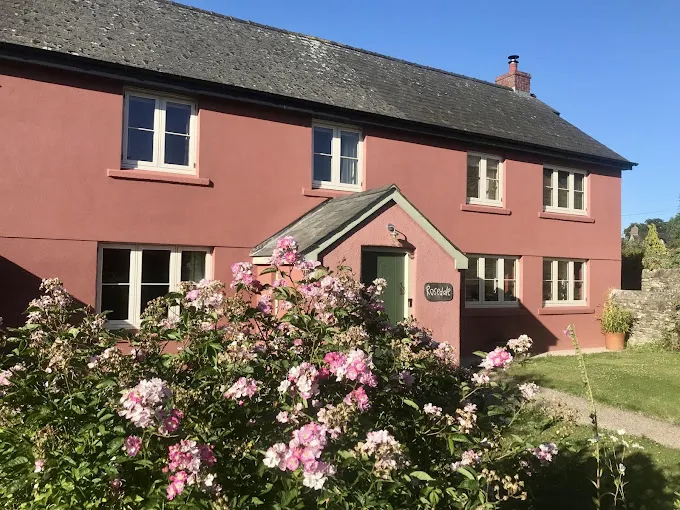
Monocouche Rendering Pontarddulais: Complete Guide
Monocouche rendering Pontarddulais gives homeowners and developers a durable, through-coloured external finish that protects against the region’s heavy rainfall and coastal winds – here is everything you need to know before starting your project.
Table of Contents
- What Is Monocouche Rendering?
- Benefits for Pontarddulais Properties
- Application Process and Techniques
- Choosing the Right Monocouche System
- Frequently Asked Questions
- Monocouche vs Other Render Types
- Our Monocouche Rendering Services
- Practical Tips for Your Project
- Final Thoughts
- Sources & Citations
Article Snapshot
Monocouche rendering Pontarddulais is a single-coat, through-coloured cement-based external render that decorates and protects masonry walls without requiring paint. Applied in one pass, it bonds directly to brick, block, and concrete substrates, delivering a weather-resistant finish with a service life measured in decades and minimal ongoing maintenance.
Monocouche rendering Pontarddulais in Context
- 11 rendering service providers are listed for the Pontarddulais area (Checkatrade, 2026)[1]
- 10-year warranties covering both installation workmanship and render systems are available on professionally installed monocouche projects (Monocouche Render Systems, 2026)[2]
- 25 years of experience is the benchmark cited by leading monocouche specialists for delivering durable, weather-resistant finishes (Purpose Rendering Ltd, 2026)[3]
What Is Monocouche Rendering and How Does It Work?
Monocouche rendering Pontarddulais is a pre-coloured, single-coat external render system that eliminates the need for a separate paint finish by carrying pigment throughout its full depth. The name itself signals the core principle: as one technical source explains, “Monocouche renders – meaning ‘single-coat’ in French – is an evolution of the cement render and comes in mixes that contain water. Just one coat of Monocouche provides complete coverage” (House Rendering, 2026)[4]. Coloured Rendering South Wales has been specifying and applying systems of this type across South Wales since 1998, giving property owners in Pontarddulais direct access to that accumulated expertise.
The system works by combining Portland cement, carefully graded aggregates, and factory-batched mineral or synthetic pigments into a single ready-to-use product. When mixed with water and applied to a prepared substrate, it cures to form a dense, hard-wearing shell around the external walls. Because the colour runs through the full thickness of the coat rather than sitting on the surface as paint does, any minor surface scuffs or weathering do not expose an unsightly base layer underneath.
Monocouche is compatible with the most common masonry substrates found in South Wales housing stock: engineering brick, dense and lightweight concrete block, and traditional stone walls that have been re-pointed and stabilised. Substrate preparation is important – surfaces must be structurally sound, free of loose material, and primed correctly to ensure adhesion. An experienced applicator will assess the wall condition, apply a suitable bonding agent or primer where required, and confirm that movement joints are correctly positioned before any render is mixed.
Call Us
For Pontarddulais properties in particular, the local build fabric matters. Many homes in the area date from the mid-twentieth century and feature solid concrete block construction that responds well to monocouche systems, provided moisture readings in the substrate are within acceptable limits before application begins. Coloured Rendering Swansea – durable and attractive rendering solutions for residential and commercial properties covers the wider context of coloured render choices for this part of South Wales.
Key Benefits of Monocouche Rendering for Pontarddulais Properties
Monocouche through-colour render delivers a combination of weather protection, low maintenance, and lasting kerb appeal that is particularly well matched to the climatic and architectural conditions in and around Pontarddulais. The town sits inland from Swansea Bay but remains exposed to the prevailing south-westerly weather systems that bring persistent rain and wind-driven moisture to the western valleys. A correctly specified monocouche system provides a hydrophobic outer surface that sheds water rapidly, preventing saturation of the wall behind.
The maintenance argument is compelling for homeowners who have previously owned painted rendered properties. External masonry paint on a cement render requires re-coating every five to eight years, depending on exposure. Monocouche eliminates that cycle entirely: the colour is integral to the product, so there is no paint film to crack, peel, or fade. Many manufacturers incorporate water-repellent silicone additives that further reduce surface wetting and slow the accumulation of atmospheric dirt.
Energy performance is a secondary but genuine benefit when monocouche is specified as the outer coat of a full external wall insulation system. The render bonds to the reinforced mesh layer on top of insulation boards, creating a complete thermal envelope around the building. For older Pontarddulais homes with solid walls and poor insulation values, this combination reduces heating bills while delivering a fresh external appearance in a single project. Our EWI Specialists South Wales – expert external wall insulation installations for energy efficiency service integrates exactly this approach.
From an investment perspective, a freshly rendered property in a consistent, contemporary colour reads as well-maintained and up to date. Estate agents and valuers in South Wales consistently report that improved external presentation positively influences sale prices and buyer confidence, particularly in competitive markets. A new-build development in Cardiff completed using monocouche render in contemporary grey – with spray application finishing each property in approximately two days – sold out faster than comparable developments, illustrating the commercial logic of the system for developers as well as individual homeowners.
Colour Stability and Aesthetic Longevity
One of the most practical advantages of monocouche over painted systems is colour stability. Factory-batched pigments are measured precisely to batch tolerances, which means the colour you select from a manufacturer’s sample range is reproducible if any patch repairs are ever needed. This is a significant benefit compared with trying to match a faded external paint colour years after the original application. Leading manufacturers offer palettes of several dozen standard shades, from warm ochres and terracottas that complement Welsh stone buildings to cool greys and off-whites favoured on contemporary new builds.
The Monocouche Rendering Application Process
Professional monocouche rendering application follows a defined sequence of preparation, priming, rendering, and finishing stages that together determine the long-term performance of the system. Skipping or rushing any stage compromises the finished result regardless of the quality of the render product itself.
Preparation begins with a thorough inspection of the substrate. Any loose or hollow areas of existing render must be cut back and made good. Cracks in the masonry or existing render should be investigated to establish their cause before being filled with a compatible mortar. High-suction substrates such as dense brick require a bonding or stabilising primer to prevent the render drawing moisture away too quickly during curing, which causes surface cracking. Low-suction surfaces like painted masonry or fair-faced concrete need mechanical keying or specialist adhesion primers.
Spray application, as used by Coloured Rendering South Wales, offers a consistent advantage over hand application for monocouche projects. Professional spray equipment delivers the mix to the wall at a controlled pressure and thickness, producing a more uniform density across the entire surface than is achievable by hand trowel. This consistency matters for both appearance and performance: variations in coat thickness alter the drying rate and produce tonal differences in the finished colour. Spray application also reduces project duration significantly – a factor that minimises disruption to occupants and allows developers to hand over units faster.
Once applied, monocouche requires appropriate curing conditions. Direct hot sun or frost during the curing period causes premature drying or freeze damage respectively. Experienced applicators schedule work to avoid these conditions and use curing membranes or temporary screening where necessary. The render is finished by scratching or sponge-floating the surface to achieve the specified texture – fine scraped, medium scraped, or roughcast – before the product fully stiffens.
Spray vs Hand Application for Monocouche
Spray application reduces monocouche installation time by approximately half compared with hand application on a standard semi-detached property. The compressed spray mix also achieves slightly better mechanical bond with the substrate due to the impact pressure at the nozzle. For large wall areas such as those on housing developments or commercial facades, the efficiency advantage of spray application becomes even more pronounced, making it the preferred method for professional rendering contractors handling significant project volumes across South Wales.
Choosing the Right Monocouche System for Your Property
Selecting the correct monocouche product for a Pontarddulais property requires matching system characteristics to the specific demands of the building: its age, substrate type, exposure level, desired finish texture, and budget. Not all monocouche products are equivalent – formulations differ in aggregate size, binder content, silicone loading, and colour fastness, and these differences affect how the finished render performs over time.
For properties in exposed positions – particularly those on elevated sites or close to the western valleys where rainfall intensity is high – a monocouche system with a higher silicone content and finer aggregate will outperform a standard formulation. Silicone additives create a hydrophobic surface that causes water to bead and run off rather than being absorbed, dramatically reducing freeze-thaw stress on the render during winter. The Baumit guide to facade renders and paints outlines how different binder systems affect water management and breathability.
Texture selection is partly aesthetic and partly practical. A fine scraped finish gives a contemporary, relatively smooth appearance suited to modern properties, while a medium scraped or roughcast texture provides better self-cleaning performance on very exposed elevations by breaking up the path of dirt-laden water across the surface. Architects and specifiers working under UK Building Regulations Approved Documents will also consider the render’s contribution to the overall wall U-value and vapour permeability when completing compliance calculations.
Budget is a legitimate consideration in system selection, but the focus should be on whole-life cost rather than initial price per square metre. A premium monocouche system with better weather resistance and colour stability will cost more upfront but will not require repainting and is less likely to need repair work within the first decade. The use case of a landlord in Bridgend who switched six properties to through-coloured monocouche and reduced annual maintenance costs by 60% illustrates this calculation clearly – the investment paid for itself within three years without any additional painting expenditure.
Warranty coverage is an important selection criterion when comparing systems and contractors. Professionally installed monocouche projects carry warranties of 10 years covering both the installed render system and the workmanship (Monocouche Render Systems, 2026)[2]. This level of cover provides meaningful long-term protection and is only available when a certified applicator installs a manufacturer-approved system – not when products are applied by uncertified tradespeople using off-specification methods.
Your Most Common Questions
How long does monocouche rendering last on a property in Pontarddulais?
A correctly specified and professionally applied monocouche render on a Pontarddulais property realistically lasts 20 to 30 years before requiring replacement, provided the substrate was properly prepared and the render has been maintained in a reasonable condition. The through-coloured nature of the system means there is no paint film to fail, which removes one of the most common causes of premature render deterioration. Systems incorporating silicone additives – which create a water-repellent surface – outperform standard cement monocouche in the wetter exposure conditions typical of South Wales. Manufacturer warranties of up to 10 years on installed systems (Monocouche Render Systems, 2026)[2] provide documented assurance for the early period of the render’s service life. Periodic cleaning to remove biological growth such as algae, which colonises any external surface in the damp Welsh climate, helps preserve both appearance and performance. An occasional softwash treatment is sufficient and avoids the pressure washing that damages render surfaces.
Can monocouche render be applied directly over existing render in Pontarddulais?
Applying monocouche render directly over existing render is not recommended and carries significant risk. The bond of the new coat is entirely dependent on the integrity of the existing render underneath. If the existing coat has hollow areas, delamination, or structural movement cracks, the new monocouche will inherit those defects and fail prematurely. The correct approach is to carry out a thorough tap test across the entire elevation, remove all hollow or loose sections, and assess whether the remaining sound render is sufficient as a base or whether complete removal is more practical. Where an existing render has a smooth, dense, low-suction surface, a specialist bonding primer or mechanical keying allows overcoating, but this should always be specified by an experienced rendering contractor rather than assumed. In most cases involving older or deteriorated renders on Pontarddulais properties, full removal and re-rendering onto the cleaned masonry substrate delivers a better long-term result than working over compromised existing coats.
What is the difference between monocouche render and silicone thin coat render?
Monocouche and silicone thin coat render are distinct product categories that serve similar purposes but differ significantly in their composition, application method, and typical coat thickness. Monocouche is a cement-based product applied at 15 to 20 mm thickness in a single coat directly to masonry. It is factory-coloured throughout and gains its durability from the cement matrix. Silicone thin coat render, by contrast, is a polymer-modified finish product applied at 1.5 to 3 mm thickness as the final decorative layer over a separate basecoat system or, in EWI applications, over a reinforced mesh coat. The silicone binder gives it excellent flexibility, crack bridging ability, and water repellence, along with self-cleaning properties that keep the surface looking fresh in exposed locations. Silicone thin coat is preferred for retrofit projects, renovation work on older properties, and EWI systems, whereas monocouche is specified for new builds and properties with sound masonry substrates. Both systems achieve comparable colour ranges and long service lives when correctly installed by a qualified applicator.
How much does monocouche rendering cost for a typical house in Pontarddulais?
Monocouche rendering costs for a typical semi-detached or terraced property in Pontarddulais depend on several variables: the total wall area to be rendered, the condition and preparation required for the existing substrate, the complexity of the elevation including window and door reveals, the render product specified, and whether scaffold access is needed. As a general guide in the current South Wales market, professionally installed monocouche on a standard three-bedroom semi-detached house ranges from approximately £3,000 to £6,000 for a straightforward project on a sound substrate, with costs rising where significant preparation work is required. Obtain itemised quotations from established local contractors so you can compare like-for-like on specification, surface preparation, and included warranties. The cheapest quotation is rarely the best value when the alternative is render that fails within a few years. A free site assessment from a specialist rendering contractor is the most reliable way to receive an accurate cost for your specific property, factoring in all the relevant conditions.
Comparing External Render Systems for South Wales Properties
Property owners in Pontarddulais and the surrounding area have several render systems to consider, each with distinct characteristics in terms of application method, performance, maintenance requirements, and cost. The table below summarises the most relevant options to help you make an informed decision.
| Render System | Coat Thickness | Colour Method | Maintenance Requirement | Best Suited To |
|---|---|---|---|---|
| Monocouche through-colour render | 15-20 mm | Factory-batched integral pigment | Low – no repainting required | New builds, sound masonry substrates[4] |
| Silicone thin coat render | 1.5-3 mm | Factory-coloured polymer finish | Very low – self-cleaning surface | EWI systems, renovation projects |
| One coat cement render (painted) | 12-18 mm | External masonry paint applied after curing | Medium – repainting every 5-8 years | Budget-conscious projects, colour flexibility |
| Traditional three-coat sand and cement | 25-30 mm | Paint applied to finish coat | High – paint maintenance plus susceptibility to cracking | Heritage properties, specialist restoration |
How Coloured Rendering South Wales Serves Pontarddulais
Coloured Rendering South Wales has delivered monocouche rendering and a full range of external render systems to property owners throughout the South Wales region since 1998. Based in Swansea, the team regularly works across the Llanelli, Gorseinon, and Pontarddulais corridor, bringing the same specification rigour and spray application expertise to every project regardless of scale. With over 25 years of hands-on experience in Welsh climate conditions, we understand precisely how to specify render systems that perform reliably against the persistent rain and wind-driven moisture that affects properties in this part of Wales.
Our services for Pontarddulais properties include monocouche through-colour render, thin coat silicone render, one coat cement render, full external wall insulation systems, and rendering repairs. As a Baumit Approved EWI Applicator with City & Guilds Assured accreditation, we are certified to install Baumit StarTop premium silicone render and complete EWI systems carrying manufacturer-backed warranties of up to 25 years. Every project begins with a free site assessment so you receive a specification and price based on the actual condition of your property rather than a generic estimate. Visit our About us – Learn more about our experienced team and rendering expertise page to read more about our background, or view finished project photography on our Gallery – View examples of our high-quality spray rendering and repair work.
Our maintained 5.0 Google rating across numerous independent reviews reflects the consistent standard of workmanship and site conduct our clients experience. Two of those clients sum it up directly:
“With over 15 years in the building trade I have experienced several different plasterers all offering different styles and finishes. Geoff’s thin coat spray finish render would rival the best and I can’t recommend his team enough to someone thinking of using him. His professionalism and work ethic has stood out from many of the others we have worked with.” – Keri Hopkins, Google Review
“We’re 100% happy and wouldn’t hesitate to recommend Jeff. His workmanship is excellent and we’re also very happy with the product he recommended to eradicate the penetrating damp and give our house a great new look and lease of life.” – Alistair Legge, Google Review
To discuss your Pontarddulais rendering project and arrange a free consultation, contact Coloured Rendering South Wales for a free quote or consultation on your rendering project or call us directly on 07815 868070.
Practical Tips for a Successful Monocouche Rendering Project
Getting the most from a monocouche rendering project in Pontarddulais starts well before any product is mixed. The decisions made at the planning and specification stage have more impact on the long-term result than any other factor.
Check substrate moisture before committing to a schedule. Monocouche render must not be applied to wet or saturated walls. If the property has a history of water ingress or has recently been affected by heavy rain, allow adequate drying time and check moisture readings at multiple points across the elevation. Applying render over a wet substrate traps moisture and significantly increases the risk of early failure.
Choose your colour from a physical sample in South Wales daylight. Colour perception varies considerably between manufacturer brochures, screen displays, and real-world conditions. Obtain a physical rendered panel or large colour chip and view it on the actual elevation at different times of day before committing. The warm afternoon light in summer renders some colours considerably warmer than they appear indoors.
Confirm scaffold requirements and access arrangements early. Scaffold erection and striking adds two to three days to a project schedule. On terraced properties in Pontarddulais, neighbour notification and licence to place scaffold on the highway are also required, which need to be arranged in advance. Your rendering contractor should advise on this as part of the initial site assessment.
Plan render repairs into the programme before final render application. If sections of existing render need cutting back and making good, this preparation work should be completed and allowed to cure before the monocouche top coat is applied. Carrying out repairs and top-coating in the same visit without adequate curing time between stages risks differential movement and visible joints in the finished surface.
Consider maintenance at the design stage. Even low-maintenance monocouche render benefits from occasional inspection and light cleaning. Properties with heavily shaded north or north-west facing elevations are more susceptible to biological growth. A periodic softwash – rather than high-pressure water cleaning – is the correct maintenance method and will extend the render’s service life and appearance significantly.
The Bottom Line on Monocouche Rendering Pontarddulais
Monocouche rendering Pontarddulais offers property owners a proven, low-maintenance solution for protecting and improving external walls in a climate that demands genuine weather resistance. The through-coloured system eliminates ongoing painting costs, delivers lasting kerb appeal, and – when correctly specified and installed – carries warranty protection of up to 10 years on both materials and workmanship. Selecting an experienced, accredited local specialist with a verifiable track record in South Wales conditions is the single most important decision in any rendering project.
Coloured Rendering South Wales has been delivering exactly that standard of service from Swansea since 1998. Whether you are planning a full re-render, an EWI upgrade, or targeted repairs to an existing monocouche surface, our team is ready to assess your property and provide clear, honest advice. Call us on 07815 868070, email geoff@colouredrenderingsouthwales.com, or visit our Home page of Coloured Rendering South Wales – expert spray rendering and external wall insulation services across South Wales to get started with a free, no-obligation consultation.
Sources & Citations
- Rendering services in Pontarddulais. Checkatrade.
https://www.checkatrade.com/Search/Rendering/in/Pontarddulais - Monocouche Render Systems – Warrantied Render Installation. Monocouche Render Systems.
https://monocouche.co.uk - Monocouche Rendering Services. Purpose Rendering Ltd.
https://www.purposerendering.co.uk/monocouche-rendering-ponteland - Pontarddulais Exterior Rendering. House Rendering.
https://www.houserendering.co.uk/pontarddulais.html