
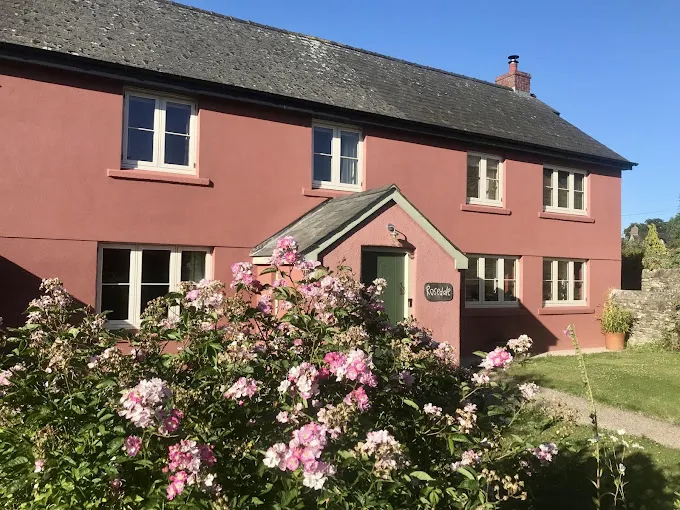
House Rendering South Wales: Complete Guide
House rendering south wales guide covering render types, costs, and how to choose a qualified contractor for lasting weather protection and kerb appeal.
Table of Contents
- What Is House Rendering?
- Render Types for South Wales Properties
- House Rendering Costs Explained
- Choosing a Rendering Contractor in South Wales
- Frequently Asked Questions
- Render System Comparison
- Coloured Rendering South Wales
- Practical Tips for Your Rendering Project
- The Bottom Line
- Sources & Citations
Article Snapshot
House rendering south wales is the process of applying a protective and decorative coat to external walls, shielding properties from the region’s high rainfall, coastal salt air, and wind-driven moisture. Modern systems – from thin coat silicone to monocouche through colour render – offer durable, low-maintenance finishes suited to Welsh building stock.
House Rendering South Wales in Context
- 4,631 new dwellings were completed in Wales in 2024-25, with 73% delivered by the private sector (Welsh Government, 2025)[1], each representing a potential rendering specification decision.
- 266 new dwellings were completed in Swansea alone in 2024-25 (Welsh Government, 2025)[1], reflecting strong local demand for external finishing trades.
- Rendering costs range from approximately £3,000 for a two-bedroom bungalow to £7,500 for a four-bedroom detached house (MyJobQuote, 2026)[2], depending on property size and system chosen.
- New dwelling starts in Wales fell 26% in 2024-25 compared to the previous year (Welsh Government, 2025)[1], increasing focus on renovation and re-rendering of existing stock.
What Is House Rendering and Why Does It Matter in South Wales?
House rendering south wales describes applying a cement, silicone, or polymer-based coating to external walls to protect the underlying substrate from moisture penetration, frost damage, and the accelerated weathering that characterises the Welsh climate. South Wales receives significantly higher annual rainfall than most parts of England, and coastal areas from Swansea to Barry face salt-laden air that degrades untreated or poorly maintained external walls far more rapidly. Rendering is therefore not merely cosmetic – it is a primary line of defence for the building envelope.
Coloured Rendering South Wales has been delivering external rendering and plastering services across the region since 1998, applying modern spray rendering technology to both new builds and renovation projects throughout Swansea, Cardiff, Newport, and beyond.
The South Wales housing stock includes a high proportion of pre-1919 solid-wall terraced properties, particularly in the valleys and coastal towns, which were never designed with cavity insulation in mind. As TheGreenAge notes, “Much of these properties are in desperate need of an upgrade, both in terms of the thermal properties and external appearance. Aside from protecting your walls, you can choose from a huge range of colours and textures of render – or even replicate a brick look using the brick slips.” (TheGreenAge, 2025)[3] External rendering addresses both concerns simultaneously: it seals the wall against moisture ingress while delivering a refreshed finish that lifts kerb appeal and property value.
Call Us
Beyond Victorian terraces, modern semi-detached and detached homes across South Wales also benefit from re-rendering as original finishes age, crack, or begin admitting water. For developers active in the region, rendered finishes on new builds create a contemporary appearance that is consistently popular with buyers. The practical case for house rendering in South Wales is strong across every segment of the market – from single-property homeowners to Coloured Rendering Swansea – durable and attractive rendering solutions for residential and commercial properties serving larger portfolios.
Render Types for South Wales Properties
Selecting the correct render system for a South Wales property requires matching material properties to the specific exposure conditions the wall will face. Three systems dominate the market: thin coat silicone render, monocouche through colour render, and one coat cement render, each suited to different property types, budgets, and finish requirements.
Thin Coat Silicone Render
Thin coat silicone render is a polymer-modified, ready-mixed coating applied in layers of 1.5-3 mm directly over a basecoat or reinforcement mesh. Its defining characteristic is flexibility: the silicone chemistry allows the material to expand and contract with substrate movement without cracking, which is particularly valuable on older South Wales properties where settlement has created minor structural movement. Silicone render is also hydrophobic – water beads and runs off rather than soaking in – whilst remaining vapour-permeable, so any moisture within the wall can still escape. The self-cleaning surface keeps the finish looking fresh even on exposed coastal sites such as Mumbles or the Gower Peninsula, where driving rain and salt spray would quickly discolour a conventional painted finish.
Baumit StarTop, installed by a City & Guilds Assured Baumit Approved EWI Applicator, is a premium silicone render available through certified applicators and carries manufacturer-backed warranties of up to 25 years. For property owners on the South Wales coast or in high-rainfall valley locations, thin coat silicone render represents the highest-performance external wall finish currently available.
Monocouche Through Colour Render
Monocouche render is a single-coat, cement-based system pre-coloured throughout its full thickness. Because the colour runs all the way through the material, scratches and minor surface abrasion do not reveal a contrasting undercoat, and the finish never requires painting. This makes monocouche cost-effective over its service life, as the ongoing maintenance cost is effectively zero for the first 15-20 years. The system is widely used on new-build housing developments across Cardiff and Newport, where developers need a contemporary kerb appeal finish that will not require repainting before properties are sold or let. The spray application method – as shown in use cases involving a 20-home Cardiff development – allows each dwelling to be completed in roughly two days, compared to four or five days for hand application.
One Coat Cement Render
One coat cement render is the most cost-accessible system and remains a practical choice where the property owner intends to paint the exterior finish in their chosen colour. Applied using professional spray equipment for consistent thickness, it provides the proven durability of a cement-based matrix whilst simplifying the traditional three-coat rendering process. It suits both traditional and contemporary South Wales properties and is frequently specified for commercial buildings and Rendering Repairs South Wales – professional repairs and maintenance for external wall renders where a painted finish is already the established aesthetic.
House Rendering Costs in South Wales
Understanding house rendering costs allows property owners to budget accurately and evaluate quotes with confidence. Cost is determined primarily by the total wall area to be rendered, the system specified, the condition of the existing substrate, and the complexity of the building’s detailing around windows, doors, and architectural features.
According to MyJobQuote, “House rendering costs range from about £2,000 to upwards of £8,000. This is a wide range, as the cost of house rendering is largely dependent on the size of the property being rendered.” (MyJobQuote, 2026)[2] For more specific benchmarks, rendering a two-bedroom bungalow costs an average of £3,000, while a four-bedroom detached house averages £7,500 (MyJobQuote, 2026)[2].
Factors That Affect Your Rendering Quote
Substrate preparation is one of the most significant cost variables. If existing render must be stripped, if the masonry beneath requires repair, or if specialist primers are needed for unusual substrates, these stages add time and materials before the finish coat is even applied. Scaffolding – required for any property above single-storey height – adds a further fixed cost that is quoted separately by scaffold hire companies. In South Wales coastal locations, additional surface treatments for salt resistance are specified, influencing the base material cost.
The render system itself carries different price points. Silicone render systems carry a higher material cost than cement render but deliver lower lifetime maintenance expense, so the total cost of ownership calculation favours silicone for properties intending to hold rather than sell. Spray application reduces labour time compared to hand application, which partially offsets the higher material cost of premium systems and means the final price difference between systems is narrower than the raw material costs suggest.
External Wall Insulation systems, which combine insulation boards with a render finish, represent the largest investment – but also deliver the most comprehensive outcome, improving both thermal performance and external appearance in a single project. These systems qualify for government grant support, and EWI Specialists South Wales – expert external wall insulation installations for energy efficiency can advise on current eligibility. Always request itemised quotes so you can compare like for like across contractors.
Choosing a House Rendering Contractor in South Wales
The quality of a rendering installation is determined as much by the contractor’s skill, preparation standards, and product knowledge as by the render system selected. A poorly applied premium silicone render will fail before a correctly applied basic cement render, so selecting a qualified, experienced contractor is the most important decision in any rendering project.
Qualifications and Accreditations
For EWI and silicone render systems, manufacturer accreditation provides the clearest quality assurance. A Baumit Approved EWI Applicator holds City & Guilds Assured certification and must show competency through assessed training before being approved to install warranted systems. This certification matters because manufacturer warranties – which run to 25 years – are only valid when the system is installed by an approved applicator. For other render systems, ask whether the contractor has attended product manufacturer training and whether they are registered with relevant trade bodies.
Insurance is non-negotiable. Public liability insurance protects you if the contractor damages neighbouring property or causes injury during the works. Request a copy of the certificate before any work commences, and verify that it covers the full contract value. For scaffold-access works on properties adjoining public spaces in areas such as Swansea city centre or terraced streets in the valleys, this protection is particularly important.
Evaluating Experience and Reviews
A contractor with a verifiable track record of completed projects in South Wales will understand how local weather conditions and building typologies affect specification. Ask for examples of work on similar property types – a contractor experienced with exposed coastal properties in Mumbles will have a different practical knowledge base than one who has worked primarily on inland new builds. Independent review platforms, particularly Google reviews where the reviewer’s identity is publicly verifiable, provide a reliable signal of consistent workmanship and customer experience. TheGreenAge Contractors note that rendering work “normally takes about 2-3 weeks to complete (weather permitting), but the contractors may take longer if the external weather conditions are not great” (TheGreenAge, 2025)[3] – an honest contractor will schedule works around weather forecasts rather than pressing ahead in unsuitable conditions.
Always obtain a minimum of three written quotes. Prices that appear significantly below the market range should prompt questions about the render system being quoted, the thickness of application, and whether appropriate preparation and priming stages are included. The lowest quote is frequently the most expensive option in the long run if remedial work is required within a few years. Visit the Home page of Coloured Rendering South Wales – expert spray rendering and external wall insulation services across South Wales to see the range of services available and the project gallery presenting completed work across the region. You can also find us on Google to read verified customer reviews and check our location in Swansea.
Your Most Common Questions
How long does house rendering last in South Wales?
The service life of a render finish depends on the system used and the exposure conditions of the property. In South Wales, where high annual rainfall and coastal salt air accelerate weathering, system selection is particularly important. Thin coat silicone render systems, when correctly specified and installed by an approved applicator, carry manufacturer warranties of 10-25 years and are formulated to perform in exactly these conditions. The hydrophobic, breathable surface resists cracking and discolouration even on exposed coastal sites.
Monocouche through colour render performs for 15-20 years before any maintenance attention is required, and because the colour runs through the full thickness, minor surface wear does not create visible marks. One coat cement render, painted after curing, requires repainting every 7-10 years depending on the paint system used and the severity of exposure. In all cases, proper substrate preparation before application – ensuring the wall surface is sound, clean, and correctly primed – has a significant influence on how long the render will last. Poor preparation is the most common cause of premature render failure.
What is the best render for a coastal property in South Wales?
For properties on the South Wales coast – including those in Swansea Bay, Mumbles, the Gower Peninsula, or Barry Island – thin coat silicone render is the most suitable external wall finish. Its defining properties directly address the challenges of coastal exposure: the hydrophobic silicone chemistry repels salt-laden moisture rather than absorbing it, the flexible polymer matrix resists the micro-cracking caused by thermal cycling in exposed locations, and the self-cleaning surface prevents the algae and tide-mark staining that affects conventional painted renders in maritime environments.
Silicone render is also vapour-permeable, which is important for older solid-wall properties common in Welsh coastal towns. If moisture does penetrate through window reveals or parapets, it needs a route to escape – a non-breathable render traps that moisture and accelerates deterioration of both the render and the masonry beneath. For properties where improved thermal performance is also a priority, an External Wall Insulation system using a silicone render finish delivers both weather protection and energy efficiency in a single installation, which is particularly valuable for pre-1919 solid-wall properties that cannot be retro-fitted with cavity wall insulation.
Can render be applied directly over existing render in South Wales?
Whether new render is applied over existing render depends on the condition and adhesion of what is already there. A competent contractor will carry out a tap test across the entire surface before quoting – a hollow sound indicates areas where the existing render has debonded from the substrate. Any hollow areas must be removed before overcoating because the new render will follow the movement of the failed layer beneath it, leading to early cracking or delamination.
Where the existing render is sound, well-bonded, and of an appropriate type, a thin coat silicone system is sometimes applied over it following correct priming. However, adding layers to a wall also adds weight, and on older properties the original render was not designed to carry an additional coating. A thorough survey is therefore required before any decision is made. In many cases – particularly where the existing render is original sand and cement dating from the mid-twentieth century – full strip-back and fresh application to the bare masonry delivers a more durable and longer-lasting result, even though it costs more at the outset. Your contractor should advise you honestly on this after a proper inspection rather than assuming overcoating is possible.
Does house rendering add value to a property in South Wales?
Fresh, high-quality rendering improves kerb appeal, which is one of the primary drivers of buyer perception and willingness to pay a premium. In South Wales, where a significant proportion of the housing stock consists of older terraced and semi-detached properties with tired external finishes, a professionally rendered exterior differentiates a property in a competitive market.
The value uplift varies by location and property type, but the combination of improved appearance and reduced maintenance liability – no repainting required for 15-25 years with modern render systems – is a straightforward value proposition for buyers. For landlords, re-rendered properties command higher rents and attract tenants more quickly, improving yield. Where an External Wall Insulation system is installed, the improvement to the property’s Energy Performance Certificate rating adds a further quantifiable value, as energy efficiency credentials are scrutinised by mortgage lenders and buyers alike. The key is ensuring the work is carried out to a high standard using quality materials – a poorly finished render deters buyers, so the contractor you choose is as important as the decision to render in the first place.
Comparing House Rendering Systems for South Wales
Choosing between render systems means weighing performance, cost, maintenance requirements, and suitability for the specific property and location. The table below compares the three principal systems used across South Wales properties, drawing on the characteristics relevant to the region’s weather exposure and building stock.
| Render System | Typical Cost Range | Service Life | Maintenance Required | Best Suited To |
|---|---|---|---|---|
| Thin Coat Silicone Render | Higher initial cost; average £7,500 for a 4-bed detached[2] | 10-25 years (warranted) | Minimal – self-cleaning surface | Coastal and high-exposure sites; older solid-wall properties; low-maintenance priority |
| Monocouche Through Colour Render | Mid-range; competitive for new build volume | 15-20 years | Low – no painting required | New builds and housing developments; contemporary residential finishes; rental portfolios |
| One Coat Cement Render | Most cost-accessible; average £3,000 for a 2-bed bungalow[2] | 7-15 years (painted) | Repainting every 7-10 years | Properties where colour flexibility is important; budget-led projects; painted finish preferred |
Coloured Rendering South Wales: Expert Rendering Since 1998
Coloured Rendering South Wales has been delivering professional house rendering south wales services from our Swansea base for over 25 years. We specialise in spray rendering – a technique that applies render consistently and efficiently across large wall areas, completing projects two to three times faster than traditional hand application without any compromise to finish quality. Our team holds Baumit Approved EWI Applicator status with City & Guilds Assured accreditation, enabling us to install Baumit StarTop premium silicone render and full EWI systems with manufacturer-backed warranties of up to 25 years.
Our services span the full range of external wall finishes: thin coat silicone render for high-performance weather protection, monocouche through colour render for maintenance-free contemporary finishes, one coat cement render for budget-conscious projects, rendering repairs to extend the life of existing finishes, and complete External Wall Insulation systems that improve both thermal efficiency and appearance. We also provide comprehensive internal plastering services across South Wales.
“With over 15 years in the building trade I have experienced several different plasterers all offering different styles and finishes. Geoff’s thin coat spray finish render would rival the best and I can’t recommend his team enough to someone thinking of using him. His professionalism and work ethic has stood out from many of the others we have worked with.” – Keri Hopkins, Google Review
“We’re 100% happy and wouldn’t hesitate to recommend Jeff. His workmanship is excellent and we’re also very happy with the product he recommended to eradicate the penetrating damp and give our house a great new look and lease of life.” – Alistair Legge, Google Review
We work with homeowners, property developers, landlords, and commercial property owners across Swansea, Cardiff, Newport, Bridgend, and the wider South Wales region. Every project begins with a free assessment and honest recommendation – we will tell you whether a repair, an overcoat, or a full strip-back-and-render is the right solution for your property, based on a thorough inspection rather than a default upsell. To discuss your project or arrange a free quote, contact Coloured Rendering South Wales for a free quote or consultation on your rendering project, call us on 07815 868070, or email geoff@colouredrenderingsouthwales.com.
Practical Tips for Your House Rendering Project
The following guidance will help you achieve the best outcome from a rendering project, whether you are a homeowner organising your first render or a property developer managing multiple sites across South Wales.
Time your project for dry weather. Render should not be applied in freezing conditions or when rain is forecast within 24 hours of application. In South Wales, the window between October and March carries significant weather risk. Spring and early summer provide the most reliable conditions. A reputable contractor will schedule the project around a suitable weather forecast and will not apply render in marginal conditions just to maintain a schedule.
Invest in thorough preparation. The most common cause of render failure is inadequate substrate preparation. All loose or hollow existing render must be removed, the masonry must be clean and free of organic growth, and the correct primer must be applied before the render coat goes on. Cutting corners at this stage makes a system failure more likely regardless of the quality of the finish coat.
Match the render system to the exposure zone. Properties within a few kilometres of the South Wales coast face significantly higher moisture and salt loads than inland properties. Specify accordingly – the additional cost of a silicone system over a painted cement render is modest compared to the cost of remedial work on a failed render within five years.
Obtain written quotes with itemised breakdowns. A detailed quote listing preparation, priming, render system, labour, and scaffolding separately allows you to compare contractors accurately and ensures there are no unexpected additions once work starts. Ask each contractor to confirm the specific render product they are quoting and check that it is appropriate for your property type and location. You can review the full range of available systems and learn more about our experienced team and rendering expertise to understand what a properly specified project should include.
Check warranties carefully. Manufacturer-backed warranties for silicone render and EWI systems are only valid when the system is installed by an approved applicator using the manufacturer’s specified products throughout. Ask your contractor for documentary evidence of their approved applicator status before work begins.
Consider energy efficiency at the same time. If you are re-rendering an older solid-wall property, the point of removing the existing render is an ideal opportunity to install External Wall Insulation before the new finish coat is applied. The marginal cost of adding insulation at this stage is considerably lower than retrofitting it later, and the improvement to your property’s EPC rating is significant. For more detail on available systems, the UK Building Regulations – Approved Documents provide the technical standards that EWI installations must meet.
The Bottom Line
House rendering south wales is a practical investment in property protection, appearance, and long-term value. The Welsh climate – high rainfall, coastal exposure, and significant seasonal temperature variation – makes the external wall finish one of the most important decisions you will make about your property. Choosing the right render system for your specific location and building type, and having it installed by a qualified contractor with genuine experience of South Wales conditions, determines whether that investment performs for 25 years or requires remedial attention within five.
From thin coat silicone render on exposed Gower coastline properties to monocouche finishes on Cardiff new builds, or one coat cement render on budget renovation projects in Bridgend and the valleys, the range of systems available means there is a suitable solution for every property and every budget. The key is taking the time to specify correctly, prepare the substrate properly, and choose a contractor whose track record is independently verifiable.
If you are ready to discuss your rendering project, contact Coloured Rendering South Wales today. Call 07815 868070, email geoff@colouredrenderingsouthwales.com, or use our online contact form to arrange a free, no-obligation property assessment across South Wales.
Sources & Citations
- New house building: April 2024 to March 2025. Welsh Government.
https://www.gov.wales/new-house-building-april-2024-march-2025-html - How Much Does It Cost to Render a House in 2026? MyJobQuote.
https://www.myjobquote.co.uk/costs/rendering-a-house - External Wall Insulation in South Wales. TheGreenAge.
https://www.thegreenage.co.uk/external-wall-insulation-in-south-wales/