
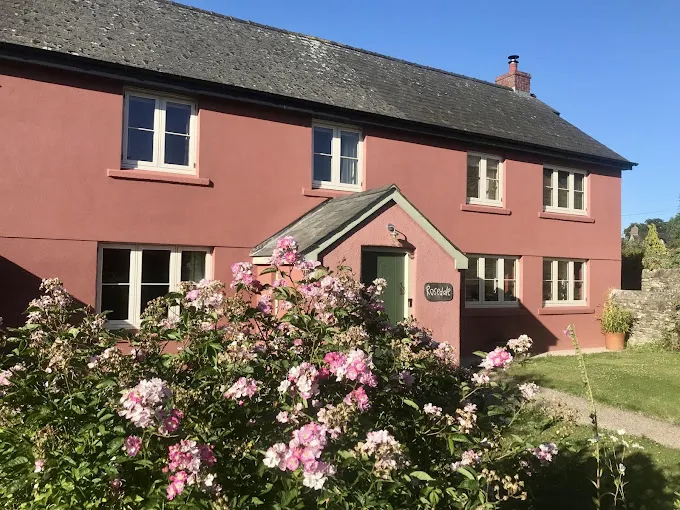
External Wall Insulation Kidwelly: Complete Guide
External wall insulation Kidwelly homeowners rely on protects solid walls from Wales’s wet climate, cuts heating bills, and transforms property appearance – here’s everything you need to know before choosing a system.
Table of Contents
- What Is External Wall Insulation?
- Benefits of EWI for Kidwelly Properties
- EWI Systems Explained: Insulation Types and Finishes
- Choosing a Qualified EWI Installer in Kidwelly
- Frequently Asked Questions
- EWI System Comparison
- Why Choose Coloured Rendering South Wales
- Practical Tips for Your EWI Project
- The Bottom Line
- Sources & Citations
Article Snapshot
External wall insulation Kidwelly is a solid-wall retrofit system that bonds insulation boards to the outside of a property and finishes them with a durable render coat. It reduces heat loss, improves Energy Performance Certificate ratings, and adds weather protection – delivering measurable energy savings with long-term low maintenance.
Market Snapshot
- 90% of solid wall homes in the UK – approximately 7.6 million properties – remain without insulation (DESNZ, 2024)[1]
- 5,895,000 square metres of EWI were installed across the UK in 2023, with 73% used for refurbishment projects (INCA, 2024)[2]
- Simulated annual site energy savings of up to 23% have been recorded from adding exterior continuous insulation to a building (ACEEE, 2024)[3]
- 98% of homes receiving EWI under the ECO scheme were found to require remedial work to correct major issues, affecting an estimated 22,000 properties (National Audit Office, 2024)[4]
What Is External Wall Insulation?
External wall insulation Kidwelly is a wall retrofit system in which insulation boards are mechanically fixed and adhesively bonded to the outside of a building’s existing walls, then overcoated with a reinforced render finish. The result is a thermally upgraded, weatherproofed external envelope that requires no internal disruption to the property. Coloured Rendering South Wales, operating across Carmarthenshire and the wider South Wales region, installs complete EWI systems for residential and commercial properties from Kidwelly to Swansea.
The system works by placing insulation on the cold side of the wall. This keeps the wall itself warmer, reduces the risk of interstitial condensation, and eliminates thermal bridging through the existing structure. For Kidwelly homes – many of which are solid stone or brick construction with no cavity – this approach is the primary method available for meaningful wall insulation improvements.
A standard EWI installation consists of three core layers. The first is the insulation board, which is mineral wool, expanded polystyrene (EPS), or phenolic foam depending on the required thermal performance and fire classification. The second is a base coat reinforced with fibreglass mesh, which provides structural integrity and protects the insulation. The third is the decorative finish coat, most commonly a thin coat silicone render or acrylic render, available in a wide range of colours. When you visit Kidwelly’s older streets, many of the traditional rendered properties would benefit from exactly this kind of upgrade, replacing failing lime or cement render with a properly insulated modern system.
Call Us
EWI is recognised under UK building regulations as a legitimate means of improving a building’s thermal envelope. Projects above a certain scale, or those involving change of use, trigger a requirement to achieve compliance with UK Building Regulations – Approved Documents, specifically Approved Document L, which governs the conservation of fuel and power. Understanding these requirements before work begins avoids costly complications later.
Benefits of EWI for Kidwelly Properties
The case for external wall insulation in Kidwelly is strong, driven by the town’s climate exposure, building stock characteristics, and the measurable financial returns available to property owners. Kidwelly sits on the Gwendraeth estuary in Carmarthenshire, a location subject to high annual rainfall, prevailing south-westerly winds, and the moisture-laden air that characterises coastal West Wales. These conditions accelerate heat loss through solid walls and cause long-term damage to unprotected render.
Thermal performance gains from EWI are well documented. Research from the ACEEE found that adding exterior continuous insulation achieved simulated annual site energy savings of up to 23% (ACEEE, 2024)[3], with one test house recording a 35% reduction in air infiltration following installation (ACEEE, 2024)[3]. For a detached or semi-detached property in Kidwelly with solid walls, those figures translate directly into lower gas or oil heating bills across the winter months.
Beyond energy costs, EWI delivers improvements to comfort that homeowners notice immediately. Cold walls contribute to the sensation of draughts even in rooms where windows and doors seal properly. By insulating externally, the interior wall surface temperature rises, eliminating the radiant chill that draws heat away from occupants. Condensation on walls – a common complaint in older Kidwelly properties – is also substantially reduced because the dew point moves away from the internal surface.
As ACEEE researchers noted, “Adding a layer of exterior continuous insulation was the most effective single intervention for nationwide aggregated savings potential, saving nearly twice what each of the analyzed window solutions in isolation saved” (ACEEE, 2024)[3]. That finding underscores the priority EWI should hold in any planned energy retrofit for a solid-wall home.
EPC rating improvements are another tangible benefit. A significant uplift in EPC band increases a property’s market value and rental appeal, and for landlords, it helps meet the Minimum Energy Efficiency Standards that govern rental properties in Wales. EWI Specialists South Wales – expert external wall insulation installations for energy efficiency provides further detail on how EWI affects EPC outcomes across different property types.
EWI Systems Explained: Insulation Types and Finishes
Selecting the correct EWI system for a Kidwelly property requires matching insulation type, thickness, and render finish to the building’s construction, exposure zone, and performance targets. There is no single system that suits every situation, and specification decisions made at the outset determine how well the installation performs over its lifetime.
Mineral fibre insulation boards – sometimes called mineral wool or rock mineral wool – held the largest market share in UK EWI installations in 2023, accounting for 56% of installations (INCA, 2024)[2]. Mineral fibre’s primary advantage is its non-combustibility, making it the preferred choice for buildings above certain height thresholds and for properties where fire classification is a priority. It also manages moisture vapour well, which suits the damp climate of coastal Carmarthenshire.
Expanded polystyrene (EPS) accounted for 37% of low-rise EWI installations in 2023 (INCA, 2024)[2]. EPS is lightweight, straightforward to cut and handle on site, and cost-effective for typical two-storey residential properties. It delivers good thermal performance at moderate board thicknesses and is widely used for housing retrofit schemes. For most detached and semi-detached homes in Kidwelly, EPS or mineral fibre at 90-120 mm thickness achieves the thermal transmittance values required to satisfy Approved Document L.
Phenolic foam and polyisocyanurate boards offer superior thermal performance per millimetre of thickness, making them useful where projection from the original wall face needs to be minimised – around bay windows, door surrounds, or sites close to boundaries. Their higher cost is offset by thinner board requirements on properties where every millimetre of projection matters.
Finish coat selection is equally important. Thin coat silicone render is the leading decorative finish for EWI systems in the UK. Its polymer-modified formula provides flexibility that resists cracking as the building moves seasonally, while its hydrophobic surface sheds water without becoming waterlogged. Silicone renders are available in hundreds of colours through manufacturers such as Baumit, whose StarTop system is installed by certified applicators including our team. For Coloured Rendering Swansea – durable and attractive rendering solutions for residential and commercial properties, silicone systems are the most specified finish for coastal and high-exposure locations.
Acrylic renders offer a similar textured finish at slightly lower material cost, though they lack the long-term breathability characteristics of silicone. Monocouche through-colour render is applied over EWI base coats for properties where a more traditional appearance is preferred, delivering a cement-based aesthetic with the colour integrated throughout the coat.
Choosing a Qualified EWI Installer in Kidwelly
Installer quality is the most important variable in any external wall insulation project, and the evidence from recent years makes this point with uncomfortable clarity. A National Audit Office report found that 98% of homes fitted with EWI under the Energy Company Obligation scheme required remedial work to correct major issues, affecting an estimated 22,000 properties (National Audit Office, 2024)[4]. The scale of that failure was not a product of technology – it was a product of inadequate installer competence and absent quality oversight.
As the National Audit Office Representative stated: “The government should also learn the wider lessons from what has happened and ensure that all households having work done to improve their insulation are confident that their installers are properly qualified and able to resolve any issues that may arise” (National Audit Office, 2024)[4]. For homeowners in Kidwelly, this warning translates into a clear requirement: verify credentials before committing to any EWI installation.
The key qualifications to look for when selecting an installer are manufacturer approval status, third-party certification, and evidence of relevant trade accreditation. A Baumit Approved EWI Applicator with City and Guilds Assured accreditation, for example, is certified to install complete EWI systems with manufacturer-backed warranties of up to 25 years. That warranty provides documented long-term protection that uncertified work cannot offer. Certification also requires ongoing training, meaning the installer remains current with the latest system requirements and installation standards.
Insurance and guarantee documentation should be requested as a matter of routine. A reputable installer will supply details of their public liability insurance, any product warranty provided by the system manufacturer, and a clear written specification of the system to be installed including insulation type, board thickness, mesh specification, and finish coat product. This documentation protects you if questions arise during or after the project.
Sean Stevenson, Chair of INCA, noted that the scale of uninsulated solid wall properties represents significant opportunity but also significant risk if not managed properly: “Whilst the numbers demonstrate that the industry is delivering well at current levels, they also highlight the scale of the opportunity on the horizon as the Government looks to ramp up its retrofit program to deliver on net zero targets” (INCA, 2024)[2]. Increased demand for EWI across Wales makes the selection of a properly qualified local specialist more important than ever.
Local knowledge matters in practical terms too. An installer familiar with Kidwelly’s building stock understands the typical substrate conditions found in properties along the Gwendraeth valley, recognises the moisture loads imposed by the local climate, and knows how to detail the system correctly around period architectural features such as window reveals, sills, and corbelled cornices. About us – Learn more about our experienced team and rendering expertise explains how our background in South Wales properties shapes every specification we produce.
Your Most Common Questions
How much does external wall insulation cost in Kidwelly?
EWI costs in Kidwelly vary depending on the property size, the insulation system specified, and the finish coat selected. For a typical semi-detached house, the installed cost of a full EWI system including insulation boards, reinforced base coat, and silicone render finish falls within a range that reflects the complexity of detailing around windows, doors, and any projecting architectural features. Properties with straightforward elevations and minimal obstructions cost less per square metre than those requiring extensive cutting, shaping, and bespoke reveals. Labour rates in South Wales are lower than in South East England, which benefits Kidwelly homeowners compared with national average figures. The most reliable way to understand the cost for your specific property is to arrange a free site assessment. An experienced installer will survey the walls, assess the substrate condition, recommend the appropriate system, and provide a written quotation itemising all elements of the work. Be cautious of very low quotations that do not specify the system in detail – cost-cutting on insulation thickness or mesh specification leads to underperforming installations that require expensive remediation.
Does external wall insulation Kidwelly require planning permission?
For most residential properties in Kidwelly, external wall insulation falls within permitted development rights and does not require a formal planning application, provided the work does not materially alter the appearance of the building in a way that conflicts with local planning policies. However, there are important exceptions. If your property is a listed building, it is within a conservation area, or it forms part of a development governed by specific planning conditions, you will need to consult Carmarthenshire County Council’s planning department before proceeding. Kidwelly has a significant historic core around its castle and town centre, and properties within the designated conservation area face restrictions on the type of render finish or the visibility of additional wall projection. Your installer should raise planning considerations at the initial consultation stage. A qualified EWI specialist will be familiar with the local planning context and will advise whether a pre-application enquiry or formal permission is advisable. Proceeding without the necessary consents on a listed or conservation area property risks enforcement action and potentially costly removal of completed work.
How long does an EWI installation take in Kidwelly?
The duration of an EWI installation depends on the size of the property, the complexity of detailing, and the weather conditions during the work. For a standard semi-detached house in Kidwelly, a full EWI installation including insulation boards, reinforced base coat, and spray-applied silicone render finish takes between five and ten working days from start to completion. Larger detached properties or those with complex elevations – bay windows, dormers, chimney stacks, or ornate detailing – take longer because more time is spent on accurate cutting, shaping, and the installation of reveals, bellcasts, and decorative beads. Spray application of the finish coat significantly reduces the time required compared with hand application, delivering consistent coverage across large wall areas quickly and with less physical disruption at ground level. Weather plays a role: render coats should not be applied in temperatures below five degrees Celsius or during heavy rain, so projects scheduled for winter months experience weather-related pauses. A good installer will plan the programme around forecast conditions and communicate any delays promptly.
What render finish is best for external wall insulation in coastal West Wales?
For properties in coastal West Wales, including Kidwelly, thin coat silicone render is the most appropriate decorative finish for EWI systems. Silicone renders are hydrophobic – they repel liquid water at the surface while remaining vapour-permeable, allowing moisture within the wall construction to escape. This combination is particularly valuable in the high-rainfall, wind-driven conditions that characterise the Gwendraeth estuary. The polymer-modified formulation gives silicone renders the flexibility to accommodate minor structural movement without cracking, which is important in older masonry buildings where seasonal thermal and moisture movement is more pronounced. Silicone renders also carry self-cleaning properties; their surface tension causes rainwater to bead and run off cleanly, taking airborne deposits with it and keeping the facade looking fresh with minimal maintenance. Colour stability is excellent – properly specified silicone renders retain their colour for decades without fading, eliminating the need for repainting. Acrylic renders offer a similar appearance at lower initial cost, but their breathability is lower and they show more algae growth over time in damp coastal environments. For the best long-term performance in Kidwelly’s climate, silicone is the system to specify.
EWI System Comparison
Selecting the right EWI system for a Kidwelly property involves balancing thermal performance, fire classification, cost, and compatibility with the chosen render finish. The table below compares the four most commonly specified approaches for residential retrofit projects in West Wales.
| System Type | Thermal Performance | Fire Classification | Typical Use | Best Render Finish |
|---|---|---|---|---|
| EPS (Expanded Polystyrene) | Good – moderate board thickness required | Combustible – requires fire barriers at junctions | Low-rise residential, budget-conscious retrofit | Silicone thin coat or acrylic |
| Mineral Fibre (Mineral Wool) | Good – 56% of UK EWI market in 2023[2] | Non-combustible – A1 or A2 rated | Mid and high-rise, fire-sensitive properties | Silicone thin coat – ideal for coastal exposure |
| Phenolic / PIR Foam | Excellent – thinnest boards for given U-value | Combustible – fire barriers required | Where minimal projection is important | Silicone or monocouche |
| Full EWI with Baumit StarTop Silicone Render | Excellent – manufacturer-backed warranty up to 25 years | System-certified – complies with UK building standards | Premium residential and commercial retrofit | Baumit StarTop silicone – self-cleaning, breathable |
Why Choose Coloured Rendering South Wales
Coloured Rendering South Wales has been delivering plastering and rendering services across the region since 1998, building over 25 years of hands-on experience with the building types, substrates, and weather conditions specific to South Wales. Our team installs complete EWI systems for residential and commercial clients throughout Carmarthenshire, including Kidwelly, Llanelli, and the surrounding area.
We hold Baumit Approved EWI Applicator status with City and Guilds Assured accreditation, enabling us to install Baumit StarTop premium silicone render and full EWI systems backed by manufacturer warranties of up to 25 years. That certification is a verifiable qualification that protects you as the property owner.
Our clients tell us what working with us is actually like. “With over 15 years in the building trade I have experienced several different plasterers all offering different styles and finishes. Geoff’s thin coat spray finish render would rival the best and I can’t recommend his team enough to someone thinking of using him. His professionalism and work ethic has stood out from many of the others we have worked with.” – Keri Hopkins, Google Review
“Geoff fitted External Wall Insulation to a wall that had a number of issues and through which a lot of heat was being lost. Geoff is very tidy, he talked us through it at every stage and was very respectful of our neighbours whilst working in their property. Great job!” – Abby Harries-Heat, Google Review
Our spray rendering technology means we apply finish coats faster and more consistently than hand application, reducing the time your property is under active construction. We maintain a perfect 5.0 Google rating across all reviews, which reflects our commitment to doing the job properly every time. Visit our home page of Coloured Rendering South Wales – expert spray rendering and external wall insulation services across South Wales for a full overview of our services, or contact Coloured Rendering South Wales for a free quote or consultation on your rendering project to arrange a no-obligation site assessment for your Kidwelly property. Call us directly on 07815 868070 or email geoff@colouredrenderingsouthwales.com.
Practical Tips for Your EWI Project
Thorough preparation before work begins is the single biggest factor in a successful EWI installation. Have your walls assessed for moisture ingress, loose render, and any active damp before insulation boards are fixed. Trapping moisture behind EWI causes long-term damage that is expensive to remediate. Any defective render or masonry should be repaired and allowed to dry fully before the new system is installed.
Request a detailed written specification with your quotation. The specification should name the system manufacturer, the insulation product, its thickness, the base coat and mesh specification, and the finish coat product and colour reference. This document protects you if any element of the completed work does not match what was agreed, and it provides the reference needed to claim against any product or installation warranty.
Consider the detailing around windows and doors carefully. Poor detailing at reveals, sills, and copings is one of the most common sources of failure in retrofit EWI. Ask your installer specifically how these junctions will be handled and whether new window sill extenders or door surrounds will be required to accommodate the additional wall thickness.
Check whether your property is eligible for any financial assistance. The Welsh Government’s Warm Homes programme and various energy company grant schemes periodically offer funding support for solid wall insulation in eligible properties. Eligibility criteria change, so it is worth contacting your local authority or a registered energy advisor to establish what support is available at the time of your project.
Arrange scaffolding access carefully. EWI cannot be installed safely from ladders on a full-property project. Ensure the scaffolding contract is clearly allocated between you and your installer before work begins, and confirm it will remain in place for the full duration of the project including any weather-related pauses. You can also browse the Rendering Repairs South Wales – professional repairs and maintenance for external wall renders page for guidance on maintaining your render once the EWI installation is complete.
For guidance on specifying facade render systems, the Baumit guide to facade renders and paints provides technical detail on product selection for different exposure conditions and substrates.
The Bottom Line
External wall insulation Kidwelly properties need is not a luxury upgrade – for the many solid-walled homes in Carmarthenshire, it is the most effective single measure available for cutting heat loss, reducing energy bills, and protecting the building fabric from the damage that sustained wet weather inflicts on unprotected walls. With 90% of UK solid wall homes still lacking insulation (DESNZ, 2024)[1], the opportunity is clear and the technology to address it is well established.
The key is choosing the right system and the right installer. Properly specified and correctly installed EWI delivers decades of performance – but as recent evidence shows, poorly installed work creates problems that cost far more to fix than they saved in the first place. Work with a certified, experienced specialist who knows the local building stock and stands behind their work with documented warranties.
To discuss your Kidwelly property and arrange a free, no-obligation assessment, call Coloured Rendering South Wales on 07815 868070, email geoff@colouredrenderingsouthwales.com, or use the contact form at colouredrenderingsouthwales.com/contact.
Sources & Citations
- Size of the UK external wall insulation market revealed in new INCA report. INCA (Insulation Manufacturers Association).
https://www.inca-ltd.org.uk/size-of-the-uk-external-wall-insulation-market-revealed-in-new-inca-report/ - Size of the UK external wall insulation market revealed in new INCA report. INCA (Insulation Manufacturers Association).
https://www.inca-ltd.org.uk/size-of-the-uk-external-wall-insulation-market-revealed-in-new-inca-report/ - Adding Insulation when Re-Siding: A Wall Retrofit that Ticks All the Boxes. ACEEE (American Council for an Energy-Efficient Economy).
https://www.aceee.org/sites/default/files/proceedings/ssb24/assets/attachments/20240722163155016_31ee1970-4c0a-42c5-a88c-4ef0f0edce59.pdf - Report sets out reasons why 98% of homes with external wall insulation under the ECO scheme require work to correct major issues. Installer Online / National Audit Office.
https://www.installeronline.co.uk/build/report-sets-out-reasons-why-98-of-homes-with-external-wall-insulation-under-the-eco-scheme-require-work-to-correct-major-issues/