
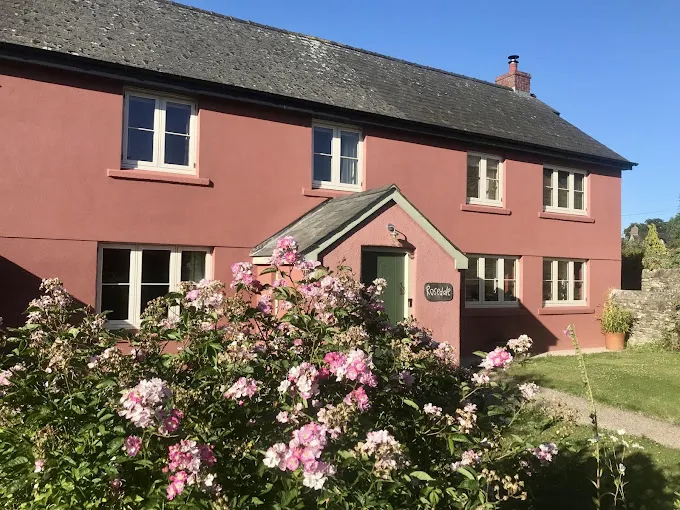
Best Renderers in South Wales: Expert Guide
Finding the best renderers in South Wales means evaluating experience, accreditations, material quality, and local climate knowledge – this guide covers every factor that separates excellent contractors from average ones.
Table of Contents
- What Defines the Best Renderers in South Wales?
- Understanding Render Systems and Material Selection
- How to Evaluate and Hire a Quality Renderer
- Coastal and Welsh Climate Considerations for Rendering
- Frequently Asked Questions
- Comparing Rendering Approaches
- Coloured Rendering South Wales
- Practical Tips for Your Rendering Project
- The Bottom Line
- Sources and Citations
Article Snapshot
The best renderers in South Wales are contractors who combine proven local experience with certified skills, appropriate modern equipment, and render systems specifically suited to Welsh weather conditions. Choosing correctly protects your property for decades and eliminates costly maintenance cycles.
By the Numbers
- 28 years – time Coloured Rendering South Wales has been serving South Wales (Coloured Rendering South Wales, 2026)[1]
- 5.0 stars – Google rating held by Coloured Rendering South Wales across multiple verified reviews (Coloured Rendering South Wales, 2026)[1]
- 35 years – plastering trade experience of Swansea Render Systems’ parent company (Swansea Render Systems, 2026)[2]
- 19 years – rendering experience of RGS Rendering Systems (RGS Rendering Systems Ltd, 2026)[3]
What Defines the Best Renderers in South Wales?
The best renderers in South Wales combine demonstrable technical expertise with a thorough understanding of the region’s specific building stock and climate demands. Coloured Rendering South Wales, established in 1998, has spent over 28 years refining precisely this combination – and the difference between a skilled local specialist and a generalist contractor becomes visible within the first few years of a project’s life.
Rendering is not a commodity service. The contractor who applies your external finish makes decisions about substrate preparation, primer selection, reinforcement mesh placement, and system compatibility that determine whether the render lasts five years or thirty. In South Wales, where rainfall is above the UK average and many properties sit within reach of coastal salt air from the Bristol Channel, those decisions carry additional weight.
The markers of quality are consistent across the market. Accredited renderers hold recognisable certifications – such as City and Guilds qualifications, manufacturer-approved applicator status, or membership of respected trade bodies. They specify the correct system for each substrate rather than applying a one-size-fits-all approach. They provide documented warranties, and they carry full public liability insurance.
Call Us
As the Coloured Rendering South Wales team notes: “The best renderers in South Wales show specific expertise in modern rendering systems, possess appropriate equipment and training, and maintain proven track records of successful projects.” (Coloured Rendering South Wales, 2026)[1]
Word-of-mouth reputation backed by independently verified reviews is one of the most reliable indicators of quality. Platforms such as Google Reviews provide time-stamped, named feedback that is difficult to fabricate at scale. When evaluating any rendering contractor, reviewing their verified review history alongside their project portfolio gives you the clearest picture of what to expect. Look for consistent comments about punctuality, cleanliness, communication, and finish quality – these reflect the operational standards that determine your day-to-day experience as a client.
Understanding Render Systems and Material Selection
Render system selection is one of the most consequential decisions in any external wall project, and the best contractors guide clients through the options with honest, property-specific advice rather than defaulting to whichever system offers the widest margin.
The primary external render systems available to South Wales property owners fall into three broad categories. Traditional cement render, including one-coat cement systems applied by spray, remains a cost-effective option for properties that will carry a painted finish. It offers proven durability and suits a wide range of substrates. Monocouche through-colour render is a single-coat, pre-coloured system that eliminates the need for painting entirely. Its through-coloured composition means minor surface wear does not expose a different-coloured layer beneath, making it a genuinely low-maintenance choice for residential and commercial properties alike. Thin coat silicone render represents the premium tier – a polymer-modified, flexible system that is simultaneously waterproof and breathable. Silicone renders resist cracking far better than cement-based alternatives, carry self-cleaning properties that help maintain appearance in South Wales’ damp conditions, and are available in a wide palette of factory-mixed colours that will not fade.
Material quality underpins all three categories. The Adfer Cymru Ltd team – a Federation of Master Builders member operating in the region – articulates a principle shared by all reputable renderers: “Work completed to the highest standard, never rushed. Honest advice on the right system for your property.” (Adfer Cymru Ltd, 2026)[4] That honest system advice requires the contractor to assess your substrate material, wall condition, exposure classification, and aesthetic requirements before making any recommendation.
For properties undergoing external wall insulation, the render finish is the outermost layer of a composite system that includes insulation board, reinforcing mesh, basecoat, and topcoat. Each layer must be compatible with the others and installed in the correct sequence. Approved applicator status – such as Baumit Approved EWI Applicator accreditation – exists precisely to ensure contractors have been trained and assessed on complete system installation rather than isolated render application. You can explore facade render and paint guidance from Baumit to better understand what a correctly specified system involves before meeting with a contractor.
Ask any prospective renderer for the technical data sheet of their proposed system and the name of the manufacturer. Reputable products from established manufacturers such as Baumit, Weber, or Parex carry independently tested performance data and manufacturer-backed warranties that a generic or unbranded material cannot provide.
How to Evaluate and Hire a Quality Renderer
Hiring the right rendering contractor requires a structured evaluation process rather than selecting on price alone – a decision that regularly results in failed renders, water ingress, and the cost of complete removal and reapplication within a decade.
Begin by gathering at least three written quotations that specify the system by manufacturer name and product reference, the number of coats, the preparation method, and the warranty terms. A quotation that describes only a vague “render” without system details is a warning sign. Any contractor unwilling to specify their materials in writing is unlikely to be using premium-grade products.
Verify insurance and accreditation independently. Public liability insurance should be confirmed in writing, not taken on verbal assurance. Manufacturer-approved applicator status can often be verified through the manufacturer’s own website or by contacting their technical team. For projects subject to UK Building Regulations Approved Documents, particularly those involving external wall insulation and changes to thermal performance, ensure the contractor is familiar with the relevant compliance requirements.
Review project references that are specific to your property type and location. A renderer with strong experience on modern brick-built housing estates does not necessarily have the same depth of experience on nineteenth-century stone-built terraces, which present different substrate preparation challenges. Ask to see completed projects in person where possible, and speak directly with previous clients about the contractor’s communication during the project, not just the finished result.
Clarify the preparation scope in detail. The longevity of any render system depends almost entirely on surface preparation – removal of loose material, treatment of any damp or biological growth, correct priming, and the application of reinforcement mesh at vulnerable junctions. Contractors who propose to render directly over questionable substrates without adequate preparation are creating a system that will fail prematurely, regardless of the quality of the render material itself.
Finally, confirm the project management arrangements. Will the person you meet during the quote visit be present on site during the work? Owner-operated businesses where the principal is directly accountable for every project deliver more consistent results than larger operations where quality control varies between crews.
Coastal and Welsh Climate Considerations for Rendering
South Wales presents a rendering environment that is among the most demanding in the UK, and the best rendering contractors in the region specify their systems accordingly rather than applying standard mainland UK approaches.
Rainfall in South Wales is substantially higher than the UK average, with many western areas receiving well over 1,000mm annually. Coastal properties from Swansea Bay through to Mumbles, the Gower Peninsula, and around to Cardiff and Newport face additional exposure to salt-laden air carried inland from the Bristol Channel. Salt crystallisation within render pores is a primary cause of spalling and delamination – a failure mode that catches many property owners by surprise when a render that appeared sound externally begins to detach from the substrate.
Wind-driven rain is the critical performance metric for external render in South Wales. The UK’s wind-driven rain exposure categories, as referenced in BS 8104, classify much of the South Wales coastline as severe or very severe exposure. Renders specified for moderate exposure conditions will underperform – and often fail – in these environments. The correct response is a system with a high water-repellency rating combined with genuine vapour permeability, allowing any moisture that enters the wall structure to escape outward rather than becoming trapped beneath the render film.
Silicone renders are the system of choice for coastal and high-exposure locations for precisely these reasons. Their hydrophobic properties repel liquid water while their molecular structure remains open to water vapour transmission. This combination prevents the freeze-thaw cycling damage that affects less flexible, lower-permeability cement renders during South Wales winters. For properties in Mumbles, Porthcawl, Barry, Penarth, and other seafront locations, a correctly specified silicone render system is not a premium upgrade – it is the minimum appropriate specification.
A practical example of this principle is a seafront property in Mumbles where specialist thin coat silicone render has protected the building for five years with no signs of deterioration despite its exposed coastal location. This outcome is only achievable when the render system, substrate preparation, and application technique are all aligned with the specific exposure conditions the building faces.
Your Most Common Questions
How much does professional rendering cost in South Wales?
Rendering costs in South Wales vary significantly depending on the system chosen, the size and condition of the substrate, and the level of preparation required. Thin coat silicone render systems are priced at a premium over one-coat cement render because the materials carry higher manufacturing costs and the application requires trained, accredited operatives. Monocouche render sits between the two on cost, offering a through-colour, low-maintenance finish at a mid-range price point. External wall insulation systems are priced differently again – the overall cost includes insulation board, fixing, mesh, basecoat, and finish render, and the scale of the investment is offset against energy savings over time.
When comparing quotations, the key is to ensure you are comparing equivalent specifications. A lower quotation that proposes a basic cement render against a higher quotation for silicone render is not a like-for-like comparison. Request that all contractors quote for the same system so that price comparisons reflect only labour and margin differences. Factor in the whole-life cost: a silicone render that requires no painting for twenty or more years represents a different long-term financial proposition than a cement render that requires repainting every five to seven years.
What accreditations should I look for when choosing a renderer?
The most meaningful accreditations for rendering contractors in South Wales are those that show both trade competence and system-specific training. City and Guilds qualifications in plastering and rendering confirm foundational trade skills assessed by an independent examining body. Manufacturer-approved applicator status – such as Baumit Approved EWI Applicator with City and Guilds Assured accreditation – confirms that the contractor has been trained and assessed specifically on installing that manufacturer’s system correctly. This matters because manufacturer warranties on full EWI and render systems, which extend to 10-25 years, are conditional on installation by an approved applicator.
Membership of trade bodies such as the Federation of Master Builders provides an additional layer of accountability, as member contractors must show financial stability, hold appropriate insurance, and pass an independent vetting process. For projects involving external wall insulation, checking whether the contractor is listed on the relevant manufacturer’s approved installer directory is a straightforward verification step that many property owners overlook. Always request copies of relevant certificates and verify insurance documentation directly before signing any contract.
How long does external rendering last in Welsh weather conditions?
The lifespan of external render in South Wales depends on three factors: the system specified, the quality of application, and the exposure conditions at the specific property. A correctly applied thin coat silicone render on a well-prepared substrate in a sheltered suburban location performs without intervention for twenty to thirty years. The same system on a highly exposed coastal property – assuming correct specification for the exposure zone – delivers fifteen to twenty-five years of low-maintenance performance. Traditional cement renders on exposed coastal properties have a significantly shorter effective lifespan before cracking and water ingress become apparent.
Preparation quality is the determining factor in render longevity. A premium silicone render applied over a poorly prepared or contaminated substrate will fail far sooner than a standard cement render applied over a correctly treated surface. This is why the prep scope in a contractor’s quotation deserves as much attention as the render specification itself. Annual visual inspections – particularly checking junctions around windows, doors, and soffits – allow minor issues to be addressed before they develop into system failures that require more extensive remediation work.
Can rendering be applied in winter in South Wales?
Most render systems carry manufacturer temperature restrictions that limit application to conditions above a minimum threshold – five degrees Celsius for cement-based systems, though some polymer-modified and silicone renders have slightly different requirements. In South Wales, temperatures during the autumn and early winter months are mild enough to permit rendering work to continue, but overnight frost risk must be managed carefully during curing periods. Applying render when frost is forecast within 24 hours of application risks freeze damage to the curing material, which causes surface cracking or delamination.
Reputable rendering contractors in South Wales plan their winter project schedules around weather forecasts and will not apply render in conditions that compromise the system’s performance – even if this means a short delay. If a contractor proposes to render during a cold snap without discussing frost protection measures or scheduling adjustments, treat this as a concern about their workmanship standards. The additional cost of a short delay is negligible compared to the cost of a render that fails during its first winter because curing conditions were inadequate.
Comparing Rendering Approaches for South Wales Properties
Choosing between rendering systems requires weighing upfront cost, long-term maintenance requirements, performance in South Wales’ exposure conditions, and aesthetic outcome. The table below summarises the four main approaches relevant to South Wales property owners to help clarify which solution fits your circumstances.
| Render System | Best For | Maintenance Requirement | Coastal Suitability | Typical Longevity |
|---|---|---|---|---|
| One-Coat Cement Render | Budget-conscious projects; painted finishes | Repainting every 5-7 years | Moderate – requires high-quality paint system | 15-20 years with maintenance |
| Monocouche Through-Colour Render | Low-maintenance coloured finishes; housing developments | Minimal – no painting required | Good – weather-resistant formula | 20-30 years (Coloured Rendering South Wales, 2026)[1] |
| Thin Coat Silicone Render | Coastal and high-exposure properties; premium finishes | Very low – self-cleaning properties | Excellent – hydrophobic and breathable | 20-30+ years |
| EWI with Silicone Render Finish | Solid wall properties; energy efficiency improvement | Very low – complete system protection | Excellent with correct system specification | 25+ years with manufacturer warranty |
Coloured Rendering South Wales
Coloured Rendering South Wales has been delivering professional plastering and external rendering services across South Wales since 1998 – 28 years of continuous operation that underpins a depth of regional knowledge no recently established contractor can replicate (Coloured Rendering South Wales, 2026)[1]. Based in Swansea, the company serves residential homeowners, property developers, landlords, and commercial property managers across the region, from Cardiff and Newport through to Swansea, Mumbles, Bridgend, and the wider South Wales area.
The company’s core services span the full range of external and internal finishing: coloured rendering Swansea – durable and attractive rendering solutions for residential and commercial properties, one-coat cement render, monocouche through-colour systems, internal plastering, and rendering repairs. As a Baumit Approved EWI Applicator with City and Guilds Assured accreditation, the team is certified to install complete EWI Specialists South Wales – expert external wall insulation installations for energy efficiency with manufacturer-backed warranties of up to 25 years. Spray rendering technology enables application two to three times faster than traditional hand methods, reducing both project duration and disruption to occupants.
The company holds a 5.0 Google rating (Coloured Rendering South Wales, 2026)[1], with clients consistently highlighting workmanship quality, professionalism, and communication. Two reviews are representative of the broader feedback received:
“With over 15 years in the building trade I have experienced several different plasterers all offering different styles and finishes. Geoff’s thin coat spray finish render would rival the best and I can’t recommend his team enough to someone thinking of using him.” – Keri Hopkins, Google Review
“We’re 100% happy and wouldn’t hesitate to recommend Jeff. His workmanship is excellent and we’re also very happy with the product he recommended to eradicate the penetrating damp and give our house a great new look and lease of life.” – Alistair Legge, Google Review
To discuss your rendering project and arrange a free consultation, contact Coloured Rendering South Wales for a free quote or consultation on your rendering project, call 07815 868070, or email geoff@colouredrenderingsouthwales.com.
Practical Tips for Your Rendering Project
Preparation is the single most important factor in render performance. Before any system is applied, the substrate must be structurally sound, free from loose material, biological growth, and contamination, and correctly primed with a compatible primer. Do not accept a quotation that skips or minimises the preparation scope – the render is only as durable as the surface beneath it.
Obtain system-specific warranties in writing before work commences. For silicone render and EWI systems from major manufacturers, warranties of ten to twenty-five years are available when the product is installed by an approved applicator. These warranties are a contractual document, not a verbal assurance, and should be filed alongside your property records.
Plan your project outside frost risk periods where possible. In South Wales, late spring through to early autumn offers the most consistently suitable conditions for rendering. If your project must proceed during cooler months, discuss temperature and frost management plans with your contractor explicitly.
Consider the whole-life cost when comparing systems. Through-colour and silicone renders eliminate the repainting cycle that adds recurring cost to cement render maintenance over a property’s lifetime. For landlords and property managers maintaining multiple properties, the long-term saving from a no-paint system is substantial. The Rendering Repairs South Wales – professional repairs and maintenance for external wall renders page provides useful guidance on identifying early signs of render failure that, if caught promptly, can be addressed with targeted repairs rather than full replacement.
For properties in high-exposure coastal zones – particularly those facing the Bristol Channel – always insist that the contractor classifies your exposure zone correctly and specifies a system rated for that classification. This step is frequently overlooked and is one of the primary reasons render fails prematurely on South Wales coastal properties.
The Bottom Line
The best renderers in South Wales are not simply competent tradespeople – they are specialists who understand Welsh climate exposure, specify systems correctly for each property and location, hold verifiable accreditations, and stand behind their work with documented warranties. The difference between a contractor who meets this standard and one who does not will be apparent within the first few winters following application.
When evaluating your options, prioritise verified reviews, accreditation documentation, system-specific quotations, and clear preparation scopes over headline price. South Wales properties – particularly those in coastal locations from Swansea to Cardiff – deserve render systems that are genuinely built for the conditions they face, not generic solutions applied without regional consideration.
Coloured Rendering South Wales has delivered exactly this standard since 1998. To find out which render system is right for your property, visit the home page of Coloured Rendering South Wales – expert spray rendering and external wall insulation services across South Wales, call Geoff on 07815 868070, or email geoff@colouredrenderingsouthwales.com to arrange your free site assessment.
Sources & Citations
- Best Renderers in South Wales: Expert Guide to Quality. Coloured Rendering South Wales.
https://www.colouredrenderingsouthwales.com/best-renderers-in-south-wales/ - Swansea Render Systems.
https://swansearendersystems.co.uk - Plastering & Rendering Bridgend | RGS Rendering Systems Ltd.
https://www.rgsrendering.co.uk - Beautiful & Functional Exterior Rendering By Adfer Cymru Ltd.
https://www.adfercymru.co.uk/rendering/ - UK Building Regulations – Approved Documents. GOV.UK.
https://www.gov.uk/guidance/approved-documents - Choose The Perfect Facade, Renders & Paints. Baumit.
https://baumit.co.uk/guides/facade-renders-and-paints