
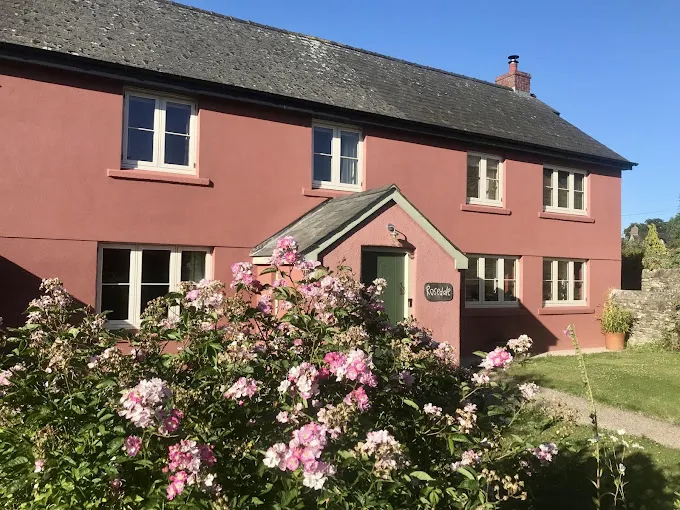
Local Weather Coating Installer Swansea Guide
A local weather coating installer Swansea property owners can rely on combines technical knowledge of render systems with an understanding of the region’s demanding coastal climate – this guide covers everything you need to know before commissioning work.
Table of Contents
- What Is a Local Weather Coating Installer?
- Why Swansea Properties Need Specialist Weather Coatings
- Choosing the Right Render System for Your Property
- How to Hire a Qualified Local Weather Coating Installer
- Frequently Asked Questions
- Comparing Weather Coating Approaches
- Coloured Rendering South Wales
- Practical Tips for Property Owners
- The Bottom Line
- Sources & Citations
Article Snapshot
A local weather coating installer Swansea specialist applies protective render systems – including silicone, monocouche, and cement finishes – to external walls, shielding properties from rain, salt air, and wind-driven moisture. Choosing the right installer and system determines how long that protection lasts and how little maintenance you will need.
Quick Stats: local weather coating installer swansea
- 28 years – the length of time Coloured Rendering South Wales has served as a trusted local weather coating installer in South Wales (Coloured Rendering South Wales, 2026)[1]
- 5.0 stars – the Google rating held by Coloured Rendering South Wales for local weather coating installer services (Coloured Rendering South Wales, 2026)[1]
What Is a Local Weather Coating Installer Swansea Property Owners Should Know?
A local weather coating installer Swansea residents and property managers seek out is a specialist contractor who applies protective render and coating systems to external walls, creating a durable barrier against the elements. The term covers a range of products and methods – from traditional cement renders to advanced silicone-based thin coat systems – all designed to prevent water ingress, resist cracking, and maintain a property’s appearance for years with minimal upkeep. Coloured Rendering South Wales has been delivering these services across the region since 1998, bringing over 25 years of hands-on experience to every project.
Weather coatings are not simply decorative finishes. Applied correctly to brick, block, stone, or concrete substrates, they form an integral part of a building’s waterproofing and thermal protection strategy. In South Wales – where annual rainfall regularly exceeds the UK average and coastal salt air accelerates surface degradation – the quality of a weather coating installation directly affects a property’s structural integrity and energy performance.
Modern render systems have evolved considerably from the sand-and-cement mixes that dominated construction until the late twentieth century. Today’s weather coatings incorporate polymer and silicone additives that improve flexibility, breathability, and self-cleaning capability. An experienced installer matches the product specification to the building’s substrate, exposure rating, and aesthetic requirements – a process that demands both technical knowledge and familiarity with local conditions.
Call Us
For property owners in Swansea, Cardiff, Newport, and across South Wales, UK Building Regulations Approved Documents set minimum performance standards for external wall finishes, making correct specification important from a compliance standpoint as well as a practical one.
Why Swansea Properties Need Specialist Weather Coatings
Swansea’s coastal position exposes properties to a combination of weather stresses that makes generic or poorly applied render coatings fail far sooner than they would in sheltered inland locations. The Gower Peninsula, Mumbles, and the Swansea Bay seafront receive driving rain from the south-west, salt-laden air from the Bristol Channel, and rapid temperature cycling that causes materials to expand and contract repeatedly. These factors act together to open micro-cracks in inflexible coatings, allowing water to penetrate the substrate beneath.
Salt crystallisation is a particular concern for coastal weather coating performance. When salt-laden moisture enters a porous render and then evaporates, the salt crystals it leaves behind expand within the material’s pore structure, generating mechanical pressure that eventually causes spalling and delamination. Silicone-modified render systems resist this process far more effectively than traditional cement finishes because their hydrophobic nature prevents moisture absorption in the first place.
The Impact of Welsh Rainfall on Render Longevity
South Wales receives significantly higher rainfall than the UK average for much of the year, with prevailing south-westerly winds ensuring that rain arrives at an angle rather than falling vertically. This wind-driven rain penetrates joints, edges, and any surface imperfection with much greater force than typical rainfall. A render system specified for an exposed coastal or semi-coastal location in South Wales must carry a high wind-driven rain classification to deliver the expected service life.
Silicone renders – such as the Baumit StarTop system installed by Baumit Approved applicators – are rated for precisely these conditions. Their water-repellent surface causes rain to bead and run off rather than soak in, while their breathable nature allows any vapour within the wall to escape outward. This balance between water exclusion and vapour permeability is especially important for older solid-wall properties common in Swansea’s Victorian and Edwardian terraces, where moisture management is important to occupant health and structural stability.
As Geoff, Owner at Coloured Rendering South Wales, puts it: “Finding a reliable local weather coating installer can transform your property’s protection against the harsh Welsh climate.” (Coloured Rendering South Wales, 2026)[1] That observation reflects the day-to-day reality faced by homeowners across the region whose failed render allows damp to penetrate walls, leading to internal condensation, mould growth, and costly structural remediation.
Choosing the Right Render System for Your Property
Selecting the correct render system is the single most important decision in any weather coating project, and it depends on four variables: the substrate material, the property’s exposure rating, the desired aesthetic, and the long-term maintenance budget. Each of the main render categories performs differently across these criteria, and an experienced local installer will assess all four before making a recommendation.
Thin Coat Silicone Render
Thin coat silicone render is the most technically advanced weather coating widely available in the UK residential and commercial market. Applied at a thickness of between 1.5 mm and 3 mm over a prepared basecoat, it provides exceptional flexibility – accommodating minor substrate movement without cracking – alongside high water repellency and self-cleaning properties. Colour is carried throughout the product, eliminating the need for periodic repainting and significantly reducing lifecycle maintenance costs.
For properties in exposed coastal areas such as Mumbles or the Gower, thin coat silicone render offers the best combination of weather resistance and longevity. When installed as part of an External Wall Insulation system by EWI Specialists South Wales, it simultaneously improves the building’s thermal performance and its external appearance – a dual benefit that makes it particularly attractive for older solid-wall properties with poor EPC ratings.
Monocouche Through Colour Render
Monocouche render – literally “single coat” in French – combines the basecoat and finish in one application, with colour distributed throughout the product’s full depth. This through-colouring means that minor surface abrasion does not reveal a different colour beneath, and no painting is required at any stage of the product’s life. Monocouche systems are available in a range of textures, from scraped finishes reminiscent of traditional lime work to smooth contemporary profiles, and they are compatible with both spray and hand application.
For new build developments and housing schemes across South Wales, monocouche render offers the best balance of aesthetic consistency, application speed, and long-term cost. When applied by spray – a method that Coloured Rendering South Wales uses extensively – application time per property is reduced by up to half compared with hand application, reducing labour costs and programme durations on multi-unit schemes. You can explore examples of completed monocouche projects in the Gallery – view examples of our high-quality spray rendering and repair work.
One Coat Cement Render
Traditional cement render modernised with polymer additives remains a cost-effective external coating option for properties where the owner intends to paint the finished surface or where budget constraints rule out silicone systems. One coat cement render applied by spray provides a consistent, durable substrate for masonry paint, and it suits both modern and period properties. Its main limitation compared to silicone finishes is the need for periodic repainting – every eight to twelve years – and its lower flexibility relative to polymer-modified systems, which leads to fine hairline cracking on substrates subject to movement. For advice on rendering repairs South Wales caused by failed cement coatings, expert assessment is always the recommended starting point.
How to Hire a Qualified Local Weather Coating Installer
Hiring the right local weather coating installer requires more than obtaining the lowest quotation. The quality of preparation, the accuracy of product specification, and the skill of application all affect whether a render system reaches its intended service life – and whether any manufacturer warranty remains valid after installation.
The first step is to verify that a prospective installer holds relevant trade accreditations. For EWI and premium silicone render systems, manufacturer approval schemes – such as Baumit’s Approved EWI Applicator programme – certify that installers have received product-specific training and are authorised to install systems with full manufacturer-backed warranties. City & Guilds Assured accreditation provides an additional independent quality benchmark. Contractors who cannot show these credentials should not be entrusted with premium render systems, regardless of their general experience level.
Questions to Ask Before Commissioning a Weather Coating Project
Before committing to a weather coating contractor in Swansea or across South Wales, the following points merit direct discussion. Ask for evidence of public liability and employer’s liability insurance. Request references from completed projects of a similar type and substrate. Confirm whether the installer uses spray or hand application and why they recommend one over the other for your property. Ask which specific products they intend to use, and check whether those products have the British Board of Agréement (BBA) certification relevant to your wall type and exposure zone.
You should also ask how the installer intends to prepare the substrate before applying the weather coating. Proper preparation – including removal of any hollow, cracked, or contaminated render, treatment of any biological growth, and application of appropriate primer – is as important as the quality of the finish coat. Skipping preparation steps to reduce cost invariably leads to premature adhesion failure and costly remedial work. Geoff at Coloured Rendering South Wales notes: “Our team has been serving as your trusted local weather coating installer since 1998, providing expert application of advanced weather-resistant render systems.” (Coloured Rendering South Wales, 2026)[1]
Finally, check that the quotation includes detailed information about what is and is not covered. A thorough quotation specifies the products to be used, the application method, the number of coats, the preparation steps, and the project timeline – leaving no ambiguity about what you are paying for. For a free consultation and detailed quotation, the Contact Coloured Rendering South Wales page provides direct access to the team.
Your Most Common Questions
What is the difference between a weather coating and standard external render?
Standard external render – traditionally a sand-and-cement mix – primarily provides a flat, paintable surface over masonry. It offers some weather resistance by virtue of its density, but it is not specifically engineered for water repellency or flexibility. A weather coating, by contrast, is a purpose-formulated render system containing additives – most commonly silicone or acrylic polymers – that actively repel water, resist cracking through improved flexibility, and carry through-colouring that eliminates the need for paint. Modern weather coatings also feature breathable formulations that allow water vapour from within the wall structure to escape, preventing moisture from becoming trapped behind the coating. In the South Wales climate, where driving rain and coastal salt air subject external walls to sustained moisture pressure, this distinction between a standard render finish and a purpose-designed weather coating system has significant practical consequences for both maintenance frequency and structural protection. A qualified local weather coating installer will specify the appropriate system based on your property’s substrate type, location, and exposure rating.
How long does a professionally applied weather coating last in South Wales?
Service life depends on the product type, the quality of installation, and the property’s exposure level, but properly applied premium weather coatings routinely deliver twenty to thirty years of effective protection. Thin coat silicone render systems installed as part of a certified EWI system – such as the Baumit StarTop product applied by an Approved EWI Applicator – carry manufacturer warranties of ten to twenty-five years, providing documented assurance of performance. Monocouche through-colour renders last twenty-plus years without requiring repainting, though surface cleaning is beneficial after ten to fifteen years in heavily polluted or high-algae environments. One coat cement renders have a shorter decorative lifespan because the masonry paint applied over them requires recoating every eight to twelve years, though the render substrate itself remains structurally sound for much longer. In all cases, the quality of substrate preparation before the weather coating is applied has the greatest single influence on whether the system reaches its rated service life. Cutting preparation corners – a common practice among lower-cost contractors – reduces effective service life by thirty to fifty per cent.
Can a weather coating be applied over existing damaged render?
In most cases, a weather coating should not be applied directly over existing render that is cracked, hollow, or delaminating. Applying a new coat over a compromised substrate simply traps the problem beneath the new finish, and the defect will migrate through to the surface within a relatively short time. The correct approach is to carry out a thorough condition survey – either by tapping the surface by hand or using specialist equipment – to identify and remove all hollow and failing sections before any new coating is applied. Small, stable hairline cracks are treated with appropriate fillers and sealants prior to re-coating, but large or actively moving cracks indicate a more fundamental structural issue that requires investigation before surface treatment proceeds. In situations where a significant proportion of the existing render is sound, selective removal and patch repair followed by a new overall coating provides a cost-effective outcome without the disruption and expense of full strip-back. Your local weather coating installer should provide a written assessment of the existing render’s condition and a clear recommendation before any work begins.
Is planning permission required to apply a weather coating in Swansea?
For most residential properties in Swansea and across South Wales, applying a new external render or weather coating falls within permitted development rights and does not require a formal planning application. However, there are important exceptions. Listed buildings require listed building consent for any works that alter the external appearance, including render application or removal. Properties within a designated conservation area require permission if the works would materially affect the character of the area – particularly where existing render is being removed to expose original masonry, or where the colour or texture of a proposed new coating would be significantly different from existing finishes in the street scene. Properties subject to Article 4 Directions – which withdraw some or all permitted development rights – must also check with the local planning authority before proceeding. Confirming permitted development status with Swansea Council or your local planning authority before commissioning weather coating work is advisable, particularly for properties in sensitive locations. Your installer should be able to advise you on this based on their knowledge of local planning requirements.
Comparing Weather Coating Approaches
Property owners in South Wales face a choice between three main weather coating approaches, each offering different combinations of upfront cost, maintenance requirement, and performance in exposed coastal conditions. The table below sets out the key differences to help you identify the most appropriate system for your property’s needs and budget.
| Approach | Application Method | Maintenance Requirement | Coastal Suitability | Typical Lifespan |
|---|---|---|---|---|
| Thin Coat Silicone Render[1] | Spray (primary) or hand | Very low – no painting required | Excellent – high water repellency and flexibility | 20-30+ years |
| Monocouche Through Colour Render | Spray or hand | Low – no painting required | Good – weather-resistant formulation | 20+ years |
| One Coat Cement Render | Spray or hand | Moderate – repainting every 8-12 years | Moderate – less flexible than polymer systems | 10-15 years decorative; substrate longer |
Coloured Rendering South Wales
Coloured Rendering South Wales is a Swansea-based specialist rendering contractor established in 1998, delivering over 28 years of continuous service as a trusted local weather coating installer across South Wales (Coloured Rendering South Wales, 2026)[1]. The company holds a 5.0 Google rating (Coloured Rendering South Wales, 2026)[1] – an independently verified measure of consistent workmanship and customer care that spans residential homeowners, property developers, landlords, and commercial clients throughout Swansea, Cardiff, Newport, Bridgend, and beyond.
As a Baumit Approved EWI Applicator with City & Guilds Assured accreditation, the team is certified to install Baumit StarTop premium silicone render and complete EWI systems with manufacturer-backed warranties of up to 25 years. The company’s spray rendering capability allows projects to be completed significantly faster than traditional hand application – a benefit that reduces disruption to occupants and enables property developers to maintain tight programme schedules across multi-unit schemes.
Services cover the full rendering lifecycle, from Coloured Rendering Swansea – durable and attractive rendering solutions for residential and commercial properties through to external wall insulation installations and targeted render repair work. The team’s deep familiarity with South Wales coastal and valley conditions means product specifications are tailored to actual site exposure rather than generic UK-wide defaults.
“We’re 100% happy and wouldn’t hesitate to recommend Jeff. His workmanship is excellent and we’re also very happy with the product he recommended to eradicate the penetrating damp and give our house a great new look and lease of life.” – Alistair Legge, Google Review
“With over 15 years in the building trade I have experienced several different plasterers all offering different styles and finishes. Geoff’s thin coat spray finish render would rival the best and I can’t recommend his team enough to someone thinking of using him.” – Keri Hopkins, Google Review
To discuss your property’s weather coating requirements and receive a free, no-obligation quotation, visit the Contact Coloured Rendering South Wales page or call the team directly on 07815 868070.
Practical Tips for Property Owners
Commissioning a weather coating project in South Wales involves several decisions beyond selecting a contractor. The following guidance helps you get the most from your investment and avoid common pitfalls.
Time your project appropriately. Weather coatings require certain temperature and humidity conditions during and after application to cure correctly. In South Wales, early to mid-spring and summer months offer the most consistent curing conditions, though experienced installers work through autumn with appropriate product selection. Avoid commissioning render work in periods of forecast frost, as low temperatures prevent proper curing and cause premature failure.
Address substrate issues before the coating goes on. Damp penetration, biological growth, and structural cracking all need to be resolved before a new weather coating is applied. A competent installer will identify these issues during their initial survey. If a contractor proposes to coat over obviously damp or biologically contaminated walls without treatment, seek a second opinion before proceeding.
Obtain detailed quotations in writing. A thorough quotation specifies the render system brand and product reference, the preparation steps to be carried out, the application method, the number of coats, the expected coverage rate, and the project timeline. This level of detail makes like-for-like comparison between contractors straightforward and provides a baseline for checking the work upon completion.
Consider whole-wall solutions where relevant. For properties with solid walls and poor thermal performance, combining a weather coating with external wall insulation delivers energy savings alongside weather protection. The EWI Specialists South Wales – expert external wall insulation installations for energy efficiency service combines both objectives in a single programme, potentially qualifying for available energy efficiency grant support.
Check manufacturer technical datasheets. Every reputable render product has a published technical datasheet specifying minimum and maximum application temperatures, substrate requirements, and curing times. Asking your installer to confirm they are working within these parameters costs nothing and provides reassurance that the product will perform as specified. For guidance on render and facade product selection, Baumit’s guide to facade renders and paints is a useful independent reference point.
The Bottom Line
A local weather coating installer Swansea property owners choose carefully will protect a building for two to three decades, reduce maintenance costs substantially, and improve both kerb appeal and market value. In the South Wales coastal climate – with its combination of high rainfall, salt air, and wind-driven moisture – the difference between a correctly specified, professionally applied weather coating and a generic or poorly installed alternative is measured in years of effective service life and hundreds of pounds in avoided remedial costs.
The key steps are straightforward: identify an installer with verifiable local experience and manufacturer accreditation, obtain detailed written quotations that specify exact products and preparation work, and choose the render system that best matches your property’s substrate, exposure rating, and long-term maintenance preferences. Coloured Rendering South Wales has been delivering those outcomes across Swansea and wider South Wales since 1998. Call 07815 868070 or email geoff@colouredrenderingsouthwales.com to arrange a free property assessment and quotation today.
Sources & Citations
- Expert Local Weather Coating Installer in South Wales. Coloured Rendering South Wales.
https://www.colouredrenderingsouthwales.com/local-weather-coating-installer/
