
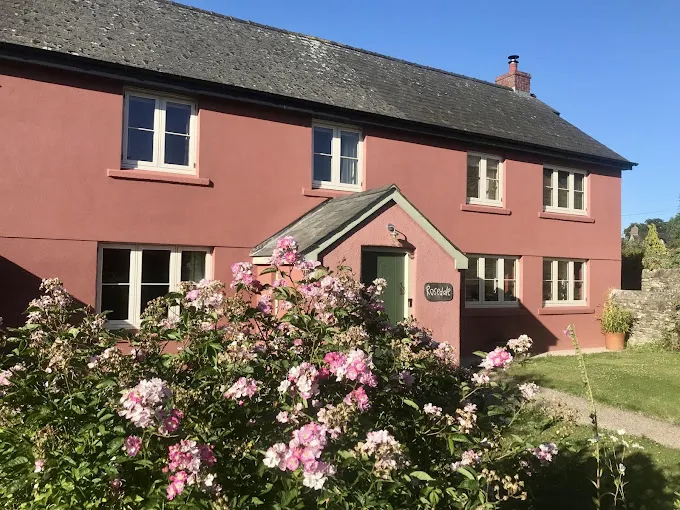
Spray Rendering: Benefits, Types & Application Guide

Spray rendering is a modern external wall finishing method that applies render evenly via machine – discover how it compares to hand application, which render types suit your property, and why South Wales homeowners are choosing it.
Table of Contents
- What Is Spray Rendering and How Does It Work?
- Types of Render Used in Spray Application
- Key Benefits of Spray Rendering for Properties
- Spray Rendering Considerations for South Wales Properties
- Frequently Asked Questions
- Spray Rendering vs Hand Application: A Comparison
- Coloured Rendering South Wales
- Practical Tips for Your Rendering Project
- The Bottom Line
- Sources & Citations
Your Most Common Questions
Spray rendering is a machine-assisted method of applying render to external walls, atomising the material through a nozzle for fast, consistent coverage. It suits silicone, monocouche, and cement render systems and is widely used across residential and commercial properties in South Wales for its speed, uniformity, and long-term weather protection.
Spray Rendering in Context
- Monocouche render applied by spray pump reaches a first-pass thickness of 10 mm, with a second pass of 8-9 mm and a scratched-back finish of 2-3 mm – totalling 15-17 mm overall (EWI Store, 2023)[1]
- Silicone renders require just 1 pass for application when sprayed, while monocouche renders require 2 passes in traditional application (EWI Store, 2023)[1]
- Spray rendering completes large wall areas in a fraction of the time required by manual methods (EWI Pro, 2023)[2]
What Is Spray Rendering and How Does It Work?
Spray rendering is a machine-driven wall finishing technique that pumps render material through a hose and ejects it through a nozzle in a fine, even spray. Coloured Rendering South Wales has used this approach for over 25 years, applying it to residential homes, commercial buildings, and new-build developments across the region. Where traditional hand application relies on a hawk and trowel to build up render coat by coat, the spray method atomises the material before it reaches the wall – producing consistent thickness and coverage from the first pass.
As Messrs Harris and Christmas at EWI Pro explain, “A render spray machine allows one to apply render incredibly quickly and spread it evenly. The render is atomised before being ejected from the nozzle.” (EWI Pro, 2023)[2] This atomisation is the defining characteristic of the process. The machine breaks the render down into fine particles, which bond tightly to the substrate and to one another as they land, producing a denser, more uniform coating than hand application achieves.
The equipment itself consists of a hopper that holds the mixed render, a pump that forces the material through a hose under pressure, and an interchangeable nozzle that controls the spray pattern. Operatives work methodically across the wall surface, maintaining a consistent distance from the substrate to ensure even build-up. Once the render is on the wall, it is then floated, scratched, or finished with a sponge, depending on the system being used and the texture required.
Call Us
Joel Cooke, a spray rendering expert and trainer, describes the machine’s impact directly: “with a machine we’re eliminating a lot of that… the Machine’s more consistent we could put more area on which means more money.” (YouTube, 2025)[3] The consistency Cooke refers to matters practically – uneven render thickness causes differential drying, which leads to cracking. By removing the variability inherent in hand application, machine spraying reduces that risk significantly. For property owners, this means fewer callbacks, longer-lasting results, and a smoother finished surface.
How the Spray Rendering Process Unfolds on Site
Before the machine is started, the wall must be clean, structurally sound, and correctly primed. Any loose or friable material is removed, gaps or cracks are filled, and a bonding agent or primer coat is applied where the substrate requires it. This preparation stage is as important as the application itself – no render system, however well sprayed, will perform on a poorly prepared wall.
With preparation complete, the operative mixes the render to the manufacturer’s specified consistency, loads the hopper, and begins spraying. For monocouche render systems, the first pass builds the base thickness – at around 10 mm – before a second pass brings the total depth up to 15-17 mm (EWI Store, 2023)[1]. For silicone render, a single pass is sufficient. The wall is then worked to the desired finish while the render remains workable. View examples of our high-quality spray rendering and repair work to see how the finished surface looks across different property types.
Types of Render Used in Spray Application
Three primary render systems are applied using spray equipment: thin coat silicone render, monocouche through-colour render, and one coat cement render – each with distinct performance characteristics and appropriate use cases.
Thin coat silicone render is the most widely specified modern render system. It is polymer-modified, making it highly flexible and resistant to cracking as buildings move through seasonal temperature changes. The silicone component makes the render water-repellent while remaining vapour-permeable – moisture within the wall escapes outward, preventing the damp build-up that sealed render systems cause. Self-cleaning properties, achieved through the silicone’s hydrophobic surface, help the render shed dirt with rainfall, keeping the facade looking fresh without regular maintenance. For coastal properties in areas like Mumbles or the Gower Peninsula, where salt-laden air accelerates the deterioration of conventional renders, silicone systems offer substantially better long-term performance.
Monocouche through-colour render is a cement-based system where the pigment runs through the full depth of the render, not just the surface. This means the colour does not chip or peel because there is no separate painted layer to fail. Monocouche is popular on housing developments and new builds, where a consistent, low-maintenance finish across multiple properties is a priority. When sprayed rather than hand-applied, the through-colour is distributed evenly, avoiding the patchy appearance that results from inconsistent trowel pressure. Coloured Rendering Swansea – durable and attractive rendering solutions for residential and commercial properties provides further detail on colour options available locally.
One coat cement render suits properties where a painted finish is intended or where budget is a primary consideration. It is a strong, proven system that benefits from spray application in the same way as other render types – faster coverage, more even thickness, and reduced labour time. Once cured, it accepts external masonry paint in any colour, giving property owners flexibility to change the appearance over time.
Choosing the Right Render System for Your Property
The correct render choice depends on the wall type, property location, the substrate condition, and the finish the owner wants to achieve. Solid brick or block walls without insulation suit any of the three systems described above. Properties with external wall insulation boards require a thin coat render system – silicone or acrylic – rather than a heavy cement-based coat. Exposed coastal locations call for silicone or specialist acrylic systems rather than standard cement render, which absorbs salt moisture and deteriorates more quickly. A qualified rendering contractor will assess these factors before recommending a system, rather than defaulting to a single product regardless of conditions.
Key Benefits of Spray Rendering for Properties
Spray rendering delivers measurable advantages over hand application in terms of speed, consistency, and long-term surface performance – benefits that translate directly into lower project costs and better results for property owners.
The speed advantage is the most immediately apparent. Because the machine applies render across large wall areas continuously, without the operative stopping to load a hawk or reposition a board, projects are completed in a fraction of the time required by manual methods (EWI Pro, 2023)[2]. For property owners, this means less time with scaffolding up, less disruption to daily life, and lower overall labour costs. For property developers managing multiple units simultaneously – as in the Cardiff new-build scenario where monocouche was applied across 20 homes – spray application compresses a multi-week programme into a fraction of that time.
Consistency is the second significant benefit. Hand application depends heavily on the individual operative’s skill, fatigue levels, and working conditions. Render applied late in the day by a tired plasterer is thinner or less well-bonded than the morning’s work. A spray machine removes much of that variability. The pressure and nozzle setting remain constant, and the operative’s main task is to maintain a steady distance from the wall and move at an even pace. The result is a render coat of more uniform thickness and density across the entire surface.
Surface Adhesion and Long-Term Durability
Sprayed render bonds more thoroughly to the substrate than hand-applied render, particularly on textured or uneven surfaces. The force of the spray drives the material into surface pores and irregularities, improving mechanical adhesion. This is particularly relevant for renovation projects where the existing wall has minor surface variation, or for substrates like insulation boards where good initial adhesion is important to the performance of the whole EWI system.
Long-term durability is also improved by the greater density and consistency of sprayed render. Fewer air pockets form during application, reducing the risk of hollow patches that allow water to collect behind the render face. When combined with a silicone or polymer-modified render system, the sprayed finish resists cracking, water ingress, and biological growth more effectively than older cement render applied by hand. For property owners in South Wales, where annual rainfall is among the highest in the UK and coastal properties face additional salt air exposure, these durability characteristics are practically significant.
The Property Care Association provides guidance on external wall performance standards that underpin good render specification practice, reinforcing the importance of matching both the application method and the render system to the property’s specific exposure conditions.
Spray Rendering Considerations for South Wales Properties
South Wales properties face a combination of weather conditions that make render specification more demanding than in many other parts of the UK – high annual rainfall, coastal salt air exposure, and driving westerly winds all accelerate render deterioration if the wrong system is chosen.
The South Wales coastline from Swansea Bay through to Pembrokeshire experiences some of the most aggressive weathering conditions for external renders in the UK. Salt-laden air, combined with frequent rainfall and wind-driven moisture, attacks conventional cement render at the surface and at the render-substrate interface. Properties in Mumbles, the Gower, and along the Swansea Bay coastline require render systems specifically formulated for high-exposure zones – silicone-based renders with hydrophobic additives – rather than standard sand and cement mixes.
Inland South Wales locations including Cardiff, Newport, Pontypridd, and Bridgend experience high rainfall without the salt exposure of coastal sites, but driving rain remains a primary weathering factor. Monocouche through-colour renders suit many of these inland locations well, providing solid weatherproofing with a clean, maintenance-free finish. For older solid-wall properties common in Victorian-era terraces throughout Swansea and Cardiff, external wall insulation combined with a thin coat silicone render finish addresses both thermal performance and weather protection simultaneously.
Spray Rendering on Welsh Vernacular Architecture
Many properties in South Wales feature rubble stone walls, rough-textured blockwork, or aged brick substrates that present challenges for hand-applied render – achieving even coverage on an irregular surface by trowel alone requires significant skill and time. Spray application handles these substrates more effectively, as the force of the spray deposits render into recesses and across projections simultaneously, building a more uniform base coat without the laborious filling required in hand work.
Welsh weather also imposes practical constraints on when render is applied. Render must not be applied in freezing conditions, during rain, or in direct strong sunlight. South Wales winters are mild by UK standards, extending the practical rendering season, but the frequency of rainfall means operatives must work with good weather windows. Spray application’s speed advantage is particularly valuable in this context – a job that takes a hand plasterer four days is completed in one or two, reducing the exposure to adverse weather mid-project. Rendering Repairs South Wales – professional repairs and maintenance for external wall renders addresses what happens when weather-related render damage does occur and when repair rather than full replacement is the appropriate response.
Your Most Common Questions
How long does spray rendering take compared to hand application?
Spray rendering completes large wall areas in a fraction of the time required by manual methods (EWI Pro, 2023)[2]. For a typical semi-detached house, hand application of a two-coat render system takes three to five days. With spray equipment, the same property is completed in one to two days. The time saving comes from the continuous, pressurised application – the machine deposits render across the wall at a rate that a trowel operative cannot match. This speed advantage has a direct effect on project costs, because labour is the largest single expense in any rendering contract. Reduced time on site also means less disruption for property occupants, less time with scaffolding erected, and a smaller window of exposure to adverse weather mid-project. For developers working across multiple properties simultaneously, as in the housing development scenario common across Cardiff and Newport, spray application transforms a project programme from weeks to days.
Is spray rendering suitable for all property types?
Spray rendering is suitable for the vast majority of residential and commercial property types, including new builds, brick and block construction, properties with external wall insulation boards, and older solid-wall buildings. The key variable is not the property type but the substrate condition and the render system selected. Walls must be structurally sound, free of friable material, and correctly primed before any render – sprayed or hand-applied – will perform properly. Properties with highly decorative architectural features, complex geometry, or very small areas are better served by hand application, where greater precision around details is easier to achieve. For standard wall elevations – which represent the majority of work on most properties – spray application is consistently more efficient and produces comparable or superior results to hand application. Your rendering contractor should inspect the property before committing to a method and system, rather than applying a standard approach regardless of the specific conditions.
What is the difference between silicone render and monocouche render?
Silicone render and monocouche render are both through-coloured systems that do not require painting after application, but they differ significantly in composition, thickness, and performance characteristics. Silicone render is a thin coat system – applied at 1.5-3 mm – based on a polymer-modified binder with silicone additives. It is highly flexible, crack-resistant, vapour-permeable, and self-cleaning, making it the preferred choice for modern EWI systems and exposed coastal locations. Monocouche render is a cement-based system applied at greater thickness – 15-17 mm in total – that provides a more traditional appearance and is compatible with a wider range of substrates including bare brick and block without an insulation layer. Monocouche offers strong weather resistance and a durable, maintenance-free finish, but it is less flexible than silicone render and does not suit properties where significant building movement is expected. The right choice depends on your wall type, location, and the finish you want to achieve – a specialist can advise which system best matches your property’s requirements.
How do I maintain a spray-rendered external wall?
Modern render systems applied by spray – particularly silicone and polymer-modified renders – are designed to be low-maintenance. Silicone render’s hydrophobic surface sheds water and the dirt it carries, meaning the wall stays cleaner with normal rainfall than a painted cement render would. Routine maintenance is limited to an annual visual inspection for any signs of cracking, hollow patches, or biological growth, and an occasional gentle wash with a low-pressure hose if algae or surface staining appears. Avoid high-pressure jet washing, which damages the render surface and forces water into the substrate. If cracks or hollow areas appear, have them repaired promptly by a specialist – small repairs addressed early prevent water ingress that leads to much larger and more costly failures. Through-colour render systems, whether silicone or monocouche, do not require repainting, which is the most significant ongoing maintenance saving compared to cement render with a painted finish. With appropriate specification and correct application, a quality spray-rendered wall performs for 20 to 30 years before any significant remedial work is needed.
Spray Rendering vs Hand Application: A Comparison
Choosing between spray and hand application affects project timescale, cost, surface consistency, and suitability for different render systems. The table below compares the two approaches across the criteria most relevant to property owners and developers.
| Factor | Spray Rendering | Hand Application | Notes |
|---|---|---|---|
| Application speed | Significantly faster – large elevations completed in a fraction of manual time (EWI Pro, 2023)[2] | Slower – labour-intensive trowel work | Speed advantage most pronounced on large, uninterrupted wall areas |
| Surface consistency | High – machine delivers uniform thickness and density | Variable – depends on operative skill and fatigue | Spray reduces risk of differential drying and cracking |
| Substrate adhesion | Strong – pressurised spray drives material into surface pores | Good on smooth substrates; variable on rough or uneven walls | Spray performs better on textured or irregular substrates |
| Suitable render systems | Silicone, monocouche, acrylic, one coat cement | All systems; required for intricate detail work | Hand application preferred around complex architectural features |
| Cost | Lower overall due to reduced labour time | Higher for large areas; competitive for small or detailed work | Equipment cost offset by labour savings on larger projects |
| Finish quality | Consistent, professional finish across large areas | Excellent in skilled hands; variable across a team | Both methods require skilled operative for final float and finish |
Coloured Rendering South Wales
Coloured Rendering South Wales has delivered plastering and spray rendering services across South Wales since 1998 – over 25 years of continuous operation from our base in Swansea. We specialise in external spray rendering for residential and commercial properties, with expertise across thin coat silicone render, monocouche through-colour render, one coat cement render, and complete external wall insulation systems. As a Baumit Approved EWI Applicator with City & Guilds Assured accreditation, we install Baumit StarTop premium silicone render and full EWI systems backed by manufacturer warranties of up to 25 years.
Our understanding of South Wales weather conditions – coastal salt air, high rainfall, and wind-driven moisture – means we specify render systems matched to your property’s actual exposure rather than applying a generic solution. Every project begins with a free property assessment, and we provide clear, detailed quotations outlining the materials, method, and timescale before any work begins.
“With over 15 years in the building trade I have experienced several different plasterers all offering different styles and finishes. Geoff’s thin coat spray finish render would rival the best and I can’t recommend his team enough to someone thinking of using him. His professionalism and work ethic has stood out from many of the others we have worked with.” – Keri Hopkins, Google Review
“We’re 100% happy and wouldn’t hesitate to recommend Jeff. His workmanship is excellent and we’re also very happy with the product he recommended to eradicate the penetrating damp and give our house a great new look and lease of life.” – Alistair Legge, Google Review
Our services cover spray rendering, rendering repairs, internal plastering, and EWI installation across Swansea, Cardiff, Newport, Bridgend, and the wider South Wales area. Visit our EWI Specialists South Wales – expert external wall insulation installations for energy efficiency page for full details on insulation-backed render systems, or Contact Coloured Rendering South Wales for a free quote or consultation on your rendering project. You can also explore our full service range at the Home page of Coloured Rendering South Wales – expert spray rendering and external wall insulation services across South Wales.
Practical Tips for Your Rendering Project
Getting the most from a spray rendering project comes down to preparation, material selection, timing, and working with a contractor who understands the specific conditions your property faces. The following guidance applies whether you are a homeowner planning a single property refresh or a developer managing a multi-unit programme.
Start with a thorough substrate assessment. No render system performs well on a failing substrate. Before agreeing to any render specification, have the existing wall assessed for structural soundness, moisture content, and surface preparation requirements. Hollow areas in existing render, active damp, or loose masonry must be addressed before new render is applied – not covered over.
Match the render system to your exposure zone. Properties within a kilometre of the South Wales coastline – Swansea Bay, Mumbles, the Gower, Barry, and Penarth among others – need hydrophobic render systems, not standard cement render. The UK Building Regulations – Approved Documents reference exposure classifications for external render that provide a useful starting framework, though a specialist contractor will apply local knowledge to the specification.
Plan project timing around the weather. Render must not be applied below 5°C, during rainfall, or in direct hot sun that will cause the surface to dry too quickly. In South Wales, late spring through early autumn provides the most reliable conditions, though mild winters extend the season. Build weather contingency into your project programme.
Do not skip the primer coat. On absorbent or variable substrates, a primer or bonding coat applied before the render improves adhesion and reduces the risk of the render drying unevenly or pulling away from the wall. This applies to both hand and spray application but is particularly important when a thin coat silicone system is going onto a rough blockwork or stone surface.
Inspect completed work before scaffolding comes down. Once the scaffold is removed, close-up inspection of the finished render becomes difficult. Walk the wall with your contractor before final sign-off, checking for any areas of uneven texture, colour variation, or imperfect detailing around windows and soffits. Addressing these whilst access is still in place is far more cost-effective than returning later.
The Bottom Line
Spray rendering is a proven, efficient method of applying external render that delivers consistent coverage, stronger substrate adhesion, and significantly faster project completion than hand application. For South Wales property owners, the combination of spray application and correctly specified render systems – particularly silicone and monocouche renders – provides durable, low-maintenance protection against the region’s demanding coastal and high-rainfall conditions.
Render specification should always be matched to the property’s exposure zone, substrate type, and long-term performance requirements. Getting that specification right from the outset is more cost-effective than addressing premature render failure later.
To discuss your property’s rendering requirements and receive a free assessment, contact Coloured Rendering South Wales directly on 07815 868070, email geoff@colouredrenderingsouthwales.com, or use the contact form on our website. We cover Swansea, Cardiff, Newport, Bridgend, and the wider South Wales region.
Sources & Citations
- Why Use a Render Spray Machine? EWI Store, 2023.
https://ewistore.co.uk/why-use-a-render-spray-machine/ - Case Study – Spray Rendering. EWI Pro, 2023.
https://ewipro.com/2023/08/09/case-study-spray-rendering/ - Lessons in Spray Rendering with Joel Cooke (Part 1). YouTube, 2025.
https://www.youtube.com/watch?v=vfFFjBZ6L08
