
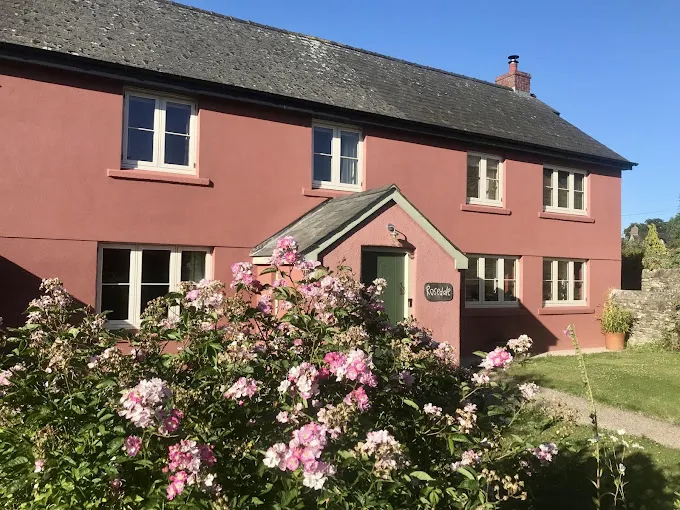
External Wall Insulation Wales: Energy Savings & Installation

External wall insulation Wales: slash energy bills by up to £930 yearly. Explore costs, savings, grants, and spray rendering installation across South Wales.
Table of Contents
- What Is External Wall Insulation Wales?
- Benefits for Welsh Homes
- Costs and Funding in Wales
- Professional Installation Process
- Important Questions About External Wall Insulation Wales
- Comparison: EWI vs Other Insulation Methods
- Coloured Rendering South Wales: Your EWI Partner
- Practical Tips for Your EWI Project
- Final Thoughts on External Wall Insulation Wales
Quick Summary
External wall insulation Wales is a thermal upgrade system that wraps solid-walled homes in insulation, topped with a weather-resistant render. It slashes heat loss, cuts fuel bills by up to £930 per year (Energy Saving Trust, 2025)[1], and reduces carbon emissions. Ideal for older Welsh properties built before the 1920s.
By the Numbers
- Up to £930 yearly energy bill savings for a detached home (Energy Saving Trust, 2025)[1]
- Around 1,900 kg of CO₂ saved per year per home (Energy Saving Trust, 2025)[1]
- 18% of Welsh homes have uninsulated solid walls (Welsh Government, 2019)[2]
- Average home Energy Performance rating in Wales: SAP 63, band D (Welsh Government, 2019)[2]
What Is External Wall Insulation Wales?
External wall insulation Wales is a whole-house retrofit system designed to improve thermal efficiency in buildings with solid walls. It involves fixing rigid insulation boards directly to the outer face of the property, then applying a reinforced basecoat and a decorative, weatherproof render finish. Unlike cavity wall insulation, which fills the gap between two brick leaves, external wall insulation is the only effective solution for the millions of solid‑walled homes across Wales built before cavity construction became standard. In Wales, 18 per cent of dwellings still have uninsulated solid walls (Welsh Government, 2019)[2], contributing to unnecessarily high heating demand.
The system works by adding a continuous thermal barrier around the building envelope. This stops heat escaping through the walls, which account for up to 35 per cent of total heat loss in an uninsulated home. The insulation layer is expanded polystyrene (EPS), mineral wool, or phenolic foam, chosen depending on the substrate and performance requirements. Once the boards are mechanically and adhesively fixed, a mesh‑reinforced basecoat is applied, followed by a finish coat of silicone or acrylic render installed by spray rendering specialists. This finish coat both protects the insulation and gives the property a fresh, modern appearance. In coastal areas of Swansea, Bridgend, and the South Wales coast, the render must be vapour‑permeable yet water‑repellent, which is why modern silicone‑based renders are specified for external insulation in Wales.
Benefits of External Wall Insulation for Welsh Homes
Installing external wall insulation delivers immediate and long-term advantages for Welsh homeowners, from dramatic energy savings to improved comfort and property value. The primary benefit is reduced heat loss, which translates into lower fuel bills. The Energy Saving Trust estimates that solid wall insulation in a gas‑heated detached home saves up to £930 each year on energy costs (Energy Saving Trust, 2025)[1]. Even smaller semi‑detached or terraced properties see significant reductions, often cutting annual bills by several hundred pounds. With 14 per cent of Welsh households living in fuel poverty as of 2021 (Welsh Government, 2023)[3], EWI offers a practical route out of choosing between heating and other essentials.
Call Us
The environmental gains are equally compelling. The same solid wall insulation package prevents around 1,900 kilograms of carbon dioxide emissions every year (Energy Saving Trust, 2025)[1]. For Wales, where housing stock is among the oldest and least efficient in the UK, widespread take‑up of external insulation would be a major contribution towards net‑zero targets. Beyond carbon, the improved thermal envelope eliminates cold bridging and draughts, making rooms feel warmer and more consistent in temperature. Homeowners also report noticeably quieter interiors as the insulation dampens external noise, a real bonus on busy roads or in urban areas of Cardiff and Newport.
Protection from the Welsh climate is another under‑appreciated advantage. The render finish acts as a shield against wind‑driven rain, which is particularly aggressive in exposed coastal and hillside locations. When correctly installed by a certified installer, a modern silicone render system is water‑repellent yet breathable, allowing moisture inside the wall structure to escape. This reduces the risk of interstitial condensation and damp. A well‑maintained rendered facade adds kerb appeal and market value. Estate agents note that houses with fresh, coloured renders command higher offers because buyers perceive lower future maintenance. In South Wales, where terraced streets of Victorian and Edwardian homes are abundant, a uniform insulated render unifies a property’s look while cutting its running costs.
Costs and Funding for External Wall Insulation in Wales
The cost of external wall insulation in Wales varies with property size, the thickness of insulation required, and the chosen render finish. As a national benchmark, the Energy Saving Trust puts the cost for a semi‑detached home in the UK at around £13,000 (Energy Saving Trust, 2025)[1]. Detached houses cost proportionately more, while a mid‑terrace costs closer to £8,000–£10,000 depending on access and ground conditions. Additional costs arise if existing render needs removal, if scaffolding is complex, or if architectural features such as stone sills and string courses require careful detailing. Despite the upfront investment, EWI is a capital improvement that pays back through lower heating bills and increased asset value over time.
Funding schemes in Wales reduce the net cost. The UK Government’s Energy Company Obligation (ECO4) scheme supports insulation measures for low‑income and fuel‑poor households, frequently covering the full cost of external wall insulation. The Welsh Government also operates the Warm Homes Nest scheme, which offers free energy efficiency improvements to eligible residents, including solid‑wall insulation. Eligibility criteria consider household income, receipt of certain benefits, and the property’s Energy Performance Certificate rating. Even for those who do not qualify for grants, some local authorities and energy suppliers offer interest‑free loans or match‑funded programmes. Checking with a qualified installer is the best path to understanding current funding options. Many, including Coloured Rendering South Wales, advise on current funding options and help with applications as part of their consultation process. For a tailored quotation covering your home’s exact requirements, contact the team for a free, no‑obligation survey.
Professional Installation Process for External Wall Insulation
A professional external wall insulation installation follows a structured sequence to ensure thermal performance, weathertightness, and a flawless finish. Work begins with a detailed survey, during which the installer assesses the existing wall condition, checks for damp, and measures the area. Any necessary repairs—such as repointing or removal of defective render—are completed before insulation starts. The building is then scaffolded to provide safe access for the spray rendering team. Insulation boards are fixed to the wall using a combination of adhesive and mechanical fixings; the type and depth of insulation is specified to meet or exceed current building regulations, such as those detailed in the UK Building Regulations Approved Documents which set minimum U‑values for thermal elements.
Once the boards are secured, a basecoat is trowel‑applied and a reinforcing mesh is embedded while the coat is still wet. This creates a tough, crack‑resistant substrate. After the basecoat has cured, a primer is applied, and the final decorative render is sprayed on using specialist equipment. Spray application, as practised by Coloured Rendering South Wales, delivers a consistent thickness and texture much faster than hand trowelling, often halving the time a house is under scaffolding. The render finishes smooth, scraped, or textured to the homeowner’s preference, and is coloured throughout to eliminate the need for future painting. All openings—windows, doors, eaves—receive purpose‑made trims and sealants, and the system is detailed to prevent water ingress. A final inspection ensures that insulation is continuous and that any junctions with roofs, drains, or adjoining properties are correctly weathered. This full process transforms a cold, draughty solid‑walled house into a thermally efficient, low‑maintenance home.
Important Questions About External Wall Insulation Wales
How much does external wall insulation cost in Wales?
External wall insulation for a semi‑detached home in Wales costs around £13,000, though the final figure depends on the property size and render choice. Grants such as ECO4 or the Welsh Government’s Nest scheme reduce outlay, and in some cases fully fund the work for eligible households.
Can external wall insulation really reduce my energy bills?
External wall insulation cuts annual heating bills by up to £930 for a detached home by preventing heat loss through solid walls, according to the Energy Saving Trust (2025). Solid walls account for about 35 per cent of heat escape in an uninsulated property.
Is external wall insulation suitable for all Welsh properties?
External wall insulation is ideal for solid‑walled properties built before the 1920s, which make up around 18 per cent of Welsh homes. It is not suitable for cavity‑walled houses that are filled instead, and listed buildings or conservation-area properties require planning consent.
How long does external wall insulation take to install on a Welsh house?
External wall insulation installation on a semi‑detached home takes one to two weeks, depending on weather and access. Spray rendering methods, such as those used by Coloured Rendering South Wales, speed up application and reduce disruption compared to traditional hand application.
Comparison: EWI vs Other Insulation Methods
When upgrading a home’s thermal performance, external wall insulation is just one of several options available, each suited to different building types and budgets. The choice comes down to the wall construction of the property and the homeowner’s appetite for disruption. The table below compares external wall insulation with internal wall insulation and cavity wall insulation, the two most common alternatives.
| Method | Best for | Thermal improvement | Disruption to occupants | Approximate cost (semi‑detached) |
|---|---|---|---|---|
| External wall insulation (EWI) | Solid‑walled homes, poor‑condition exteriors | High; continuous insulation layer eliminates cold bridging | Low‑moderate; external work only, scaffolding needed | £13,000 (Energy Saving Trust, 2025)[1] |
| Internal wall insulation | Solid walls where external appearance must be preserved | Moderate‑high, but room space is lost and cold bridging persists | High; rooms become unusable during installation | Lower than EWI, but room‑by‑room approach adds complexity |
| Cavity wall insulation | Homes with unfilled cavity walls (post‑1920s) | Moderate; limited by cavity width and fill quality | Low; small holes drilled from outside | Far lower, often under £1,000, but only relevant to cavity‑walled properties |
For the nearly one in five Welsh properties with solid walls, external wall insulation remains the most comprehensive solution, simultaneously insulating, weatherproofing, and enhancing the property’s appearance.
Coloured Rendering South Wales: Your EWI Partner
Coloured Rendering South Wales has been delivering expert spray rendering and external wall insulation across Swansea, Cardiff, Newport, and the South Wales valleys since 1998. As a Baumit Approved EWI Applicator, the company installs full external wall insulation systems that meet the highest standards and come with manufacturer‑backed warranties. The team’s deep understanding of Welsh weather—from coastal salt spray in Mumbles to driving rain on the Valleys hillsides—means they specify render systems that stay looking good and performing for decades. Their spray application equipment cuts project time, so you spend fewer weeks under scaffolding while still getting a flawless, consistent finish.
Don’t just take our word for it. “We had our house rendered by Geoff and he did a fantastic job. He was also as clean as can possibly be and he tidied up after himself. Also, we used him after this to skim our new extension and the plaster was nice and smooth. Would definitely use him again.” — Paula Hill. Similarly, “Geoff helped us with some external rendering on our garden walls after we were left in a mess by some cowboy builders. Geoff was extremely helpful throughout the whole process, advising us on how we could best prep the walls and protect our neighbours property.” — Laura Tatlock. These real‑world experiences echo the company’s perfect 5.0 Google rating, built over 25 years of reliable workmanship.
For homeowners ready to upgrade their property’s energy performance, Coloured Rendering South Wales offers free, no‑obligation surveys and detailed quotations. Call Geoff on 07815 868070 or request a callback via the contact page to arrange your assessment and start the journey towards a warmer, lower‑bills home.
Practical Tips for Your External Wall Insulation Project
Planning an external wall insulation project in Wales requires a few practical steps to ensure the work runs smoothly and delivers the expected savings. First, confirm that your walls are solid (nine‑inch brickwork with no visible cavity) rather than cavity construction, because a cavity‑wall property is filled far more cheaply. If you are unsure, a professional surveyor or an experienced renderer drills a small test hole and advises accordingly. Next, check your eligibility for funding and apply early. Schemes such as ECO4 and Nest have application windows and limited annual budgets, so submitting your details as soon as possible improves your chances of receiving help.
When selecting an installer, look for manufacturer accreditations like Baumit or SWIGA, and check their track record with modern render and insulation systems. Accreditation indicates that the installer has been trained and audited, which is important for maintaining product warranties. Ask to see photographs of previous EWI projects in your area, and always obtain a written quotation that specifies the insulation specification, render type, and aftercare. Engage with your neighbours if the scaffolding crosses a boundary, as a friendly conversation prevents disputes. Finally, timetable the work for a period when severe frost is less likely, because prolonged cold slows curing times for renders. A well‑coordinated EWI installation, delivered by a trusted South Wales rendering firm, is a straightforward process that leaves your property warmer, quieter, and more valuable.
Final Thoughts on External Wall Insulation Wales
External wall insulation Wales offers one of the most effective ways to cut energy bills, reduce carbon footprint, and modernise the appearance of older solid‑walled homes. From the £930 annual saving to the tangible comfort of a draught‑free living space, the benefits stack up quickly. With targeted government grants and low‑interest schemes, the initial outlay becomes far more manageable than many homeowners fear. If you own a property in Swansea, Cardiff, or anywhere across South Wales, now is the time to explore how external wall insulation transforms your home. Contact Coloured Rendering South Wales today on 07815 868070 or use the online form to book your free, no‑obligation survey and take the first step towards a warmer, energy‑efficient future.
Further Reading
- Solid Wall Insulation. Energy Saving Trust.
https://energysavingtrust.org.uk/advice/solid-wall-insulation/ - Welsh Housing Conditions Survey 2017-18: Energy Efficiency of Homes. Welsh Government.
https://www.gov.wales/welsh-housing-conditions-survey-2017-18-energy-efficiency-homes - Fuel Poverty Estimates Wales 2021. Welsh Government.
https://www.gov.wales/fuel-poverty-estimates-wales-2021
