
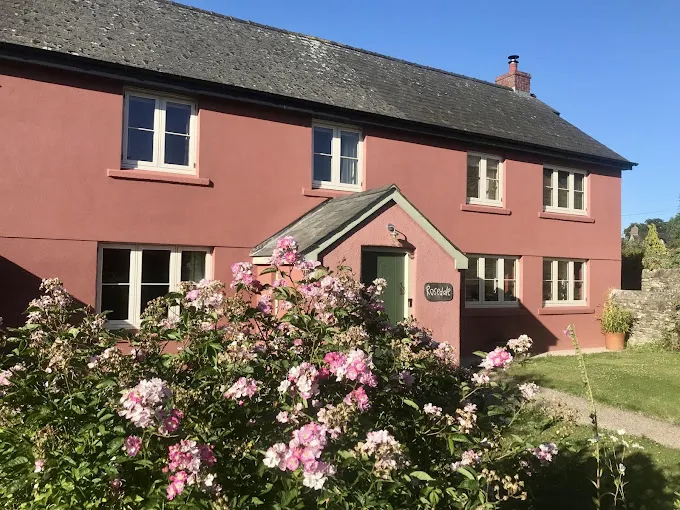
K Rend K1 Spray: Complete Guide to This Render

K rend k1 spray is a through-coloured, weather-resistant render system designed for machine and hand application on both new build and refurbishment projects across the UK.
Table of Contents
- What Is K Rend K1 Spray?
- Application and Performance Specifications
- K1 Spray+ and the Latest Developments
- K Rend K1 Spray in South Wales Conditions
- Frequently Asked Questions
- Comparison: K1 Spray Approaches
- How Coloured Rendering South Wales Can Help
- Practical Tips for K Rend K1 Spray Projects
- The Bottom Line
- Sources & Citations
Article Snapshot
K rend k1 spray is a cement-based, through-coloured render formulated for spray machine application, delivering a fine-texture scraped finish on masonry substrates. It suits new build and refurbishment work, resists weathering, and requires no painting once applied, making it a practical choice for South Wales properties.
K Rend K1 Spray in Context
- Application rate (one coat/two passes on 7 Newton block): 26-32 kg per square metre (Insulation Point, 2025)[1]
- Nominal thickness (one coat/two passes on 7 Newton block): 16-20 mm (Insulation Point, 2025)[1]
- Coverage rate per mm thickness: 1.6 kg per sq m per mm (MKM Building Supplies, 2025)[2]
- Standard colours available for K1 Spray+: 20 colours (K Rend, 2025)[3]
What Is K Rend K1 Spray?
K rend k1 spray is a factory-produced, through-coloured monocouche render designed primarily for application via spray machine, though it is equally suitable for hand application where project conditions require it. The product is manufactured by K Rend, a brand of Kilwaughter Minerals, and is engineered to provide a fine-textured, scraped finish on masonry and blockwork substrates without requiring a separate paint coat.
Coloured Rendering South Wales has worked with spray render systems including K Rend products throughout South Wales, applying these materials to properties from Swansea to Newport where weather resistance and low maintenance are priorities.
The render belongs to the monocouche family, meaning the colour runs throughout the entire coat rather than being applied as a surface paint. This characteristic is central to its appeal for property owners seeking a durable, maintenance-free external finish. Because the pigment is integral to the mix, surface scuffs and minor weathering do not expose a contrasting underlayer, and the finish retains its appearance over many years without repainting.
Call Us
K1 spray render is compatible with a range of common UK masonry substrates, including concrete block, brick, and EWI base coat surfaces. This broad substrate compatibility makes it relevant for both new-build housing developments and older properties undergoing renovation, including the solid-wall Victorian and Edwardian terraced houses that are common throughout South Wales towns. Its spray machine suitability means experienced applicators achieve consistent coverage and thickness across large wall areas more efficiently than with hand-only methods, which is relevant for developers managing multiple plots or landlords upgrading several properties simultaneously.
As a product that sits within the K Rend range, it benefits from the manufacturer’s established technical support network and detailed application guidance. Specifiers working on projects governed by UK Building Regulations – Approved Documents can reference published technical data sheets when demonstrating compliance with external envelope performance requirements.
Application and Performance Specifications
Understanding the application rates and technical specifications of K rend k1 spray is essential for accurate material estimation and achieving a compliant, long-lasting finish.
When applied in a single coat over two spray passes directly onto 7 Newton dense concrete block, the application rate sits between 26 and 32 kg per square metre, producing a nominal finished thickness of 16 to 20 mm (Insulation Point, 2025)[1]. Meeting the minimum finished thickness of 16 mm when applied directly onto blockwork is important because thinner applications risk ghosting, where the block joint pattern shows through the render surface once the material dries (Next Day Insulations, 2025)[4].
Where a prepared base coat has already been applied – as is standard practice when rendering over EWI insulation boards or when a more controlled substrate surface is required – the application rate reduces significantly. Over a base coat, the material is applied at approximately 18 kg per square metre at a nominal thickness of 10 mm (Insulation Point, 2025)[1]. The coverage rate of 1.6 kg per sq m per mm of thickness (MKM Building Supplies, 2025)[2] gives specifiers a reliable figure for project calculations regardless of the target thickness on a particular job.
The thermal conductivity of the original K1 spray render is recorded at 0.39 W/mK at P=50% (Insulation Point, 2025)[1]. Render systems are not the primary means of improving a building’s thermal performance, but this figure is relevant for full-fabric calculations on projects where external wall U-values are being assessed under Part L of the Building Regulations.
Spray machine application is the primary intended method, and K Rend’s technical guidance addresses machine settings and nozzle configurations in detail. The material remains workable for hand application on smaller areas or where machine access is impractical. Once sprayed, the render is closed, scratched, and scraped to achieve the characteristic fine texture. The scraping window – the period during which the material can be worked – directly affects the finish quality, and experienced applicators develop a clear understanding of how temperature and humidity on a South Wales project site influence this working time.
Substrate Preparation and Bonding
Proper substrate preparation is one of the most influential factors in the long-term performance of any spray render system, including K rend k1 spray. All substrates must be structurally sound, clean, and free from contamination before render is applied. On dense smooth blocks, a bonding agent or spatterdash coat is recommended to improve adhesion and reduce the risk of delamination. On EWI systems, the render is applied over the reinforced base coat after it has fully cured, waiting at least 24 hours depending on site conditions. Ensuring the base coat surface is lightly abraded before applying the K1 finish coat helps mechanical keying and contributes to a more consistent final appearance.
K1 Spray+ and the Latest Developments
The K1 Spray+ represents the most recent evolution of the K rend k1 spray product range, introduced as a reformulated version that addresses applicator feedback on workability and efficiency.
Caroline Rowley, Business Development Director at Kilwaughter Minerals, described the context for the new product: “We are thrilled to introduce K1 Spray+, which, following the launch of K Rend’s Eco Range earlier this year, reflects the brand’s commitment to continuous innovation and effectively meeting the demands of the market.”[5]
The development was backed by a £200,000 investment in product research and formulation (Kilwaughter Minerals, 2025)[5], signalling a substantial commitment to improving on the original specification rather than making incremental tweaks. The result is a product that the K Rend Technical Team describes directly: “K1 Spray+ is a weather resistant through coloured render. K1 Spray+ offers an attractive, fine texture finish.”[3]
From a practical application standpoint, the K Rend Technical Team highlights a key usability improvement: “The new K1 Spray+ delivers effortless usability – light to rule and robust in scraping with a versatile scrape window.”[3] The extended and more forgiving scrape window is a direct response to the challenges applicators face when working on larger facades or in variable weather conditions – circumstances that are routine in South Wales given the region’s changeable climate.
K1 Spray+ is available in 20 standard colours (K Rend, 2025)[3], giving specifiers and property owners a practical palette covering neutral creams and greys as well as stronger tones. The through-colour formulation means the selected shade is consistent from surface to core, which is important for coastal and exposed locations where surface erosion is more pronounced than in sheltered inland settings.
The thermal conductivity of K1 Spray+ is recorded at 0.44 W/mK at P=50% (MKM Building Supplies, 2025)[2], marginally higher than the original K1 Spray’s 0.39 W/mK. Specifiers should account for this difference when conducting whole-wall U-value calculations on thermally sensitive projects.
Application Flexibility of K1 Spray+
One of the defining features of K1 Spray+ is its deliberate design for both machine and manual application. The K Rend Application Experts note: “K1 Spray+ is designed for render spray machines as well as hand application. It is suitable for both new build and refurbishment projects.”[3] This dual-mode suitability makes the product accessible to contractors across a range of project scales, from a single house renovation to a multi-plot housing development.
K Rend K1 Spray in South Wales Conditions
South Wales presents a demanding environment for external render systems, and selecting the correct specification of K rend k1 spray is particularly important for properties in this region.
The Welsh climate is characterised by high annual rainfall, frequent wind-driven rain from the west and south-west, and – for coastal properties in areas such as Mumbles, the Gower Peninsula, and Barry – additional exposure to salt-laden air. These conditions accelerate the degradation of renders that lack appropriate water resistance, and they highlight why through-coloured, factory-mixed products like K1 spray have become the preferred choice for many South Wales rendering contractors over hand-mixed site mortars.
The product’s weather-resistant formulation addresses the primary failure modes seen in older sand-and-cement renders on South Wales properties: water ingress through micro-cracks, staining from algae and lichen growth in damp conditions, and paint failure on rendered surfaces that require regular recoating. By using a render that is inherently coloured and waterproof, property owners remove the maintenance cycle associated with painted finishes entirely.
For properties in exposed coastal locations, the minimum finished thickness guidance is relevant. Achieving a nominal 16 mm or more when applying K1 spray directly onto blockwork provides not only the visual uniformity needed to avoid ghosting but also the physical depth of material required to resist wind-driven rain penetration over the long term. Properties on the Swansea Bay seafront or along the Vale of Glamorgan coast benefit most directly from adherence to this specification.
Planning considerations in Wales are also relevant for render colour selection. Properties within conservation areas, including parts of Swansea city centre and various village centres across South Wales, require pre-application approval for changes to external appearance. Consulting with the local planning authority before specifying a colour from the K1 Spray+ range is advisable where any doubt exists. The NBS – National Building Specification provides framework guidance on specifying render systems within planning-sensitive contexts.
Temperature also affects application. K Rend’s technical guidance specifies minimum air and substrate temperature thresholds below which application should not proceed, and South Wales winters regularly test these limits. Planning projects for the spring to autumn window reduces weather-related application risk, though experienced rendering teams in the region are well-versed in assessing site conditions before committing to application on borderline days.
Your Most Common Questions
What is the difference between K Rend K1 Spray and K1 Spray+?
K1 Spray is the original formulation of K Rend’s machine-applied, through-coloured monocouche render, while K1 Spray+ is an updated version introduced in 2025 following a £200,000 product development investment (Kilwaughter Minerals, 2025)[5]. The principal differences lie in workability and applicator experience. K1 Spray+ features what K Rend describes as a more versatile scrape window, meaning the material remains workable for longer after application before it must be closed and scraped. This is a practical advantage on larger facades, in warmer conditions, or when project teams are working across wide wall areas. The updated formulation is also described as lighter to rule and more strong during the scraping stage, reducing applicator fatigue and the risk of tearing the surface. The thermal conductivity of K1 Spray+ is 0.44 W/mK compared to 0.39 W/mK for the original (MKM Building Supplies, 2025)[2], a point worth noting for projects where U-value compliance is being calculated. Both products are available in a range of through-colours and are suitable for new build and refurbishment applications on common masonry substrates.
Can K Rend K1 Spray be applied by hand rather than by machine?
Yes. While K rend k1 spray is formulated primarily for machine application using render spray equipment, it is also suitable for hand application. The K Rend Application Experts confirm that K1 Spray+ “is designed for render spray machines as well as hand application” and is “suitable for both new build and refurbishment projects” (K Rend, 2025)[3]. Hand application is most common on smaller projects, areas with restricted machine access such as bay windows, stepped elevations, or narrow rear extensions, and situations where mobilising spray equipment is not economically justified for the wall area involved. Machine application offers advantages in consistency of coverage, material density, and application speed that make it the preferred method on most projects of any significant scale. For South Wales projects involving large gable ends, multi-storey facades, or development sites with multiple plots, spray application reduces labour time considerably and produces a more uniform finish thickness – both of which contribute to long-term performance and appearance.
How thick should K Rend K1 Spray be applied to avoid ghosting on blockwork?
When applied directly onto blockwork without a pre-applied base coat, K rend k1 spray should achieve a minimum finished thickness of 16 mm to avoid ghosting – the visual telegraphing of block joints through the render surface (Next Day Insulations, 2025)[4]. At the published coverage rate of 1.6 kg per sq m per mm (MKM Building Supplies, 2025)[2], achieving this minimum thickness requires careful machine calibration and consistent spray technique. The recommended application rate for a single coat over two passes on 7 Newton block is 26 to 32 kg per square metre, producing a nominal 16 to 20 mm thickness (Insulation Point, 2025)[1]. Where the substrate has significant irregularities, using a levelling or scratch coat first allows the finish coat to be applied at a more controlled and consistent thickness, reducing the risk of thin spots. This two-stage approach also helps on substrates that are not 7 Newton dense block, where absorption rates and surface profiles differ from the standard technical data sheet assumptions.
Is K Rend K1 Spray suitable for EWI systems?
K rend k1 spray is used as a finish coat on External Wall Insulation systems, applied over the reinforced base coat that forms the structural layer of the EWI build-up. In this configuration, the application rate is approximately 18 kg per square metre at a nominal 10 mm thickness (Insulation Point, 2025)[1], which is thinner than the direct-to-blockwork specification because the base coat already provides a flat, prepared surface. EWI projects are increasingly common in South Wales, where many older solid-wall properties have poor insulation and high heat loss through the external envelope. Installing EWI with a K Rend K1 spray finish addresses both the thermal performance deficit and the external appearance in a single programme of work, which makes practical and financial sense for homeowners and landlords seeking to improve EPC ratings. For properties eligible for government energy efficiency schemes, the combination of EWI and a durable, low-maintenance render finish represents a cost-effective improvement. The EWI base coat must be fully cured and any mesh reinforcement properly embedded before the K1 finish coat is applied, as premature application compromises adhesion and long-term performance.
Comparison: K Rend K1 Spray Application Approaches
Choosing between application methods and system configurations for K rend k1 spray depends on the substrate, project scale, and target performance. The table below compares the main approaches commonly used on South Wales projects.
| Approach | Application Rate | Nominal Thickness | Best For | Key Consideration |
|---|---|---|---|---|
| One coat / two passes (direct to 7N block) | 26-32 kg/m² (Insulation Point, 2025)[1] | 16-20 mm (Insulation Point, 2025)[1] | New build blockwork facades | Minimum 16 mm to avoid ghosting |
| Finish coat over base coat | 18 kg/m² (Insulation Point, 2025)[1] | 10 mm (Insulation Point, 2025)[1] | EWI systems, irregular substrates | Base coat must be fully cured |
| Machine spray application | Consistent at 1.6 kg/m²/mm (MKM Building Supplies, 2025)[2] | Variable to specification | Large facades, multi-plot developments | Machine calibration critical |
| Hand application | Variable | Variable | Small areas, restricted access | Finish consistency harder to maintain |
How Coloured Rendering South Wales Can Help
Coloured Rendering South Wales has been applying external render systems across South Wales since 1998, building more than 25 years of practical experience with the materials and weather conditions specific to this region. The team works with a range of spray render systems, bringing the technical knowledge needed to specify and apply products such as K rend k1 spray correctly for each property and location.
As a Baumit Approved EWI Applicator with City & Guilds Assured accreditation, the company is certified to install premium silicone render and full EWI systems with manufacturer-backed warranties. This level of certification matters for property owners who want documented assurance that their render installation meets manufacturer standards – relevant when a render system is expected to protect a coastal or exposed South Wales property for decades.
Whether your project involves applying a through-coloured spray render to a new build development, upgrading the external finish of an older terraced house, or addressing render failure on a rental property, the team brings the right equipment and expertise to deliver a consistent, high-quality result.
“We’re 100% happy and wouldn’t hesitate to recommend Jeff. His workmanship is excellent and we’re also very happy with the product he recommended to eradicate the penetrating damp and give our house a great new look and lease of life.” – Alistair Legge, Google Review
“With over 15 years in the building trade I have experienced several different plasterers all offering different styles and finishes. Geoff’s thin coat spray finish render would rival the best and I can’t recommend his team enough to someone thinking of using him.” – Keri Hopkins, Google Review
For residential homeowners, property developers, and landlords across Swansea, Cardiff, Newport, and the wider South Wales area, our Coloured Rendering Swansea – durable and attractive rendering solutions for residential and commercial properties service provides a practical starting point. You can also explore our EWI Specialists South Wales – expert external wall insulation installations for energy efficiency service if thermal improvement is part of your project goals.
Call us on 07815 868070 or email geoff@colouredrenderingsouthwales.com to discuss your project and arrange a free site assessment.
Practical Tips for K Rend K1 Spray Projects
Preparation is the single greatest determinant of K rend k1 spray performance. Before any material is applied, assess the substrate for soundness by tapping the wall surface to identify hollow or delaminating areas, loose mortar joints, or efflorescence that would compromise adhesion. Address all defects before application begins – render applied over a failing substrate will replicate those failures within a short time.
Temperature management is relevant for South Wales projects. K Rend technical guidance specifies minimum air and substrate temperatures for application, and working below these thresholds risks inadequate curing, reduced adhesion, and freeze damage in overnight frosts. Scheduling application between late spring and early autumn reduces weather risk considerably, and monitoring forecasts closely during shoulder months avoids costly remediation.
Colour selection deserves careful attention before ordering materials. Through-coloured renders cannot be recoloured without applying a new coat, and colours appear different on large wall areas compared to small sample chips. Viewing the selected colour on a full-size test panel under the natural light conditions of the property site, rather than relying solely on a colour card, produces far fewer surprises on completion.
When planning material quantities, use the published coverage rates to calculate requirements and add a sensible allowance for waste, substrate irregularities, and potential touch-up areas. Ordering all material from the same production batch is important for through-coloured renders; different batches show subtle shade variation that becomes visible once the render has dried and the property is viewed from a distance.
For ongoing care, inspect rendered surfaces annually for early signs of cracking, particularly around window and door reveals where differential movement is most common. Small cracks addressed promptly with compatible repair mortar prevent water ingress that would otherwise undermine the render over a wider area. Timely Rendering Repairs South Wales – professional repairs and maintenance for external wall renders prevents minor issues from developing into full-scale re-rendering projects.
The Bottom Line
K rend k1 spray and its updated K1 Spray+ formulation represent a well-specified, practical solution for through-coloured external rendering on South Wales properties. The product’s machine and hand application flexibility, its through-colour durability, and its suitability for both direct-to-block and EWI overlay applications make it a relevant choice across a wide range of project types.
South Wales conditions – high rainfall, coastal exposure, and variable temperatures – make a correctly specified and properly applied spray render system a sound long-term investment. Achieving the published minimum thicknesses, managing substrate preparation carefully, and selecting an experienced applicator familiar with local conditions are the practical steps that separate a render that performs well for decades from one that requires costly intervention within a few years.
If you are planning an external rendering project in Swansea, Cardiff, Newport, or anywhere across South Wales, contact Coloured Rendering South Wales on 07815 868070 or email geoff@colouredrenderingsouthwales.com for a free consultation and site assessment. You can also use our Contact Coloured Rendering South Wales for a free quote or consultation on your rendering project page to get in touch directly.
Sources & Citations
- K Rend Spray K1 Top Coat 25kg. Insulation Point, 2025.
https://www.insulationpoint.co.uk/k-rend-spray-k1-top-coat-25kg/ - K Rend K1 Spray Technical Data Sheet. MKM Building Supplies, 2025.
https://checkout.mkm.com/content/products/pdf/42435/k-rend-k1-spray-pewter-grey-25kg-b086056_TechData_1.pdf - K1 Spray+ | Performance by design. K Rend, 2025.
https://k-rend.co.uk/k1-spray-plus - K Rend K1 Spray 25kg. Next Day Insulations, 2025.
https://nextdayinsulations.com/products/k-rend-k1-spray-25kg - K Rend Launches Innovative New Render Product K1 Spray+ to Market. Kilwaughter Minerals, 2025.
https://kilwaughter.com/news/k-rend-launches-innovative-new-render-product-k1-spray-plus-to-market
