
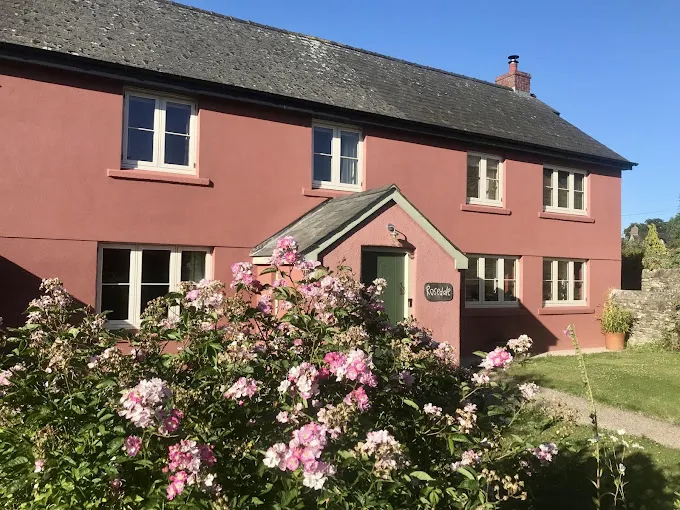
Expert Monocouche Rendering Pontardawe Guide

Monocouche rendering Pontardawe properties need demands a specialist who understands local weather, substrate conditions, and the right system to deliver a durable, through-coloured finish that lasts for decades. 155 chars.
Monocouche rendering Pontardawe homeowners and developers need delivers a single-coat, through-coloured external finish that protects and transforms properties across the Swansea Valley – find out how to choose the right system, contractor, and colour for lasting results.
Table of Contents
- What Is Monocouche Rendering?
- Why Monocouche Rendering Suits Pontardawe Properties
- The Monocouche Rendering Application Process
- Choosing the Right Monocouche System
- Frequently Asked Questions
- Monocouche vs Other Render Systems
- Coloured Rendering South Wales
- Practical Tips for Property Owners
- The Bottom Line
- Sources & Citations
Article Snapshot
Monocouche rendering is a single-coat, factory-coloured external render system that combines basecoat and finish in one application. For Pontardawe properties, it delivers weather-resistant, low-maintenance protection with through-colour durability – no painting required, and no fading over time.
Monocouche rendering Pontardawe in Context
- 22% reduction in carbon emissions from fossil fuels achieved by next-generation monocouche render weberpral E (Saint-Gobain Weber, 2025)[1]
- 19% reduction in non-renewable energy consumption for weberpral E compared to standard monocouche (Saint-Gobain Weber, 2025)[1]
- 28% less water used in raw material supply for weberpral E (Saint-Gobain Weber, 2025)[1]
- 25% total energy consumption savings over the lifecycle of weberpral E (Saint-Gobain Weber, 2025)[1]
What Is Monocouche Rendering?
Monocouche rendering Pontardawe projects involve a single-coat, pre-coloured cement-based render applied directly to masonry substrates, eliminating the need for separate basecoat and finish coat stages. The term “monocouche” derives from the French for “single layer,” and the system is specifically engineered to integrate weather protection, structural adhesion, and decorative colour into one factory-batched product. Coloured Rendering South Wales has delivered monocouche systems across the Swansea Valley for over 25 years, advising property owners on specification, colour selection, and application methods suited to each building’s exposure level and substrate type.
Unlike traditional multi-coat render systems, monocouche products are through-coloured throughout their full thickness. This means that even if the surface is scratched or chipped, the original colour remains consistent – no bare grey substrate is exposed beneath. The colour is locked into the mix at the factory, using mineral pigments that resist UV degradation and maintain their appearance for decades without repainting.
Call Us
The system is compatible with a wide range of masonry substrates, including brick, dense block, lightweight block, and concrete. It is applied by hand or by machine spray, with spray application delivering a more consistent thickness and texture across large wall areas. Modern monocouche renders include water-repelling additives and reinforcing fibres, improving resistance to driving rain, frost, and the kind of wind-driven moisture that is routine across Pontardawe and the wider Swansea Valley.
For residential homes, housing developments, and commercial buildings throughout South Wales, monocouche render represents a practical balance between upfront cost, long-term durability, and low maintenance. A well-applied monocouche system requires no painting throughout its service life, and with appropriate specification for local exposure conditions, it performs reliably for 20 to 30 years or more.
Why Monocouche Rendering Suits Pontardawe Properties
Pontardawe sits at the northern edge of the Swansea Valley, where the local climate combines high annual rainfall, prevailing westerly winds, and temperature fluctuations that put external wall finishes under considerable stress throughout the year. These conditions make render specification particularly important – a system that performs adequately in sheltered lowland locations will fail prematurely on a Swansea Valley property exposed to sustained wind-driven rain. Monocouche render, when correctly specified for the exposure zone, is one of the most reliable external finishes available for this type of environment.
Properties in Pontardawe range from Victorian and Edwardian terraces with solid stone or brick construction to post-war cavity-wall semis and more recent housing developments. Each building type presents different substrate characteristics, and monocouche render is sufficiently versatile to address them all. For older solid-wall properties, the breathable formulation of modern monocouche systems allows moisture vapour to escape from the wall, preventing the trapped dampness that causes problems with non-breathable coatings. For newer blockwork construction, the system provides a direct, durable decorative finish without the complexity of a multi-stage render scheme.
The through-colour feature is particularly practical for properties in areas with higher airborne pollution or organic growth, such as algae and moss, which are more common in wetter upland locations like the Swansea Valley. Monocouche renders formulated with biocide additives resist biological growth, keeping the façade cleaner for longer. Some systems also incorporate hydrophobic agents that cause water to bead and run off the surface rather than soaking in, further protecting the wall from freeze-thaw damage during colder months.
Coloured Rendering Swansea – durable and attractive rendering solutions for residential and commercial properties are available across the wider region, and the same expertise applied in Swansea city locations translates directly to Pontardawe projects, where understanding the valley’s specific exposure conditions is essential to selecting the correct render grade and application thickness.
The Monocouche Rendering Application Process
Correct preparation and application are the two factors that most directly determine how long a monocouche render system performs on any property. Skipping preparation steps or applying render in unsuitable conditions is the primary cause of premature failure – regardless of the quality of the product itself. A professional monocouche rendering contractor will follow a structured process from initial substrate assessment through to final inspection.
Surface preparation begins with a thorough inspection of the existing substrate. Any loose, hollow, or contaminated areas of existing render or masonry must be cut out and made good before the monocouche coat is applied. Organic growth such as algae or moss is treated and removed, and the surface is cleaned of dust, dirt, and any oil contamination that could prevent adhesion. On highly absorbent substrates, a primer or bonding agent is applied to equalise suction and ensure the render does not dry too quickly, which causes cracking.
Beads and movement joints are fixed before rendering begins. Render beads define the thickness and create neat arrises at corners, around windows, and at reveals. Movement joints are positioned to accommodate any differential thermal or structural movement between sections of walling, preventing the render from cracking across those transition points. This detailing work is often where less experienced contractors cut corners, and it is visible in the finished result – poorly fixed beads lead to shadow lines and uneven edges that undermine the overall appearance.
Application itself is carried out either by hand or by machine spray. Coloured Rendering South Wales – expert spray rendering and external wall insulation services across South Wales uses professional spray equipment for monocouche projects where wall areas and access allow, delivering a more uniform thickness and texture than hand application across larger surfaces. After application, the render surface is worked to achieve the specified texture – typically a scraped or roughcast finish – and then left to cure at an even rate. Newly applied monocouche should be protected from direct sun, frost, and heavy rain during the initial curing period.
Choosing the Right Monocouche System
Not all monocouche renders perform equally, and selecting the correct product for a Pontardawe property requires consideration of exposure rating, substrate type, desired finish texture, and environmental credentials. Manufacturers classify monocouche renders according to their suitability for different exposure zones, with higher-rated systems incorporating greater water-repellent additives, stronger polymer reinforcement, and thicker recommended application depths for severe exposure conditions.
For properties in exposed upland locations such as Pontardawe, a render rated for severe or very severe exposure is the appropriate specification. Applying a standard or moderate-exposure product in a high-rainfall valley location is a common cause of premature water ingress, surface degradation, and loss of adhesion. A thorough exposure assessment – accounting for the property’s elevation, orientation, and proximity to open land or water – should inform the product selection before any work begins.
The environmental performance of monocouche render is an increasingly relevant consideration, particularly for developers and specifiers working to meet sustainability targets. James Mead, R&D Director at Saint-Gobain Weber, noted that “weberpral E uses the next generation of cement replacement, resulting in a 22 per cent reduction in carbon emissions from fossil fuels and by 10 per cent overall compared to its current monocouche” (Saint-Gobain Weber, 2025)[1]. This development reflects a broader industry shift towards lower-embodied-carbon render systems without compromising on performance standards.
Mead also confirmed that performance testing validated the new system comprehensively: “Blind tests, including spraying, ruling, and scraping, were carried out with four other leading monocouche renders with weberpral E coming out on top, in each category, including ease of application. Essentially, weberpral E boasts all the same key features as our original monocouche render but is demonstrably better for the environment” (Saint-Gobain Weber, 2025)[1].
Colour selection is another practical consideration. Most monocouche manufacturers offer extensive colour ranges – often 100 or more standard shades – with the option of custom colours on larger orders. For Pontardawe properties, earthy neutrals and muted greens tend to complement the valley landscape, though contemporary greys and off-whites are increasingly popular for both renovation and new-build projects. Request physical colour samples rather than relying on screen representations, as monitor calibration varies considerably and the final appearance is influenced by surface texture and natural light levels at the specific site. Rendering Repairs South Wales – professional repairs and maintenance for external wall renders can also advise on colour-matched repairs if sections of existing monocouche require attention prior to a full re-render.
Your Most Common Questions
How long does monocouche render last on a Pontardawe property?
A correctly specified and professionally applied monocouche render system lasts between 20 and 30 years on most properties in the Pontardawe area, provided the substrate was properly prepared and the exposure rating of the product matches the actual conditions at the site. The Swansea Valley’s high rainfall and persistent westerly winds place above-average demands on external finishes, so using a render rated for severe or very severe exposure is essential to achieving the full expected service life. Through-coloured systems maintain their appearance throughout this period without repainting, and biocide-treated formulations reduce biological growth accumulation. Periodic inspection – ideally every five to seven years – allows any minor cracks or detachment at joints and reveals to be addressed before water ingress causes deeper substrate damage. With appropriate maintenance, well-applied monocouche renders remain in sound condition beyond the 25-year mark on sheltered elevations.
Can monocouche render be applied to an old brick or stone property in Pontardawe?
Yes, monocouche render is applied to brick and stone substrates, including the solid-wall Victorian and Edwardian properties that are common throughout Pontardawe and the surrounding Swansea Valley. The key requirement is that the existing masonry is structurally sound, free from loose or friable material, and clean. If the original pointing is recessed or deteriorated, it should be raked out and repointed prior to rendering to ensure adequate key for the render coat. On highly porous stone substrates, a stabilising primer is needed to control suction. Breathable monocouche formulations are specifically important for solid-wall properties, as these buildings manage moisture through the wall fabric rather than a cavity – a non-breathable finish traps moisture and causes internal damp. A professional surveyor or experienced rendering contractor should assess the wall condition and substrate before specifying the product, particularly on older buildings where the masonry type and original construction method are not immediately obvious.
How does spray application compare to hand application for monocouche rendering?
Spray application of monocouche render offers several practical advantages over hand application, particularly on larger wall areas. Machine spray delivers a more consistent thickness across the surface, reducing the risk of thin spots that allow water penetration over time. Application rates are significantly faster – two to three times quicker than hand application – which reduces labour costs and minimises disruption to occupants. The spray method also produces a more uniform texture distribution, which is visible in the quality of the final scraped or roughcast finish. For property developers working on multiple units, such as housing developments in South Wales, the speed advantage of spray application makes it the preferred method for maintaining programme schedules. Hand application remains appropriate for smaller areas, intricate detailing around architectural features, or locations where access prevents the use of spray equipment. Both methods, when carried out by an experienced operative using correctly specified materials, produce results that meet the same performance standards – the choice is primarily one of efficiency and site logistics.
Is planning permission required for monocouche rendering in Pontardawe?
In most cases, applying external render to a house in Pontardawe does not require planning permission, as it falls within permitted development rights for residential properties. However, there are important exceptions that property owners should verify before starting work. If the property is listed, any changes to the external appearance – including re-rendering – require listed building consent from Neath Port Talbot County Borough Council. Properties within a designated conservation area also need prior approval before changing the external material or colour of the walls, particularly if the original finish is considered characteristic of the area. Permitted development rights are removed by conditions attached to the original planning permission on newer estates, so checking with the local planning authority is advisable if you are unsure. For commercial properties, the rules differ from residential and planning advice should be sought before proceeding. Your rendering contractor should be familiar with local requirements, but the legal responsibility for obtaining consent rests with the property owner.
Monocouche vs Other Render Systems
Choosing between monocouche and alternative external render systems depends on the property’s substrate, budget, exposure conditions, and the desired maintenance profile over the long term. The table below compares the four principal render systems used on South Wales properties across the criteria most relevant to Pontardawe homeowners and developers.
| Render System | Application Coats | Colour Maintenance | Exposure Suitability | Relative Cost |
|---|---|---|---|---|
| Monocouche through-colour render | Single coat | No painting required – through-coloured | Moderate to severe (system-dependent) | Mid-range |
| Thin coat silicone render | Basecoat + thin finish | No painting required – UV-stable pigments | Severe to very severe | Higher |
| One coat cement render (painted) | Single coat + paint | Periodic repainting required | Moderate | Lower upfront, higher lifecycle |
| External Wall Insulation (EWI) with render | Insulation + reinforced basecoat + finish | No painting required | All exposure zones | Highest – includes insulation value |
Coloured Rendering South Wales
Coloured Rendering South Wales has delivered professional rendering services across Swansea, Pontardawe, and the wider South Wales region since 1998. With over 25 years of hands-on experience, the team understands the specific demands that the Swansea Valley climate places on external render systems – from the high annual rainfall that tests water repellency to the frost risk at higher elevations that requires adequate air entrainment in the mix.
The company’s core monocouche rendering service covers full specification advice, substrate preparation, machine spray or hand application, and post-completion care guidance. As a Baumit Approved EWI Applicator with City & Guilds Assured accreditation, the team is certified to install Baumit StarTop premium silicone render and full EWI systems with manufacturer-backed warranties of up to 25 years – providing documented long-term protection that informal or uncertified rendering work cannot offer. For Pontardawe properties specifically, the team recommends products rated for the valley’s severe exposure conditions and advises on breathable formulations for the area’s older solid-wall housing stock.
“With over 15 years in the building trade I have experienced several different plasterers all offering different styles and finishes. Geoff’s thin coat spray finish render would rival the best and I can’t recommend his team enough to someone thinking of using him. His professionalism and work ethic has stood out from many of the others we have worked with.” – Keri Hopkins, Google Review
“Excellent finish. Geoff worked in my house, both an outside render and throughout the house. Couldn’t be happier with the finish and completely reliable. Would recommend this company 100%. Maybe not the cheapest quote I had but worth every penny.” – David Lamb, Google Review
For Pontardawe property owners considering monocouche render, the company offers free on-site consultations to assess wall condition, confirm the appropriate product specification, and provide a detailed written quotation. Contact Coloured Rendering South Wales for a free quote or consultation on your rendering project by calling 07815 868070 or emailing geoff@colouredrenderingsouthwales.com. You can also learn more about our experienced team and rendering expertise before getting in touch.
Practical Tips for Property Owners
Timing your monocouche rendering project correctly makes a significant difference to the quality of the finished result. Render should not be applied when air or substrate temperatures are below 5°C, when frost is forecast within 24 hours of application, or during periods of sustained heavy rain. In the Swansea Valley, this means the optimal window runs from late spring through to early autumn, though experienced contractors can manage mild weather conditions outside this period with appropriate precautions.
Before obtaining quotes, take time to identify the substrate type on your property. Knowing whether your walls are solid stone, solid brick, or cavity blockwork helps a contractor give you an accurate specification and price without visiting the site. Check for any areas of previous render failure, rising damp at the base of walls, or cracked pointing that would need addressing before rendering begins – these issues will add to the preparatory work required and should be accounted for in any quotation.
When comparing quotes from different contractors, pay attention to what is included in the preparation scope rather than focusing solely on the final price. A lower quote that omits substrate treatment, priming, or proper movement joint installation will result in premature render failure and a more expensive repair bill within five to ten years. Request confirmation of the specific product being used, its exposure rating, and whether it is appropriate for the NHBC or manufacturer-defined exposure zone for your property’s location.
- Always request a physical colour sample applied to your wall before committing to a colour – screen representations are unreliable and natural light at your site will affect the final appearance significantly.
- Ensure your contractor protects windows, doors, and adjacent paving with appropriate masking and sheeting before spray application begins – overspray is difficult to remove from glass and landscaping.
- Ask for written confirmation of the product warranty and any workmanship guarantee, and keep these documents alongside your property records for future reference when selling or remortgaging.
The Bottom Line
Monocouche rendering Pontardawe properties is a practical, durable, and low-maintenance solution for external wall protection in a demanding climate. Correctly specified for the Swansea Valley’s exposure conditions, a professional monocouche system delivers through-colour appearance and weather resistance for decades – with no repainting and minimal ongoing maintenance. The key to a successful outcome lies in product selection matched to exposure zone, thorough substrate preparation, and application by an experienced contractor who understands local conditions.
Coloured Rendering South Wales has served the Pontardawe area and the wider South Wales region since 1998, combining spray rendering expertise with deep knowledge of the valley’s building stock and climate. To discuss your property and receive a free, no-obligation quotation, call 07815 868070, email geoff@colouredrenderingsouthwales.com, or use the online contact form to arrange a site visit at a time that suits you.
Sources & Citations
- Saint-Gobain Weber discusses the evolution of monocouche render. Architecture Today.
https://architecturetoday.co.uk/saint-gobain-weber-discusses-the-evolution-of-monocouche-render/
