
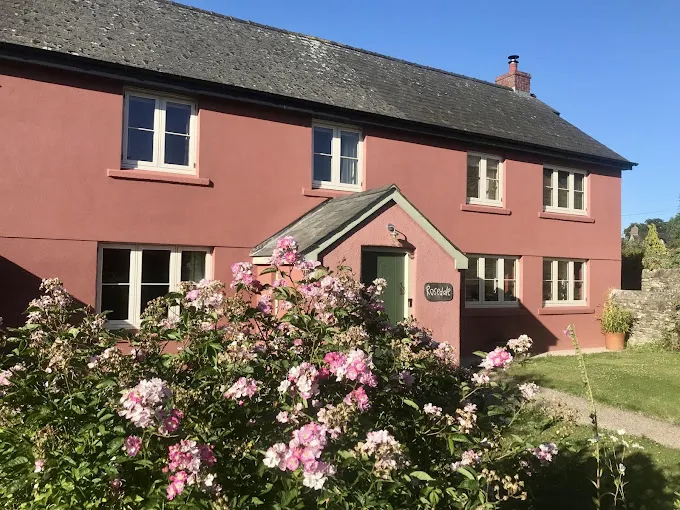
Expert Spray Rendering Mumbles: Complete Guide

Spray rendering Mumbles delivers weather-resistant, attractive external wall finishes for coastal properties – discover the best systems, application methods, and how to choose a qualified local specialist.
Table of Contents
- What Is Spray Rendering and How Does It Work?
- Coastal Benefits of Spray Rendering in Mumbles
- Choosing the Right Render System for Your Property
- Professional Application: What to Expect
- Frequently Asked Questions
- Spray Rendering vs Traditional Hand Rendering
- Coloured Rendering South Wales
- Practical Tips for Property Owners
- Key Takeaways
- Sources & Citations
Article Snapshot
Spray rendering Mumbles is a machine-applied external wall coating that delivers a uniform, durable finish faster than hand methods. For coastal properties in Mumbles, specialist silicone and monocouche render systems provide superior protection against salt air, driving rain, and wind-driven moisture while enhancing kerb appeal.
Spray Rendering in Context
- Spray rendering reduces application time by approximately 50% compared to manual methods (EWI Store, 2025)[1]
- Roughcast spray textured render uses aggregate sized 6-8 mm to prevent sagging on walls (Weber UK, 2025)[2]
- Professional spray rendering delivers 7 key benefits including quick application and long-lasting coating (AMJ Contracts, 2025)[3]
- Textured spray render techniques have origins dating back to the Roman era, with increased UK use from the 1930s (Weber UK, 2025)[2]
What Is Spray Rendering and How Does It Work?
Spray rendering Mumbles is a machine-assisted process in which a pre-mixed render compound is pumped through a hopper gun or continuous mixer and applied directly onto external walls at controlled pressure, producing a consistent, even coating across large surface areas. Unlike hand application with a trowel and hawk, the spray method feeds render mechanically from a mixing unit through a hose to a nozzle operator who directs coverage across the substrate. Coloured Rendering South Wales has used this technique throughout South Wales since 1998, bringing both speed and finish consistency to residential and commercial projects.
As John Stanley, Owner at John Stanley Plastering, explains: “Spray rendering is the same as the traditional method of rendering, except you spray it on. The spraying method is much faster and more efficient than the traditional trowel method.” (John Stanley Plastering, 2025)[4]
The machinery used in spray rendering regulates pressure and flow throughout the application cycle. This regulation produces a significant reduction in material waste compared to hand-thrown methods (EWI Store, 2025)[1], and the adjustable settings allow operatives to achieve multiple texture and finish options from the same equipment depending on nozzle configuration and spray distance. Smooth finishes, fine-textured coatings, and roughcast effects are all achievable with appropriate machine settings and material formulations.
Call Us
Proper spray technique matters from the very first moment the equipment is activated. Roger Upjohn, Director at EWI Store, highlights a key point practitioners learn early: “the way when you spraying you always start off in a bucket right because your first bit that will come out will be a Splat got it okay you don’t want to Splat on the wall because you want a nice even texture.” (EWI Store, 2025)[1] This detail illustrates why trained operatives produce reliably better results than those attempting spray rendering without structured experience. An uncontrolled first burst creates an irregular patch that is difficult to blend once the surrounding render begins to set.
Surface preparation is equally important before any render is applied by spray. Substrates must be assessed for structural soundness, contamination, and moisture content. Loose material must be removed, and appropriate primers or bonding agents applied to ensure adhesion. On masonry block and brick walls – the most common substrates in Mumbles – this preparation stage determines how well the render performs over the long term, particularly in the exposed coastal conditions that characterise the peninsula.
The History and Evolution of Spray Rendering
Textured render application has a long heritage. Weber UK technical specialists note that roughcast techniques have origins in the Roman era, with the style becoming widely used across the UK from the 1930s (Weber UK, 2025)[2]. Early roughcast – also called wet dash or harling – involved throwing a coarse aggregate and cement slurry onto a freshly applied scratch coat. Modern spray rendering builds on this principle but replaces manual throwing with pressurised machinery, resulting in far greater control over thickness, texture consistency, and material economy. Contemporary render formulations incorporating silicone polymers, acrylic binders, and pre-graded aggregates have expanded the performance envelope well beyond what lime or Portland cement alone delivers.
Coastal Benefits of Spray Rendering in Mumbles
Mumbles presents some of the most demanding external wall conditions in South Wales, and spray rendering addresses these challenges directly through both material selection and application method. The Gower Peninsula’s coastline exposes properties to persistent salt-laden air, high annual rainfall, and wind-driven moisture that penetrate poorly specified or ageing render, causing cracking, hollow patches, and water ingress behind the wall finish.
Thin coat silicone render is particularly well suited to Mumbles properties because its polymer chemistry provides flexibility that resists the thermal and moisture cycling that causes brittle cement-based renders to crack. The silicone matrix repels water at the surface while remaining vapour permeable, allowing moisture already within the wall to escape. In a coastal environment this breathability matters: trapping moisture behind an impermeable coating accelerates substrate deterioration rather than preventing it. The self-cleaning properties of silicone render reduce the build-up of biological growth – a common problem on north-facing and shaded coastal walls – keeping the finish looking fresh without the need for regular washing or repainting.
Salt air attacks both the render surface and any painted finish applied over it. Through-coloured render systems, including monocouche, eliminate the paint layer entirely, removing the primary point of failure in coastal external decoration cycles. Colour is integral throughout the full depth of the coating, so surface abrasion from wind-blown sand or grit does not expose a different-coloured substrate beneath. For seafront and near-seafront properties on the Mumbles headland, this durability distinction is the difference between a render that requires attention every few years and one that performs reliably for decades.
The Coloured Rendering Swansea – durable and attractive rendering solutions for residential and commercial properties page details the full range of coloured finish options available for the wider Swansea Bay area, including Mumbles, where coastal exposure informs every specification decision. Properties on the Mumbles headland, around Oystermouth, and along the seafront road all benefit from the same principle: a render specified for coastal conditions, applied by a team that understands the difference between a sheltered urban site and an exposed maritime location.
Weather Resistance and Long-Term Performance
Long-term performance in Mumbles depends on matching render specification to exposure category. UK building practice recognises that coastal and elevated locations receive significantly higher driving rain indices than inland sites. The South Wales coastline receives some of the highest annual rainfall totals in England and Wales, and Mumbles, projecting into Swansea Bay, is exposed on multiple sides. Renders specified for moderate inland exposure perform adequately in Cardiff or Bridgend but fail prematurely on a Mumbles seafront elevation. Selecting a render with the appropriate water-repellent admixtures, fibre reinforcement, and surface chemistry for the actual exposure condition at the site is the single most important specification decision for any coastal property.
Choosing the Right Render System for Your Property
Three primary render systems account for the majority of external wall treatments on South Wales residential and commercial properties, each with distinct performance characteristics, aesthetic options, and maintenance implications that make them appropriate for different property types and owner priorities.
Thin coat silicone render is the premium choice for properties where long-term low maintenance, colour retention, and weather resistance are the priorities. Applied at thicknesses between 1.5 mm and 3 mm over a reinforced basecoat, silicone render adds minimal weight to the wall structure and maintains its flexibility over decades of thermal cycling. Baumit StarTop silicone render, installed by a City & Guilds Assured Baumit Approved EWI Applicator, carries manufacturer-backed warranties of up to 25 years, providing documented long-term protection that informally applied or uncertified work cannot offer. For Mumbles properties, where salt air and moisture cycling are constant stressors, this certification standard matters.
Monocouche through colour render is a cement-based system that combines the scratch and finish coats into a single application. The through-colouring means the render does not require painting after application and resists surface colour fade over time. Monocouche suits both traditional stone-built Mumbles cottages and more modern rendered elevations, and its range of available textures – from fine scraped to coarser float finishes – gives specifiers and homeowners genuine aesthetic flexibility. It meets British Standards for external rendering systems and performs well in the South Wales climate when correctly specified for coastal exposure.
One coat cement render provides a cost-effective base finish that is painted once cured. It suits properties where the owner wishes to control colour choice over time through repainting, or where budget constraints make a premium system impractical in the short term. Spray application of cement render achieves consistent thickness more reliably than hand application, reducing the risk of differential shrinkage cracking that appears when hand-applied cement render is too thick in some areas and thin in others.
For properties with solid walls suffering from thermal inefficiency, EWI Specialists South Wales – expert external wall insulation installations for energy efficiency combines insulation board fixed to the external wall face with a render finish applied over mesh reinforcement. This approach improves the EPC rating of the property, reduces heating costs, and delivers a fresh rendered finish in the same operation. In Mumbles, where many properties are Victorian or Edwardian terraces with solid brick or stone walls, EWI provides a meaningful improvement in thermal comfort alongside weather protection.
Matching the System to the Property
Selecting between these systems requires an honest assessment of the substrate condition, the exposure category of the site, the owner’s maintenance preferences, and the budget available. A free property assessment from an experienced rendering specialist identifies potential substrate issues – hollow patches, carbonated cement, sulphate attack in older mixes – before they become expensive problems mid-project. Getting the specification right at the outset avoids the far greater cost of render failure and premature replacement.
Professional Application: What to Expect
Professional spray rendering follows a structured sequence from initial site assessment through to final inspection, and understanding this process helps property owners set realistic expectations about project duration, access requirements, and the appearance of the work at each stage.
The EWI Store Technical Team summarises the core principle concisely: “Spray render involves using specialized machinery to spray the mixture onto walls. This technique offers faster application, covering large areas in a fraction of the time.” (EWI Store, 2025)[1] For a typical Mumbles semi-detached or terraced house, spray application reduces total application time by approximately 50% compared to hand rendering (EWI Store, 2025)[1], which directly reduces the period of scaffolding on the property and the overall project disruption.
The application sequence begins with scaffolding erection and full masking of windows, doors, sills, soffits, and any adjacent hard landscaping. Protecting these surfaces before render application is a mark of professional working practice. Surface preparation follows: any loose, hollow, or contaminated render is removed, cracks are filled with compatible repair mortar, and the substrate is primed. On EWI projects, insulation boards are mechanically fixed and adhesive-bonded before reinforcement mesh is bedded into a basecoat layer.
Render mixing is carried out using a continuous mixer or forced-action mixer to produce a consistent blend at the correct water-to-powder ratio. Machine settings for pressure and nozzle distance are adjusted for the specific product and the texture specification. The operative works in overlapping passes across each elevation, maintaining a wet edge to avoid lap marks in the finished surface. On larger properties, a second operative with a trowel follows immediately behind the spray pass to knock back any unevenness or apply the required texture finish – a scrape, float, or roughcast effect depending on the system.
Once the render has cured sufficiently – 24 to 48 hours depending on temperature and humidity – any required sealants around windows and door frames are applied and scaffolding is struck. The finished surface should be inspected in raking light at this stage to confirm uniform texture and colour. A competent rendering contractor invites this inspection rather than avoiding it.
You can view completed spray rendering and plastering projects across South Wales in our Gallery – View examples of our high-quality spray rendering and repair work, which includes residential and commercial properties across the region from Swansea to Newport.
Your Most Common Questions
How long does spray rendering last on a Mumbles coastal property?
The lifespan of spray rendering on a Mumbles coastal property depends primarily on the render system specified and the quality of application. Thin coat silicone render applied to a properly prepared substrate and installed by a certified applicator carries manufacturer-backed warranties of up to 25 years. In practice, well-specified silicone systems on coastal properties perform for 20 to 30 years with no significant maintenance when correctly installed. Monocouche through colour render performs for 20 or more years on sheltered elevations, though exposed seafront faces show surface weathering earlier. One coat cement render painted after curing has a shorter maintenance-free lifespan because the paint layer degrades in coastal UV and salt air conditions, requiring repainting every 5 to 8 years. Choosing a render system that eliminates the painted surface entirely – silicone or monocouche – is the most effective way to extend maintenance-free performance in Mumbles. Substrate condition at the time of application is equally important: render applied over contaminated, cracked, or damp masonry will fail prematurely regardless of the product used, which is why thorough preparation before spray application is non-negotiable for coastal property work.
What is the difference between spray rendering and traditional hand rendering?
Spray rendering and traditional hand rendering use the same materials and achieve the same end result – a bonded external wall coating – but differ significantly in application method, speed, and finish consistency. Hand rendering uses a trowel and hawk to apply render in manually spread passes, with thickness and texture depending on the operative’s skill and physical stamina across the working day. Spray rendering pumps a pre-mixed compound through a machine and nozzle, applying render at controlled pressure across large areas in a fraction of the time. Spray application reduces installation time by approximately 50% compared to hand methods (EWI Store, 2025)[1], which translates directly to lower labour costs on large elevations and shorter scaffolding hire periods. Machine application produces more consistent layer thickness than hand work because the pressure and flow are regulated by the machinery rather than varying with operative fatigue. For thin coat render systems – particularly silicone products applied at 1.5 to 3 mm – achieving the correct and uniform thickness by hand is genuinely difficult, whereas spray application makes consistent coverage achievable across complex wall geometries. The quality of the finish is determined by the operative’s skill in controlling the spray pass, managing overlaps, and applying the texture finish immediately after spraying.
Do I need planning permission to change the render on my Mumbles property?
Most external render replacement and repair work on standard residential properties in Mumbles falls within permitted development rights and does not require planning permission, provided you are not changing the material of the walls in a way that alters the character of the building. However, there are important exceptions you must check before proceeding. If your property is a listed building – and parts of Mumbles village and the conservation area contain listed buildings – any external alteration including render colour or type requires listed building consent, and in some cases full planning permission. Properties within a designated conservation area also need consent before changing the external appearance, particularly if the existing render is considered characteristic of the area. Swansea Council’s planning department can confirm whether your property is in a conservation area or listed, and your rendering contractor should be aware of local designation boundaries before specifying colour and finish. The UK Government’s UK Building Regulations – Approved Documents set out the technical standards for external wall construction and insulation work that apply regardless of planning status. EWI installations that significantly alter wall thickness around window and door reveals trigger building regulations notification requirements even where planning permission is not needed.
How much does spray rendering cost in Mumbles?
Spray rendering costs in Mumbles vary based on the render system chosen, the size and complexity of the property, the condition of the existing substrate, and whether scaffolding is required for upper elevations. Thin coat silicone render is the premium option and carries a higher material cost than cement-based systems, though its long-term low maintenance profile makes it more economical over a 20-year period when painting and repair costs are factored in. Monocouche through colour render sits in the mid-range for both material and labour costs, while one coat cement render is the most budget-friendly option at point of installation. Properties requiring extensive substrate preparation – including removal of hollow or failed existing render, crack repairs, or treatment for biological growth – attract higher preparation costs than a clean block or brick surface. EWI systems carry higher overall costs than render-only work because of the insulation boards, fixings, mesh, and basecoat involved, though energy savings over time offset this investment. The most reliable way to understand the cost for your specific Mumbles property is to arrange a free assessment and quotation. Contact Coloured Rendering South Wales on 07815 868070 or email geoff@colouredrenderingsouthwales.com to discuss your project and receive a detailed, no-obligation quote.
Spray Rendering vs Traditional Hand Rendering
Choosing between spray and hand rendering methods affects project cost, duration, finish consistency, and suitability for different render systems. The table below compares the two approaches across the criteria most relevant to Mumbles property owners, drawing on publicly available data and product specifications.
| Criteria | Spray Rendering | Hand Rendering |
|---|---|---|
| Application speed | Up to 50% faster on large areas (EWI Store, 2025)[1] | Slower; speed depends on operative skill and stamina |
| Finish consistency | Highly consistent thickness and texture via machine control | Variable; dependent on individual operative technique |
| Suitability for thin coat silicone | Preferred method; achieves consistent 1.5-3 mm coverage | Technically possible but difficult to maintain even thickness |
| Material waste | Significant reduction via regulated pressure and flow (EWI Store, 2025)[1] | Higher waste from over-application and dropped material |
| Texture options | Multiple options via nozzle and machine settings (EWI Store, 2025)[1] | Broad range achievable through manual tools |
| Equipment requirement | Specialist spray machinery required | Standard plastering tools only |
| Cost on large elevations | Lower labour cost due to speed | Higher labour cost for equivalent area |
Coloured Rendering South Wales
Coloured Rendering South Wales has delivered plastering and spray rendering services across South Wales since 1998, building over 25 years of direct experience with the coastal and inland property types that characterise the region. Based in Swansea, we work throughout the Gower Peninsula and Swansea Bay area – including Mumbles, Oystermouth, and the wider coastal communities – as well as Cardiff, Newport, Bridgend, and surrounding areas. Our spray rendering Mumbles projects draw on detailed knowledge of the local exposure conditions that determine which render systems perform reliably at the coast versus those specified for more sheltered inland sites.
Our service range covers thin coat silicone render, monocouche through colour render, one coat cement render, external wall insulation systems, internal plastering, and rendering repairs. As a Baumit Approved EWI Applicator with City & Guilds Assured accreditation, we install Baumit StarTop premium silicone render and full EWI systems with manufacturer-backed warranties of up to 25 years. This certification provides our clients with documented long-term protection that uncertified rendering work cannot match.
Our clients’ feedback reflects the standard we set on every project. “With over 15 years in the building trade I have experienced several different plasterers all offering different styles and finishes. Geoff’s thin coat spray finish render would rival the best and I can’t recommend his team enough to someone thinking of using him. His professionalism and work ethic has stood out from many of the others we have worked with.” – Keri Hopkins, Google Review
“We’re 100% happy and wouldn’t hesitate to recommend Jeff. His workmanship is excellent and we’re also very happy with the product he recommended to eradicate the penetrating damp and give our house a great new look and lease of life.” – Alistair Legge, Google Review
We maintain a perfect 5.0 Google rating across all our reviews – a record built through consistent delivery on every project, regardless of size. Visit the Home page of Coloured Rendering South Wales – expert spray rendering and external wall insulation services across South Wales to learn more about our full service range, or Contact Coloured Rendering South Wales for a free quote or consultation on your rendering project. You can also reach us directly on 07815 868070 or at geoff@colouredrenderingsouthwales.com.
Practical Tips for Property Owners
Getting the best outcome from a spray rendering project in Mumbles starts before the contractor arrives on site. These practical steps help ensure the project runs smoothly and the finished render performs as intended.
Commission a condition survey before specifying the render system. Tapping the existing render with a hammer or the heel of your hand reveals hollow patches where the coating has debonded from the substrate. Hollow areas must be removed before new render is applied; skipping this step traps a failure point beneath the new coating. A reputable contractor will include this assessment in a free quotation visit rather than pricing over unknown substrate conditions.
Check exposure category and select accordingly. Mumbles is classified as a high-exposure location for driving rain. The BRE Group – Building Research Establishment publishes driving rain index data for UK locations that confirm the exposure category for your specific site. A render specified for moderate exposure will be over-stressed by the conditions at an exposed Mumbles elevation and is likely to fail before its design life is reached.
Verify contractor certification for the system being installed. Manufacturer warranties on premium render and EWI systems are contingent on installation by a certified applicator. Before accepting a quotation, ask whether the contractor holds approved applicator status for the specific product specified, and request documentary evidence. This is particularly important for EWI systems where the warranty covers the full composite system rather than individual components.
Plan around weather windows. Render should not be applied when temperatures are below 5°C or above 30°C, in direct strong sunlight, or when rain is forecast within the curing period. In Mumbles, autumn and winter months increase the probability of unsuitable conditions. A contractor who plans application dates around forecast weather – rather than a fixed calendar date regardless of conditions – is protecting the quality of the finished work.
Allow adequate curing time before painting or decoration. Cement-based renders require a full curing period before any painted finish is applied. Premature painting traps residual moisture and alkalis that cause paint failure within months. Silicone and monocouche renders do not require painting, removing this risk entirely. If your chosen system requires a painted finish, discuss the required waiting period with your contractor at the quotation stage and factor it into the project timeline. For guidance on Rendering Repairs South Wales – professional repairs and maintenance for external wall renders, our team is available to assess any areas of concern before, during, or after a render project.
Key Takeaways
Spray rendering Mumbles is a specialist discipline that combines the right render system, properly prepared substrate, and machine-applied finish to deliver external wall protection suited to one of South Wales’s most demanding coastal environments. Choosing a silicone or monocouche system eliminates the maintenance burden of regular repainting, while spray application reduces project duration and delivers consistent finish quality that hand methods struggle to match on large or complex elevations. Certification matters: manufacturer warranties on premium systems depend on approved applicator installation, and the long-term performance of your render depends on that documented assurance.
If your Mumbles property needs new render, a repair assessment, or an EWI system that combines insulation with a fresh external finish, contact Coloured Rendering South Wales today. Call 07815 868070, email geoff@colouredrenderingsouthwales.com, or use the contact form at https://www.colouredrenderingsouthwales.com/contact/ to arrange a free, no-obligation property assessment and quotation.
Sources & Citations
- Spray Rendering – Everyone Is Doing It? EWI Store, 2025.
https://www.youtube.com/watch?v=ni6CY8WsEtk - Roughcast, Spray Texture, Harling or Wet Dash? Weber UK, 2025.
https://www.uk.weber/blog/construction-industry-facts/roughcast-spray-texture-harling-or-wet-dash - Professionally-Applied Spray Rendering. AMJ Contracts, 2025.
https://amjcontracts.co.uk/spray-render/ - Spray Rendering Benefits – Aesthetic and Functional Gains. John Stanley Plastering, 2025.
https://plastererdorset.co.uk/blog/what-are-the-benefits-of-spray-rendering/ - UK Building Regulations – Approved Documents. GOV.UK.
https://www.gov.uk/guidance/approved-documents - BRE Group – Building Research Establishment. BRE.
https://www.bre.co.uk/
