
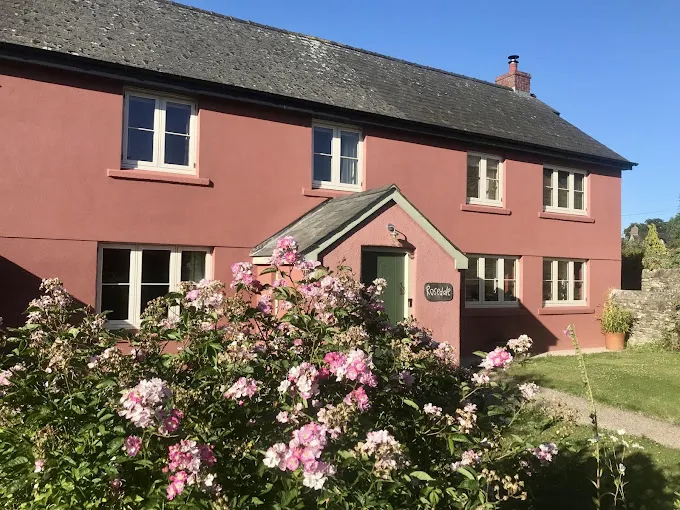
Coloured Rendering Gorseinon: Expert Guide

Coloured rendering Gorseinon transforms external walls with durable, weather-resistant finishes – discover system types, costs, and how to choose the right render for your property.
Table of Contents
- What Is Coloured Rendering?
- Render Systems for Gorseinon Properties
- Spray Application and Installation
- Longevity and Low-Maintenance Finishes
- Frequently Asked Questions
- Comparing Render Systems
- Coloured Rendering South Wales
- Practical Tips for Your Project
- The Bottom Line
Article Snapshot
Coloured rendering Gorseinon is a specialist external wall finish that bonds coloured render directly to masonry, eliminating the need for ongoing painting. Modern systems – silicone, monocouche, and cement-based – provide durable, breathable protection suited to South Wales weather conditions, with colour retained throughout the material’s thickness.
What Is Coloured Rendering and Why Gorseinon Properties Benefit
Coloured rendering Gorseinon is the application of a pigmented render system to external masonry walls, producing a weather-resistant, decorative finish that requires no periodic repainting. Unlike painted surfaces, modern through-coloured and silicone render systems carry their colour throughout the material itself, so superficial weathering does not expose a different base layer. Coloured Rendering South Wales has been specifying and applying these systems across the region since 1998, helping Gorseinon homeowners, landlords, and developers protect and refresh their properties with finishes suited to the local climate.
Gorseinon sits in the Swansea Valley corridor, where properties are exposed to prevailing westerly winds, high annual rainfall, and the residual salt-laden air carried inland from Swansea Bay. These conditions are demanding on traditional painted render surfaces, which crack, peel, and allow water ingress within a few years of application. Modern coloured render systems address this by creating a continuous, flexible skin over the substrate that repels liquid water while allowing water vapour to escape – preventing the trapped moisture that causes render failure from within.
The range of properties in Gorseinon spans Victorian and Edwardian terraces in the older town centre, 1930s semi-detached houses, post-war council stock, and more recent residential developments extending toward Pontarddulais. Each property type presents different substrate conditions and aesthetic considerations. Solid-wall Victorian properties benefit from breathable silicone systems that allow the wall to manage moisture without trapping it behind an impermeable coating. Cavity-wall properties from the 1960s onwards are well suited to monocouche through-colour render, which provides a strong, low-maintenance finish with a traditional or contemporary appearance.
Call Us
This guide covers the principal render systems available to Gorseinon property owners, how spray application technology has changed installation timescales, maintenance expectations across system types, and practical guidance for specifying and commissioning a rendering project.
Render Systems for Gorseinon Properties
Selecting the right render system for a Gorseinon property depends on wall construction, existing substrate condition, desired appearance, and budget – and each of the principal system types offers a distinct balance of these factors.
Thin Coat Silicone Render
Thin coat silicone render is the most technically advanced system currently available for external wall finishing. Applied at between 1.5 mm and 3 mm thickness over a prepared basecoat, it uses silicone polymers to create a surface that is inherently water-repellent yet microporous. This combination – sometimes described as waterproof but breathable – allows the wall to release any residual or seasonal moisture vapour without accumulating liquid water at the render-substrate interface. For Gorseinon properties near the coast or on exposed west-facing elevations, this characteristic is particularly important.
Silicone render systems are available in a broad palette of colours, including contemporary greys, warm creams, and neutral whites that suit both traditional Welsh terraced housing and modern residential development. The pigments used in quality systems are UV-stable, meaning colour retention over years of South Wales sunlight and rain exposure is significantly better than painted finishes. Self-cleaning properties – achieved through the hydrophobic surface texture – allow rainwater to wash surface dirt away, keeping the facade looking fresh between professional cleans.
The Baumit StarTop silicone render system, installed by certified Baumit Approved EWI Applicators, carries manufacturer-backed warranties of between 10 and 25 years depending on the specification, providing property owners with documented long-term protection that basic painted render cannot offer. For properties with solid walls and damp-management challenges, combining silicone render with an External Wall Insulation system addresses thermal performance and surface finish in a single installation.
Monocouche Through Colour Render
Monocouche render – the name comes from the French for single coat – is a cement-based system pre-coloured throughout its full thickness. Applied at 15-20 mm in a single pass, it combines what traditional multi-coat rendering systems would achieve in two or three coats. Because the colour runs through the full depth of the material, minor surface abrasion or shallow weathering does not expose a different substrate colour. This makes monocouche a particularly practical choice for high-traffic areas or properties subject to occasional impact.
Gorseinon builders and property developers working on new residential sites or housing association refurbishments frequently specify monocouche for its consistency across multiple properties and reduced application time compared to hand-applied multi-coat systems. Facade render and paint guidance from leading manufacturers confirms that through-coloured cement systems provide reliable weathering performance in the UK climate when applied over correctly prepared substrates with appropriate reinforcement mesh at vulnerable junctions.
One Coat Cement Render
One coat cement render provides a cost-effective external wall finish for properties where a painted final appearance is acceptable or preferred. Applied in a single layer of 10-15 mm thickness, it protects the substrate from direct weather exposure and provides a flat, even surface ready for external masonry paint. While it does not offer the colour permanence or self-cleaning properties of silicone or monocouche systems, it remains a proven and durable solution for budget-conscious projects or where the property owner prefers flexibility to change colour by repainting in future.
For Gorseinon landlords managing several properties, one coat cement render applied with spray technology offers a practical way to refresh multiple elevations quickly, with painting carried out as a separate operation once the render has fully cured. This phased approach is useful for managing cashflow across a portfolio.
Spray Application and Installation Process
Spray rendering technology has fundamentally changed how external wall rendering is delivered, offering faster installation, more consistent coverage, and reduced disruption compared to traditional hand application methods.
In conventional rendering, a plasterer applies material to the wall surface by hand – a labour-intensive process that produces output of roughly 15 to 25 square metres per person per day depending on surface complexity and the number of coats required. Spray application pushes mixed render material through a pump and nozzle at controlled pressure, allowing a trained operative to cover 80 to 120 square metres per day with consistent thickness and texture. For a standard Gorseinon semi-detached property with three rendered elevations totalling 90 to 120 square metres, this reduces site time from four or five days to one or two days.
The speed advantage is not purely economic. Shorter site durations reduce the period during which scaffolding is erected around the property, minimising access restrictions and the visual disruption to occupants and neighbours. For occupied residential properties, completing rendering work in two days rather than five represents a meaningful reduction in inconvenience. For commercial buildings – such as the retail and industrial premises along Gorseinon’s High Street and industrial estates – weekend or phased working combined with spray application allows complete facade refreshes without interrupting trading operations.
Preparation and Substrate Condition
Regardless of the render system specified, thorough substrate preparation determines the long-term performance of the installation. Failing render must be sounded by tapping across the surface to identify hollow sections, which are then removed back to sound masonry before any new render is applied. Cracks wider than hairline width are cut out, cleaned, and filled with compatible repair mortar. Organic growth – algae, lichen, or moss – is treated and removed, as residual biological material prevents adhesion and accelerates future render failure.
On properties with a history of penetrating damp, the source of water ingress must be identified and resolved before rendering begins. Applying new render over an actively wet or contaminated substrate will not resolve the underlying problem and will compromise the adhesion and durability of the new finish. A pre-application assessment by an experienced renderer is the most reliable way to identify substrate issues before they become expensive post-installation problems. The Property Care Association provides guidance on diagnosing and resolving damp in UK properties ahead of external wall work.
Scaffolding and Access
All external rendering work above ground-floor height requires scaffolding to provide safe working platforms for operatives and to carry material. On standard residential properties in Gorseinon, scaffolding is erected the day before rendering begins and struck within a day of completion. The scaffolding period is four to seven days for a standard semi-detached or terraced house, though complex properties with chimneys, bay windows, or multiple projections require longer. Confirming scaffolding arrangements and any requirements for neighbour notification or pavement licences should form part of the pre-project planning discussion.
Longevity and Low-Maintenance Finishes
Modern render systems are engineered for low maintenance, and understanding what each system requires – and over what timescale – helps property owners make informed decisions that account for whole-life cost rather than just initial installation price.
Thin coat silicone render systems from quality manufacturers are designed to perform without intervention for 20 to 25 years under normal UK exposure conditions. Their hydrophobic surface sheds water readily, and the self-cleaning mechanism activated by rainfall removes the surface soiling that builds up on painted finishes. Periodic inspection – at five-year intervals – to check for impact damage, movement cracks at junctions, or any areas of localised failure allows minor issues to be addressed before they extend. When a render system does eventually reach end of life, the thin coat applied over a reinforced basecoat can in many cases be overcoated with a fresh finish coat without complete removal, reducing reinstatement costs.
Monocouche through-colour render carries an expected service life of 25 to 30 years on well-prepared substrates in normal UK exposure. Maintenance requirements are minimal: the surface benefits from an occasional clean with a low-pressure washer and, if biological growth is present, an appropriate biocide wash. Because the colour is integral, there is no need to repaint the surface – a meaningful saving over the life of a property compared with the cost and disruption of repainting exterior masonry every five to eight years.
Render Repairs and When to Act
Early intervention on render defects is consistently more cost-effective than allowing problems to develop into widespread failure. Hairline cracks that admit water will, through freeze-thaw cycling during South Wales winters, progressively widen and undermine adhesion over several seasons. A localised repair carried out promptly – crack chasing, filling, and colour-matched patching – costs a fraction of re-rendering the affected elevation. Rendering Repairs South Wales – professional repairs and maintenance for external wall renders explains the range of repair options available and how to assess whether repair or replacement is the more appropriate course of action.
Signs that render requires attention include: hollow-sounding sections identified by tapping, visible cracks particularly running through or adjacent to reveals and quoins, staining patterns suggesting water tracking behind the render face, and any areas of visible separation between the render and the wall surface. An inspection by an experienced rendering contractor is the most reliable diagnostic step, and most reputable contractors in South Wales will assess a property and provide a condition report without charge as part of the quotation process.
Questions from Our Readers
How long does coloured rendering Gorseinon last?
The service life of coloured rendering depends primarily on the system specified and how well the substrate was prepared before application. Thin coat silicone render systems from quality manufacturers are designed to perform for 20 to 25 years in UK conditions, while monocouche through-colour render achieves 25 to 30 years on a properly prepared substrate. One coat cement render, where a painted finish is applied over the top, has a shorter maintenance-free period – exterior masonry paint requires recoating every five to eight years even when the render itself remains sound. Gorseinon properties on exposed western or south-western elevations facing prevailing weather experience higher UV and rainfall loads than sheltered north-facing walls, and the exposed elevation shows earlier weathering. Selecting a system rated for severe UK exposure – indicated by the manufacturer’s exposure zone classifications – ensures the render performs to its rated life in local conditions.
What is the difference between spray rendering and hand application?
Spray rendering uses a pump and nozzle to apply mixed render material to the wall surface under controlled pressure, while hand application uses traditional trowel techniques to spread and flatten material manually. The practical differences are significant for property owners commissioning rendering work. Spray application covers three to five times more area per operative per day than hand application, reducing labour costs and overall project duration. Consistency of thickness and texture across large wall areas is more uniform with spray application, as the operator maintains a fixed nozzle distance and pressure rather than relying on physical feel and experience alone. For large elevations – as found on housing developments, apartment blocks, or commercial buildings in the Gorseinon area – spray application provides meaningful programme savings. For small, intricate areas with many windows, reveals, and architectural features, hand application is more practical. Experienced rendering contractors combine both methods: spray application for open wall areas, hand tooling for reveals, soffits, and detailing.
Can I choose any colour for my external render in Gorseinon?
Modern render systems are available in extensive colour ranges. Thin coat silicone render manufacturers offer between 50 and 200 standard colours, with some systems capable of custom colour matching. Monocouche systems offer a more limited but still substantial range – 30 to 60 colours – with the selection weighted towards neutral and earth tones suited to traditional UK residential architecture. One coat cement render is inherently grey or buff in colour and relies on exterior masonry paint for its final appearance, giving the broadest colour flexibility but at the cost of ongoing repainting. When selecting a colour for a Gorseinon property, practical considerations include how the colour interacts with neighbouring properties and the surrounding streetscape, whether planning requirements apply – conservation areas or listed building consent restrict colour choice – and the long-term effect of UV exposure on the selected pigment. Mid-tone colours in grey, cream, and warm white perform best over time, as very light colours show organic staining more readily and very dark colours fade more visibly in direct sunlight.
Does coloured rendering add value to a Gorseinon property?
Fresh, well-applied coloured render improves the kerb appeal of residential properties, and kerb appeal is a documented factor in buyer perception and valuation. A property with cracked, stained, or tired render gives an immediate impression of deferred maintenance, which influences both the speed of sale and the price achieved. Replacing failing render with a quality modern system removes that negative signal and brings a property’s external appearance in line with or above comparable properties on the same street. For Gorseinon properties where the housing stock includes significant numbers of rendered terraces and semi-detached houses, the relative quality of external finishes is highly visible in local marketing. External Wall Insulation combined with a silicone render finish offers a dual benefit: improved visual appearance and a measurable improvement to the Energy Performance Certificate rating, which is an increasingly significant factor for mortgage lenders, buyers, and tenants. EWI installations on solid-wall properties have been associated with meaningful reductions in heating costs, which translates to ongoing financial benefit for the occupier.
Comparing Coloured Render Systems for Gorseinon Properties
Choosing between render systems involves balancing upfront cost, long-term maintenance commitment, aesthetic flexibility, and the specific conditions of each property. The table below sets out the principal differences between the three main system types available to Gorseinon property owners, helping you identify which approach best fits your requirements and budget.
| System | Colour Method | Expected Life | Maintenance Requirement | Best Suited For |
|---|---|---|---|---|
| Thin Coat Silicone Render | Through-coloured, UV-stable pigments | 20-25 years | Minimal; self-cleaning surface, periodic inspection | Exposed coastal and west-facing elevations; solid-wall properties; EWI finish coats |
| Monocouche Through Colour Render | Through-coloured cement, full depth | 25-30 years | Low; occasional biocide wash, no repainting | New builds; housing developments; cavity-wall properties; cost-effective low-maintenance finish |
| One Coat Cement Render | Painted finish after curing | Render 20+ years; paint 5-8 years | Regular repainting every 5-8 years | Budget-conscious projects; where colour flexibility is prioritised; properties requiring phased investment |
Coloured Rendering South Wales – Gorseinon and the Wider Region
Coloured Rendering South Wales has delivered plastering and spray rendering services across South Wales since 1998. From our base in Swansea, we work on properties throughout the Gorseinon area and the wider region, including Swansea, Cardiff, Newport, Bridgend, and the Swansea Valley. Our experience spans Victorian terraces, post-war housing estates, modern residential developments, and commercial premises – giving us a detailed understanding of the substrate conditions, exposure profiles, and planning considerations that apply to properties across the area.
We are certified as a Baumit Approved EWI Applicator with City and Guilds Assured accreditation, enabling us to install Baumit StarTop premium silicone render and complete External Wall Insulation systems with manufacturer-backed warranties of up to 25 years. This certification represents verified competence in the installation methods, system detailing, and quality assurance procedures that underpin the manufacturer’s warranty commitment to property owners.
Our clients range from individual homeowners replacing failing render on a single elevation to property developers commissioning rendering across 20 or more new homes. We approach both with the same process: a thorough pre-application assessment, clear written specification of materials and method, spray application for open wall areas combined with careful hand finishing at reveals and junctions, and a final inspection before scaffolding is struck.
“Geoff’s thin coat spray finish render would rival the best and I can’t recommend his team enough to someone thinking of using him. His professionalism and work ethic has stood out from many of the others we have worked with.” – Keri Hopkins, Google Review
“We’re 100% happy and wouldn’t hesitate to recommend Jeff. His workmanship is excellent and we’re also very happy with the product he recommended to eradicate the penetrating damp and give our house a great new look and lease of life.” – Alistair Legge, Google Review
To discuss your rendering project or request a free assessment of your property, visit our Contact Coloured Rendering South Wales for a free quote or consultation on your rendering project page, or explore our full service range at the Home page of Coloured Rendering South Wales – expert spray rendering and external wall insulation services across South Wales.
Practical Tips for Your Gorseinon Rendering Project
Planning a coloured rendering project carefully before work begins produces better outcomes and avoids the most common causes of cost overrun and finish disappointment.
Get a substrate assessment before agreeing a price. Any rendering contractor quoting from photographs or a brief site visit without sounding the existing render surface is not accounting for the preparation work that hollow or delaminated sections will require. A proper assessment – tapping across all elevations, checking for damp indicators, and inspecting reveals, sills, and verges – should precede the final quotation for the work.
Confirm whether planning permission is required. In most cases, applying render to the external walls of a residential property in England and Wales is permitted development. However, properties in conservation areas, listed buildings, and some planned estates have restrictions on the type or colour of external finish. Gorseinon town centre includes properties that are subject to local planning conditions. Checking with Swansea Council planning department before commissioning work avoids the cost and disruption of enforcement notices after installation.
Choose colour using large samples in natural light. Render colour appears very different on a small chip in a showroom versus a full wall elevation in South Wales daylight. Request that your contractor provides large painted sample boards – at least A3 size – and assess them on the actual wall in different light conditions before confirming your selection. Colours that appear warm and mid-tone on a chip frequently appear lighter and cooler at full scale on a north-facing elevation.
Consider whole-life cost, not just installation price. A silicone render system costs more to install than one coat cement render with paint, but eliminates repainting costs for 20 or more years. For a property that would otherwise require external painting every seven years, the cumulative cost of painting rapidly exceeds the differential between system types. Calculating whole-life cost over a 25-year period almost always shows that through-coloured or silicone systems deliver better value than painted alternatives.
Schedule work to avoid frost and sustained rain. Most render systems have minimum application temperature requirements – above 5°C with no frost forecast for 24 hours after application. In South Wales, the optimal rendering window runs from late spring through to early autumn, though mild periods in winter are suitable if conditions are favourable. Avoid scheduling rendering immediately before forecast prolonged rainfall, as wash-out of freshly applied material before it has set causes surface marking and adhesion problems.
For properties requiring insulation as well as a fresh external finish, reviewing our EWI Specialists South Wales – expert external wall insulation installations for energy efficiency page provides detailed information on how EWI and coloured render work together as a combined system.
The Bottom Line
Coloured rendering Gorseinon offers property owners a durable, low-maintenance external wall solution suited to the demands of South Wales weather. Whether you are replacing failing render on a Victorian terrace, specifying a through-coloured finish for a new residential development, or combining insulation with a silicone finish coat on a solid-wall property, the range of modern render systems available provides options to match most budgets, aesthetic requirements, and technical specifications.
The most important decisions are selecting the right system for your substrate and exposure conditions, ensuring thorough preparation before any new render is applied, and working with an experienced contractor who can assess, specify, and install to the standard that the chosen system demands. Getting these decisions right at the outset significantly reduces the risk of premature render failure and the cost that comes with it.
To arrange a free property assessment or discuss your Gorseinon rendering project, contact Coloured Rendering South Wales on 07815 868070, email geoff@colouredrenderingsouthwales.com, or use the contact form to request a callback at a time that suits you.
Sources & Citations
- Choose The Perfect Facade, Renders & Paints. Baumit.
https://baumit.co.uk/guides/facade-renders-and-paints - Property Care Association – guidance on damp diagnosis and external wall preparation.
https://www.propertycare.org/
